
Viva Voce Preparation: The Complete UK Dissertation Defence Guide (2026)
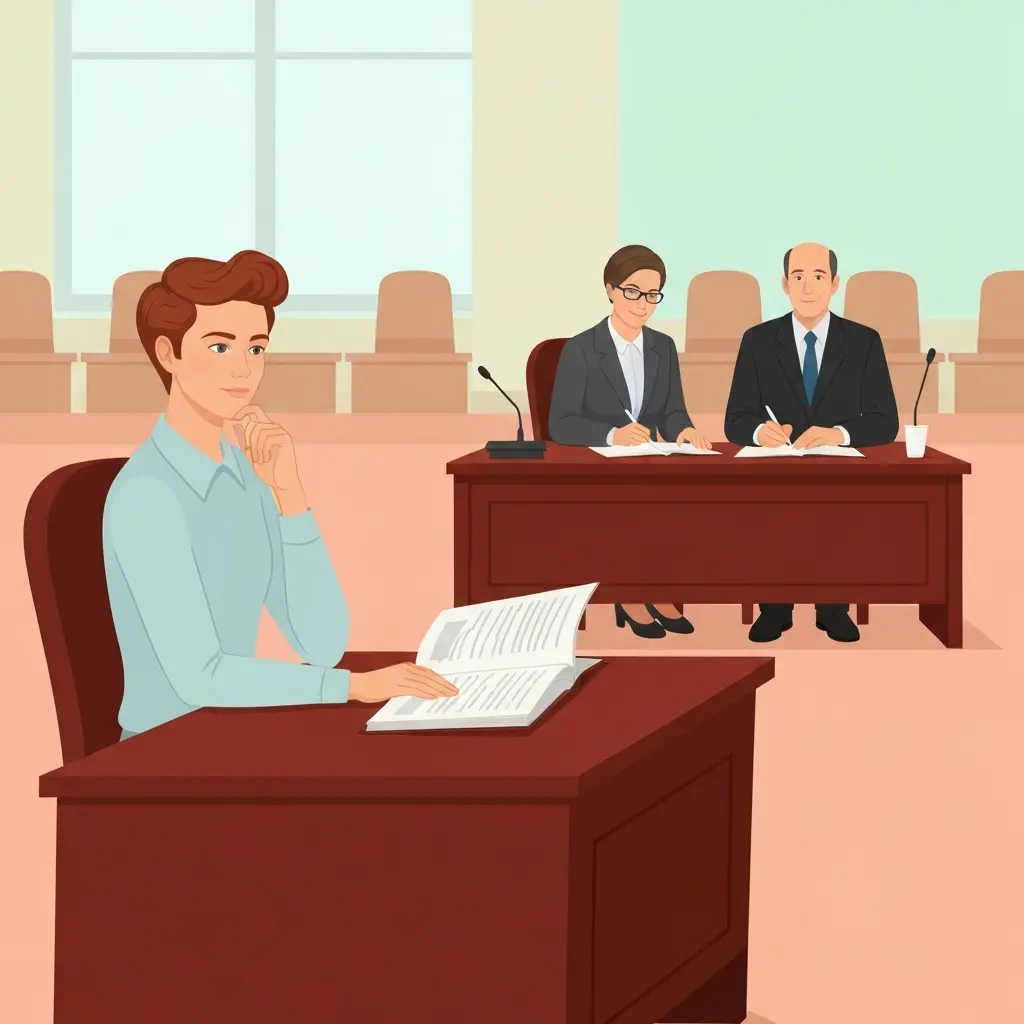
The viva voce is the moment every PhD student dreads and dreams about in equal measure. After three to seven years of research, you sit in a room with two or three examiners — people who have read every word of your thesis — and defend your work out loud. In the UK, this oral examination is the final gateway before you receive your doctorate, and the pressure is immense. But here is the truth that most preparation guides miss: the viva is not an ambush. It is a scholarly conversation, and you already know more about your research than anyone else in that room.
This guide covers everything about viva voce preparation: how the UK viva actually works, how to build a compelling 20-minute presentation, what examiners are really looking for, how to handle the most common questions, and how to manage committee dynamics. Whether your viva is six months away or six weeks away, the strategies here are drawn from real examiner guidance, UK university regulations, and the experiences of thousands of students who passed.
By the end, you will have a concrete preparation plan you can start today.
Viva voce preparation is the structured process of reviewing your thesis, anticipating examiner questions, practising verbal answers, and building a presentation before your oral examination. Effective preparation takes 4–8 weeks and includes mock vivas, examiner research, and a thorough re-read of your submitted work.
How the UK Viva Voce Works
The viva voce — Latin for “by live voice” — is the UK’s standard form of doctoral examination. Unlike in the US, where a dissertation defence is often a formal public presentation, the UK viva is a closed oral examination typically lasting between 90 minutes and three hours. The format varies by institution, but the standard structure is:
- Panel composition: one internal examiner (from your institution) and one external examiner (from another university), both with expertise in your field. Some institutions add a chair who does not examine but manages proceedings.
- No audience: your supervisor is usually not allowed in the room, although some universities allow them as an observer without speaking rights.
- Pre-reading: both examiners will have read your full thesis in advance and prepared questions.
- No pass/fail immediately: after the viva, examiners deliberate and communicate the outcome, which falls into one of four categories (see Viva Outcomes below).
According to the UK Council for Graduate Education (UKCGE), the examiner’s primary job is to establish that you are the author of the work, that you understand its strengths and limitations, and that it makes an original contribution to knowledge. That last phrase — “original contribution” — is the standard against which everything in your viva is measured.
Timing After Submission
Most UK universities schedule the viva within three months of thesis submission. The process is organised by your institution’s graduate school, not your supervisor. Once you submit, request a confirmation of the viva date in writing and begin preparation immediately — three months is shorter than it feels.
When to Start Preparing
The single most common mistake students make is waiting until after submission to begin viva preparation. The optimal approach is to begin a light preparation phase during the final stages of thesis writing and intensify it after submission.
| Timeline Before Viva | Preparation Activity |
|---|---|
| 8+ weeks out | Complete first full thesis re-read; begin examiner research |
| 6 weeks out | Annotate thesis with potential question triggers; draft question list |
| 4 weeks out | Build and rehearse your presentation slides; schedule mock viva |
| 2 weeks out | Run mock viva with peers or supervisor; refine weak answers |
| Final week | Light review only; sleep, exercise, and reduce anxiety |
How to Re-Read Your Thesis
Your thesis re-read is the foundation of viva preparation. You need to re-read it as an examiner would — critically, looking for gaps, inconsistencies, and areas that invite challenge. A passive re-read changes nothing. An active, annotated re-read changes everything.
The Active Annotation Method
Print your thesis (yes, physically — it changes how you read) or use PDF annotation software. As you read each chapter, mark the following four types of content:
- Red flags: anything you are not confident about — a claim you cannot fully defend, a methodological limitation you downplayed, a citation you cannot locate.
- Green lights: your strongest contributions — findings you are proud of, original arguments, robust methodology choices. Know these cold.
- Question triggers: places where a critical reader might push back. Every “could have” or “might suggest” in your writing is a question trigger.
- Missing literature: papers published since your submission that are relevant to your field. Examiners sometimes ask whether you are aware of recent work.
After two full passes, you should have a document covered in annotations and a list of 40–60 potential questions. That list is your preparation material for the next four weeks.
Building Your 20-Minute Presentation
Not all UK universities require a formal presentation at the viva — some open with the examiner asking you to summarise your work verbally. However, many departments do ask for a 15–20 minute overview, and even if yours does not, preparing one is one of the best preparation exercises available.
Slide Structure for a 20-Minute Defence
For a 20-minute dissertation presentation, aim for 15–18 slides. The Carnegie Mellon University library guide recommends roughly one slide per minute, with each slide containing minimal text and maximum visual clarity. Use this structure:
| Slide | Content | Time |
|---|---|---|
| 1 | Title, your name, institution | 30 sec |
| 2 | Research problem and gap in knowledge | 2 min |
| 3 | Research questions and aims | 1 min |
| 4–5 | Theoretical framework and key literature | 2 min |
| 6–7 | Methodology — design, sample, analysis | 3 min |
| 8–11 | Key findings (one slide per major finding) | 5 min |
| 12–13 | Discussion and theoretical contribution | 3 min |
| 14–15 | Limitations and future research | 2 min |
| 16 | Original contribution to knowledge (explicit summary) | 1 min |
| 17 | Thank you / Questions | 30 sec |
Slide Design Principles
Keep text to a maximum of five bullet points per slide, each no longer than one line. Use your thesis figures and tables directly — examiners will recognise them and it signals confidence in your own work. Avoid animation and transitions; they are distracting in a formal examination context. Your slides should support your spoken words, not replace them.
The Most Common Viva Questions (and How to Answer Them)
Examiners across UK universities ask a remarkably consistent set of questions. Grad Coach’s analysis of hundreds of doctoral defences identifies these as the most frequently asked opening questions:
The “Summarise Your Research” Opening
Nearly every viva opens with a version of: “Can you give us a brief overview of your research?” This is not a warm-up — it is the first test. You need a three-to-five minute verbal summary that covers the gap in knowledge, your research questions, your methodology, and your core contribution. Practise this until it is fluent. Time yourself. Do not read from notes.
Methodology Questions
Methodology is the most heavily interrogated section in most vivas. Expect variations of:
- “Why did you choose this research design rather than [alternative]?”
- “How did you ensure the validity/reliability of your data?”
- “What would you do differently if you could repeat this study?”
- “How did you address potential bias in your data collection?”
For each methodological choice in your thesis, prepare a two-sentence defence: state the choice, then give the rationale with a reference to methodology literature if possible.
Contribution Questions
- “What is the original contribution of this thesis to the field?”
- “How does your work advance existing theory?”
- “What are the practical implications of your findings?”
Your answer to contribution questions should never be vague. Have a crisp, concrete, three-part answer: (1) what the existing literature said before your study, (2) what your study found, (3) how this changes or advances the field.
Limitation Questions
Do not apologise for limitations. Every study has them. A strong examiner-style answer acknowledges the limitation clearly, explains why it does not invalidate the findings, and suggests how future research could address it. This demonstrates maturity as a researcher.
The “What Would You Change?” Question
This is a trap for the unprepared. Students who say “nothing” fail to demonstrate critical reflection. Students who say too much undermine their thesis. The right answer is: identify one or two genuine improvements — broader sample, longitudinal design, additional method — while making clear why the approach you took was justified and sufficient for the aims of the study.
Researching Your Examiners
One of the most underused preparation strategies is researching your examiners before the viva. This is not about flattery — it is about understanding the intellectual lens through which they will read your work.
For each examiner, review their last five years of publications. Note:
- Their theoretical commitments — do they favour a particular school of thought that might conflict with yours?
- Their methodological preferences — qualitative, quantitative, mixed methods?
- Any papers they have published on topics adjacent to your own — where might your work intersect or diverge from theirs?
- Their record as a supervisor and examiner — how rigorous are their published critiques?
Armed with this knowledge, you can anticipate the specific lines of questioning each examiner is likely to pursue. The external examiner in particular was chosen for their expertise in your area — expect deep, specific questions about the literature and theoretical framework.
Understanding Committee Dynamics
Most students think of the viva as a two-on-one interrogation. The reality is more nuanced. Examiners approach the viva with different roles, different levels of engagement with your work, and sometimes different initial assessments of your thesis. Understanding this dynamic helps you navigate the room.
The Internal Examiner
The internal examiner knows your department, your supervisor, and the institutional culture. They are often less aggressive in questioning but play a key role in the deliberation process. They may advocate for you or raise concerns about consistency with departmental standards.
The External Examiner
The external examiner is typically the more senior voice in the viva. They have no stake in your institution and will apply the standard of “original contribution to knowledge” purely on its merits. Their questions tend to be more focused on the theoretical and methodological rigour of your work.
Navigating Disagreement Between Examiners
Occasionally, your two examiners will hold different views about an aspect of your work, and they may debate it in front of you. This is not uncommon and is not a bad sign. When it happens: do not take sides. Listen carefully, acknowledge both perspectives, and explain how your research relates to both positions. Demonstrating awareness of scholarly debate is a strength, not a weakness.
How to Ask Good Questions as a PhD Candidate
The viva is not entirely one-directional. When you do not understand a question, ask for clarification. When you are unsure of an answer, it is absolutely acceptable to say “I would need to think carefully about that — could I come back to it?” rather than guessing. Examiners respect intellectual honesty. They are testing whether you think like a scholar, and scholars ask clarifying questions before answering.
Running an Effective Mock Viva
A mock viva is the single most valuable preparation activity you can undertake. Reading your thesis and formulating answers in your head is qualitatively different from saying those answers out loud under examination conditions. The University of Edinburgh’s IAD guidance notes that students who complete at least one structured mock viva report significantly higher confidence on the day.
How to Set Up Your Mock Viva
- Choose your panel carefully: your supervisor plus one academic from a related field. Avoid using only close colleagues who will be overly supportive — you need someone willing to challenge you.
- Treat it like the real examination: book a formal room, dress as you would for the actual viva, bring a printed copy of your thesis.
- Record it: video is best, audio is acceptable. Watching yourself answer questions is uncomfortable but revealing — you will notice filler words, defensive posture, and unclear explanations you had not noticed before.
- Debrief systematically: after the mock, spend 30 minutes noting every question you struggled to answer. These become your priority focus areas for the remaining preparation period.
If your supervisor is unable to organise a mock viva, peer mock vivas — two PhD students examining each other’s work — are a worthwhile alternative. Peers often ask questions that supervisors, who know your work too well, would not think to ask.
On the Day: What to Expect
Viva logistics vary by institution, but a typical schedule looks like this:
- Before the viva: you will be asked to wait outside the examination room while examiners confirm the process. Use this time for slow, deliberate breathing — not last-minute reading.
- Opening: the chair or lead examiner will introduce the panel, confirm the administrative details, and ask you to begin with either your presentation or an opening overview.
- Questioning phase: questions typically move chapter by chapter, though examiners may jump to specific pages. Bring your annotated thesis — you are allowed to refer to it.
- Your questions: at the end, examiners often ask if you have questions for them. Prepare one or two genuine questions about the future direction of the research or how the field is developing — this signals ongoing scholarly engagement.
- Deliberation: you will be asked to leave while examiners decide. This typically takes 15–30 minutes.
Anxiety Management on the Day
A moderate level of anxiety improves performance — it sharpens focus and increases alertness. Research from the British Psychological Society suggests that reframing pre-exam anxiety as excitement (telling yourself “I am excited” rather than “I am nervous”) measurably improves verbal performance in high-stakes situations. You have spent years becoming the world’s leading expert on your specific research area. That expertise does not disappear under pressure — it is in you.
Viva Outcomes Explained
UK vivas have four possible formal outcomes. Understanding them removes some of the fear of the unknown:
| Outcome | Meaning | Frequency |
|---|---|---|
| Pass with no corrections | Thesis accepted as submitted | Rare (~5%) |
| Pass with minor corrections | Small typographical, referencing, or clarity changes; typically 3 months to complete | Most common (~75%) |
| Major corrections | Substantial rewriting required; typically 6–12 months | Less common (~18%) |
| Resubmission or fail | Thesis must be substantially rewritten and resubmitted, or the award is not granted | Very rare (~2%) |
The data is reassuring: over 98% of students who reach the viva stage pass, even if minor or major corrections are required. Examiners are not trying to fail you — they are trying to ensure the work meets the standard for a PhD. Korean-speaking students can find a structured overview of the thesis review process in this Korean-language guide to the thesis review process.
Tesify’s AI thesis assistant helps you structure your research, sharpen your arguments, and build the kind of clarity that makes viva questions easier to answer. Try Tesify free and start writing your thesis with confidence.
Frequently Asked Questions
How long does a UK viva voce last?
A UK viva voce typically lasts between 90 minutes and three hours. The average is around two hours. Some vivas run shorter if the thesis is exceptionally strong; others run longer if examiners have detailed technical questions. There is no fixed minimum or maximum duration — examiners continue questioning until they are satisfied.
What should I bring to my viva voce?
Bring a printed, annotated copy of your submitted thesis. You are allowed to refer to it during the examination. Also bring a notepad for jotting questions you want to return to, a glass of water, and any approved presentation materials. Do not bring unsolicited additional material such as new drafts or additional data — this can raise questions about the work you submitted.
Can I fail my viva voce?
Outright failure at the viva is extremely rare — fewer than 2% of students who reach the examination stage receive an outright fail. Most students receive minor or major corrections. You are far more likely to pass with corrections than to fail. The key risk factors for major corrections are: insufficient engagement with the literature, poorly justified methodology, and inability to defend your findings in discussion.
How do I handle a question I cannot answer in my viva?
Say so honestly. A response like “That is a genuinely interesting question and I do not have a confident answer — I would want to look more carefully at [specific aspect] before making a claim” demonstrates intellectual integrity, which examiners respect. Never guess or speculate wildly. If you do not know, say you do not know, explain what you do know about the related area, and acknowledge what further investigation would be needed.
Does my supervisor attend the viva?
In most UK universities, the supervisor may attend the viva as a silent observer but cannot speak or intervene. Some institutions exclude supervisors entirely. Check your university’s specific regulations. Either way, your supervisor’s presence does not change the examination — you must answer the questions yourself.
How do I prepare a summary of my research for the viva opening?
Write a four-paragraph spoken summary: paragraph one covers the research problem and gap; paragraph two covers your methodology; paragraph three covers your key findings; paragraph four states your original contribution to knowledge. Time it to be between three and five minutes. Practise it aloud until you can deliver it without notes and without hesitation. This summary forms the backbone of your entire viva preparation.
What is the difference between the internal and external examiner in a UK viva?
The internal examiner is from your institution and knows your departmental context; they often focus on how your work sits within your department’s research culture and whether it meets institutional standards. The external examiner is from another university and applies a purely academic standard — they focus on whether the thesis makes a genuine original contribution to the field. Both examiners read the full thesis and both must agree on the outcome.
How many slides should a dissertation defence presentation have?
For a 20-minute dissertation presentation, aim for 15–18 slides. A common guideline is one slide per minute of speaking time. Each slide should contain minimal text — no more than five bullet points — and use visuals (your actual thesis figures and tables) to support your verbal explanation. Avoid text-heavy slides; they invite reading rather than listening.
Further Resources
For deeper preparation, explore these authoritative guides alongside this article:
- Grad Coach: Preparing for Your Viva Voce — practical question lists and strategy overview
- Vitae: The Viva — UK-specific guidance from the national researcher development charity
- UKCGE Guidance on Preparing for the Viva — official guidance from the UK Council for Graduate Education
Also see our related guides on tesify.app: Thesis Defence Tips, PhD Thesis Structure, Research Methodology Types, and How to Write a Thesis.
Write your thesis with AI
Structure, draft, cite, and format your thesis faster with Tesify’s AI writing tools, automatic bibliography, and plagiarism checker. Free to start, no credit card required.




Leave a Reply