
Software Project Thesis vs Traditional CS Dissertation (2026): Which One Are You Actually Writing?
Your computer science program calls it a “thesis,” your advisor calls it a “project,” and the handbook uses both terms interchangeably in different paragraphs — so which document are you actually supposed to produce? Most CS programs now offer two genuinely different tracks under the same “thesis” label: a software project thesis, where you build a working system and the writeup documents and evaluates it, and a traditional dissertation, where the contribution is a novel algorithm, theoretical result, or empirical study reported in a research-paper format. Picking the wrong structure for the one your committee expects is one of the most common and most avoidable ways CS students lose time in their final semester.
1. The Two Tracks, Side by Side
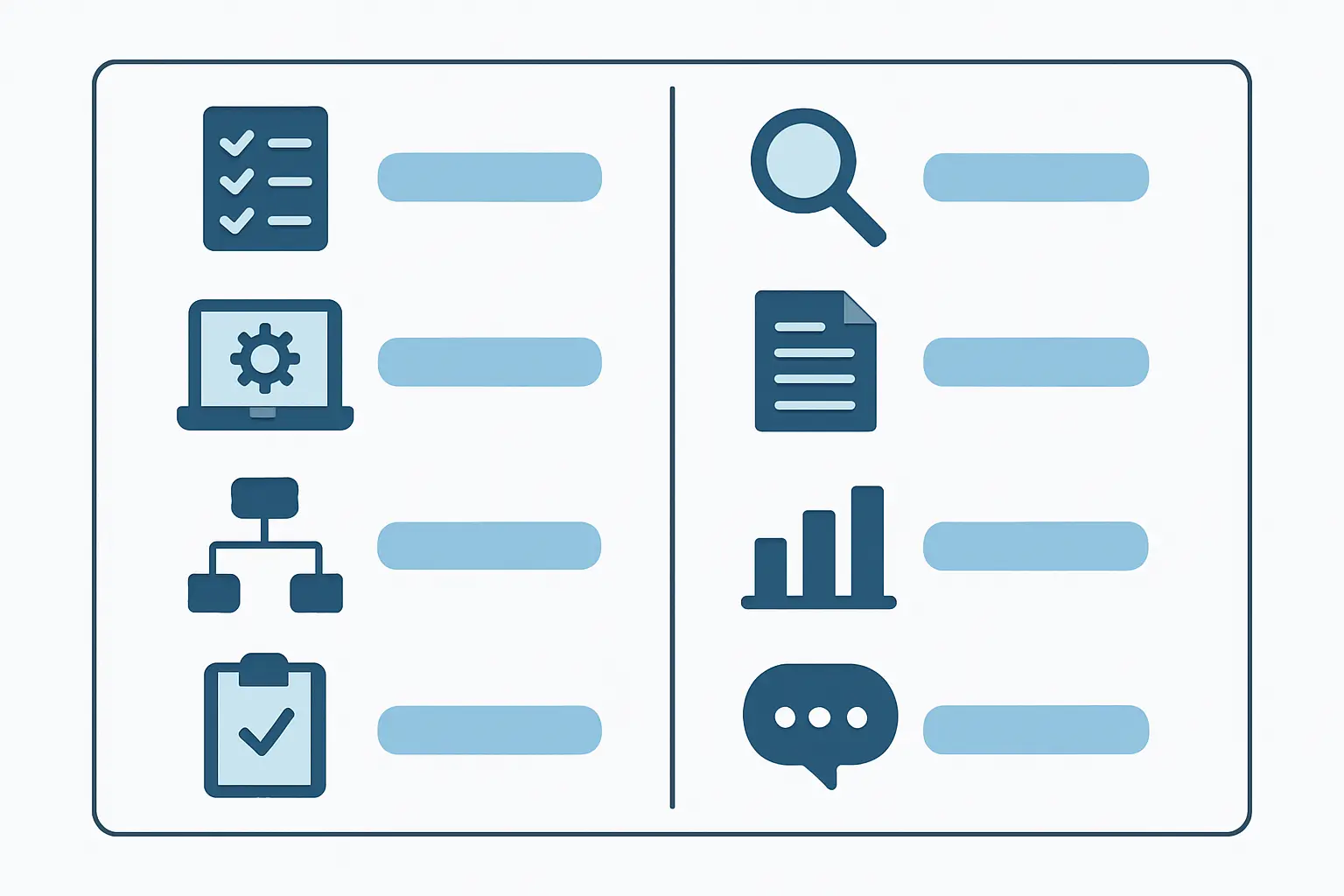
A software project thesis treats the built system as the primary deliverable: the document exists largely to specify what you built, justify the design decisions behind it, and demonstrate that it works against a defined set of requirements or use cases. A traditional dissertation treats the written document itself as the primary deliverable: the system, if one exists at all, is instrumentation built to generate the results being reported, and the document’s job is to argue that those results constitute a genuine contribution to knowledge. Neither track is “easier” — a software project thesis still requires a rigorous evaluation chapter, and a traditional dissertation’s system-building, when it involves one, is usually smaller in scope but must support a more demanding argument about novelty.
2. Software Project Thesis: Chapter Structure
A typical software project thesis follows a structure closer to a systems-engineering report than a research paper: an introduction stating the problem and the system’s intended users, a requirements chapter (functional and non-functional requirements, often with use-case diagrams), a design chapter (architecture, data model, key design decisions and the alternatives you considered), an implementation chapter (technology stack, notable engineering challenges, what you built versus what you scoped out), an evaluation chapter (testing strategy, performance benchmarks, usability results, or a comparison against requirements), and a conclusion covering limitations and future work. The emphasis throughout is on justification — every design decision needs a stated reason, not just a description of what you did.
3. Traditional Dissertation: Chapter Structure
A traditional CS dissertation follows the structure of an extended research paper: an introduction stating the research question and contribution claim, a related work chapter situating your contribution against the existing literature, a methodology chapter (the algorithm, model, or experimental design), a results chapter (typically quantitative, often with statistical comparison against baselines), a discussion chapter interpreting what the results mean and where they generalize, and a conclusion. If your work involves building software at all, it typically appears as a methodology sub-section describing the experimental apparatus, not as its own multi-chapter block — the code exists to produce the results, not to be evaluated in its own right.
4. What Counts as “Evaluation” in Each Track
This is the single biggest source of confusion between the two tracks, and the one most likely to surface as a hard question at your defense. In a software project thesis, evaluation typically means: does the system meet its stated requirements, how did users or testers respond to it, and how does it perform under realistic load or usage conditions — evaluation criteria you define yourself, tied to the goals you set in your requirements chapter. In a traditional dissertation, evaluation means: does your method outperform relevant baselines on a recognized benchmark or dataset, using metrics accepted by your sub-field, ideally with statistical significance testing where the sub-field expects it. Confusing the two — presenting a working demo as if it were a benchmark comparison, or running a formal ablation study on a tool nobody but you will ever use — is a common and avoidable defense-day stumble.
5. Your Codebase Is Not Your Contribution Statement
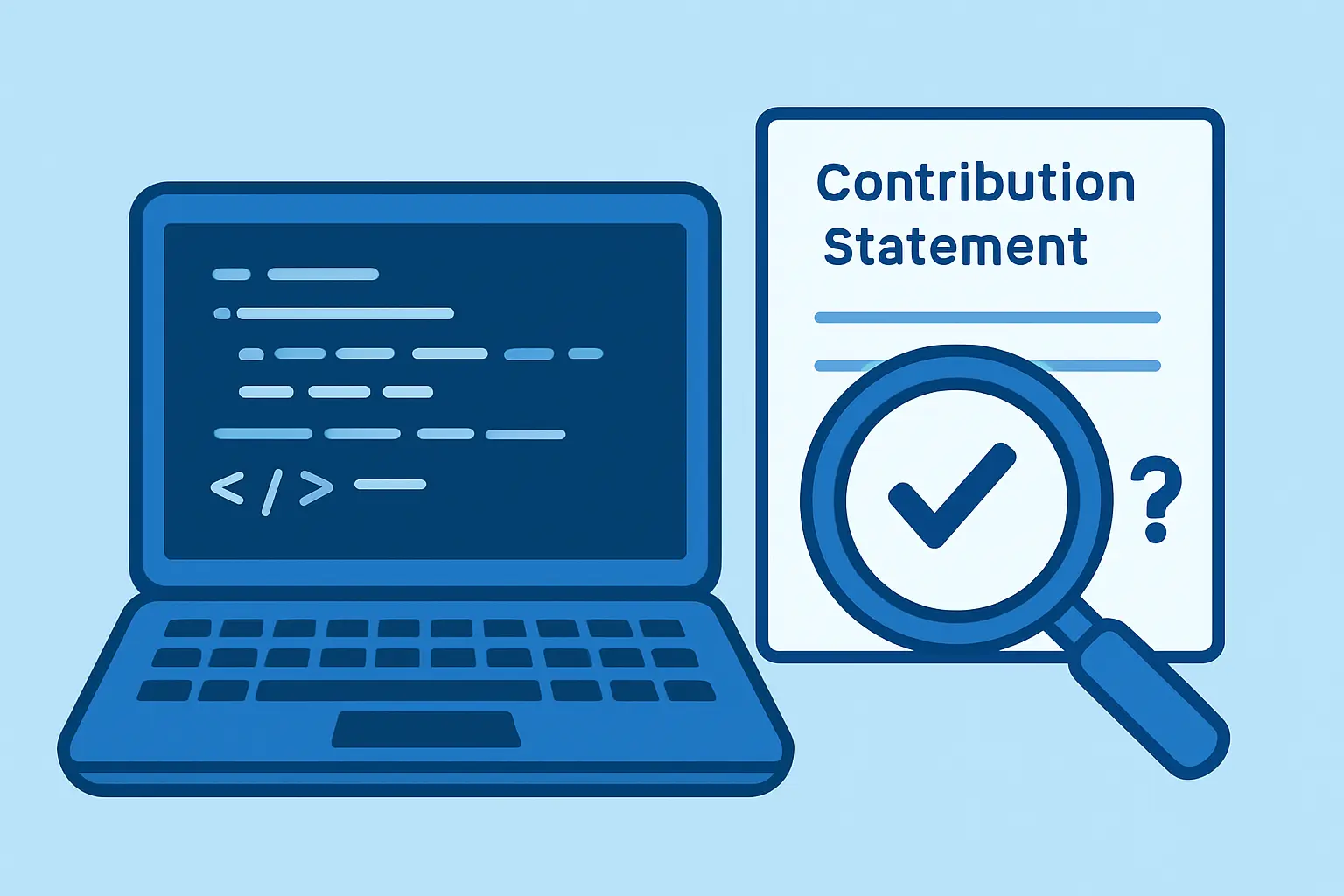
Whichever track you’re on, the single most common weakness examiners report in CS theses is a missing or vague contribution statement — the document describes what was built or what experiments were run, but never states, in one or two sentences a committee member could quote back, what is new here that wasn’t true before this project existed. In a software project thesis, the contribution is usually the specific engineering problem solved and how (a novel architecture for a known problem class, a tool that fills a gap in existing tooling, a system evaluated against a need nothing else currently addresses). In a traditional dissertation, the contribution is the specific advance over prior work (a faster algorithm for a defined problem class, a model that improves a metric on a recognized benchmark, an empirical finding that changes how a phenomenon should be understood). State it explicitly in your introduction and again in your conclusion — do not make your committee infer it from your implementation details.
6. How to Find Out Which Track Your Program Uses
Do not guess based on department culture or what a friend in a different program did — check the specific document your own department issues, because the same “thesis” label can mean either track depending on the institution, and some departments explicitly offer both as separate options students choose between at proposal stage. Look for your program’s thesis or capstone handbook (often distinct from the general graduate-school thesis format guide, which usually only covers formatting rather than chapter structure), ask your advisor directly which track past students in your specific research group have used, and if you’re choosing between tracks, ask what your advisor’s own preference is — many advisors have a strong, unstated preference based on what they can most usefully advise on.
7. Preparing for the Defense: What Each Track Actually Tests
Defense preparation should mirror the track you wrote in, and treating both the same is a common way students walk in underprepared for the specific questions their committee is likely to ask. A software project thesis defense usually opens with a live or recorded demonstration of the system, followed by design-decision questions — why this architecture and not an alternative, what you would change with more time, and how the system behaves under an edge case the committee names on the spot. A traditional dissertation defense usually opens with a summary of the contribution and its significance, followed by methodology questions — why this baseline, why this metric, what a competing explanation for your result might be, and how confident you actually are in the statistical claims you made. Rehearsing the wrong style of question — practising a benchmark defense when your committee is going to ask design-decision questions, or vice versa — wastes preparation time your final weeks do not have to spare.
8. Worked Examples
Software project thesis contribution statement: “This thesis presents [ToolName], a static analysis tool that detects a specific class of race condition in concurrent Rust programs that existing tools (Miri, Loom) do not currently flag; evaluation against a corpus of 40 known-buggy open-source crates shows [ToolName] detects 34/40 cases with a false-positive rate of 6%, compared to 21/40 and 4/40 respectively for the strongest existing tool.”
Traditional dissertation contribution statement: “This dissertation presents a modified attention mechanism that reduces inference latency by 23% on sequence lengths above 4,096 tokens relative to the standard transformer baseline, with no statistically significant loss in accuracy across three benchmark datasets (paired t-test, p > 0.05 on all three), addressing a scaling limitation identified in [prior work] as unresolved.”
9. Common Mistakes
- Writing a dissertation-style related-work chapter for a software project thesis when your program expects a requirements-and-design chapter instead — check the actual chapter template your department distributes.
- Presenting a demo as a benchmark result in front of a committee expecting a quantitative comparison against baselines.
- Leaving the contribution statement implicit, forcing the committee to infer what’s actually new from implementation detail.
- Scoping an unrealistically large system for a software project thesis timeline, leaving no time for the evaluation chapter that the format actually requires.
For a general step-by-step walkthrough of the computer science dissertation writing process, see our guide to writing a computer science dissertation, and if your abstract structure is your next hurdle, see our guide to the computer science thesis abstract.
Frequently Asked Questions
How do I know if my program wants a software project thesis or a traditional dissertation?
Check your specific department’s thesis or capstone handbook, not general graduate-school formatting guides, and ask your advisor which track past students in your research group have used — the label “thesis” alone does not tell you which structure is expected.
Can I build software as part of a traditional dissertation?
Yes, but the software typically functions as experimental apparatus described in a methodology sub-section, not as its own multi-chapter block with requirements, design and implementation chapters — the results the software generates, not the software itself, are the deliverable.
What’s the difference between “evaluation” in each track?
A software project thesis evaluates against requirements you defined yourself (functionality, performance, usability). A traditional dissertation evaluates against baselines and benchmarks recognized by your sub-field, typically with quantitative comparison and, where expected, statistical significance testing.
Do I need a contribution statement in a software project thesis?
Yes. State explicitly what engineering problem you solved and how it differs from existing tools or approaches — a missing or vague contribution statement is one of the most commonly cited weaknesses in CS thesis defenses across both tracks.
Structure Your CS Thesis With Confidence
Tesify’s AI-powered academic writing tool helps computer science students pick the right chapter structure for their track and turn implementation detail into a clear, defensible contribution statement.
Write your thesis with AI
Structure, draft, cite, and format your thesis faster with Tesify’s AI writing tools, automatic bibliography, and plagiarism checker. Free to start, no credit card required.




Leave a Reply