
Quick answer: An in text citation APA style uses the author-date system: the author’s surname and the year of publication, either in parentheses (Smith, 2020) or in the sentence, as in Smith (2020) found. Direct quotations also need a page number, such as (Smith, 2020, p. 45).
Two authors are joined with “&” in parentheses and “and” in the sentence; three or more authors are shortened to the first author plus “et al.” from the first citation. Every in-text citation must match an entry in your reference list.
In-text citations are small, but they appear in almost every paragraph of a thesis, so a consistent system saves hours of correction later. This in text citation APA guide covers the 7th edition rules for parenthetical and narrative citations, the author rules from one author to group authors, quotations and page numbers, multiple works in one citation, secondary sources, missing information and personal communications, with examples you can copy and a checklist for your final draft.
The two formats: parenthetical and narrative
APA gives you two ways to cite the same source, and good academic writing uses both.
| Format | Pattern | Example | Use it when |
|---|---|---|---|
| Parenthetical | (Author, Year) | Students increasingly use AI tools to explain concepts (Stephenson & Armstrong, 2026). | The idea is the focus and the author is secondary |
| Narrative | Author (Year) | Stephenson and Armstrong (2026) found that most students use AI to explain concepts. | The author or study is part of your point, for example when comparing studies |
In a narrative citation the year usually follows the author’s name directly. If you mention the same author again in the same paragraph, you do not need to repeat the year for narrative citations, as long as the reference is unambiguous; parenthetical citations always include the year.
In text citation APA rules for authors
| Number of authors | Parenthetical | Narrative |
|---|---|---|
| One | (Newton, 2018) | Newton (2018) |
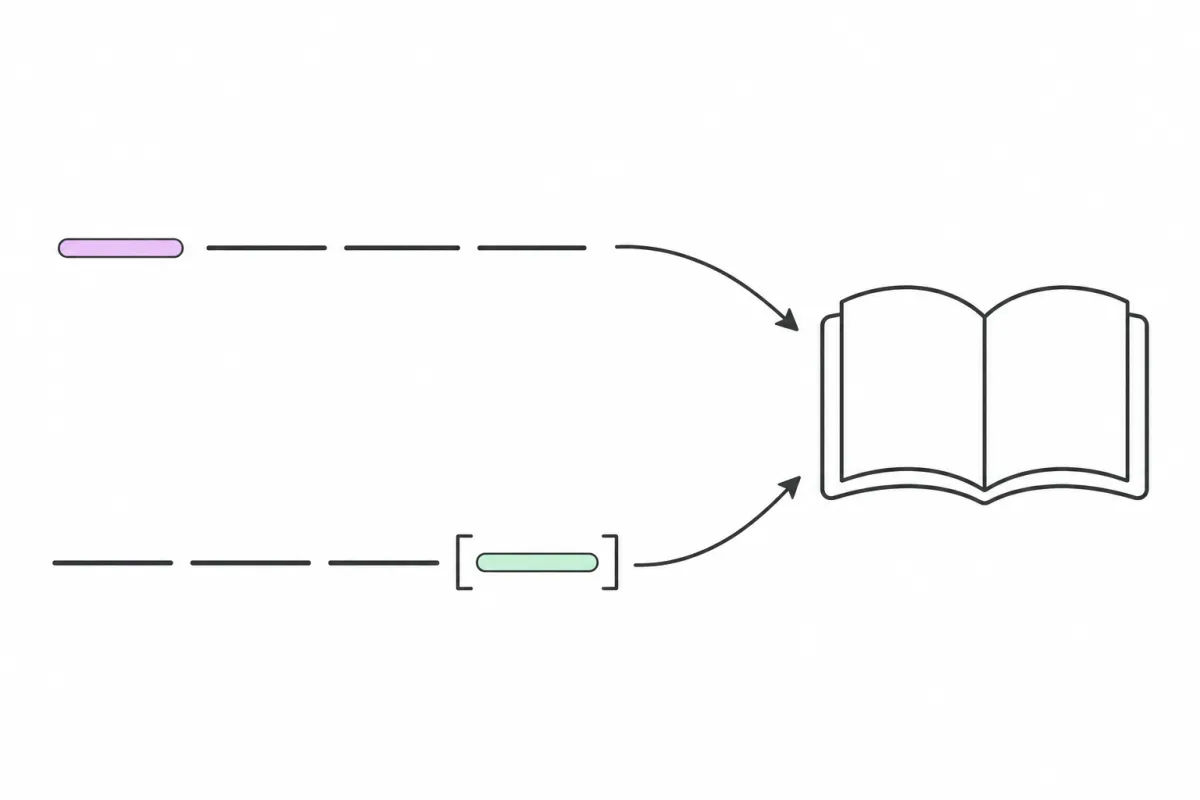
| Two | (Walters & Wilder, 2023) | Walters and Wilder (2023) |
| Three or more | (Liang et al., 2023) | Liang et al. (2023) |
| Group author with abbreviation, first citation | (American Psychological Association [APA], 2020) | American Psychological Association (APA, 2020) |
| Group author, later citations | (APA, 2020) | APA (2020) |
A few details trip students up:
- Always name both authors of a two-author work, every time you cite it.
- Use “et al.” from the first citation for three or more authors. There is no period after “et”, but there is one after “al.”. If two different works would shorten to the same form, add as many names as needed to tell them apart.
- Use “&” only inside parentheses; write “and” in running text.
- Define a group author’s abbreviation once, in the first citation, and use only the abbreviation after that. Skip the abbreviation if the name is short or you cite it only once.
- Omit suffixes such as “Jr.” in the in-text citation.
- Add initials when two first authors share a surname, for example (E. Johnson, 2001; L. Johnson, 1998), so readers can tell the works apart.
Quotations and page numbers
When you quote a source word for word, the citation must also give the location of the quotation.
- One page: (Lee, 2021, p. 14)
- Several pages: (Lee, 2021, pp. 14–15), with an en dash between the numbers.
- No page numbers: use another locator, such as a paragraph number (para. 4), a section heading, or a combination, for example (Lee, 2021, para. 3); these examples are illustrative. Do not use Kindle location numbers.
Short quotations (fewer than 40 words) go in double quotation marks within your sentence. With a narrative citation, put the year after the author’s name and the page after the quotation, as in this illustrative example: Lee (2021) argued that feedback is “most useful when it arrives before the next draft” (p. 14). With a parenthetical citation, put everything after the quotation, before the final period: … before the next draft” (Lee, 2021, p. 14).
Block quotations (40 words or more) start on a new line, are indented 0.5 inch from the left margin, have no quotation marks, stay double-spaced, and put the parenthetical citation after the final punctuation mark.
For paraphrases, a page number is not required, but APA encourages one when it helps the reader find the passage in a long work. If you are unsure whether you are paraphrasing or patchwriting, the site’s guide on how to paraphrase academically shows the difference.
Citing several works at once
- Different authors: list them in alphabetical order, as they appear in the reference list, separated by semicolons: (Bretag et al., 2019; Newton, 2018; Scarfe et al., 2024).
- Same author, different years: give the name once and the years in order, with undated works first and works in press last: (Smith, n.d., 2015, 2021, in press).
- Same author, same year: add lowercase letters after the year, matching the reference list: (Smith, 2021a, 2021b).
- Emphasising one source: you can put a key source first and then write “see also” before the others: (Newton, 2018; see also Bretag et al., 2019).
Missing information and special cases
| Situation | In-text format |
|---|---|
| No author | Use the title, or its first few words, in place of the author: (“Using Citations,” 2001) for an article or chapter, or an italicized title for a book or report |
| Author listed as “Anonymous” | (Anonymous, 2022) |
| No date | (Lee, n.d.) |
| Republished or translated work | Both dates, original first: (Frankl, 1946/2006) |
| Secondary source | Name the original and cite the source you read: Johnson (1985, as cited in Smith, 2003) argued… |
| Personal communication | (E. Robbins, personal communication, January 4, 2026), and no reference list entry |
Use secondary citations sparingly. Examiners expect a thesis to engage with primary sources, so if a study matters to your argument, find and read the original.
Citations, the reference list and AI tools
Every in-text citation points to exactly one reference list entry, and the author surname and year must match exactly, including any “a” and “b” letters. Personal communications are the only common exception, appearing in the text but not on the reference page. The guide to the APA reference list and citations step by step covers the other half of the system. If you quote or describe output from a generative AI tool in your work, cite it according to APA’s current guidance for software and AI; the site’s page on how to cite AI-generated content explains the format.
Placement and flow: citing without clutter
Where you place a citation changes how a sentence reads.
- Cite at the point of use. Put the citation immediately after the claim it supports, especially when one sentence combines ideas from different sources.
- Vary the format. A paragraph in which every sentence ends in parentheses reads like a list. Use narrative citations when you compare authors or highlight a key study.
- Do not over-cite. Once you have cited a source for a point, you do not need to repeat the citation in every following sentence about the same point, unless the source changes or the paragraph changes topic.
- Use signal verbs precisely. “Found”, “argued”, “proposed” and “reported” mean different things. In literature reviews, APA recommends past or present perfect tense for signal phrases, such as “Newton (2018) found”.
A worked example: citing in a literature review paragraph
The paragraph below is illustrative, written for a thesis on AI and academic integrity, to show how narrative and parenthetical citations combine in practice. The sources it cites are real and are described accurately; the paragraph itself is an example.
“Estimates of misconduct depend heavily on how it is measured. Newton (2018) found that self-reported contract cheating averaged 3.52% across studies since 1978 but 15.7% in samples from 2014 onwards, while a national Australian survey reported a rate of about 6% (Bretag et al., 2019). Recorded cases are far lower, partly because detection is weak: in a blind test, 94% of AI-written exam submissions went unnoticed (Scarfe et al., 2024). Independent tests have also found AI detection tools neither accurate nor reliable, including when judging writing by non-native English speakers (Liang et al., 2023; Weber-Wulff et al., 2023).”
Notice how the paragraph works. The first narrative citation puts Newton at the centre because his review is the main evidence; the next sources are cited parenthetically because the finding matters more than the authors; and the last sentence groups two studies that support the same point, in alphabetical order, separated by a semicolon. No sentence repeats a citation unnecessarily, and every source is cited at the point where its finding appears.
Citing tables, figures and specific parts of a work
When you refer to a specific part of a source rather than the whole work, add the locator after the year: a chapter (Lee, 2021, Chapter 3), a table (Lee, 2021, Table 2), a figure (Lee, 2021, Figure 1) or a section heading in a webpage without page numbers. When you reproduce or adapt a table or figure from a source in your own thesis, APA uses a copyright attribution in the table or figure note rather than only an in-text citation, and you may need permission from the copyright holder; check your graduate school’s guidance on third-party material before you deposit the thesis. For legal materials such as statutes and court cases, APA follows legal citation conventions that differ from the author-date pattern, so look up the specific format rather than adapting the standard one; the site’s guide on how to cite laws, statutes and court cases in APA 7 sets out those patterns with examples for the most common legal sources students use.
Common in-text citation mistakes
- Including the author’s first name or initials when they are not needed to distinguish authors.
- Writing “et al” without the period, or putting a period after “et”.
- Using “&” in running text, or “and” inside parentheses.
- Forgetting page numbers for direct quotations.
- Citing a work in the text that is missing from the reference list, or the reverse.
- Writing the full title of a journal article in the citation instead of the author.
- Putting the citation after the period at the end of a short quotation instead of before it.
Final in-text citation checklist
- Every citation gives author and year, and quotations give a page or paragraph number.
- Two-author works always name both authors; three or more use “et al.” from the start.
- “&” appears only in parentheses.
- Multiple sources in one citation are in alphabetical order, separated by semicolons.
- Group author abbreviations are defined once and used consistently.
- Every citation matches a reference list entry exactly, and every entry is cited.
Run this checklist on one chapter at a time. The fastest method is to search your document for “(” and check each citation in turn against your reference list.
For a related guide, see the APA reference page.
Where Tesify fits
Citations are easier to keep consistent when each chapter is organized around its sources from the start. Start structuring your thesis in Tesify. It helps you structure and organize your chapters as you write them, and 9,000+ students have written 15,000+ chapters with Tesify. Every word stays 100% written by you.
Frequently asked questions (FAQ)
How do you write an in-text citation in APA 7?
Give the author’s surname and the year of publication, either in parentheses, such as (Newton, 2018), or in the sentence, such as Newton (2018). Add a page number for direct quotations.
When do I use et al. in APA in-text citations?
Use et al. for any work with three or more authors, starting from the first citation, for example (Liang et al., 2023). Name both authors of a two-author work every time.
Do I need page numbers in APA in-text citations?
Page numbers are required for direct quotations and encouraged for paraphrases from long works. If there are no page numbers, use a paragraph number or section name instead.
How do I cite two sources in one parenthesis?
List them alphabetically by first author, as they appear in your reference list, separated by semicolons, for example (Bretag et al., 2019; Newton, 2018).
Should I use and or the ampersand in APA citations?
Use the ampersand inside parentheses, such as (Walters & Wilder, 2023), and the word and in running text, such as Walters and Wilder (2023).
How do I cite a source with no author or no date?
For no author, use the title or its first few words in place of the author. For no date, write n.d. in place of the year, for example (Lee, n.d.).
How do I cite a source I found in another source?
Name the original work and cite the source you actually read, for example Johnson (1985, as cited in Smith, 2003). Only the source you read goes in the reference list.
Do personal communications need a reference list entry?
No. Cite emails, interviews that are not part of your data and other personal communications in the text only, with the person’s initials, surname and the exact date.
Write your thesis with AI
Structure, draft, cite, and format your thesis faster with Tesify’s AI writing tools, automatic bibliography, and plagiarism checker. Free to start, no credit card required.




Leave a Reply