

Action Research as a Social Work Thesis (2026): When It’s Accepted, Cycle Structure, and What Examiners Expect
Action research sits closer to social work’s own professional values than almost any other thesis type — it treats the practitioner as co-researcher, ties knowledge production directly to a practice change, and refuses the distance between “the researcher” and “the setting” that a traditional case study or survey design assumes. That fit is exactly why it is also frequently misunderstood or misapplied: a project labelled “action research” that is really just a reflective account of practice, with no genuine research cycle, does not meet the standard a social work examiner is checking for.
1. When Action Research Is the Right Fit
Action research suits a social work thesis when three conditions hold together: you have practitioner access to a specific setting (a team, a service, a caseload) where a practice question is genuinely open; you can secure stakeholder collaboration — colleagues, service users, or both — in shaping and evaluating the intervention rather than simply implementing something decided in advance; and your research timeline allows for at least two full cycles of the research process, since a single implement-and-evaluate pass is a practice evaluation, not action research. If any of these three conditions is missing, a case study or a more conventional qualitative design focused on your own practice reflection is usually the more defensible choice.
2. The Plan-Act-Observe-Reflect Cycle

Action research’s foundational structure — traced to Kurt Lewin’s original formulation and developed further by Kemmis and McTaggart into an explicit “action research spiral” — moves through four stages, repeated across cycles: plan (identify the practice problem and design a specific intervention or change, ideally with stakeholder input into the plan itself); act (implement the planned change); observe (systematically gather data on what happened — not just whether the change “worked,” but how it unfolded in practice); and reflect (analyse what the observation showed, and use that analysis to revise the plan for the next cycle). The defining feature that separates this from ordinary practice development is that each stage is documented as data, and the reflection stage is written up with the same analytical rigour as a qualitative coding process, not as an informal practice journal entry.
3. How Many Cycles Do You Need?
A minimum of two full cycles is the conventional threshold examiners look for, because a single cycle cannot demonstrate the iterative learning that defines action research methodologically — it is indistinguishable from a one-off practice evaluation. Three cycles is common in a longer piece of work where time allows, but two well-documented cycles, each with a genuine change in plan informed by the previous cycle’s reflection, is generally sufficient for a master’s-level social work thesis. State explicitly in your methodology chapter how many cycles you completed and why that number was appropriate given your timeline and setting — a thesis that quietly reports only one cycle while calling itself action research is a common source of examiner pushback.
4. Genuine Participation vs Practice Reflection
The distinction examiners scrutinise most closely is whether stakeholders (colleagues, service users, or both) genuinely shaped the intervention and its evaluation, or whether they were simply informed about a change the researcher had already decided on. Action research’s claim to rigour rests substantially on this participatory element — it is what separates the method from a solo practitioner’s reflective account of their own decisions. Document specifically how stakeholders were involved at each stage: did they help define the practice problem, propose or refine the intervention, participate in data collection, or interpret the findings together with you? A thesis that can answer these questions concretely is far more defensible than one that asserts “a participatory approach was used” without specifying what that meant in practice.
5. How the Thesis Is Structured
An action research thesis typically organises its central chapters around the cycles themselves rather than the conventional single results-then-discussion split: an introduction and literature review set up the practice problem and existing evidence; a methodology chapter justifies the action research design and describes the setting, participants and ethical arrangements; then each cycle is presented in turn — its plan, what was done, what was observed, and what the reflection led to for the next cycle — before a final discussion chapter draws the cycles together into an overall account of what was learned, both about the specific practice change and about the setting more broadly. This cycle-by-cycle structure is a genuine departure from the standard IMRaD shape, and stating it explicitly to your supervisor and committee early avoids confusion about what “the results chapter” should even contain.
6. The Ethics of Researching Where You Practise
Action research in social work almost always involves researching your own workplace or caseload, which raises the dual-role and power-dynamic questions that any insider research carries, intensified by social work’s specific duty of care to service users who may feel unable to decline participation from a worker with authority over their case. Address this directly in your ethics application and methodology chapter: how consent was genuinely voluntary and separable from the service relationship, how you managed your dual role as both practitioner and researcher, and what safeguards protected participants who might otherwise have felt obligated to take part. For the general insider-research conditions this builds on, see our guide on researching your own workplace, and for the wider ethical and methodological landscape a social work thesis operates within, see our complete guide to social work dissertation methodology and research ethics.
A Worked Scenario (Illustrative)
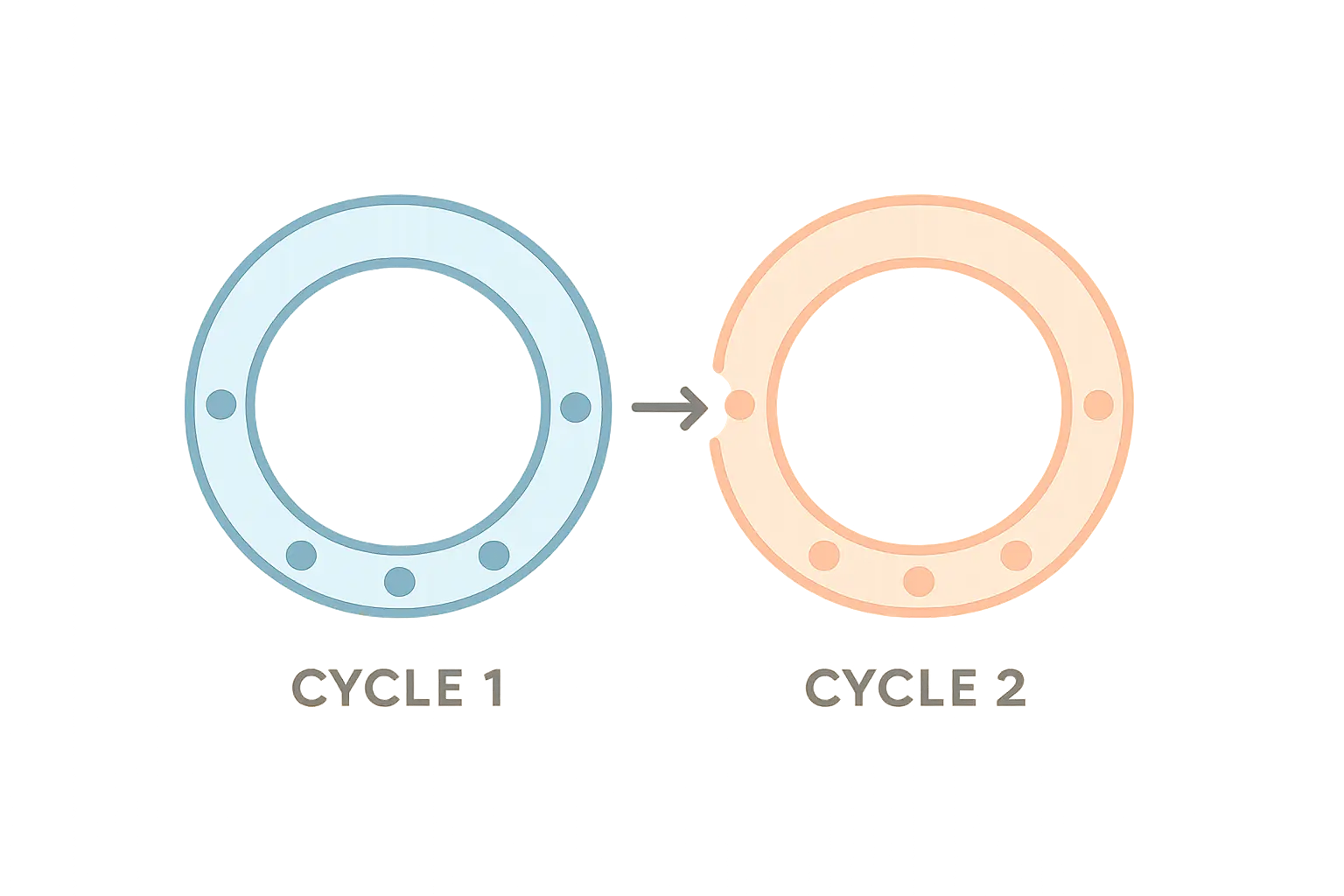
Consider an illustrative action research thesis on improving transition planning for care leavers turning 18 within a local authority leaving-care team:
- Cycle 1 plan: Following informal feedback that transition meetings felt rushed and one-directional, the researcher and three colleagues design a revised meeting structure that opens with the young person setting the agenda, developed collaboratively with two care-experienced young people consulted beforehand.
- Cycle 1 act and observe: The revised structure is used in six transition meetings over eight weeks; the researcher keeps structured observation notes on agenda-setting, and the two young people who advised on the design are interviewed afterward about whether the meetings matched what they had proposed.
- Cycle 1 reflect: Interviews reveal the agenda-setting opening worked well, but young people still felt talked over once the meeting moved to housing and benefits logistics — the reflection identifies a specific, addressable gap rather than a vague “it went well.”
- Cycle 2 plan and beyond: A revised structure adds a check-in prompt at the midpoint of each meeting specifically to hand control back to the young person before the logistics discussion, directly responding to what cycle 1’s reflection surfaced.
Notice that cycle 2’s plan is visibly derived from cycle 1’s reflection, not a repeat of the same intervention — the feature examiners are specifically checking for when judging whether a genuine research cycle occurred.
7. Common Reasons Examiners Push Back
- Only one cycle completed but presented as action research — the single most common structural problem.
- No genuine stakeholder participation in shaping the intervention, only in receiving it.
- The “observe” stage lacks systematic data collection — informal impressions substituted for documented observation, interview or survey data.
- The reflection stage does not visibly inform the next cycle’s plan — cycles that repeat the same intervention rather than revising it based on what was learned.
- Insufficient attention to the dual-role and consent problems of researching one’s own practice setting with vulnerable service users.
Frequently Asked Questions
How many action research cycles does a social work thesis need?
A minimum of two full cycles is the conventional threshold, since a single cycle cannot demonstrate the iterative learning that defines the method. Three cycles is common where the timeline allows, but two well-documented cycles with a genuine plan revision between them is generally sufficient for a master’s-level thesis.
What is the difference between action research and simply reflecting on my own practice?
Action research requires a genuine, documented research cycle — systematic data collection at the observe stage, analytical rigour at the reflect stage, and a visible change in plan between cycles — plus genuine stakeholder participation in shaping the intervention, not just receiving it. A reflective account of your own decisions, without these elements, is reflective practice, not action research.
Can I do action research in my own team or caseload?
Yes — this is the typical setting for social work action research, but it raises dual-role and consent questions that must be addressed explicitly in your ethics application: how participation was genuinely voluntary and separable from the service relationship, and how you managed being both practitioner and researcher in the same setting.
How is an action research thesis structured differently from a standard dissertation?
Instead of a single results chapter followed by discussion, an action research thesis typically presents each cycle in turn — its plan, action, observation and reflection — before a final chapter draws the cycles together. This cycle-by-cycle structure is a genuine departure from the conventional IMRaD shape.
Does action research count as qualitative research?
It is usually classified within the qualitative or mixed-methods family, since data collection typically involves interviews, observation notes and documentary evidence, though some cycles may include simple quantitative measures (attendance, incident counts) alongside the qualitative data. See our complete guide to qualitative research methods for how it sits alongside other qualitative traditions — it is best understood as a distinct methodological approach with its own logic rather than simply a qualitative technique.
Write Your Action Research Thesis With Confidence
Tesify’s AI-powered academic writing tool helps social work students structure a cycle-by-cycle action research thesis, document genuine stakeholder participation, and address the dual-role ethics your committee will expect to see addressed directly.
Write your thesis with AI
Structure, draft, cite, and format your thesis faster with Tesify’s AI writing tools, automatic bibliography, and plagiarism checker. Free to start, no credit card required.






Leave a Reply