
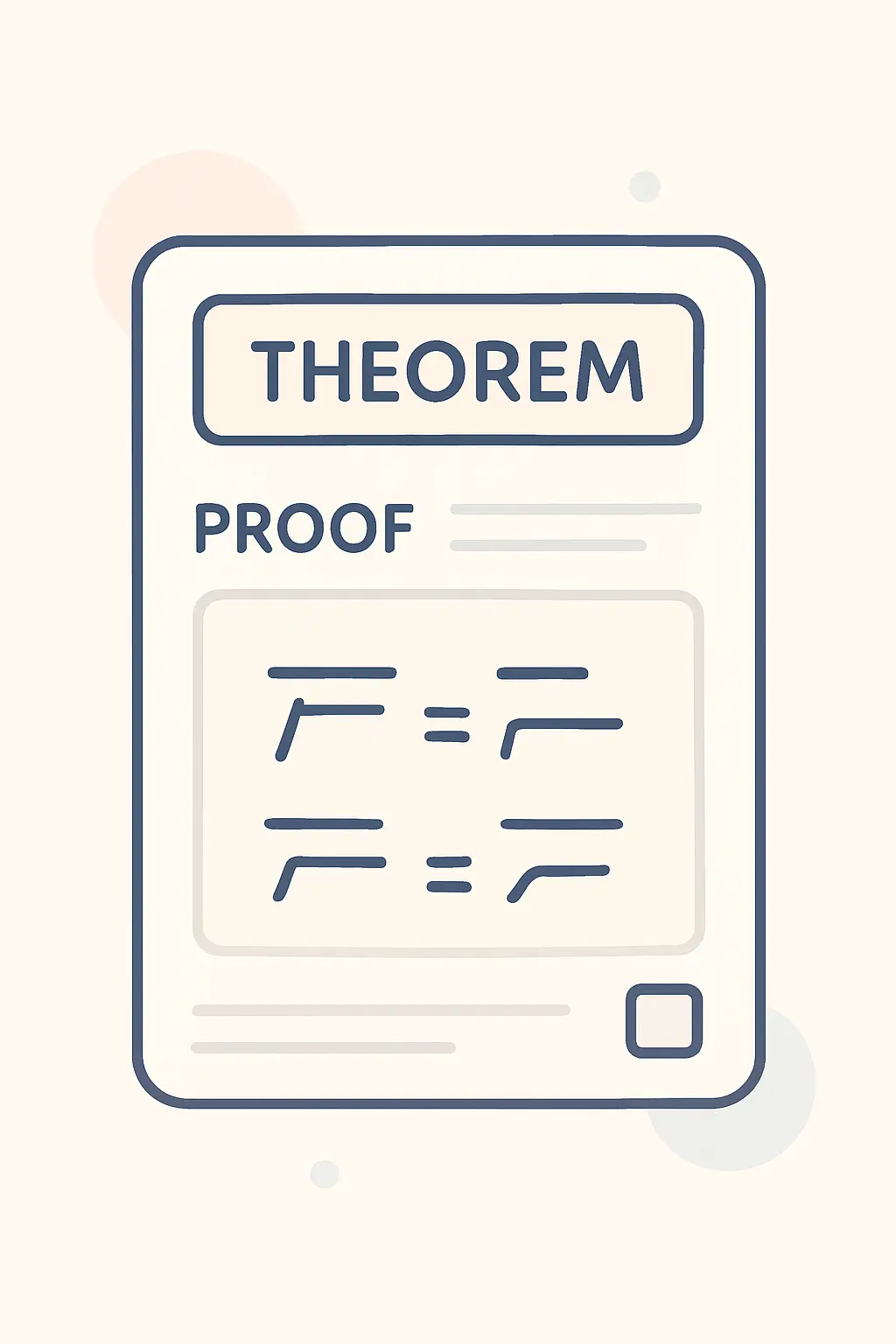
A mathematics thesis is structured around theorems and their proofs rather than the introduction–methodology–results–discussion pattern used elsewhere. It typically opens with preliminaries fixing notation and known results, then presents original results as a sequence of definitions, lemmas, theorems and proofs, with exposition connecting them into an argument.
Why does a maths thesis have no methodology chapter?
Because in pure mathematics the method is proof, and proof is displayed rather than described. There is no data collection to justify, no sampling strategy to defend and no instrument whose validity requires establishing. Writing a methodology chapter in a pure mathematics thesis signals unfamiliarity with the discipline’s conventions.
Applied and computational mathematics differ. If your work involves numerical experiments, simulation, or analysis of real datasets, you will need a section describing implementation, parameter choices, hardware and reproducibility — closer to the conventions in our engineering thesis guide. Statistics theses sit closer still to the standard social-science shape.
What structure does a mathematics thesis follow?
The conventional architecture is remarkably stable across institutions, though chapter counts vary with the number of distinct results.
| Component | Purpose | Approximate length |
|---|---|---|
| Introduction | Problem, context, statement of main results, thesis outline | 10–20 pages |
| Preliminaries / Background | Notation, definitions, cited results used later | 15–30 pages |
| Results chapters (2–4) | Original theorems with proofs, one theme per chapter | 20–40 pages each |
| Applications or examples | Worked instances demonstrating scope | 10–20 pages |
| Conclusion and open problems | Summary of contribution; directions for further work | 5–10 pages |
| Appendices | Long computations, code, technical lemmas | Variable |
Mathematics theses are typically shorter than those in the humanities or social sciences — frequently 80 to 150 pages — because density is prized over volume. Our data on average thesis word count by discipline shows how wide the variation across fields runs.
Where do you state your main results?
In the introduction, explicitly and early. The convention in mathematics is to state the principal theorems in full in the introduction — often as “Theorem A”, “Theorem B” — with forward references to where each is proved.
This is the opposite of the suspense structure used in some disciplines, and it exists for a reason: a reader should be able to determine from the first ten pages exactly what you have proved and whether it matters to them. Burying the main theorem on page 94 is treated as a defect in exposition, not as narrative craft.
How do you write a proof for a thesis?
Thesis proofs differ from journal proofs in one important respect: you have space, and you are expected to use it. A journal referee will accept “the result follows by a standard argument”; an examiner assessing whether you understand the material will not.
- State the theorem completely. All hypotheses, no implicit assumptions carried over from earlier sections.
- Signal the strategy before the details. A sentence such as “We argue by induction on the dimension, reducing to the compact case” orients the reader.
- Keep steps at consistent granularity. Sudden jumps between meticulous and telegraphic reasoning read as gaps.
- Isolate technical machinery into lemmas. A proof that runs six pages without a break is usually three lemmas that have not been named.
- Justify every non-obvious step by reference to a numbered result, a cited theorem, or an explicit calculation.
- Close the proof with the standard end marker.
The most common examiner criticism of mathematics theses is not incorrectness but unverifiability — proofs where the writer’s intention is clear but the argument as written contains an unbridged step. Reading your own proofs after several weeks, as a hostile reader, catches most of these.
What are the conventions for numbering and notation?
Use a single sequential numbering system across all theorem-like environments within each chapter — so Definition 3.1 is followed by Lemma 3.2 and Theorem 3.3, rather than three parallel sequences. This makes cross-references unambiguous and is the standard in most mathematics journals.
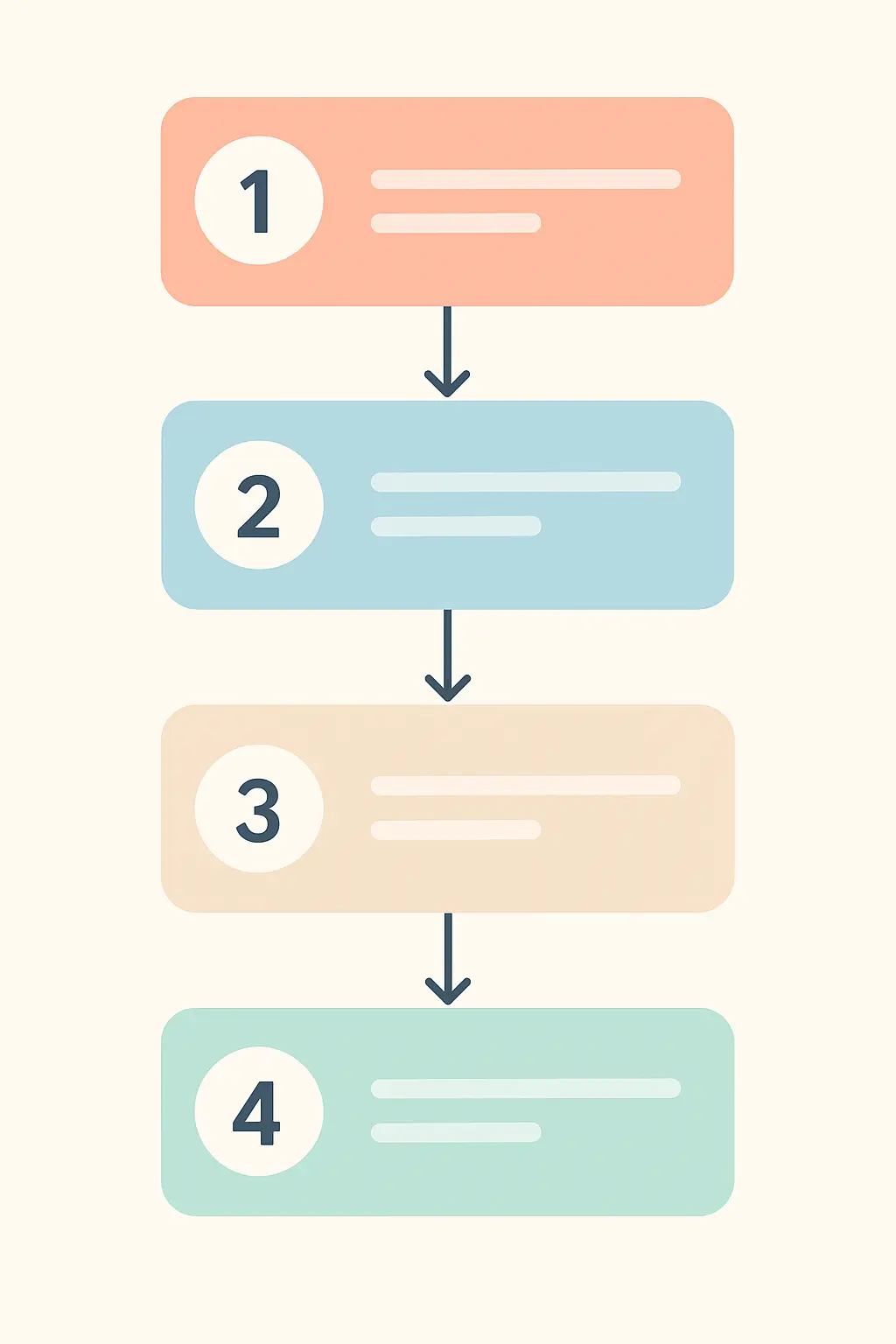
On notation, the governing principle is that every symbol should be introduced once, used consistently, and ideally listed in a notation index at the front. Reusing a symbol for two purposes in different chapters is a frequent source of correction requests. Our guide to writing a list of abbreviations and symbols covers the front-matter conventions.
Should you write a mathematics thesis in LaTeX?
Yes, essentially without exception. Mathematical typesetting in a word processor is slow, fragile and produces output that looks wrong to anyone in the field. Most departments provide a LaTeX thesis class, and the AMS packages — amsmath, amsthm, amssymb — supply the theorem environments and symbols the discipline expects.
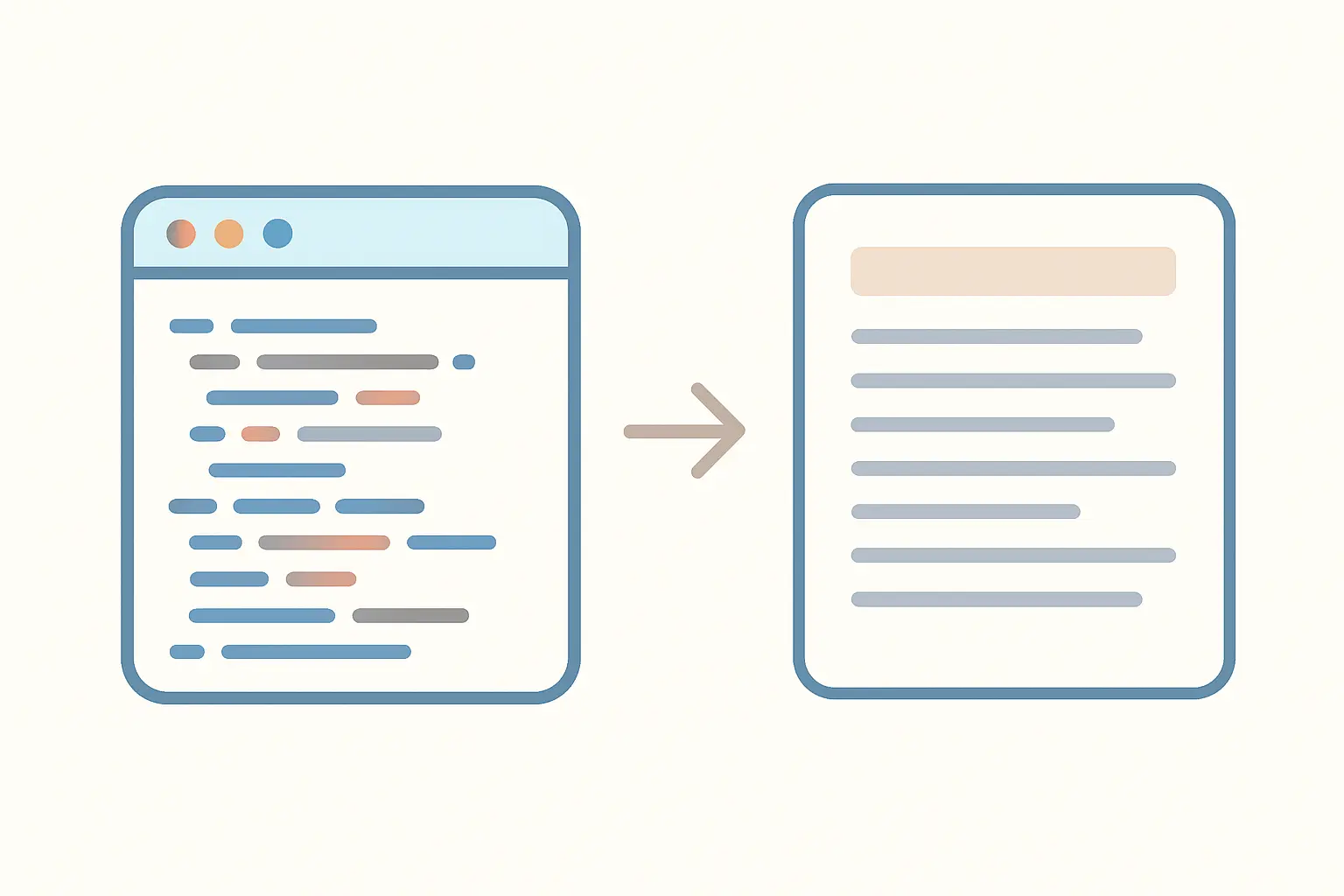
Practical points that matter over a three-year project: use one file per chapter with a master document, keep the whole thesis in version control, and define your own macros for recurring notation so that a late change of symbol is a one-line edit rather than a four-hundred-instance find-and-replace. Our comparison of LaTeX, Word and Overleaf for thesis writing covers the wider trade-offs, and our walkthrough on backing up a thesis with version control covers the Git side.
How do you cite in a mathematics thesis?
Mathematics uses AMS style, implemented through BibTeX with the amsplain or alpha bibliography styles, producing citation keys such as [Ser79] or numbered references. Author–date styles like APA are essentially unused in pure mathematics.
Two discipline-specific habits are worth adopting. Cite arXiv preprints with their identifiers, since a substantial proportion of current mathematics is read in preprint form long before journal publication. And use MathSciNet or zbMATH review numbers where your department expects them — these serve as persistent identifiers in a way that is unusual outside the mathematical sciences. For managing the bibliography itself, our comparison of reference managers for LaTeX and BibTeX covers the options that integrate cleanly.
How do you handle the literature review?
Mathematics theses rarely contain a standalone literature review chapter. Instead, engagement with prior work is distributed: the introduction situates the problem historically and identifies the state of the art, the preliminaries chapter cites the results being built on, and individual proofs cite the specific theorems they invoke.
Where a review-like discussion is needed, it usually appears as a section within the introduction covering the problem’s history and the approaches previously attempted. The intellectual work is the same as elsewhere — establishing what is known and where your contribution sits — but the packaging differs, and importing a social-science literature review chapter wholesale reads as out of place.
What do examiners look for?
Correctness first: the proofs must work. Beyond that, examiners assess whether the results constitute an original contribution of sufficient depth, whether the exposition makes that contribution accessible, and whether the candidate demonstrably understands the surrounding field rather than only the narrow problem solved.
The viva typically probes the boundaries — why a hypothesis is necessary, what happens if it is dropped, whether the result extends, how it relates to adjacent theorems. Preparing counterexamples for each hypothesis in your main theorems is unusually effective preparation. Our general guide to viva preparation covers the wider format, and our walkthrough on preparing defence slides covers the presentation, where mathematical talks demand particularly careful pacing.
Frequently asked questions
How long is a mathematics PhD thesis?
Typically 80 to 150 pages, considerably shorter than in most other disciplines. Length is a poor proxy for quality in mathematics; several celebrated doctoral theses run under 60 pages. Check your institution’s regulations for any stated maximum.
Do you need a methodology chapter in a maths thesis?
Not in pure mathematics, where proof is the method and is displayed rather than described. Applied, computational and statistical work does require a section covering implementation, parameters and reproducibility.
Can you include published papers in a mathematics thesis?
Yes — thesis by publication is common in mathematics, with chapters based on papers submitted or published during candidature. You will normally need a unifying introduction, consistent notation across chapters, and a statement of your contribution to any co-authored work. See our guide to thesis by publication.
How many original theorems does a maths PhD need?
There is no fixed number. A single deep theorem with substantial machinery can constitute a doctorate, as can a coherent body of smaller results. What is assessed is the depth and originality of the contribution, not its enumeration.
Should computations go in the main text or an appendix?
Computations that carry the argument belong in the main text; long routine verifications belong in an appendix. The test is whether a reader following the argument needs the calculation in front of them to be convinced.
Can you use AI tools when writing a mathematics thesis?
For exposition, structure and language, subject to your institution’s policy — and with the caution that current language models produce plausible-looking mathematics that is frequently wrong. Never accept a generated proof step without verifying it yourself, and declare AI assistance where required.
Getting the exposition right
In mathematics the theorems are yours alone, but the writing around them decides whether anyone can follow the argument. Tesify helps with the exposition — introductions, chapter framing, transitions and consistency of academic voice — so the prose does justice to the proofs.
Write your thesis with AI
Structure, draft, cite, and format your thesis faster with Tesify’s AI writing tools, automatic bibliography, and plagiarism checker. Free to start, no credit card required.




Leave a Reply