
Statutory Interpretation for Your Law Dissertation 2026: How Courts Read an Act
Most doctrinal law dissertations turn, somewhere, on what a statutory provision means. Yet interpretation is often the weakest part of student work: the provision is quoted, a meaning is asserted, and the argument moves on as though the words spoke for themselves. They rarely do — which is why there is a body of interpretive technique, and why deploying it visibly is one of the clearest ways to demonstrate legal competence.
This guide sets out the interpretive approaches courts use, the aids available inside and outside the Act, and the default rules that already apply to every piece of UK legislation whether or not the drafter mentioned them.
Why interpretation is where doctrinal arguments are won
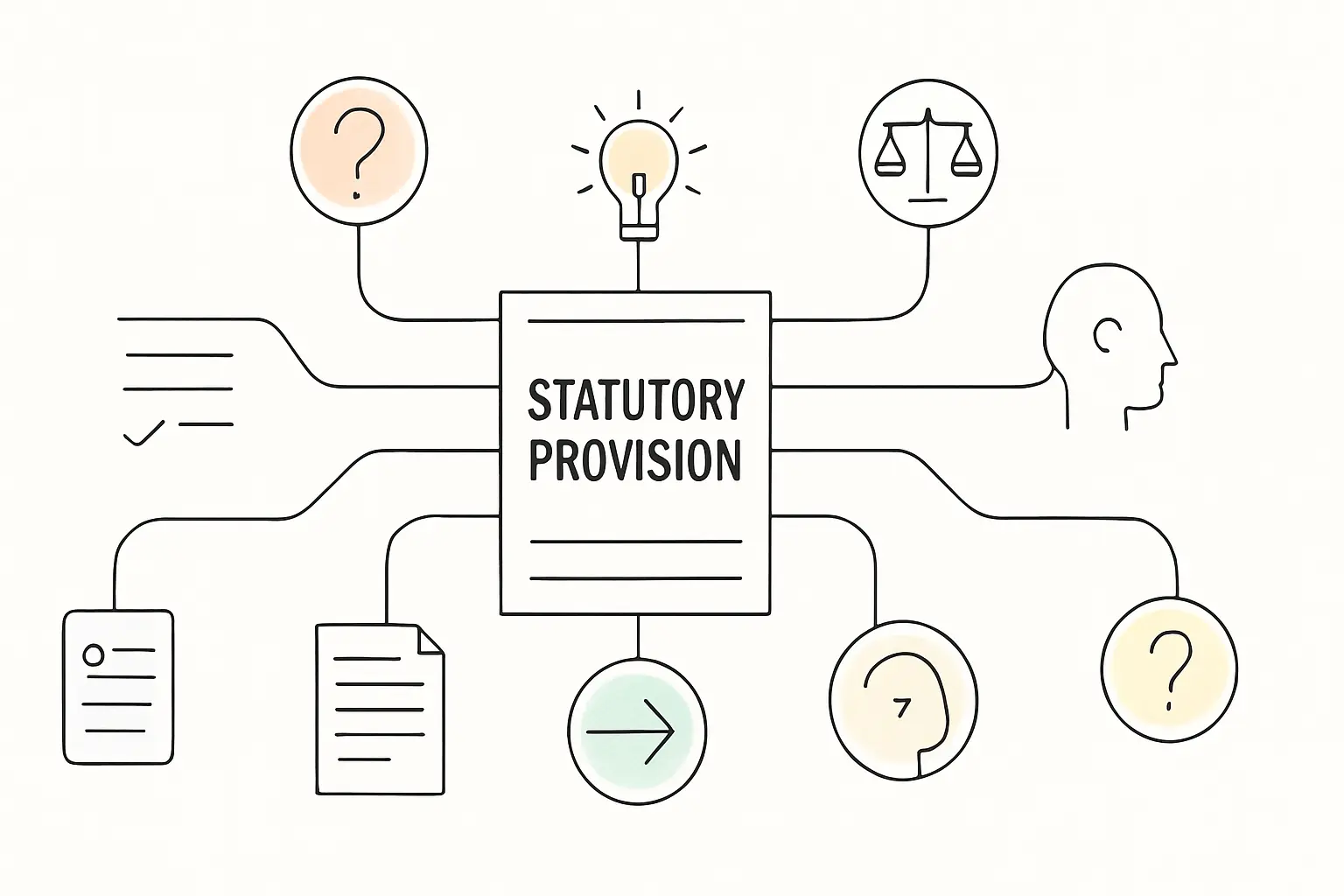
If a provision’s meaning were obvious, there would be no litigation about it and probably no dissertation in it. The questions worth writing about are the ones where the text admits more than one reading, and where the choice between readings has consequences.
That is the structure of a strong doctrinal argument: identify the ambiguity precisely, set out the competing readings, apply interpretive technique to show which is preferable, and explain what follows. An argument that skips straight from quotation to conclusion has not done the middle step, and the middle step is the analysis.
The interpretive approaches
English courts have developed several approaches to reading statutes. They are conventionally presented as distinct rules, though in practice they describe emphases rather than a fixed sequence a court must follow.
| Approach | What it asks | Characteristic use |
|---|---|---|
| Literal | What do the words ordinarily mean? | Starting point; respects the text Parliament enacted |
| Golden | Does the ordinary meaning produce an absurdity? | Departs from literal meaning only to avoid an absurd or repugnant result |
| Mischief | What defect in the law was this passed to remedy? | Reads the provision so as to suppress the mischief |
| Purposive | What is the provision’s purpose, and which reading advances it? | Generally regarded as the dominant modern approach |
For dissertation purposes, the useful move is not to recite these definitions but to apply them and show that they diverge. Where a literal and a purposive reading point the same way, say so — that is a strong argument. Where they conflict, that conflict is your analysis.
Intrinsic aids: what is inside the Act
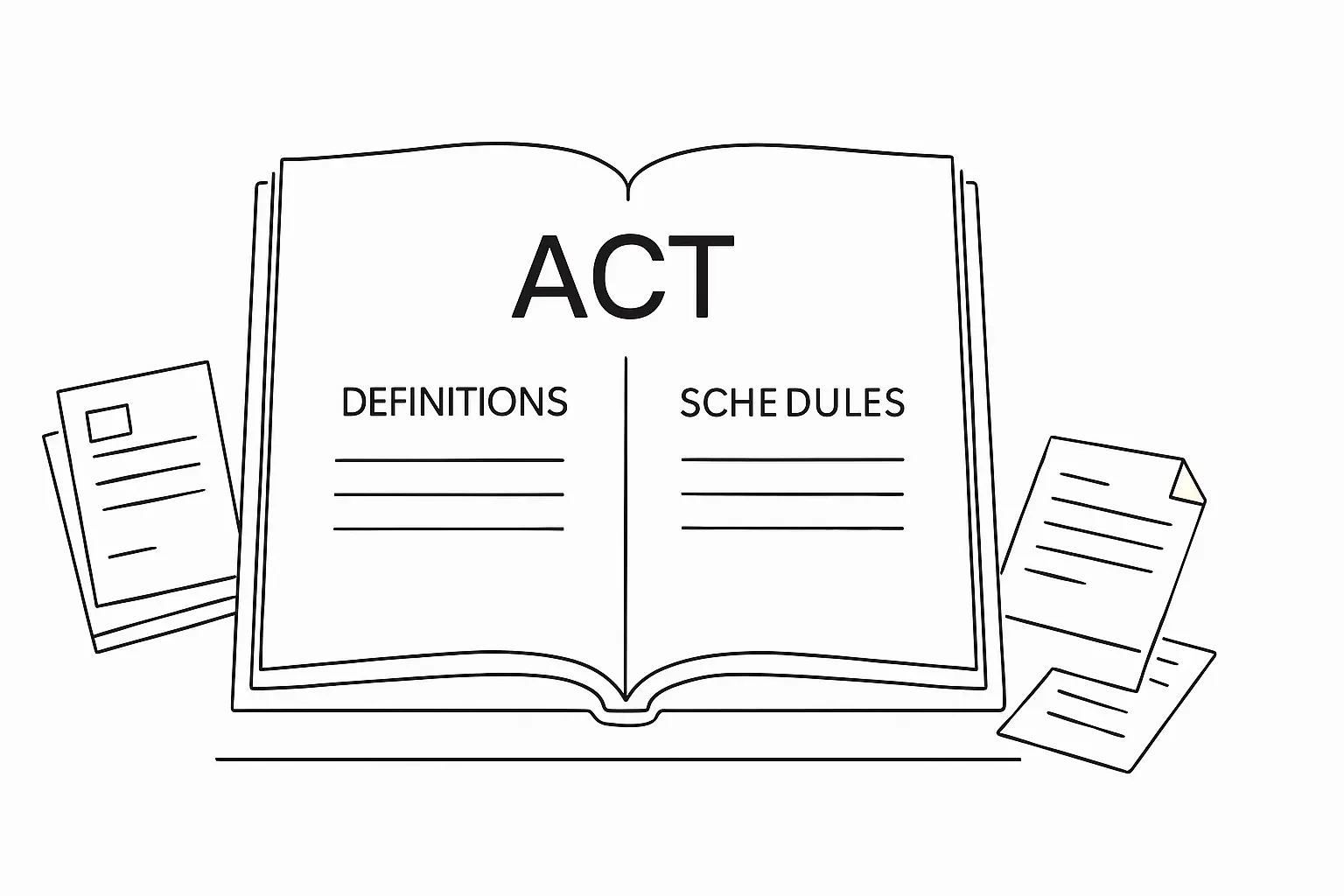
Before reaching outside the statute, use what is in it. The long title indicates the Act’s general object. Section headings and cross-headings give structure. Most substantial Acts contain a definitions or interpretation section, and a defined term means what the Act says it means, regardless of ordinary usage — checking the definitions section first is the single highest-value habit in statutory research.
Schedules carry operative content and are frequently overlooked. So is the interaction between provisions: a subsection qualified by a later exception means something different read alone.
Extrinsic aids: what sits outside it
legislation.gov.uk identifies the material published alongside legislation to make it more accessible — Explanatory Notes, Explanatory Memoranda and Impact Assessments. These illuminate purpose and intended operation. They are not the enacted text, they do not bind a court, and they cannot override the words of the provision. Use them as evidence of context and never as a substitute for the section.
Law Commission reports frequently sit behind reforming statutes and can be particularly valuable for identifying the defect a provision was designed to remedy — which is precisely the mischief enquiry.
The Interpretation Act 1978: default rules you can rely on
A body of default interpretive rules applies across UK legislation without being restated in each Act. They sit in the Interpretation Act 1978, whose sections include:
- Section 4 — Time of commencement
- Section 5 — Definitions
- Section 6 — Gender and number
- Section 7 — References to service by post
- Section 9 — References to time of day
- Section 11 — Construction of subordinate legislation
- Section 16 — General savings
- Section 17 — Repeal and re-enactment
The practical significance is that arguments about singular and plural, or about whether service was validly effected by post, or about what happens to things done under a repealed provision, may already be settled by general legislation rather than by the Act you are reading. A dissertation that spots this is doing better statutory research than one that argues the point from first principles.
Note that the Interpretation Act, like any other, has been amended since enactment — its section list now includes provisions such as section 14A on sunset and review provisions in subordinate legislation. Work from the revised text and state the date you consulted it.
Interpretive presumptions
Alongside the approaches, courts apply a set of background presumptions about what Parliament is taken to have intended unless it says otherwise. Commonly cited examples include presumptions against retrospective effect, against ousting the jurisdiction of the courts, and against altering established common law rules by implication.
Presumptions are rebuttable, and that is what makes them useful analytically. The interesting question in a dissertation is rarely whether a presumption exists but whether the statutory language is clear enough to displace it — a question that puts the burden on the text and gives you something concrete to argue about.
Three checks before you interpret anything
Interpretation presupposes that you are reading the right words. Three checks establish that, and all three are quick:
- Version. Are you reading the original text as enacted, or the revised text with amendments incorporated? legislation.gov.uk explains that by revised it means “amendments made by subsequent legislation are incorporated into the text.” Interpreting a superseded version is a wasted chapter.
- Extent. Does the provision apply in the jurisdiction you are writing about? Geographical extent is assigned at provision level, so an Act can operate differently across the four UK nations.
- Commencement. Is it in force? An Act may come into force immediately, on a specific future date, or in stages. An uncommenced provision is not yet operative law.
Our guide to primary legal sources for a law dissertation covers where to run these checks.
How to deploy interpretation in a dissertation chapter
A workable chapter shape is: state the provision and quote only the words in issue; identify the interpretive question precisely; set out the competing readings; apply the intrinsic aids, then the extrinsic ones; test each reading against the approaches above; and state which reading you prefer and why.
Two habits distinguish strong chapters. First, quote narrowly — a whole section reproduced in the body usually signals that the writer has not identified which words matter. Second, engage the reading you reject. An interpretation defended only against a strawman has not been defended.
Where courts have already interpreted the provision, their reasoning is authority and you need to establish whether the interpretation formed part of the decision or was an aside; our guide to ratio decidendi and obiter dicta covers that distinction.
Frequently asked questions
Do the literal, golden and mischief rules apply in a fixed order?
No. They are conventionally taught as separate rules but describe emphases rather than a mandatory sequence, and modern practice is generally characterised as purposive. Presenting them as a rigid hierarchy a court must climb is a common student error.
Can I cite Explanatory Notes as authority for a meaning?
No. They are evidence of context and intended operation, not of legal meaning, and they cannot displace the enacted words.
What if the Act defines a term differently from ordinary usage?
The Act’s definition governs within that Act. Always check the definitions or interpretation section before relying on ordinary meaning.
Does statutory interpretation belong in my methodology section?
Your methodology section should name the interpretive approach as part of your analytical framework; the interpretation itself belongs in the substantive chapters. See writing a doctrinal methodology section.
How do I cite a statutory provision?
UK legal writing uses footnote-based OSCOLA, which has specific forms for statutes and for pinpointing sections and subsections — see our OSCOLA referencing guide.
Is interpretation the same in every jurisdiction?
No. Interpretive conventions and the admissibility of extrinsic material vary between legal systems, which is one reason comparative chapters need their own justification rather than assuming the same technique travels.
Build the interpretive argument
Statutory interpretation rewards precision: the right words, the right version, the competing readings set out fairly. Tesify helps you structure that argument across chapters and keep your citations consistent — 100% written by you.
Write your thesis with AI
Structure, draft, cite, and format your thesis faster with Tesify’s AI writing tools, automatic bibliography, and plagiarism checker. Free to start, no credit card required.






Leave a Reply