
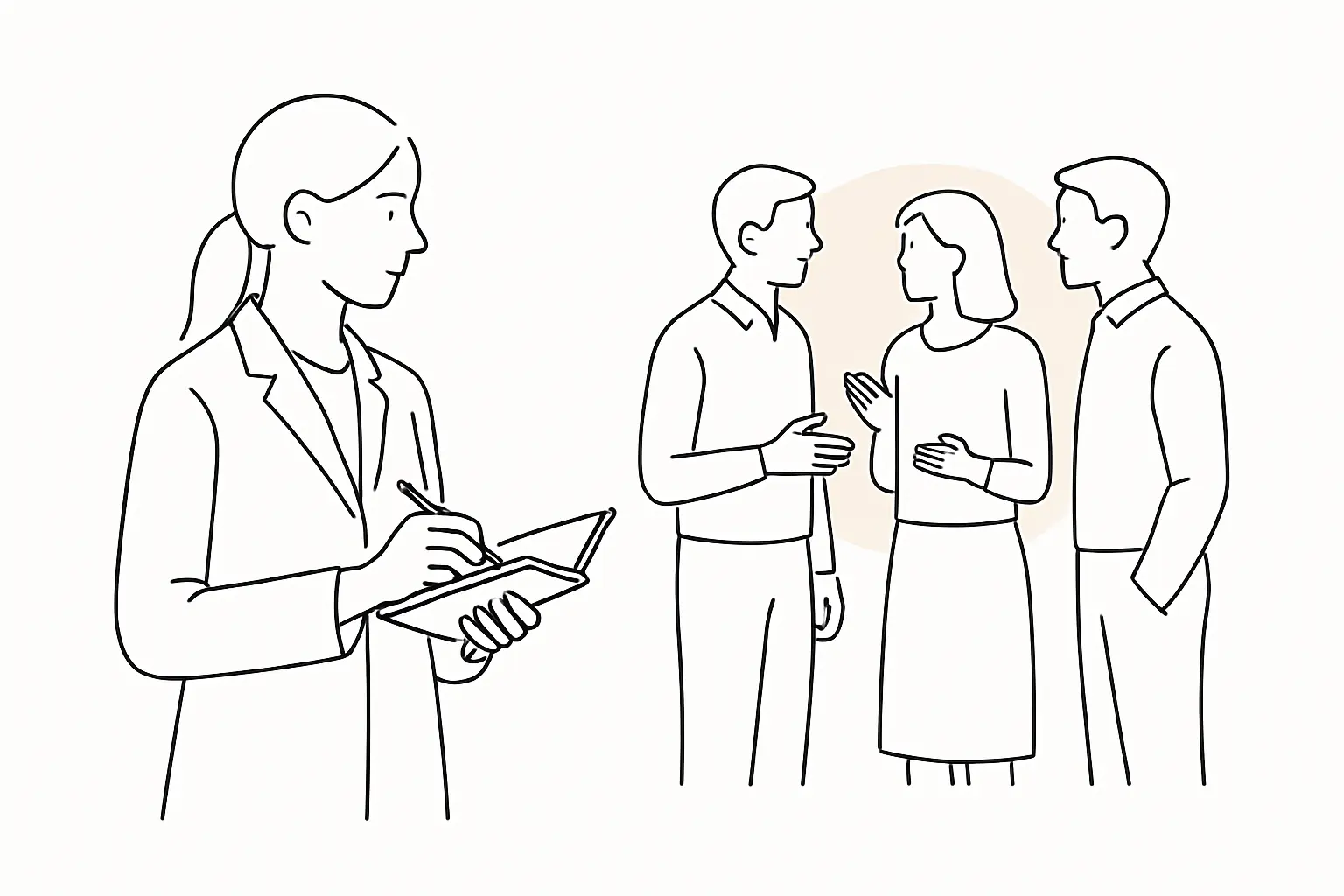
Ethnography is a qualitative methodology in which the researcher studies a culture or social setting by participating in it over an extended period, producing detailed descriptive accounts of how people actually behave. Autoethnography turns the lens inward: the researcher’s own lived experience becomes the primary data, analysed systematically against its cultural context.
What distinguishes ethnography from other qualitative methods?
Three features set ethnography apart from interview-based qualitative research: prolonged engagement, participation rather than observation alone, and a focus on what people do rather than what they say they do.
That third point is the methodological heart of the approach. Interviews capture accounts; ethnography captures practice, and the two frequently diverge. A nurse may describe handover as a structured twelve-minute process and be observed conducting it in four minutes across three interruptions. Neither account is dishonest — the gap between them is the finding.
| Methodology | Primary data | Typical duration | Central question |
|---|---|---|---|
| Ethnography | Fieldnotes from participation and observation | Months to years | How does this culture work? |
| Autoethnography | The researcher’s own experience | Variable; often retrospective | What does my experience reveal about this culture? |
| Phenomenology | In-depth interviews | Weeks to months | What is the essence of this lived experience? |
| Grounded theory | Interviews, iteratively sampled | Months | What theory explains this process? |
| Case study | Multiple sources bounded by a case | Variable | What is happening in this bounded instance? |
The boundaries blur in practice — ethnographers interview, and grounded theorists observe — but the centre of gravity differs. Our guides to phenomenology and grounded theory set out the alternatives in detail.
What are the main types of ethnography?
Ethnography has diversified well beyond its anthropological origins, and choosing the right variant sharpens both your design and your literature.
Classic or realist ethnography involves long-term immersion in a bounded community with the researcher writing an authoritative account of it. Focused ethnography compresses this into short, intensive periods within a setting the researcher already knows — the dominant form in health services and organisational research, and the most feasible for a doctoral timeline. Institutional ethnography, developed by Dorothy Smith, begins from the standpoint of people in a setting and traces how their everyday work is coordinated by texts and administrative processes elsewhere. Digital or virtual ethnography — sometimes netnography — studies online communities and platform-mediated practice. Critical ethnography explicitly foregrounds power and inequality, treating description as a step towards critique rather than an end.
What is autoethnography and when is it appropriate?
Autoethnography analyses personal experience in order to understand cultural experience. It sits on a spectrum: evocative autoethnography prioritises narrative and emotional resonance, while analytic autoethnography commits to theoretical analysis and visible engagement with existing scholarship.
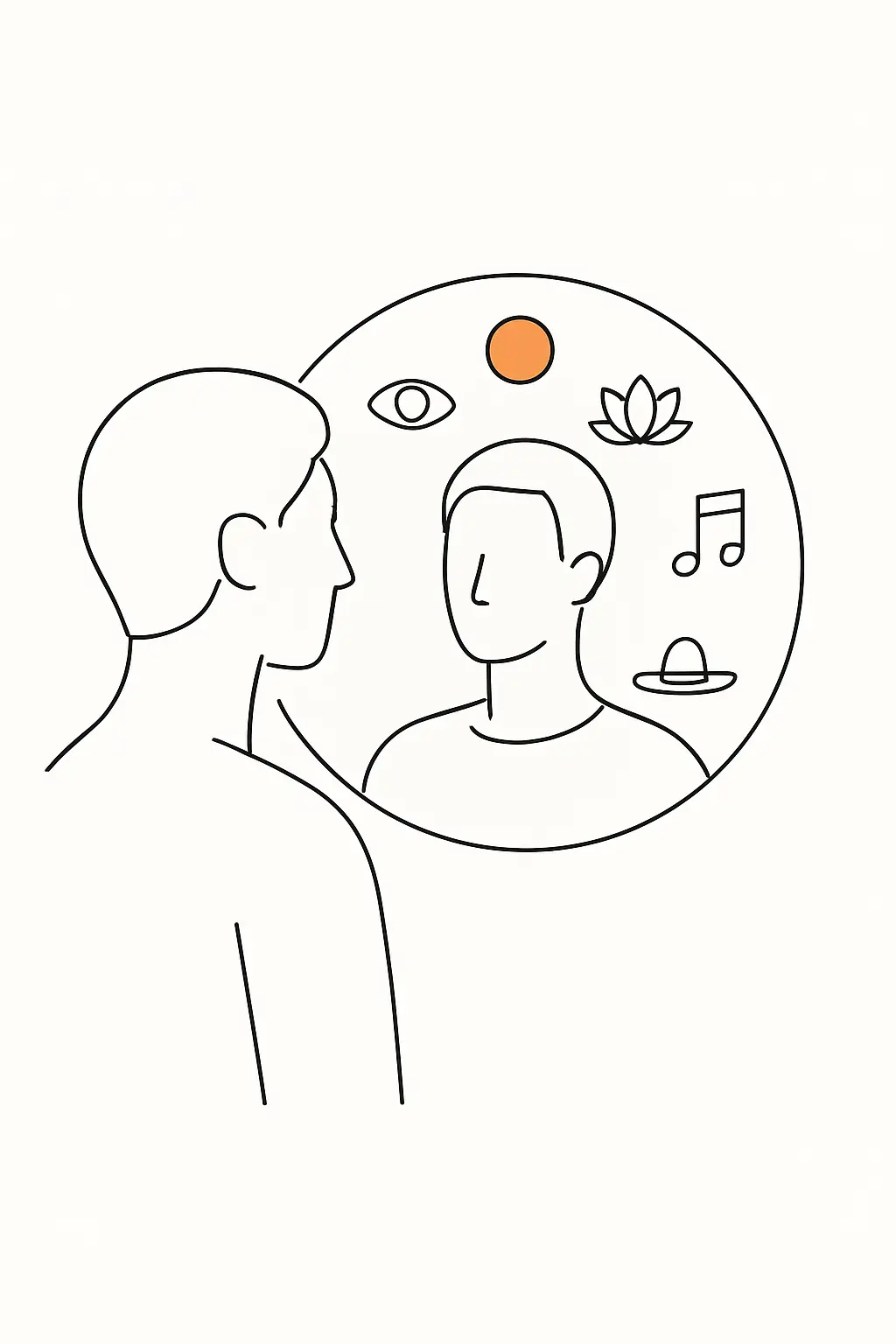
It is appropriate where the researcher’s own position provides access that no external observer could obtain, and where that position is itself analytically relevant — a disabled researcher writing about institutional accessibility, a first-generation academic writing about class in higher education, a clinician writing about moral injury.
It is inappropriate as a substitute for fieldwork you could not arrange, and this is the distinction examiners probe hardest. Autoethnography must be argued for on methodological grounds before the first line of narrative. Doctoral candidates in practice-based disciplines will find related territory in our guide to the practice-based and practice-led PhD.
How do you handle fieldnotes?
Fieldnotes are the ethnographer’s instrument, and the discipline of writing them is the discipline of the method. Most ethnographers distinguish three layers.

- Jottings — brief, discreet notes taken in the field: phrases, times, names, spatial arrangements. Written to trigger memory, not to be read by anyone else.
- Full fieldnotes — expanded within 24 hours while recall is intact, written descriptively and in the past tense, separating what was observed from what you inferred.
- Analytic memos — separate documents recording emerging patterns, questions and theoretical connections. Keeping these physically separate from descriptive notes preserves the distinction between data and interpretation.
The 24-hour rule is not a stylistic preference. Ethnographic detail degrades rapidly, and notes written three days later are reconstructions rather than records. Analysis of the resulting corpus generally proceeds through thematic analysis or an equivalent coding approach.
What is thick description?
Thick description, a term Clifford Geertz drew from Gilbert Ryle, is description that includes the context needed to make behaviour interpretable. Ryle’s example is the difference between a twitch and a wink: physically identical, socially entirely different. Thin description records the eyelid movement; thick description records what it meant, to whom, and why.
In practice this means writing that reports the setting, the participants’ own categories, and the sequence of action in enough detail that a reader can arrive at an interpretation rather than being handed one. It is the primary quality criterion by which ethnographic writing is judged, and it is why ethnographic theses run long.
How is rigour established in ethnographic work?
Ethnography does not claim replicability, so conventional reliability criteria do not apply. Trustworthiness is established through a different set of practices.
| Criterion | How it is demonstrated |
|---|---|
| Prolonged engagement | Documented time in the field, sufficient to move past initial impressions |
| Persistent observation | Focused attention on the elements most relevant to the question |
| Triangulation | Fieldnotes cross-checked against interviews, documents and artefacts |
| Member checking | Interpretations returned to participants for response |
| Reflexivity | Explicit account of the researcher’s position and its effects |
| Audit trail | Decisions and analytic moves documented and traceable |
Reflexivity carries particular weight here, because the ethnographer is the research instrument. Our guides to practising reflexivity and to triangulation cover the mechanics, and data saturation addresses the perennial question of when fieldwork ends.
What ethical issues are specific to ethnography?
Ethnography strains the standard consent model, which assumes a discrete encounter with identifiable participants. In a field setting, people enter and leave, bystanders are observed incidentally, and the research question itself may shift as understanding develops — so consent must be treated as ongoing rather than a single signature.
Anonymisation is also harder than in interview research. Removing names rarely protects a participant when the setting is described in the detail that thick description requires; small organisations and specialised professional communities are frequently identifiable from context alone. Plan pseudonymisation of the site as well as the people, and discuss the limits of confidentiality with participants explicitly.
Autoethnography raises a further problem: your story necessarily includes other people who never consented to appear in it. Family members, colleagues and patients in an autoethnographic account are what the literature calls “relational others”, and most ethics committees now expect an explicit strategy for handling them.
Frequently asked questions
How long does ethnographic fieldwork need to be?
Classic ethnography assumed a year or more. Focused ethnography in organisational and health settings routinely works with weeks of intensive observation, justified by the researcher’s prior familiarity with the setting. What matters is that engagement is long enough to move beyond first impressions and to observe the setting in more than one state.
Is autoethnography accepted in doctoral research?
Yes, across education, health, sociology, communication and the creative disciplines, though acceptance varies sharply by department. Analytic autoethnography, which engages visibly with theory and literature, encounters less resistance than purely evocative forms. Establish your examiners’ expectations early.
Can you do ethnography online?
Yes. Digital ethnography studies platform-mediated communities using the same logic of prolonged participation, with fieldnotes on interaction patterns, platform affordances and community norms. Ethical questions about public versus private data and about consent in open forums require particular care.
What is the difference between ethnography and participant observation?
Participant observation is a data-collection technique; ethnography is a whole methodology that typically uses it. You can conduct participant observation within a case study or a grounded theory design without producing an ethnography.
How many participants does ethnography need?
The question does not translate well. Ethnography samples settings, events and situations rather than individuals, and the unit of analysis is the culture or setting rather than a number of people. Justify your sampling of situations, not your headcount.
Does an ethnographic thesis need a separate methodology chapter?
Yes. Some ethnographic writing integrates method into narrative, but doctoral examination almost always requires an explicit methodology chapter setting out the design, fieldwork, analysis and ethics. See our guide to writing a methodology chapter.
Writing up months of fieldnotes
Ethnographic theses fail more often at the writing stage than in the field: hundreds of pages of notes must become an argued, structured account without losing the texture that justified the method. Tesify helps you shape long qualitative material into coherent chapters while keeping citations and academic voice consistent throughout.
Write your thesis with AI
Structure, draft, cite, and format your thesis faster with Tesify’s AI writing tools, automatic bibliography, and plagiarism checker. Free to start, no credit card required.




Leave a Reply