
Stuck on Your Discussion Chapter? How to Write It Faster in 2026 (With AI Help)
Learning how to write the discussion chapter is the moment most dissertation students hit a wall. You have spent weeks collecting data, months reading literature, and hours agonising over your results section — and then you open a blank document and realise you have no idea how to begin interpreting what any of it means. This is not a sign you have done something wrong. The discussion chapter is structurally different from every chapter before it: it demands that you stop reporting and start thinking out loud at an academic level, connecting your specific findings to a much wider body of knowledge.
The blank-page paralysis is real, and it is costly. Students routinely underestimate how long the discussion takes — then rush it in the final days before submission, producing a chapter that reads like a longer results section rather than the intellectual centrepiece of the whole dissertation. This guide gives you a clear six-part structure, shows you exactly where students go wrong at each stage, and explains how tools like Tesify can cut your drafting time without writing the chapter for you.
Why the Discussion Chapter Freezes Students
The results chapter has a built-in scaffold: you present what the data shows, table by table, theme by theme. The discussion has no such scaffold. You are responsible for deciding the order of ideas, the weight given to each finding, and the interpretive angle you take — all while using cautious academic language that avoids overstating what your data can actually support.
Three failure modes account for most stuck students:
- Repeating the results chapter. You describe your findings again instead of explaining what they mean. Examiners flag this immediately: they want interpretation, not repetition.
- Losing the thread of the research question. After months of analysis, it is easy to drift. Every paragraph of the discussion should be answerable to the question: “Does this directly address my research question or hypothesis?”
- Treating limitations as a confession. Students either omit limitations entirely (a red flag for examiners) or write them in a way that makes the whole study seem worthless. Neither is correct.
According to Scribbr’s dissertation guidance, the discussion is where you interpret your findings, relate them to existing theories, and answer the “So what?” question — synthesising your research into a coherent argument that evaluates both academic and real-world significance. That is a lot of intellectual work. Breaking it into discrete moves makes it manageable.
If the discussion chapter is not your only source of paralysis, it is worth reading about finishing your dissertation when you feel overwhelmed — the patterns are similar and the fixes apply across chapters.
Grad Coach (314K subscribers) walks through the six-step discussion chapter structure with worked examples from real dissertations.
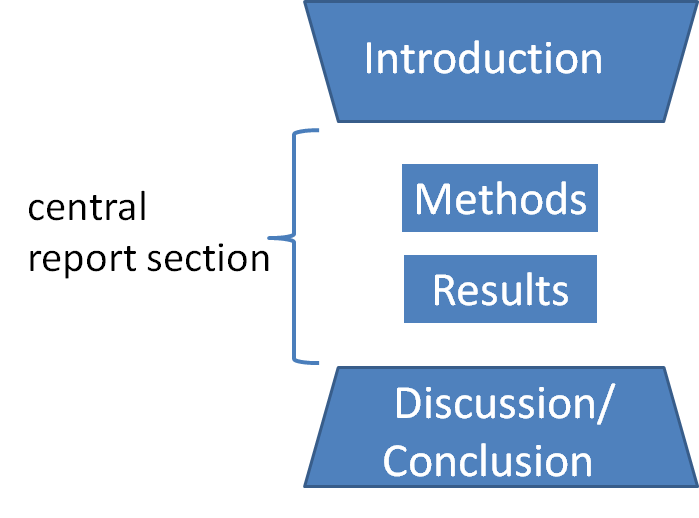
Move 1: Restate the Research Problem and Summarise Key Findings
Do not open the discussion chapter with a bland restatement like “This study investigated…”. Instead, reframe the research problem in light of what you now know. One or two sentences reminding the reader why this question mattered — followed by a brief, forward-looking summary of your headline findings — sets the interpretive context for everything that follows.
The summary of findings here is deliberately brief. You are not re-running the results section. You are pulling out the two or three most significant outcomes so the reader knows where you are headed. Think of it as a thesis statement for the discussion itself.
Notice the final sentence maps the structure of the discussion. This is not filler — it is a navigational promise that helps both the examiner and you stay on track.
Move 2: Interpret Each Finding
Interpretation is the core of the discussion chapter and the move students most commonly skip. For each key finding, ask: Why did this happen? What does it mean beyond the data itself?
Structuring interpretation by research question (rather than by data source or chronological order) keeps the chapter coherent. For each finding:
- State the finding in one sentence, using cautious language (“the data suggests…”, “the findings indicate…”).
- Offer an explanatory mechanism — why might this be the case, drawing on theory or prior knowledge?
- Note any unexpected or counter-intuitive aspects that require special explanation.
The cautious language matters. As Grad Coach’s discussion chapter guide notes, avoid absolutes like “these results prove that” — a dissertation rarely achieves scientific proof. Prefer “suggests”, “indicates”, “is consistent with”, or “provides evidence for”.
For qualitative studies, this move is where you explain what themes mean — not just that Theme A appeared in 12 of 15 interviews, but what that prevalence tells you about the underlying social or psychological reality you were studying. If your methodology was thematic analysis, the discussion is where the six phases of coding finally pay off: your interpretations now carry the weight of a systematic analytical process. Reading up on thematic analysis in research before drafting this section can sharpen your argument considerably.
Move 3: Compare Your Findings to Existing Literature
This is the move that transforms a descriptive chapter into a scholarly contribution. For each finding, you now answer: does this confirm, contradict, extend, or nuance what previous researchers have found?
Three patterns are possible, and each has its own argumentative logic:
| Pattern | What to do | Common mistake |
|---|---|---|
| Confirms prior research | State which studies you align with and why the convergence matters (replication, generalisability) | Just listing authors without explaining why the alignment is significant |
| Contradicts prior research | Propose plausible explanations (different context, sample, measurement) — do not dismiss prior work | Treating divergence as a flaw in your study rather than an interesting finding |
| Extends prior research | Explain precisely what gap you have filled — which population, context, or variable was previously unexplored | Over-claiming novelty without specifying the exact contribution |
The University of Southampton’s dissertation writing guide recommends organising this comparison by theme or research question — the same order you used in the results chapter — so examiners can trace a clear line from data to interpretation to scholarly positioning.
One practical tip: keep your literature review open in a second window while writing this section. Your discussion should cite many of the same sources — but engage with them analytically rather than descriptively, as you did in the literature review. If you struggled to turn raw notes into a usable chapter, the workflow covered in turning messy notes into a structured thesis chapter applies here too.
Move 4: State the Implications
Implications answer the “So what?” question for two audiences: the academic community and the real world. Most dissertations are expected to address both, though the balance depends on discipline.
Theoretical implications explain how your findings advance, refine, or challenge existing models or frameworks. You might show that a well-established theory holds in a new context, that a theoretical assumption needs revision, or that two previously separate bodies of literature can be productively synthesised.
Practical implications explain what practitioners, policymakers, organisations, or individuals should do differently in light of your findings. These should be grounded in your data — not vague calls for “more awareness” or “further training” without specifying who, what, and why.
Keep implications proportionate to your evidence. A master’s dissertation based on 15 semi-structured interviews cannot claim sector-wide implications. Credible scope — “these findings suggest that secondary schools in urban areas might benefit from…” — is far stronger than over-reach that examiners will push back on in the viva.
Move 5: Acknowledge Limitations Without Undermining Your Work
Limitations are not weaknesses to hide. They are the honest boundaries of your knowledge claims, and experienced examiners know every study has them. A discussion chapter with no limitations section signals either naivety or evasion — both read badly.
The four main categories of dissertation limitations are:
- Sample limitations — size, representativeness, self-selection bias
- Methodological limitations — instrument validity, recall bias, social desirability effects
- Scope limitations — geographic, temporal, or sectoral boundaries on generalisability
- Data limitations — missing data, measurement error, reliance on self-report
For each limitation, use a two-part structure: acknowledge the limitation, then explain why you proceeded and what steps you took to mitigate it. This shifts the framing from “flaw” to “informed methodological decision”. There is a dedicated guide on how to write the research limitations section of your thesis that covers exact phrasing templates for each type.
One mistake to avoid: listing every conceivable limitation in a long, dispiriting bullet list. Select the three or four that most materially affect your conclusions and discuss them substantively. Superficial acknowledgement of twenty limitations is less convincing than a thoughtful treatment of four.
Move 6: Recommend Future Research
Future research recommendations flow naturally from your limitations and from findings that opened new questions rather than closing them. Each recommendation should be specific and justified: name the population, methodology, or variable that future work should address, and explain why.
Weak recommendation: “Future research should explore this topic further.”
Strong recommendation: “Future longitudinal studies tracking the same cohort over three academic years would clarify whether the motivational gains observed here persist beyond the intervention period — something cross-sectional designs cannot establish.”
The recommendations section is also where you can acknowledge adjacent questions your study deliberately set aside. Framing these as productive avenues for others positions your work as a contribution to an ongoing conversation rather than a final word. For a complete guide to this section, see how to write recommendations for future research, which includes phrasing templates and worked examples.
How Tesify Helps You Draft the Discussion Chapter Faster
The six-move structure above solves the problem of not knowing what to write. The second problem — actually getting words on the page — is where the cognitive load of the discussion chapter becomes a time problem. Students often spend three to four hours writing a single page of discussion because every sentence requires a decision: is this interpretation or description? Does this citation engage analytically or just report? Is my claim proportionate to my data?
Tesify accelerates this process without writing the chapter for you. Here is how it works in practice:
- Structured outlining. Input your research questions and key findings, and Tesify generates a section-by-section outline that maps to the six moves above. You start writing with a skeleton, not a blank page — cutting the “what do I write next?” decision fatigue that burns hours at the start of each session.
- Tone and argument feedback. The Tesify AI Editor flags paragraphs where you have slipped into results-reporting mode instead of interpretive mode — one of the most common discussion-chapter errors. It also highlights hedging language so you can verify every claim is proportionate.
- Literature comparison assistance. Paste in your key citations, and Tesify helps you frame how each finding relates to the literature — confirming, contradicting, or extending prior work — using academically appropriate sentence structures.
- Paragraph-level clarity checks. Each paragraph in the discussion carries a lot of work. The AI Editor identifies run-on arguments, missing transitions, and sections where the “So what?” is implied but never stated — a frequent examiner complaint.
Scenario: Sarah’s 72-hour turnaround
Sarah had her results chapter finalised but stared at a blank discussion document for four days. She loaded her research questions and findings summary into Tesify, generated an outline, and within 20 minutes had a six-section scaffold with bullet-point drafts for each interpretive move. The first full draft took 11 hours spread over two days — compared to the two weeks her supervisor said most students spend at this stage. The outline gave her something to argue against, not a blank page to fill.
Tesify is not a ghostwriting service. Your interpretations, your engagement with the literature, and your analytical judgements remain yours. What changes is the time you spend staring at a cursor instead of writing. If you have already read about writing your thesis faster with AI outlining, the same principle applies here at the chapter level: structure first, prose second.
If you need a broader comparison before committing, the ranked comparison of the best AI thesis writing tools in 2026 includes Tesify alongside every major competitor so you can make an informed choice.
Stop staring at a blank discussion chapter.
Tesify gives you a structured outline, argument-level feedback, and academic tone checks — free to start.
Frequently Asked Questions
How long should the discussion chapter be?
For most master’s dissertations, the discussion chapter runs between 3,000 and 5,000 words. For undergraduate dissertations, 1,500 to 2,500 words is typical. PhD theses vary by discipline — humanities discussions often exceed 8,000 words, while STEM discussions are shorter and more tightly structured. Check your institutional guidelines, but if they are silent on the discussion specifically, aim for roughly the same length as your results chapter.
How is the discussion chapter different from the results chapter?
The results chapter reports what you found — descriptively, with tables, figures, and statistical outputs. The discussion chapter explains what those findings mean, why they occurred, how they relate to prior research, and what they imply for theory and practice. The results chapter answers “What happened?” The discussion answers “What does it mean and why does it matter?” Mixing these two functions is the most common reason discussion chapters fail examiner review.
Can I use new sources in the discussion chapter?
Yes — and you should if those sources directly support or contextualise your interpretations. The discussion often introduces additional literature not covered in the original review, particularly if your findings point in an unexpected direction. What you should not do is use the discussion to conduct a secondary literature review. Every citation should be there to support an interpretive claim about your specific findings, not to demonstrate breadth of reading.
Where do limitations go — in the discussion or a separate chapter?
Convention varies by discipline and institution. In most UK and Australian dissertations, limitations appear as a dedicated section within the discussion chapter, typically after the implications section and before future research recommendations. In some US programmes, limitations have a standalone chapter. Check your department’s structure guidelines — but wherever limitations sit, they must connect to your interpretive claims: a limitation is only worth noting if it materially affects how confidently you can make a particular argument.
How is the discussion chapter different from the conclusion?
The discussion interprets findings in depth and situates them within the literature — it is analytical and expansive. The conclusion synthesises the dissertation’s overall contribution, revisits the research aims, and closes the argument — it is retrospective and concise. The conclusion does not introduce new analysis. Many students blur the two by loading their conclusion with interpretation that should have appeared in the discussion, leaving the conclusion feeling padded and the discussion feeling thin.
Is it ethical to use AI when writing the discussion chapter?
Using AI tools to help structure, outline, and improve the clarity of your writing is widely accepted at most universities — provided the interpretive content, analytical judgements, and scholarly arguments remain yours. AI should not generate your interpretations or put words in your academic voice that you then submit as original thought. Tools like Tesify are designed as writing assistants — they help you organise and refine ideas you have already developed, rather than generating academic content from scratch. Always check your institution’s specific AI policy before using any tool in assessed work.
Write your thesis with AI
Structure, draft, cite, and format your thesis faster with Tesify’s AI writing tools, automatic bibliography, and plagiarism checker. Free to start, no credit card required.




Leave a Reply