
Content Analysis vs Thematic Analysis: Key Differences Explained (2026)
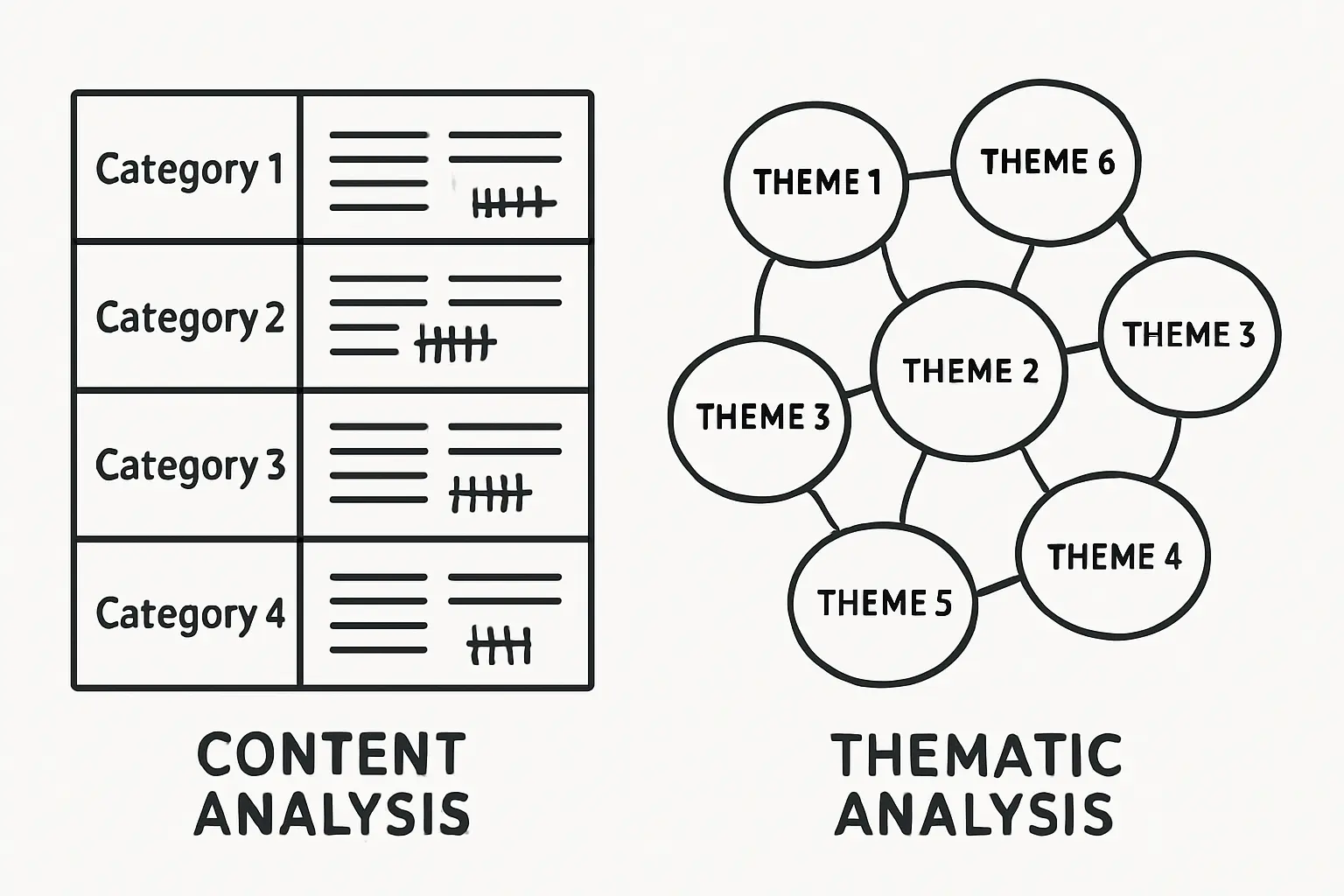
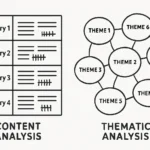
Choosing between content analysis and thematic analysis is one of the most common sticking points in a qualitative methodology chapter, and the confusion is understandable: both methods code text, both produce categories or themes, and both routinely appear in the same journals covering the same subject areas. The core distinction in the content analysis vs thematic analysis debate is that content analysis quantifies the frequency and distribution of pre-defined categories in a dataset, while thematic analysis inductively identifies patterns of meaning without needing to count how often they appear.
That distinction sounds small until you are three weeks into coding transcripts and realise your supervisor expects a frequency table, not an interpretive narrative — or vice versa. Getting this choice wrong doesn’t just cost time; examiners routinely flag methodology chapters where the analytic method doesn’t match the stated epistemological position.
This guide breaks down what separates the two approaches, when each one is the better fit, and how researchers who use elements of both can justify a hybrid design without confusing their examiners.
What Is Content Analysis?
Content analysis is a systematic technique for categorising and, usually, quantifying the presence of specific words, concepts, or categories within a body of text, images, or media. It typically starts with a codebook built before analysis begins — a deductive structure derived from theory, prior literature, or the research question itself. Coders then work through the dataset applying these categories, and the results are commonly reported as frequencies, percentages, or cross-tabulations.
Because it produces countable output, content analysis sits comfortably alongside quantitative or mixed-methods designs. A media studies dissertation counting how often political candidates are described using competence-related versus warmth-related language across 500 newspaper articles is a textbook content analysis application.
What Is Thematic Analysis?
Thematic analysis identifies, analyses, and reports patterns — themes — within qualitative data. The most widely cited version in dissertations is Braun and Clarke’s six-phase framework: familiarisation, generating initial codes, searching for themes, reviewing themes, defining and naming themes, and producing the report. Unlike content analysis, thematic analysis is usually inductive by default, letting themes emerge from the data rather than testing a pre-built list of categories, although a deductive or “theoretical” version of thematic analysis exists too.
Because it prioritises interpretation over frequency, thematic analysis fits naturally within a qualitative research methods design grounded in constructivist or interpretivist epistemology, where the goal is to understand participants’ meaning-making rather than to measure how often a category occurs.
Content Analysis vs Thematic Analysis: The Core Differences
The table below summarises the practical differences researchers most often ask about, including the reliability benchmarks examiners will expect you to report if you use either method.
| Dimension | Content Analysis | Thematic Analysis |
|---|---|---|
| Coding logic | Deductive, pre-set codebook | Usually inductive, codes emerge from data |
| Primary output | Frequencies, cross-tabulations | Narrative themes with supporting quotes |
| Typical dataset size | Large (hundreds of documents) | Smaller (10–30 interviews is common) |
| Reliability benchmark | Krippendorff’s alpha ≥ 0.80 for publishable results; ≥ 0.667 as the lowest tentative threshold | No fixed numeric threshold; reflexivity and audit trail substitute for a reliability score |
| Epistemological fit | Positivist / post-positivist | Interpretivist / constructivist (though flexible) |
| Software support | NVivo, Atlas.ti, Provalis WordStat | NVivo, Atlas.ti, manual coding |
The reliability row is worth pausing on. Krippendorff’s own recommendation is that content analysis results intended for publication should reach an alpha coefficient of at least 0.80 for full confidence, with 0.667 as the absolute floor for drawing even tentative conclusions. Thematic analysis, by contrast, does not have an equivalent industry-standard number — Braun and Clarke have argued that forcing inter-rater reliability scores onto an interpretive method misunderstands what thematic analysis is for, which is one of the most cited points of friction between the two traditions.
When Should You Use Content Analysis?
Content analysis is the stronger choice when:
- Your research question asks about frequency, prevalence, or trends over time (e.g., “how has media coverage of a topic changed across five years of articles?”).
- You are working with a large corpus where manual interpretive coding of every unit is impractical.
- You need to report a numeric reliability statistic, such as Krippendorff’s alpha or another inter-rater reliability metric, because your discipline expects quantified rigour.
- You are comparing categories across pre-defined groups (e.g., comparing sentiment scores between two news outlets).
When Should You Use Thematic Analysis?
Thematic analysis is the stronger choice when:
- Your research question is exploratory and asks “why” or “how” people experience or understand something.
- You are working with a smaller, richer dataset such as semi-structured interviews or focus group transcripts.
- Your theoretical framework is interpretivist or constructivist, and you want to preserve nuance and context rather than reduce data to counts.
- You want flexibility to let unexpected patterns surface rather than testing a fixed hypothesis about what the data will show.
Can You Combine Both Methods?
Yes, and mixed designs are increasingly common in dissertation methodology chapters. A frequent hybrid approach codes a large dataset deductively first (content analysis) to establish prevalence, then conducts a deeper thematic analysis on a purposive subsample to explain why those patterns occur. If you take this route, be explicit in your methodology chapter about which phase served which purpose — examiners want to see that you understand the philosophical tension between counting and interpreting, not that you used both methods interchangeably without justification. Documenting your coding approach clearly (inductive, deductive, or a staged combination of both) is the detail that most often separates a strong methodology chapter from a vague one.
A Practical Coding Workflow for Each Method
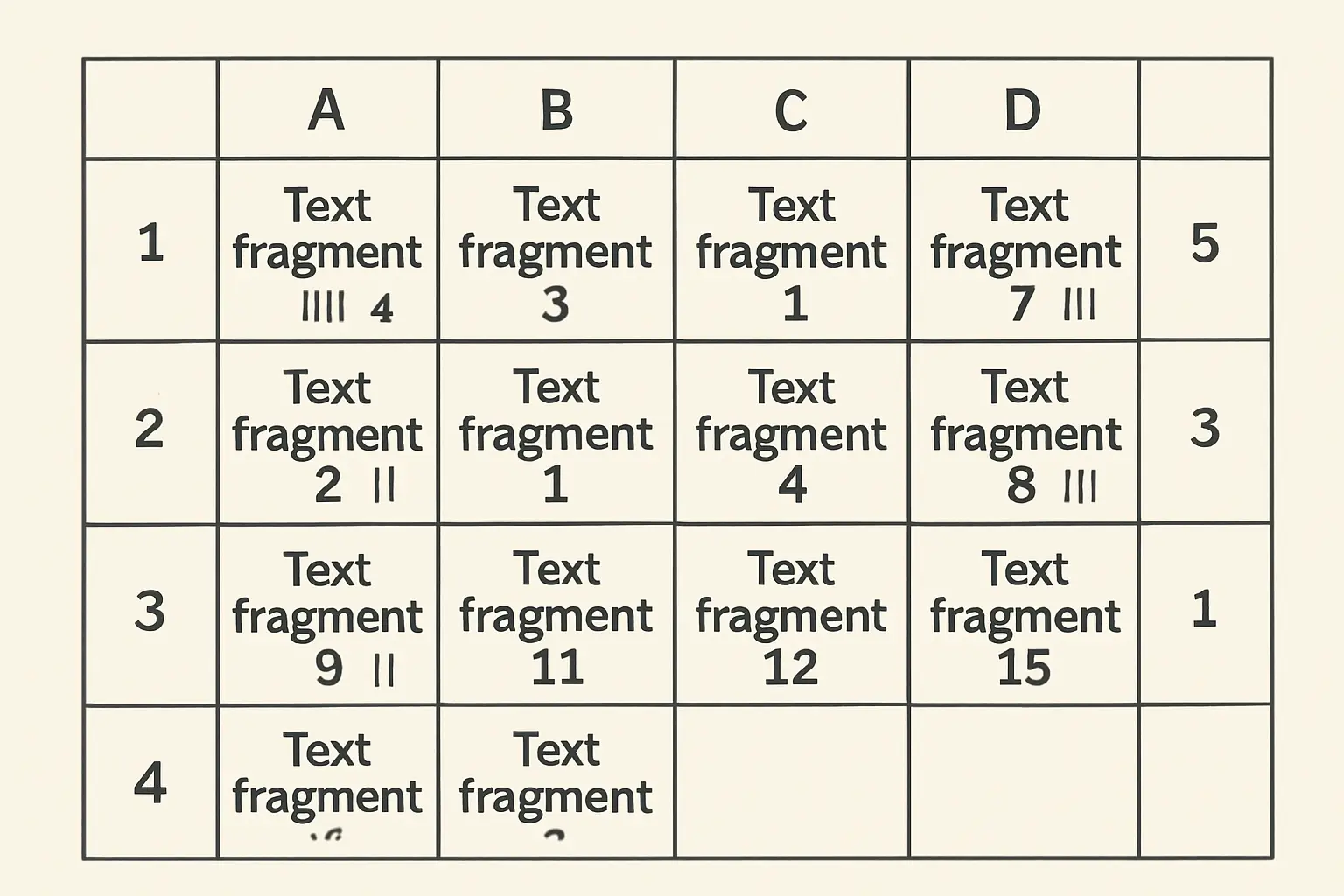
The two methods also diverge in the sequence of tasks a researcher actually performs at the desk, which matters when you are planning your dissertation timeline. A typical content analysis workflow runs: (1) define the unit of analysis (a sentence, paragraph, or whole article), (2) build and pilot the codebook on a small subset, (3) calculate inter-rater reliability on that pilot subset before coding the full dataset, (4) code the remaining data, and (5) run frequency and cross-tabulation statistics. Because reliability is checked before full-scale coding begins, a low alpha score at the pilot stage is a signal to revise category definitions rather than push forward — a step many first-time researchers skip, only to discover their final reliability score is unpublishable.
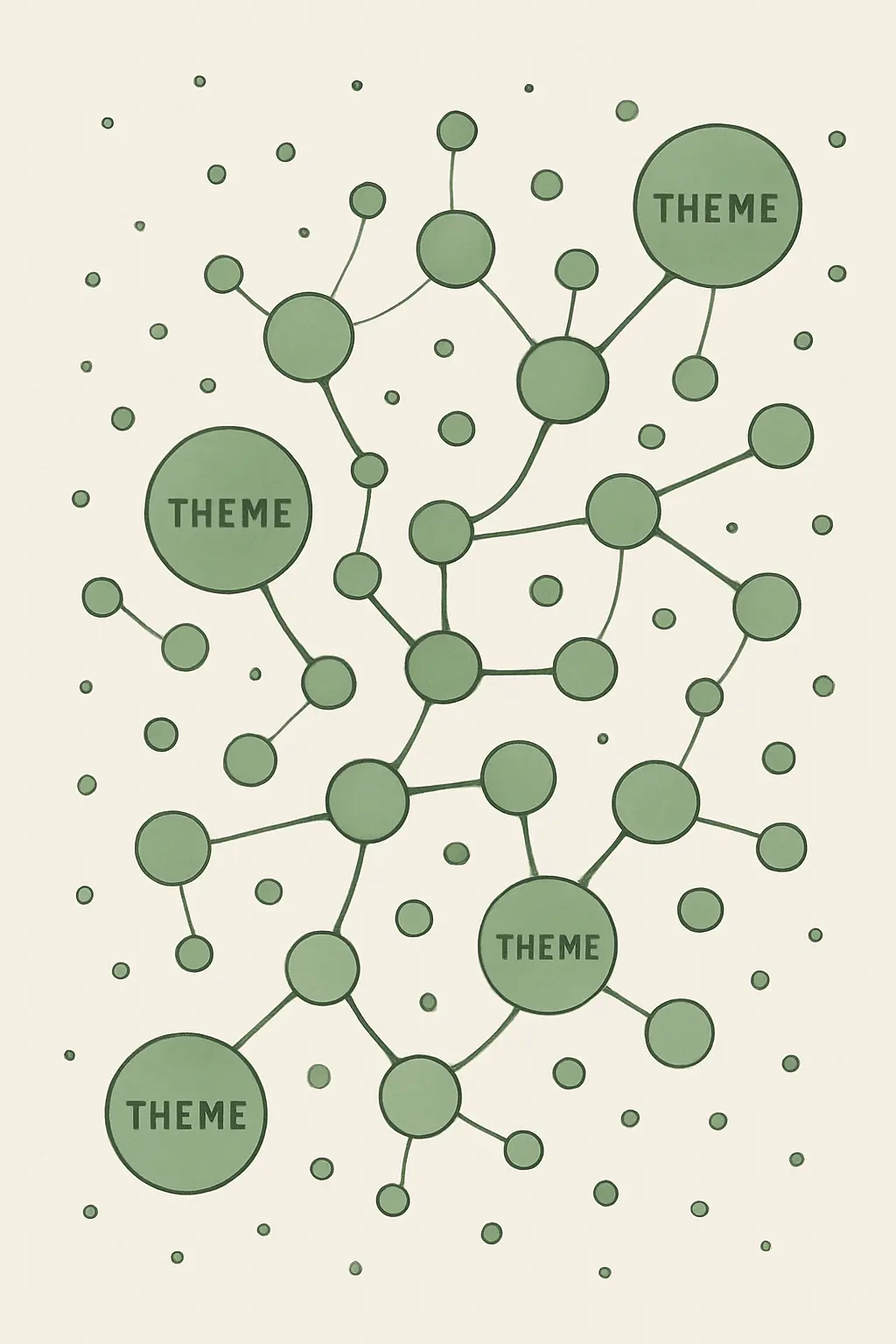
A typical thematic analysis workflow instead runs the six Braun and Clarke phases described above, but the practical difference is that reliability is established through process, not a single number: keeping a reflexive journal, documenting how initial codes evolved into candidate themes, and, where a second coder is involved, discussing disagreements until consensus is reached rather than calculating a coefficient. Researchers using computer-assisted qualitative data analysis software such as NVivo or Atlas.ti for thematic work often still export a coding tree as an appendix, which gives examiners the audit trail that substitutes for a reliability statistic in this tradition.
Common Mistakes When Choosing Between the Two
The most frequent error is naming a method in the methodology chapter and then not actually following its logic in the findings chapter — for instance, labelling an analysis “thematic” but presenting only frequency counts with no interpretive narrative, or calling a study “content analysis” without reporting any reliability statistic. A second common mistake is treating the choice as purely a stylistic preference rather than a decision tied to the research question and the theoretical framework outlined earlier in the thesis, such as your discussion of Braun and Clarke’s six-phase thematic analysis framework. Examiners read methodology chapters looking for internal consistency between the research question, the epistemological stance, and the analytic method — a mismatch in any of these three is one of the fastest ways to trigger a major revision request.
FAQ
Is thematic analysis a type of content analysis?
No. The two are related but distinct traditions. Some qualitative content analysis approaches borrow inductive coding techniques from thematic analysis, which can blur the line in practice, but thematic analysis as defined by Braun and Clarke is a standalone method focused on interpreting meaning rather than quantifying category frequency.
Which method is easier for a first-time dissertation researcher?
Thematic analysis is generally considered more accessible for first-time qualitative researchers because it does not require building and validating a codebook in advance, and its six-phase structure gives a clear procedural roadmap. Content analysis demands more upfront planning to define categories and establish inter-rater reliability.
Do I need two coders for thematic analysis?
Not necessarily. Single-researcher thematic analysis is common and accepted, provided you demonstrate rigour through a reflexive journal, an audit trail of how themes developed, and, where possible, peer debriefing. Multiple coders with a reliability statistic are more strongly expected in content analysis.
Can content analysis be qualitative rather than quantitative?
Yes. Qualitative content analysis exists as its own hybrid tradition, applying systematic coding to text while retaining a focus on meaning rather than pure frequency counts. This is one reason the boundary between content analysis and thematic analysis is often debated in methodology literature rather than treated as fixed.
What reliability score should I report for content analysis?
Krippendorff recommends a minimum alpha coefficient of 0.80 for content analysis findings you intend to treat as reliable, with 0.667 as the lowest acceptable level for tentative conclusions. Scores below 0.667 indicate the coding scheme needs revision before the results can be trusted.
Whichever method you choose, the strongest methodology chapters are the ones where the analytic technique is visibly justified by the research question and epistemological stance stated earlier in the thesis — not selected because it was the one the researcher already knew how to run in NVivo.
Write your thesis with AI
Structure, draft, cite, and format your thesis faster with Tesify’s AI writing tools, automatic bibliography, and plagiarism checker. Free to start, no credit card required.




Leave a Reply