
Can You Say “Prove” in a Thesis?
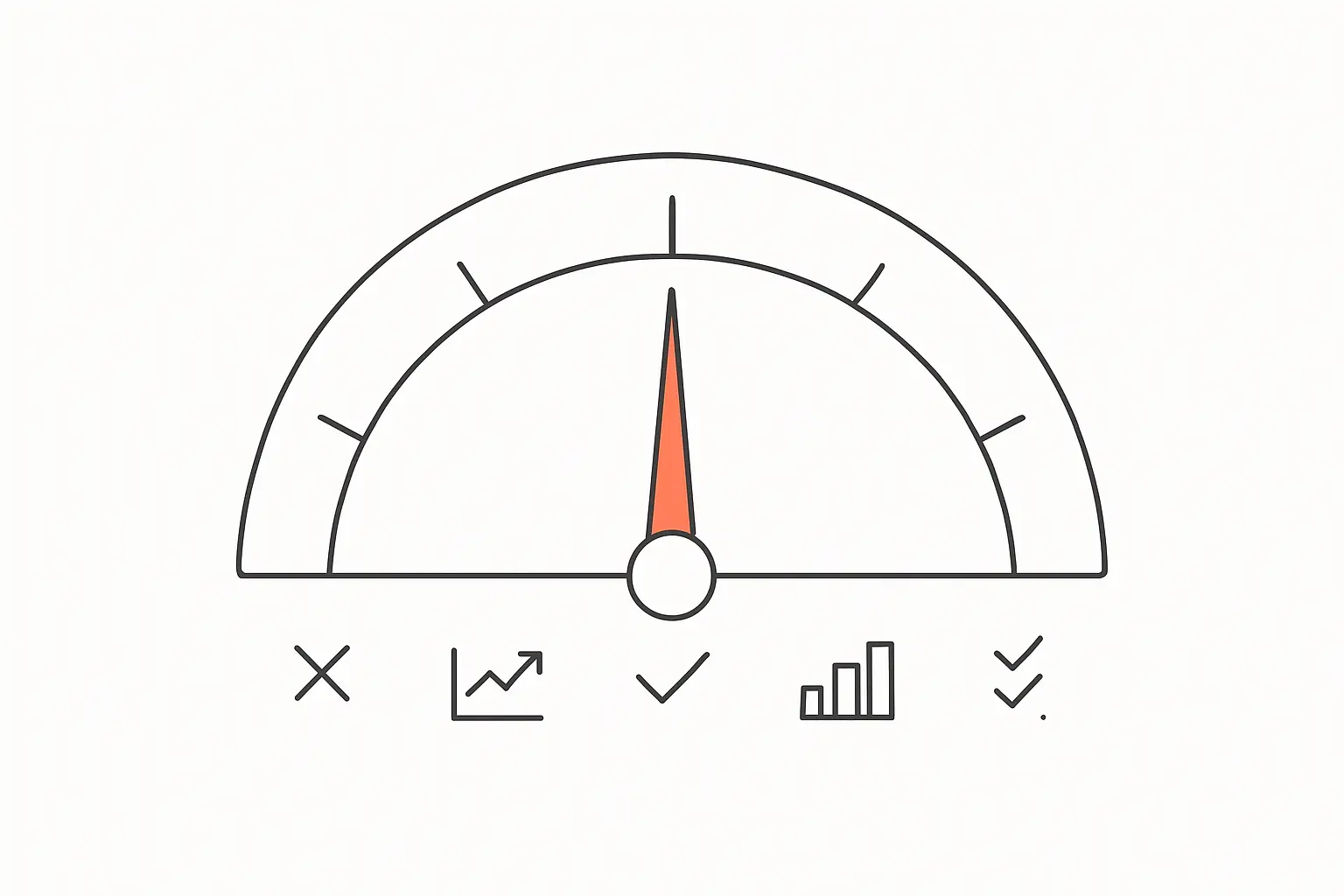
Almost never. Outside mathematics and formal logic, empirical research does not prove things — it supports, corroborates, fails to reject, or provides evidence consistent with. Writing this study proves that X causes Y tells an examiner something you did not intend to say: that you are not clear about what your own design can and cannot establish.
This is the mirror image of choosing the right verb for someone else’s work. A separate problem — and a more dangerous one, because it is your own claim on the line. This guide sets out a calibration table that maps four kinds of claim onto the evidence each one requires, names the specific words that quietly promote your findings beyond what you measured, and shows how an examiner turns a single unhedged sentence into a viva question you cannot answer.
Boosters, hedges, and why the balance is assessed
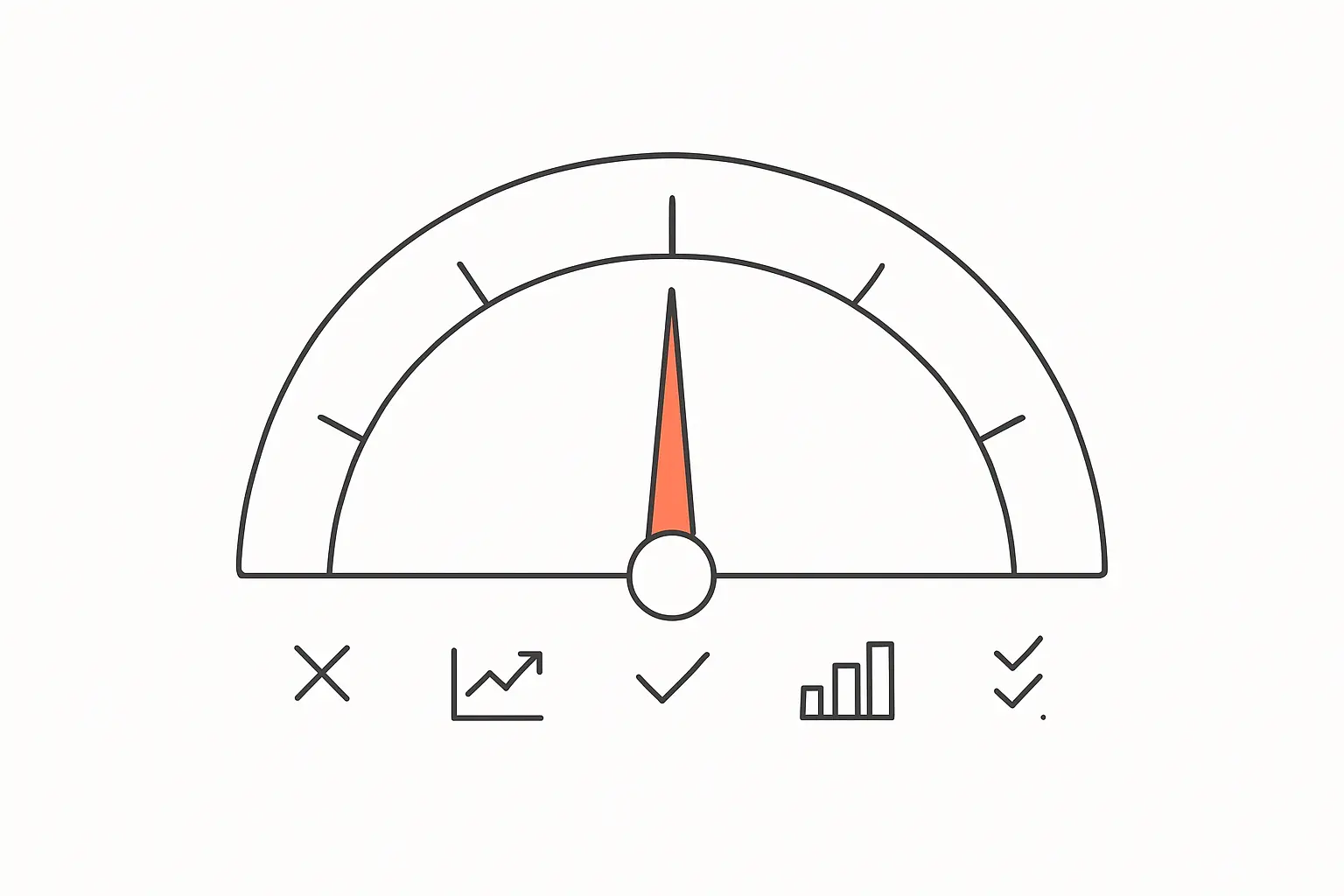
Academic English gives you two opposing sets of tools. Boosters raise the force of a claim: prove, demonstrate, clearly, obviously, undoubtedly, always, every, significant, confirms, establishes. Hedges lower it: may, might, appears to, suggests, tends to, in this sample, under these conditions.
Students are often told to “hedge more” and stop there, which produces the opposite fault: a discussion so thoroughly qualified that it commits to nothing. Both directions cost marks. Over-hedging reads as a candidate who does not believe their own results; over-boosting reads as one who has not understood the limits of the design. What examiners are actually assessing is calibration — whether the strength of the sentence matches the strength of the evidence sitting behind it.
The practical consequence is that there is no safe default register. You have to decide, claim by claim, how far your data licenses you to go.
The calibration table: four claim types and what each requires
Nearly every sentence reporting your own work is making one of four kinds of claim. Each needs a different evidential warrant, and each has a characteristic overclaiming failure.
| Claim type | Example sentence | What it requires | The overclaim to avoid |
|---|---|---|---|
| Descriptive What is in the data |
“Sixty-two per cent of respondents reported at least one episode.” | Accurate counting and a clearly defined sample. The safest claim you can make. | Extending the percentage to a population you did not sample. |
| Associative Two things vary together |
“Contact hours were positively associated with completion confidence.” | A measured relationship with an effect size and an interval. | Slipping into causal verbs — affected, led to, drove, improved — for a correlation. |
| Causal One thing produces another |
“The intervention reduced anxiety scores.” | Randomisation, or a credible identification strategy, plus control of confounding. | Cross-sectional data plus a plausible mechanism. Plausibility is not evidence. |
| Generalising It holds beyond your sample |
“Postgraduates experience this pattern.” | A sampling frame that supports the inference, or explicit transferability reasoning. | The silent jump from “my 84 participants” to “students” as a bare plural noun. |
Two of these do most of the damage in student writing, and both of them are invisible to a spell-check.
The causal slip: verbs that smuggle in an inference
You can run a correlation, report it correctly, and then undo the whole thing a few pages later with one verb. This is the single most common overclaim in a taught-postgraduate thesis.
Correlational designs license this vocabulary: was associated with, correlated with, co-occurred with, was higher among, predicted (in the strictly statistical sense). They do not license: caused, produced, led to, resulted in, improved, reduced, increased, drove, influenced, impacted.
The trap is that the second list is ordinary English. Nobody writing “increased engagement improved completion rates” feels they are making a metaphysical claim; they feel they are writing a readable sentence. But an examiner reading that sentence against a cross-sectional survey has found their first viva question, and it is not a friendly one.
Two constructions deserve specific warnings. “Predicted” is genuinely ambiguous — in regression it means statistical prediction, in ordinary use it implies producing an outcome. If your design is not longitudinal, prefer was associated with and remove the ambiguity. And “impacted” is causal in every reading; there is no correlational sense of it. Replace it every time.
The generalisation slip: the bare plural
The second silent overclaim is grammatical rather than lexical. Compare:
- “International students find supervisory feedback difficult to interpret.”
- “The international students in this sample found supervisory feedback difficult to interpret.”
The first sentence is a claim about a population of several million people, made on the basis of, typically, a few dozen interviews at one institution. It got there through a bare plural noun with no determiner — a construction English uses for generic statements. You did not decide to generalise; the grammar did it for you.
The fix is mechanical and takes an afternoon. Search your findings for every sentence that opens with a bare plural naming your participant group — students, nurses, teachers, managers, respondents — and add the scope back: in this sample, among the participants interviewed, within this cohort. In qualitative work, where statistical generalisation was never the goal, say so explicitly and make the transferability argument instead: describe the context in enough detail that a reader can judge which other settings it might speak to.
The words that carry more weight than you think
A short list of boosters accounts for most unintentional overclaiming. Each one has a legitimate use and a habitual misuse.
- Prove / proves / proven. Reserve for deductive argument. For empirical work: provides evidence that, supports, is consistent with.
- Significant. In a quantitative thesis this word is owned by statistics. Using it to mean “important” or “substantial” in the same document is a genuine ambiguity, and examiners flag it. Write substantial, marked, or practically meaningful when you do not mean p below your threshold.
- Clearly, obviously, evidently. These assert that no reasonable reader could disagree. If that were true you would not need to say it. In practice they mark exactly the places where a candidate feels least secure, and experienced examiners read them that way.
- Always, never, all, every, none. Universal quantifiers are refuted by a single counterexample. Most, typically, in the majority of cases cost you nothing and cannot be overturned.
- Confirms / establishes. A single study confirms nothing on its own. It is consistent with prior findings, or it replicates them.
- Proves the hypothesis. Hypotheses are supported or not supported. This phrase combines two errors in three words.
The companion error is stacking hedges to compensate: it could possibly be suggested that there may perhaps be some indication of a potential relationship. One hedge does the work. Three signal evasion, and they burn words you need elsewhere.
How an examiner turns an unhedged sentence into a question
Overclaiming is not punished abstractly. It creates a specific and predictable line of viva questioning, because an unhedged sentence is the easiest possible thing for an examiner to prepare against. The pattern runs in three moves.
First, they read the sentence back to you. “You write here that the programme improved retention.” Second, they ask what supports it. “What in your design allows you to say improved rather than was associated with?” Third, they follow the answer wherever it goes. If you concede that the design does not support it, the next question is why the thesis says it — which moves the exchange from your findings to your judgement, the worst possible ground to defend.
The alternative is to have written the calibrated sentence in the first place. A candidate whose thesis says “retention was higher in the programme cohort, though the non-randomised design cannot rule out selection effects” has pre-empted the entire exchange, and demonstrated the critical awareness the examiner was probing for. Calibrated writing is not defensive; it is the cheapest way to show you understand your own design.
This is also why the limitations section cannot repair an overclaiming argument. A limitation acknowledged on page 180 does not neutralise a causal verb asserted on page 165. The hedge has to sit in the sentence that makes the claim.
Where the strength of your claim comes from
Work backwards from the design, not forwards from what you hoped to find.
- Randomised experiment, adequately powered. Causal language is defensible: reduced, increased, caused. Still bound to the population and conditions tested.
- Quasi-experimental with a credible comparison. Causal language with the identifying assumption stated: the results are consistent with a causal effect, assuming parallel trends.
- Longitudinal correlational. Temporal ordering, not causation: predicted subsequent scores, with confounding acknowledged.
- Cross-sectional survey. Association only. No causal verbs anywhere in the write-up.
- Qualitative interview or case study. Claims about meaning, process and experience within the case. Transferability, not generalisation.
- A null result. The most frequently overclaimed case of all, in the opposite direction — a non-significant finding does not show the effect is zero, and writing “there was no difference” claims far more than the test can support.
Notice that the direction of the error is not always upward. Understating a well-powered randomised result is also a calibration failure, and it costs you the contribution you actually earned.
A two-hour audit before you submit
Run these five searches across your whole write-up. Each takes minutes and catches a distinct failure.
- Search for prove, proves, proven. Replace every instance. There are almost no exceptions outside a mathematical proof.
- Search for the causal verb list — caused, led to, resulted in, improved, reduced, increased, impacted, influenced, drove. For each hit, ask whether your design licenses it. Downgrade every one that fails.
- Search for significant. Confirm each use is the statistical sense. Replace the rest.
- Search for clearly, obviously, always, never, all, every. Delete or qualify.
- Read every topic sentence aloud and ask: could I defend this exact wording for two minutes under questioning? If not, rewrite it now rather than in the viva.
Do this after the argument is settled, not during drafting — hunting boosters while you are still working out what you think is a reliable way to stall. It belongs in the same late pass as your other mechanical checks, alongside the tense conventions for each chapter and the consistency sweeps you run before formatting.
How this differs from choosing a reporting verb
Two related problems, two different jobs. When you introduce someone else’s work, the verb signals what they did and whether you accept it — that is the reporting-verb decision, and it belongs mostly to the literature review. When you state what your data shows, the calibration problem is entirely your own.
They interact in one place worth watching. If you have described a prior study with a strong verb — Patel (2024) demonstrated that mindfulness reduces burnout — you have committed to that finding, and your own hedged result now appears to contradict an established fact rather than adding to a mixed literature. Calibrate the source verbs and your own claims together, or the two will pull against each other. The broader conventions that govern the sentences around both are covered in our academic voice style guide, including hedging frames and paragraph structure, and if you are writing in English as an additional language the patterns that mark a draft as second-language writing include several that interact with hedging directly.
Claim exactly what you found
Tesify drafts your write-up at the strength your design supports, flags causal verbs sitting on correlational data, and catches the bare plurals that generalise without your noticing.
Start writing your thesis with Tesify
Frequently Asked Questions
Can you ever say “prove” in a thesis?
Only where you are presenting a deductive proof — a mathematical theorem, a formal logical derivation, or a legal argument establishing that a rule applies. Empirical research supports, corroborates or fails to reject hypotheses. For everything else use provides evidence that, supports, or demonstrates, the last reserved for strong experimental designs.
What is the difference between a hedge and a booster?
A hedge reduces the force of a claim (may, appears to, in this sample); a booster increases it (clearly, demonstrates, always). Neither is inherently better. Examiners assess calibration — whether the strength of the sentence matches the strength of the evidence — so both over-hedging and over-boosting are marked down.
Can I use causal language with correlational data?
No. Verbs such as caused, improved, reduced, led to and impacted assert production of an outcome. With correlational or cross-sectional data use was associated with, correlated with, or was higher among. Be careful with predicted, which is ambiguous between the statistical and everyday senses.
How do I avoid overgeneralising from a small sample?
Watch for bare plural nouns. “Nurses report burnout” is a claim about all nurses; “the nurses interviewed in this study reported burnout” is a claim about your data. Search for sentences beginning with an unqualified plural naming your participant group and restore the scope. In qualitative work, argue transferability by describing the context rather than claiming generalisation.
Does hedging make my thesis sound weak?
Correct hedging reads as competence, not weakness — it shows you understand what your design can establish. What reads as weak is hedge stacking, where three or four qualifiers pile into one sentence. Use one hedge, place it in the sentence making the claim, and state the rest of your reasoning directly.
Can I fix overclaiming in the limitations section instead?
No. A limitation acknowledged at the end does not retract a causal verb asserted fifteen pages earlier. Examiners read the claim where it is made. The qualifier has to sit in the sentence that carries the claim; the limitations section handles design constraints more broadly, not individual overstatements.
Is it wrong to use “significant” to mean “important”?
In a quantitative thesis, yes — the word is reserved for statistical significance, and using it in both senses in the same document creates ambiguity examiners routinely flag. Use substantial, marked, notable, or practically meaningful instead. In a purely qualitative thesis the risk is lower, but the ambiguity is still worth avoiding.
Write your thesis with AI
Structure, draft, cite, and format your thesis faster with Tesify’s AI writing tools, automatic bibliography, and plagiarism checker. Free to start, no credit card required.





Leave a Reply