

Can You Research Your Own Workplace? Insider Research, Gatekeepers and the Dual-Role Problem (2026)
Yes — and for part-time and professional master’s students it is often the only realistic way to get a study done. Insider research is a recognised, defensible approach, not a shortcut. But it fails ethics review far more often than outsider research does, and almost always for the same three reasons: no organisational approval, no plan for the fact that you have power over your participants, and a promise of anonymity that a team of six makes impossible to keep. Here is what actually has to be in place.

The short answer
You can research your own workplace if you obtain organisational approval as well as university ethics approval, you do not recruit people you have authority over, your consent process makes refusal genuinely costless, and you are honest with participants about the real limits of anonymity in a small setting. If any one of those is missing, expect your application to come back.
What makes insider research different
The advantages are real and worth stating in your methodology rather than apologising for. You have access that an outsider would spend months negotiating. You understand the context, the jargon and the informal reality behind the official process. Participants are more likely to trust you and to speak candidly.
The risks are the mirror image. You may over-identify with participants and lose analytical distance. You have blind spots about practices so normal to you that you do not notice them as findings. Participants may tell you what they think a colleague wants to hear, or conversely may use the interview to raise a grievance. And you carry prior knowledge that is not in your data — you must not let something you know from the corridor appear as though it came from a transcript.
This epistemological side of the insider position — the insider/outsider continuum, and the fact that most researchers occupy a shifting hybrid position rather than a pure one — is the subject of our guide to writing a positionality statement, and the discipline of examining your own influence is covered in our guide to reflexivity in qualitative research. What follows is the practical and ethical machinery that sits alongside it.
Gatekeeper approval: the step most people skip
University ethics approval permits you to conduct the research. It does not give you permission to use your employer’s staff, patients, pupils, clients or records. That is a separate consent, from the organisation, and it is the single most common omission.
Work out who can actually authorise it. That is rarely your line manager — it is usually a headteacher, service manager, HR director, research governance office or board. Ask for the approval in writing, on headed paper, naming your study, and expect your ethics committee to want a copy before it will approve. Many committees will grant approval conditional on the gatekeeper letter arriving.
Some sectors add a layer. Health research involving patients, service users or their data typically requires a formal health research authority or ethics process well beyond your university’s, and a letter of access or research passport; schools may require parental consent and safeguarding checks; anything touching regulated client data will involve your organisation’s data protection officer. Our guides to whether you need ethical approval and to getting ethics approval and writing the participant information sheet cover the general process.
Start this early. Gatekeeper approval routinely takes longer than university ethics, and it is the most common cause of a delayed data collection window.
The dual-role problem

You are simultaneously colleague and researcher, and if you have any authority over a participant you are also, in ethics terms, a source of pressure. This is the issue committees scrutinise hardest, and the one students most often fail to anticipate.
The rule to work from: do not recruit anyone you line-manage, appraise, supervise, teach, assess or hold any decision-making power over. Their consent cannot be considered free, however genuinely you offer it, because the cost of refusing is not zero. A staff member declining their manager’s research request is taking a risk, and they know it.
Practical mitigations, roughly in order of strength: recruit from a different team, site or department than the one you manage; have someone independent handle recruitment and hold the list of who agreed, so you never learn who declined; use written opt-in rather than approaching people directly; and never recruit in a team meeting, where declining is publicly visible. If your study genuinely requires participants you have authority over, say so explicitly in the application and propose a specific mitigation — a committee will engage with a named problem and a plan far more readily than with silence.
There is a converse risk worth naming too. If you are junior and researching senior colleagues, the pressure runs the other way: you may find it hard to probe, to challenge an evasive answer, or to publish an unflattering finding. Acknowledge that in your reflexivity rather than pretending seniority only flows one way.
Consent that is actually voluntary
Your participant information sheet needs to do more work than an outsider’s would. Three statements should appear explicitly.
That participation is voluntary and the decision will have no effect on employment, appraisal, workload, training opportunities or professional relationships. That the participant may withdraw without giving a reason, with a clear deadline after which withdrawal is no longer possible because the data have been analysed or anonymised. And that you are acting in the role of researcher rather than colleague or manager for the duration of the study — with a note on what that means in practice.
Two further points specific to insider work. Say what will happen to something disclosed during the research that would normally trigger a workplace duty: safeguarding concerns, criminal conduct, serious risk. You cannot promise unconditional confidentiality if a professional or legal duty overrides it, and discovering this mid-interview is far worse than stating it upfront. And decide in advance whether you will use anything you learn informally — the answer should be no. Only data gathered through the consented process belongs in your study.
Anonymity is much harder than you think
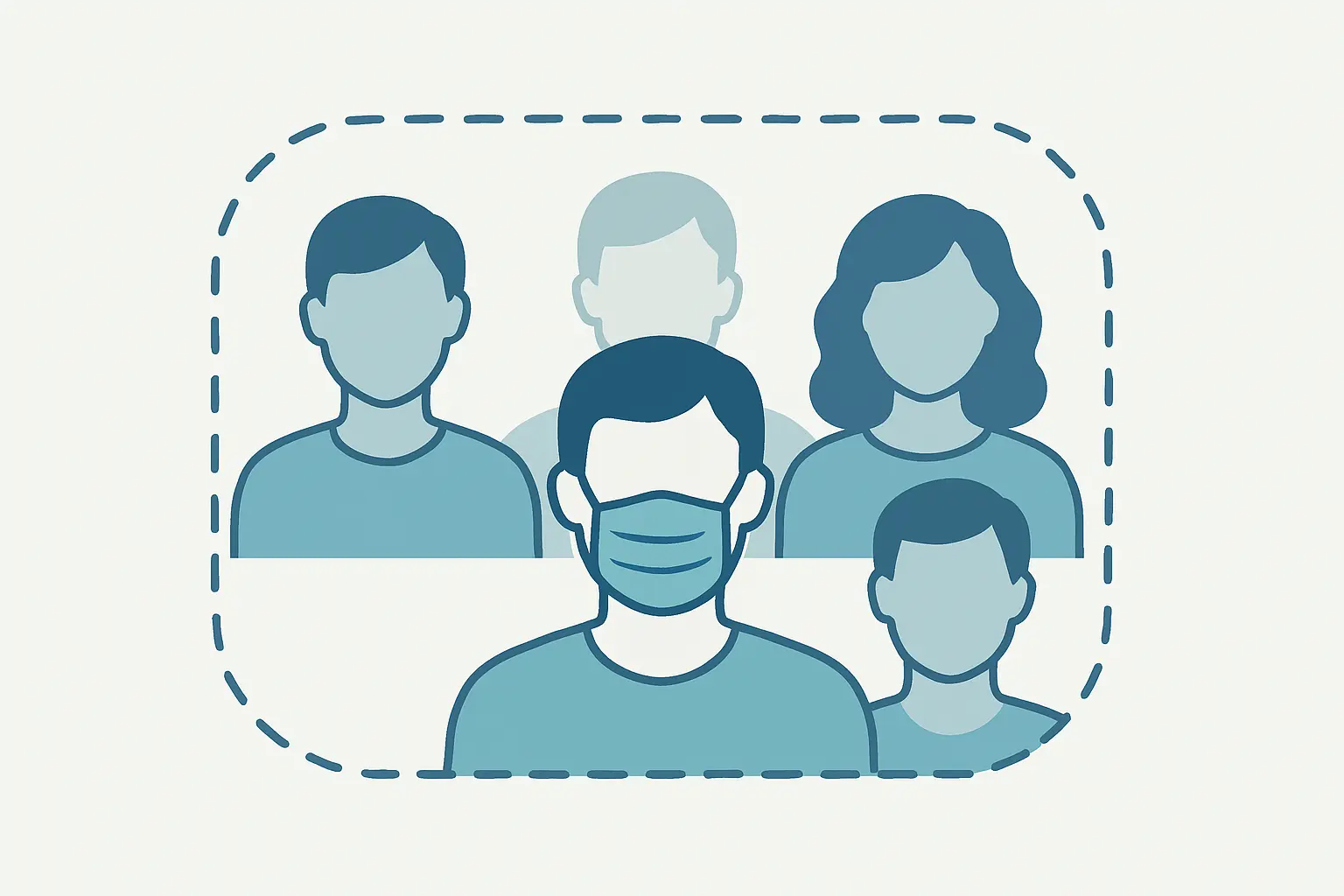
Removing names does not make a participant anonymous in a small organisation. There is one deputy head, one night-shift lead, one person who transferred from the other site last year. A role plus a detail is an identification, and quoting “a senior manager with responsibility for safeguarding” in an organisation with two of them tells every colleague exactly who spoke.
Distinguish the two audiences. External anonymity — protecting identity from readers outside the organisation — is usually achievable by anonymising the organisation itself. Internal anonymity — protecting a participant from colleagues who will read the study and know the setting — is often not fully achievable, and this is the honest problem at the heart of workplace research.
What helps: aggregate role descriptors upward (“a member of the leadership team” rather than a specific post); strip identifying incidents even when they are the most vivid quotes; report some findings thematically without direct quotation; and offer participants the chance to review and redact their own transcript or the quotes you intend to use. That last step costs time and is worth it — it converts a risk you are managing on their behalf into a decision they make themselves.
Above all, do not over-promise. If internal anonymity cannot be guaranteed, the information sheet must say so in plain language, and participants must consent knowing it. A committee will accept a limitation stated honestly; it will not accept a guarantee you cannot keep.
Data you already have is not data you may use
Access as an employee is not access as a researcher. Records, monitoring data, minutes, incident logs, performance figures or client files you can legitimately open at work require separate, explicit permission to be used as research data — normally from the data controller, and normally documented alongside your gatekeeper approval.
The same applies retrospectively. Data collected for an operational purpose cannot simply be repurposed into a study because you happen to have it, and the fact that it is already anonymised does not settle the question of whether you are authorised to analyse it for a new purpose.
What to write in your methodology
Insider research needs a paragraph that most methodology chapters lack, and it should be a strength rather than a confession. State your role in the organisation and your relationship to participants. Name the insider position and what it gave you — access, contextual understanding — and what it risked. Record that gatekeeper approval was obtained and from whom. Describe the recruitment route and, specifically, how you avoided recruiting people you had authority over. Explain the anonymity measures and state their limits candidly. And describe the reflexive practice you used — a research journal, supervision, an outsider reading your coding — to keep analytical distance.
The residual issues then belong in your limitations section, named precisely rather than gestured at. If your analysis is interview-based, our guide to coding interviews in NVivo covers the mechanics, and data saturation covers how many interviews you need — a question that gets sharper when your entire possible sample is one department.
Frequently asked questions
Do I need permission from my employer as well as my university?
Yes, essentially always. University ethics approval covers you as a researcher; it does not authorise access to your employer’s staff, service users or records. Get the gatekeeper’s approval in writing, and start early — it usually takes longer than the university process.
Can I interview people I manage?
You should not. Consent from someone whose appraisal or workload you control cannot be treated as free. Recruit from outside your line of management, or propose a specific mitigation and let the committee assess it.
Is insider research seen as less rigorous?
No, when it is handled explicitly. It is a recognised approach across education, nursing, social work and management research. What loses marks is failing to address positionality and power, not the insider position itself.
How do I keep participants anonymous in a team of eight?
Partly you cannot, and you must say so. Anonymise the organisation, aggregate role descriptors, remove identifying incidents, and offer participants transcript review. Then state in the information sheet that colleagues who know the setting may still be able to infer identities.
What if a participant discloses something serious?
Decide before you start, and write it into the information sheet. Safeguarding concerns, criminal conduct or serious risk usually override research confidentiality under your professional code and your organisation’s policy. Participants must know the limits before they speak, not after.
Can I use data I already have access to at work?
Not without separate permission. Operational access is not research authorisation, and repurposing data collected for another reason requires approval from the data controller, documented in your application.
What happens if I leave the organisation mid-study?
Raise it with your supervisor and the gatekeeper immediately. Your access, and sometimes the basis of the approval itself, may end with your employment. Data already collected under valid consent normally remains usable, but confirm this rather than assume it.
Should I tell participants what I already know?
Be transparent that you have prior knowledge as a colleague, and be disciplined about not using it. Only data generated through the consented research process belongs in your analysis — the corridor conversation does not, however useful it would be.
Get the ethics argument written down early
Insider research lives or dies on a handful of decisions — gatekeeper, recruitment route, power mitigation, anonymity limits — all made months before the methodology chapter is written, and rarely recorded at the time. Tesify helps you build the methodology around those decisions as you make them, so the justification your committee and your examiner want already exists — 100% written by you.
Write your thesis with AI
Structure, draft, cite, and format your thesis faster with Tesify’s AI writing tools, automatic bibliography, and plagiarism checker. Free to start, no credit card required.






Leave a Reply