
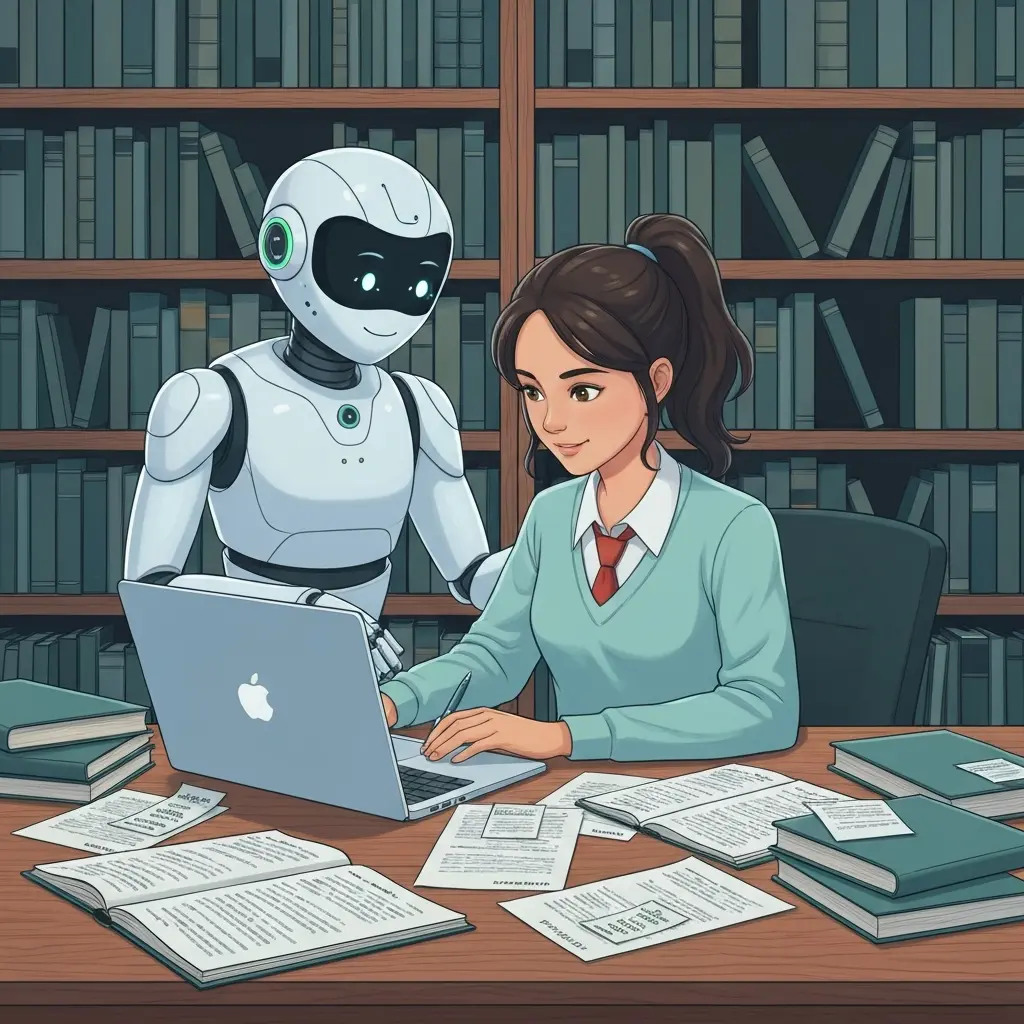
Best AI for Dissertation Writing in 2026: A Complete Comparison Guide
The AI tool landscape for academic writing has exploded since 2023. There are now dozens of products claiming to help students write better dissertations, find literature faster, and cite sources automatically. The problem: most students do not know which tools are genuinely useful for dissertation-scale work, which are overhyped, and which could get them in trouble with their university’s academic integrity policy.
This guide cuts through the noise. We evaluate the best AI tools for dissertation writing in 2026 across five categories — writing assistants, literature discovery, citation management, plagiarism checking, and all-in-one platforms — with honest assessments of strengths, weaknesses, and compliance risks.
The Five Tool Categories You Need
No single AI tool does everything well for dissertation writing. The most successful students use a curated stack that covers each phase of the process:
- Writing assistance: Structure, argument development, language improvement
- Literature discovery: Finding relevant papers without manual database searching
- Citation management: Organising sources and formatting references automatically
- Plagiarism and AI detection: Pre-submission integrity checking
- All-in-one platforms: Integrated tools that combine several of the above
Writing Assistants Compared
Tesify
Best for: Thesis and dissertation writing from start to finish
Tesify is purpose-built for academic thesis and dissertation writing. Unlike general AI tools, Tesify maintains coherence across your entire thesis document — it understands your research question, tracks your argument across chapters, and generates structured chapter content with integrated citation management. Key advantages: no hallucinated citations (verified source integration), structured templates for every thesis section, academic register maintained throughout, and built-in plagiarism checking. For a head-to-head comparison of the leading options, see our guide to the best AI tool for writing a thesis.
Jenni AI
Best for: Drafting assistance for students comfortable managing their own structure
Jenni AI provides inline writing suggestions and auto-completion tuned for academic writing. It integrates with Zotero for citation management and has a growing academic source database. Free plan available with limited document length. Does not maintain whole-thesis coherence the way Tesify does.
Writefull / Paperpal
Best for: Language and style improvement rather than content generation
Both Writefull and Paperpal are trained on academic corpora — they understand academic register and can improve the precision and formality of your writing without changing its substance. Excellent for non-native English speakers. Not writing tools in the generative sense — they enhance what you have written, not generate new content.
ChatGPT / Claude
Best for: Brainstorming, explaining concepts, editing clarity
General-purpose AI tools are excellent for certain tasks but risky for others. Never use them to generate citations or claim specific research findings. Use them for: breaking writer’s block, getting alternative explanations of complex concepts, improving paragraph clarity. Always check your university’s AI policy before using these tools for any writing that will be submitted. For the full picture, see our guide on using ChatGPT for thesis writing.
Literature Discovery Tools
Elicit
Verdict: Best AI literature discovery tool for dissertations
Elicit searches real academic papers (via Semantic Scholar’s database of 200+ million papers) and extracts key findings automatically. Unlike ChatGPT, it does not hallucinate — every paper it returns is real and verified. Free tier allows 12 full papers per month with unlimited abstract searches. Elicit can extract specific data points across papers (e.g., sample size, effect sizes, methods) — invaluable for systematic reviews.
ResearchRabbit
Verdict: Best for discovering related literature from seed papers
ResearchRabbit visualises relationships between papers — “papers that cite this paper also cite X” — helping you map the full literature around your topic. Free and no word limits. Essential for systematic or scoping reviews where finding all relevant literature is critical. Pairs perfectly with Zotero.
Consensus
Verdict: Best for specific research questions
Consensus uses AI to search real academic papers and synthesise what the research says about a specific question. Excellent for literature review background sections. Free tier available; paid plan unlocks full summaries.
Connected Papers
Verdict: Best visual literature mapping
Enter a seed paper and Connected Papers generates a visual graph of related work, showing which papers share the most citations. Free with limited searches per month. Particularly useful for identifying the core “citation cluster” in your research area.
Citation and Reference Management
Zotero (Free)
The gold standard for free reference management. Zotero captures references from any webpage or database with a single click, organises your library, formats references in 10,000+ citation styles, and integrates with Word. The best free citation manager available. Use it. Integrates with Tesify.
Mendeley
Similar functionality to Zotero with a built-in PDF reader and social features. Free for 2GB storage. Some students prefer its interface; the core citation management capabilities are equivalent to Zotero.
EndNote
The most powerful reference management tool, but expensive (~£200/year for students). Warranted for PhD students producing large reference libraries. Many universities provide free institutional access — check before paying.
Tesify Auto-Bibliography
Tesify’s auto-bibliography feature generates correctly formatted references from DOIs or paper titles in any citation style. Particularly useful for students who want citation management integrated into their writing workflow rather than managed in a separate application.
Plagiarism and AI Detection
See our dedicated guide to free plagiarism checkers for students in 2026 for a full comparison. The short version: Paperpal (most generous free academic database check), Tesify (integrated with your writing workflow), Scribbr (Turnitin-equivalent, paid).
All-in-One Platforms
Tesify (Top Pick)
Tesify combines writing assistance, citation management, plagiarism checking, and academic structure templates in a single platform designed specifically for thesis and dissertation students. It is the most comprehensive purpose-built solution available for students who want a single integrated tool rather than a multi-tool stack. Start free here.
Paperguide
Full document generation, source-backed insights, AI humanisation, and citation management in a single interface. Strong free plan. Not as specifically thesis-oriented as Tesify but good for shorter research papers.
SidekickWriter
Strong for dissertation generation with academic database access and committee collaboration features. More expensive than most alternatives. Worth evaluating if budget is not a constraint.
Recommended Tool Stacks by Budget
| Budget | Recommended Stack |
|---|---|
| Free only | Tesify (free tier) + Zotero + Elicit + ResearchRabbit + Paperpal |
| Budget (<£20/month) | Tesify (paid) + Zotero + Elicit free + Scribbr (one-off pre-submission check) |
| Full suite | Tesify + Elicit (paid) + Writefull or Paperpal + Zotero + Scribbr |
Policy Compliance Considerations
Before using any AI tool in your dissertation, check three things:
- Your institution’s general AI policy (usually in the academic integrity section of your student handbook)
- Your programme’s specific regulations (some programmes prohibit AI even where the institution permits it)
- Your module-level instructions (individual supervisors may have additional requirements)
When in doubt: ask your supervisor in writing before you use any AI tool for work you intend to submit. See our full guide to academic integrity and AI use for the current policies at major universities.
Frequently Asked Questions
What is the best AI tool for writing a dissertation in 2026?
Tesify is the best purpose-built AI platform for dissertation writing — it maintains coherence across your entire thesis, manages citations without hallucinations, and provides academic-register guidance through every chapter. For a free multi-tool approach, combine Zotero (citations), Elicit (literature discovery), Paperpal (plagiarism checking), and ChatGPT or Writefull (style editing only). The best stack depends on your budget, discipline, and what kind of support you need most.
Is it cheating to use AI tools for dissertation writing?
Using AI tools for non-substantive tasks (proofreading, citation formatting, literature discovery) is widely accepted at most institutions. Using AI to generate text that you submit as your own is prohibited at many institutions unless explicitly permitted and declared. The distinction matters: using Zotero to format your references is not cheating; submitting ChatGPT-written chapters without disclosure is. Always check your specific institution’s policy and declare AI use as required.
Can AI tools find academic sources for my dissertation?
Purpose-built academic AI tools like Elicit, ResearchRabbit, and Consensus can discover real, verified academic sources. General AI tools like ChatGPT cannot — they generate plausible-sounding but often fabricated citations. Never use ChatGPT to generate your reference list. Use Elicit or Google Scholar for source discovery, then verify every paper in an academic database before citing it.
How much time can AI tools save in dissertation writing?
Studies suggest significant time savings are achievable with proper AI tool use. A Carnegie Mellon University study found that graduate students using AI writing tools with instruction completed writing tasks 65% faster. However, this time saving is predicated on using tools that do not require significant human correction — tools that generate accurate citations and maintain academic register save time; tools that generate hallucinated references and require constant fact-checking do not.
The Only AI Built Specifically for Your Dissertation
Tesify combines every tool a dissertation student needs — writing, structure, citation management, and plagiarism checking — in a single platform built for academic rigour. No hallucinations, no compliance risk, no fragmented tool stack.
Write your thesis with AI
Structure, draft, cite, and format your thesis faster with Tesify’s AI writing tools, automatic bibliography, and plagiarism checker. Free to start, no credit card required.






Leave a Reply