
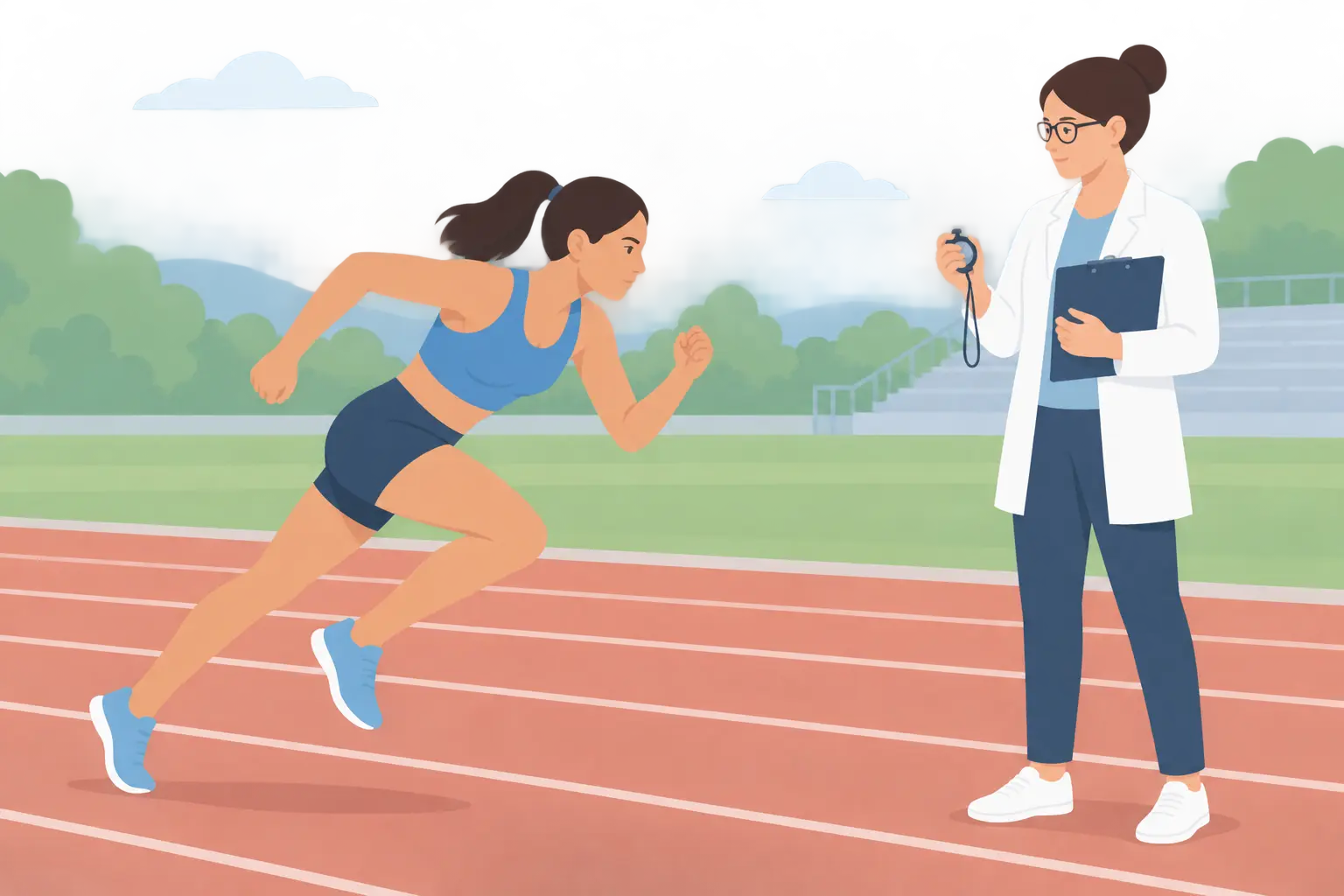
“This study examines athletes’ recovery” is not a scoped population — it says nothing about competitive level, sport, age, or training status, and a committee will ask you to define all four before approving access. This guide covers how to define an athlete population precisely, the gatekeeper structure that controls access at each competitive level, the extra consent steps for minors and vulnerable groups, and the sample-size realities specific to studying athletes rather than a general population.
Define competitive level first — it is not one population
“Athletes” spans recreational participants, sub-elite or collegiate competitors, and elite or professional athletes, and findings from one tier rarely generalize cleanly to another — a recovery protocol studied in recreational runners may not transfer to elite marathoners training at a completely different volume and intensity. A thesis needs to name the specific competitive tier its population belongs to, using a recognized classification framework rather than an impressionistic label. Several published athlete-classification frameworks exist specifically to standardize this (naming training history, competition level and performance standard together rather than a single vague descriptor like “elite”), and citing one of these explicitly in your methods chapter — rather than relying on your own informal definition of “elite” — gives your population definition a defensible, checkable basis.
Sport-specific versus cross-sport designs
A second scoping decision: is your thesis studying athletes within one sport (controlling for sport-specific training demands and physiology) or across multiple sports (trading that control for a broader claim about athletes generally)? Both are legitimate designs, but a cross-sport design needs to address explicitly what is being held constant and what is allowed to vary across sports — a study comparing recovery practices across swimmers and sprinters, for example, needs to state whether it is claiming something about recovery generally or something specific to each sport’s demands, since conflating the two produces a discussion section that cannot support its own conclusions.
Access: coaches, clubs and governing bodies as gatekeepers
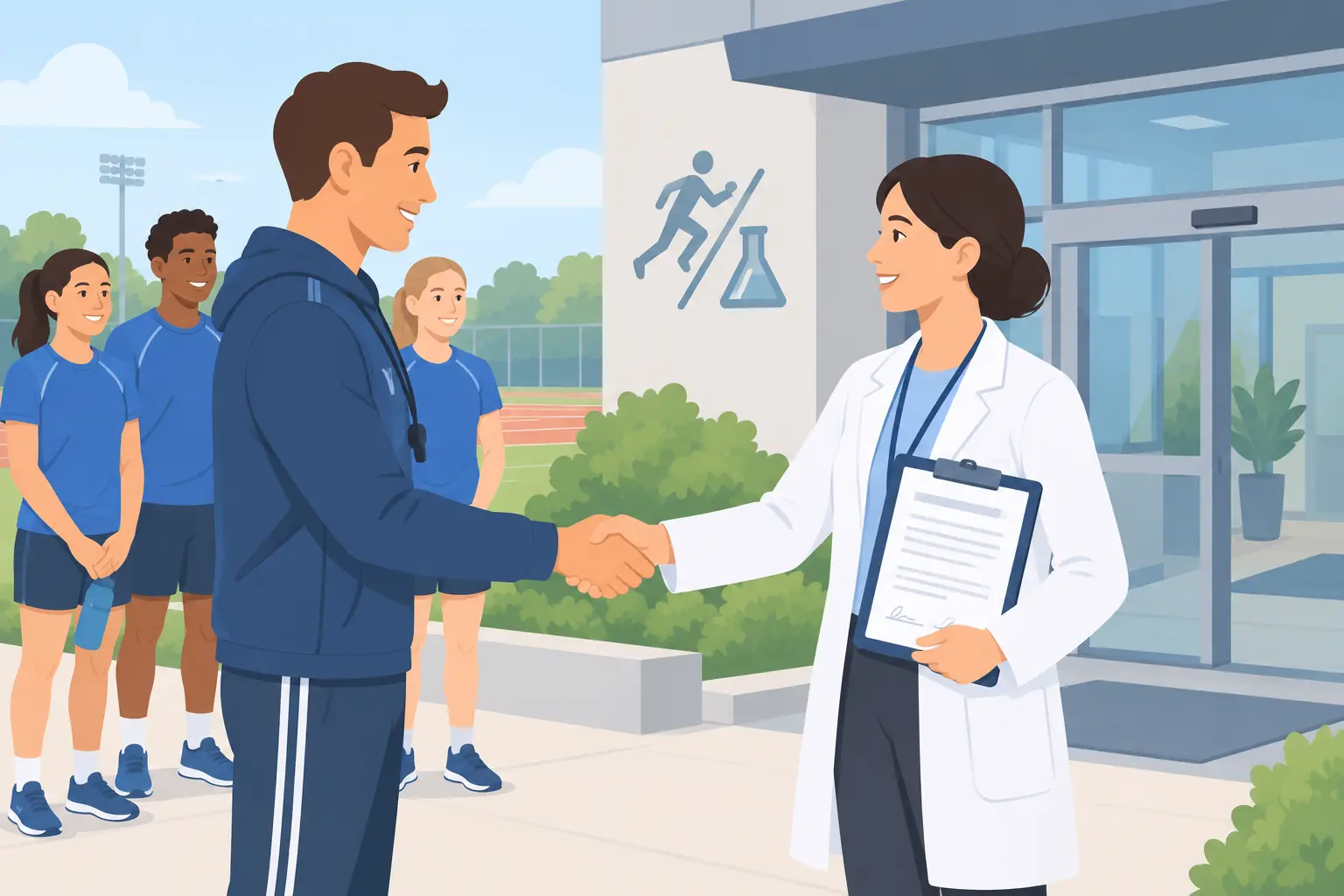
Athletes, especially above the recreational tier, are rarely reachable through direct individual recruitment — access runs through a gatekeeper structure:
- Coaches and team staff typically control access to a specific team’s athletes and will reasonably want to know how the research affects training time, whether it involves any injury or performance risk, and what the team gets back from participating.
- Clubs and academies at youth and development levels often have their own research-approval process separate from any single coach’s decision, particularly where the organization has its own duty-of-care policies toward young athletes.
- National governing bodies and sport federations control access at the elite and national-team level, and typically require a formal research-approval application well in advance of any planned data collection — building this lead time into your thesis timeline from the start, rather than discovering the approval process late, is essential for elite-athlete research specifically.
A proposal that names a specific access channel and its typical approval timeline reads as considerably more feasible to a committee than one that says only “athletes will be recruited,” which leaves the gatekeeper question unaddressed. Building a relationship with the gatekeeper well before formal data collection — attending a training session as an observer, offering a short results summary back to the club — often matters as much as the formal approval paperwork itself for actually securing cooperative, engaged participation once access is granted.
Consent: minors and other heightened-protection groups
Athlete research disproportionately involves populations needing extra consent protections. Athletes under 18 require both parental or guardian consent and the athlete’s own age-appropriate assent, and most youth-sport organizations layer their own organizational approval on top of individual family consent — a study cannot proceed on parental consent alone if the club or league has not separately approved the research. Where a study involves athletes with a current injury, a study proposing any physical testing or exertion needs a clear medical clearance and exclusion-criteria process, documented in the ethics application, distinguishing research participation from clinical care the athlete may separately be receiving. Elite and professional athletes raise a different consent consideration: power dynamics with coaches, team medical staff or sponsors can make consent feel less genuinely voluntary than in a general population, and an ethics application should address how the recruitment process protects against that pressure — for example, by having recruitment communications come from the researcher directly rather than routed through the athlete’s own coach in a way that could feel like an instruction to participate.
Confidentiality for performance and injury data
Athlete performance data, injury history and, for professional athletes, contractual details carry sensitivity beyond standard participant confidentiality. Agree a specific data-handling and reporting-granularity plan with both participants and any organizational gatekeeper before data collection begins: will individual performance data be reported at all, or only as team- or group-level aggregates; will injury history be de-identified even within a small squad where an injury pattern could identify a specific athlete; who beyond the research team will see raw data. This is closely analogous to the disclosure-risk planning any small-N population research needs, and is worth thinking through with the same rigor a thesis studying a small rural community or a niche clinical population would apply.
A note on injury and return-to-play research specifically
Where the research question involves injury or return-to-play decisions directly, an additional layer of care is expected beyond general athlete-research ethics: the study design should make clear that no research procedure influences or delays actual clinical return-to-play decision-making, which remains the responsibility of the athlete’s own medical and coaching staff rather than the research team. A thesis studying return-to-play timelines retrospectively (using existing clinical records with appropriate consent and data-sharing agreements) sidesteps this concern more cleanly than a prospective design that risks blurring the line between research observation and clinical decision-making; state explicitly in your methods chapter which side of that line your design sits on.
Sample size: small-N is normal here, but justify it
Elite-athlete research routinely works with genuinely small samples — an Olympic-level event may have only a handful of athletes nationally who qualify for your inclusion criteria — and this is an accepted, well-understood constraint in sports science specifically, unlike in fields where a small sample would simply be read as underpowered. That said, “small-N is normal in this field” is not a substitute for an explicit justification: state your target population’s actual size where known (how many athletes nationally meet your inclusion criteria), report a power analysis appropriate to a small-sample design where your analysis is quantitative, and for qualitative designs, state your saturation logic specific to a genuinely scarce population. A thesis that simply asserts “the sample size is small due to the elite nature of the population” without any of this supporting detail reads as an excuse rather than a justified design choice.
Timing research around the competitive season
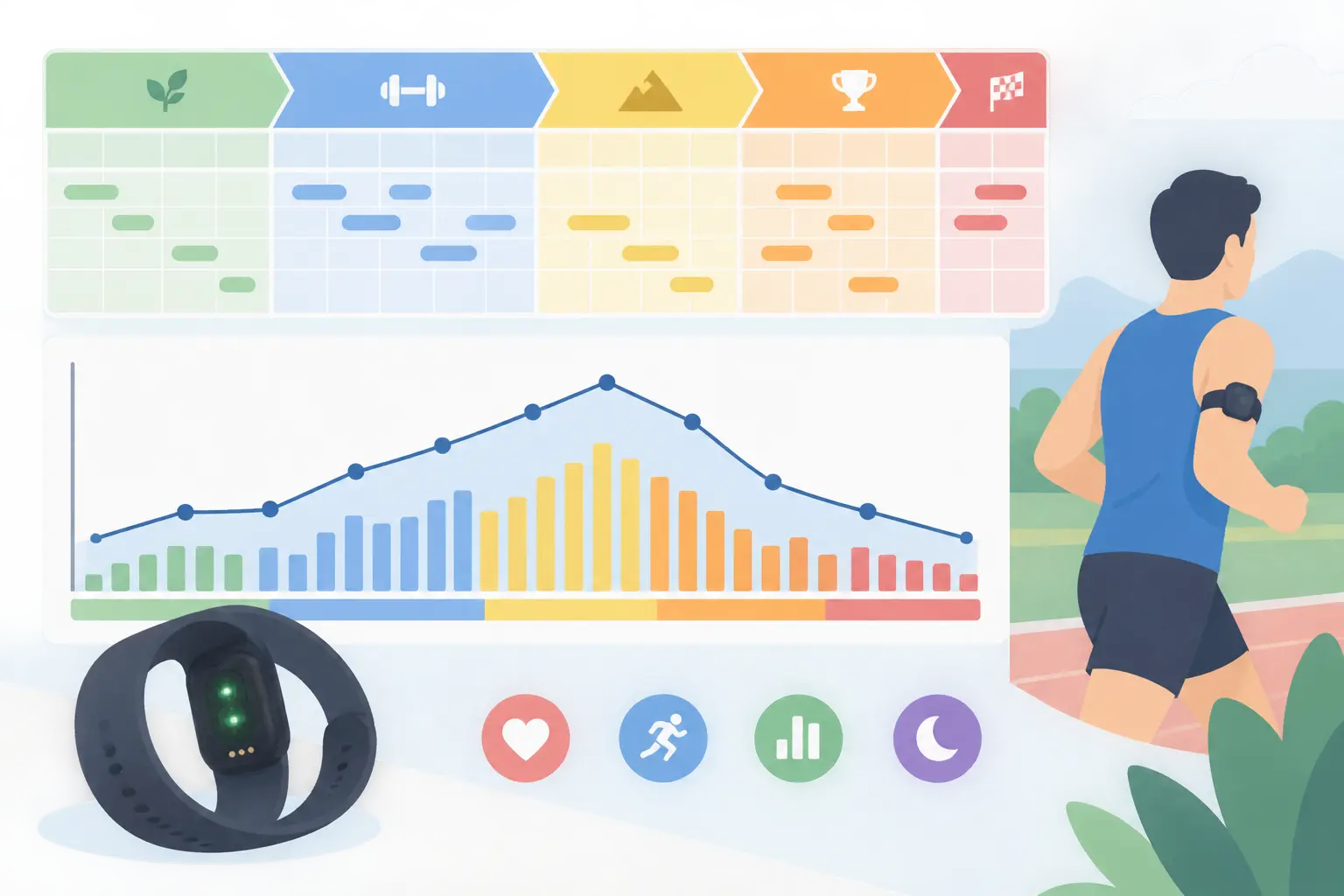
A practical scoping consideration examiners increasingly expect addressed: when in the competitive calendar data collection will occur, and why. Testing during a competitive peak carries different risk and access considerations than testing during an off-season or pre-season block, coaches are considerably more protective of athlete time and attention during competition periods, and physiological or psychological measures can shift meaningfully across a training cycle in ways that matter for interpreting your results. State explicitly which phase of the season your data collection targets and why that phase suits your specific research question, rather than leaving timing as an incidental detail of when access happened to be granted.
A worked example
Weak framing: “This study examines how athletes recover from training.”
Stronger framing: “This study examines self-reported recovery practices among sub-elite distance runners (classified, using a named published classification framework, as regional or national competitive standard) training a minimum of 60 km per week, recruited through three regional athletics clubs with club-level research approval obtained in advance, with a target sample of 40 runners informed by a power analysis for the planned regression model, data collected during the mid-season training block to avoid competition-period access constraints.”
The second version names the competitive tier with a classification framework, states the access channel and its approval status, gives a justified sample-size target, and specifies the season timing — everything a committee needs to judge feasibility in one sentence.
Comparing your design to other population-scoped theses
The scoping discipline described here — naming a precise sub-population rather than a broad category, planning access through the actual gatekeeper structure, and justifying sample size explicitly — applies across fields, not just sports science. Our guide to population, sample and sampling for a public health thesis and our guide to sampling methods in research cover the general framework this athlete-specific application builds on. For the broader structure and design choices a sports science thesis needs beyond population scoping, see our complete guide to writing a sports science dissertation, and for reporting the resulting data once collected, our guide to the sports science results chapter.
Mistakes that get an athlete-population proposal rescoped
- No competitive-level classification named — “athletes” without specifying recreational, sub-elite or elite status, or the framework used to define it.
- No stated access channel or gatekeeper — a target sample with no named coach, club, or governing-body route to reach it.
- Minor-athlete consent handled as though it were adult consent, missing the organizational approval layer most youth-sport bodies require.
- No confidentiality plan for performance or injury data specific to a small or identifiable squad.
- Small sample size asserted without justification — no power analysis, no stated population size, no saturation logic.
- Cross-sport claims made from a single-sport design, or vice versa, without addressing the mismatch.
- Research procedures that blur into clinical return-to-play decisions without a clear statement of which side of that line the design sits on.
- No stated season timing for data collection, or timing chosen incidentally rather than deliberately.
Frequently asked questions
How should I define my athlete population precisely?
By competitive level (recreational, sub-elite, elite/professional), sport, and any relevant training-status criteria, rather than the single word “athletes,” since findings from one competitive tier rarely generalize to another.
Who is the gatekeeper for accessing athletes as research participants?
Usually the coach, team, club or governing body, not the athletes themselves directly, especially at higher competitive levels where access is centrally controlled.
Can I study minor athletes without extra consent steps?
No. Studying athletes under 18 requires parental or guardian consent in addition to the athlete’s own assent, and most youth-sport organizations require separate organizational approval beyond individual family consent.
How many athletes do I need for a quantitative sports science thesis?
There is no universal number; small samples are common and accepted in elite-athlete research given genuine population scarcity, but the thesis should report a power analysis or explicitly justify a small-N design rather than treating a small sample as unremarkable.
Do professional athletes need extra confidentiality protections?
Often yes, particularly around performance data, injury history and contractual sensitivities; a specific data-handling and reporting-granularity plan should be agreed with participants and any organizational gatekeeper before data collection begins.
Can my research influence return-to-play decisions?
No. Research procedures should not influence or delay actual clinical return-to-play decision-making, which remains the responsibility of the athlete’s medical and coaching staff. State clearly in your methods chapter which side of that line your design sits on.
When in the season should I collect my data?
State this explicitly and justify it. Testing during competition periods carries different access and risk considerations than off-season or pre-season testing, and physiological or psychological measures can shift across a training cycle in ways that matter for interpretation.
Scope your athlete population with a defensible classification and access plan
Tesify’s thesis workspace, used by 9,000+ students and 15,000+ chapters, helps sports science researchers structure a precise athlete population, an access plan and a sample-size justification. Every word stays 100% written by you.
Write your thesis with AI
Structure, draft, cite, and format your thesis faster with Tesify’s AI writing tools, automatic bibliography, and plagiarism checker. Free to start, no credit card required.





Leave a Reply