
How to Write a Sports Science Dissertation in 2026: Structure, Methods and Data
A sports science dissertation follows standard empirical structure but is judged on discipline-specific rigour: health screening before exertion testing, documented measurement reliability, and effect sizes reported with confidence intervals rather than bare p-values from small samples.
What kind of sports science dissertation are you writing?
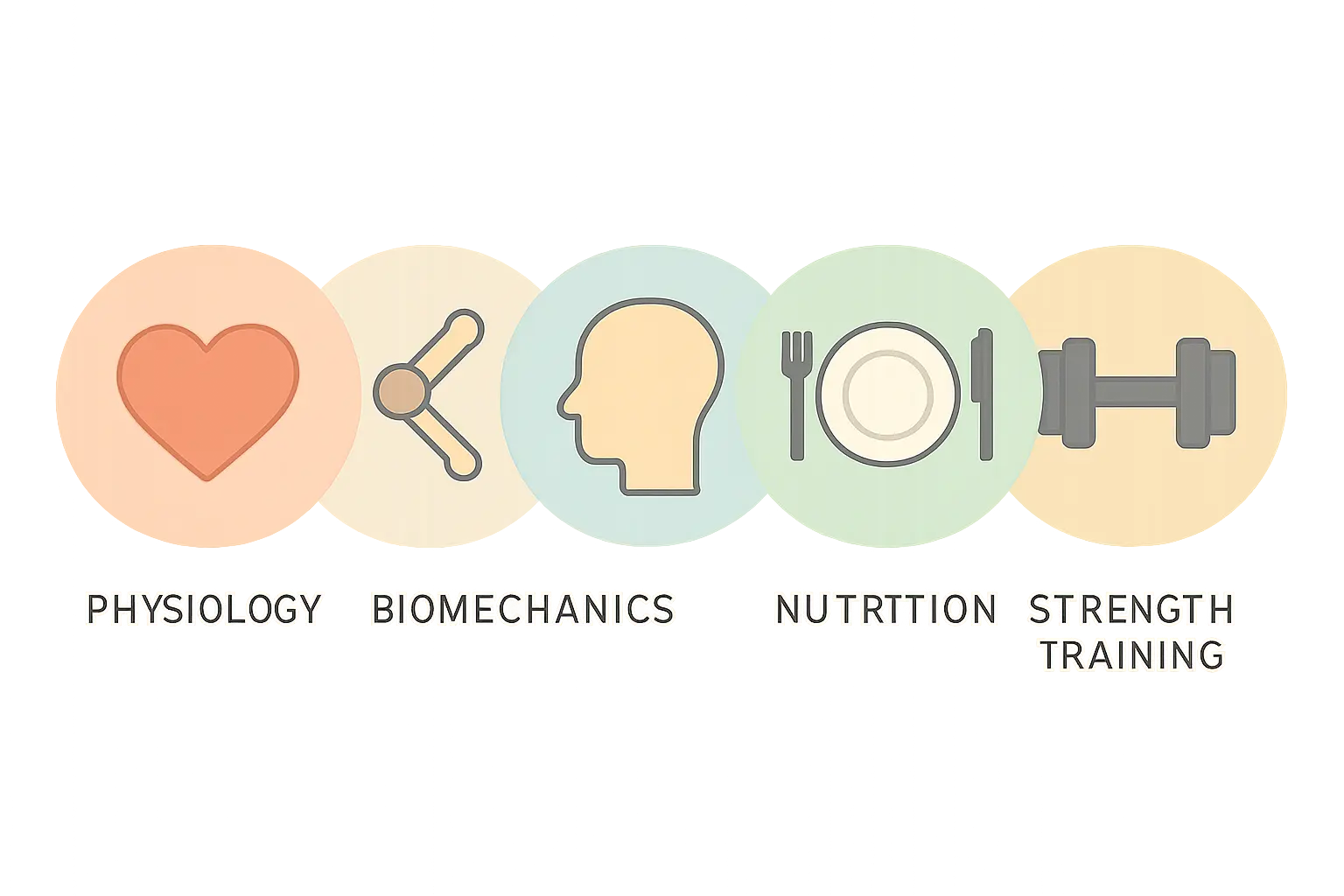
“Sports science” covers work that shares almost no methodology. Identify your sub-discipline early, because it determines your design, your statistics and which journals define good practice for you.
| Sub-discipline | Typical design | Characteristic measures |
|---|---|---|
| Physiology | Repeated-measures crossover; training intervention | VO2 max, lactate threshold, heart rate variability |
| Biomechanics | Within-subject comparison of conditions | Force plate data, motion capture, joint kinematics |
| Strength and conditioning | Training intervention with control | 1RM, countermovement jump, sprint splits |
| Performance analysis | Observational, often retrospective | GPS and accelerometer data, notational coding |
| Sport psychology | Survey, interview, or mixed methods | Validated questionnaires, interview transcripts |
| Nutrition | Crossover supplementation trial | Dietary recall, body composition, performance tests |
A psychology-focused project is closer in method to our psychology dissertation guide than to a physiology project down the corridor. Choose your reference points accordingly.
How do you choose a feasible question?
The dominant failure in undergraduate sports science is the intervention that cannot finish in time. A twelve-week training study, proposed in November, with data collection starting after February ethics approval, does not fit an April deadline. Count backwards before committing.
Three question shapes reliably work within a single academic year:
- Acute response. A single session measuring the immediate effect of one manipulation — warm-up protocol, footwear, caffeine dose, feedback condition. No longitudinal window required.
- Reliability or validity. Does a cheaper or newer measurement tool agree with an established one? Test-retest across two sessions. Genuinely useful, publishable, and logistically small.
- Retrospective performance analysis. Analyse existing match, GPS or competition data. No recruitment, no exertion testing, and often no full ethics review — this is the secondary-data route applied to sport.
Recruitment is the other constraint students underestimate. Trained athletic populations are hard to access and harder to retain across repeat visits. If your design needs twenty trained cyclists, name where they come from before you write the proposal.
What does ethics approval involve for exertion testing?
Sports science carries physical risk that most disciplines do not, and ethics committees scrutinise it accordingly. Build the approval process into your timeline as a hard dependency rather than a formality.
Expect to address at minimum:
- Health screening. A pre-participation questionnaire such as a PAR-Q or an equivalent screening tool, with documented exclusion criteria and a clear referral route for anyone who screens positive.
- Maximal exertion protocols. Tests to volitional exhaustion require justification, supervision arrangements, and stated termination criteria.
- Supervision and first aid. Who is present, what their qualifications are, and what happens in an adverse event.
- Participant populations. Under-18s in youth sport, clinical or patient groups, and pregnant participants all trigger additional safeguards and may require enhanced clearance.
- Ingested substances. Supplementation trials — even with caffeine or beetroot juice — attract closer review and may need pharmacy or clinical input.
The British Association of Sport and Exercise Sciences publishes professional standards and a code of conduct that many UK departments reference directly in their own procedures. Our guide to whether you need ethical approval covers the general process; the discipline-specific additions above are what committees will focus on.
Why does reliability deserve its own section?
This is the single clearest marker separating a strong sports science dissertation from a weak one, and it is regularly missing entirely.
Performance measures are noisy. A countermovement jump varies between attempts; a sprint time varies with surface and timing gate placement. If your intervention produces a 2% improvement and your test has a typical error of 3%, you have measured noise.
Address it explicitly. Report the typical error or coefficient of variation for your key measures — from your own pilot testing where possible, from published reliability studies otherwise. State the smallest worthwhile change you consider meaningful, and set it before you see your results rather than after.
Where you are comparing two measurement methods, use an intraclass correlation coefficient alongside limits-of-agreement analysis rather than a simple correlation. Two instruments can correlate almost perfectly while disagreeing systematically, and a correlation coefficient will not reveal it.
How should you handle statistics with a small sample?
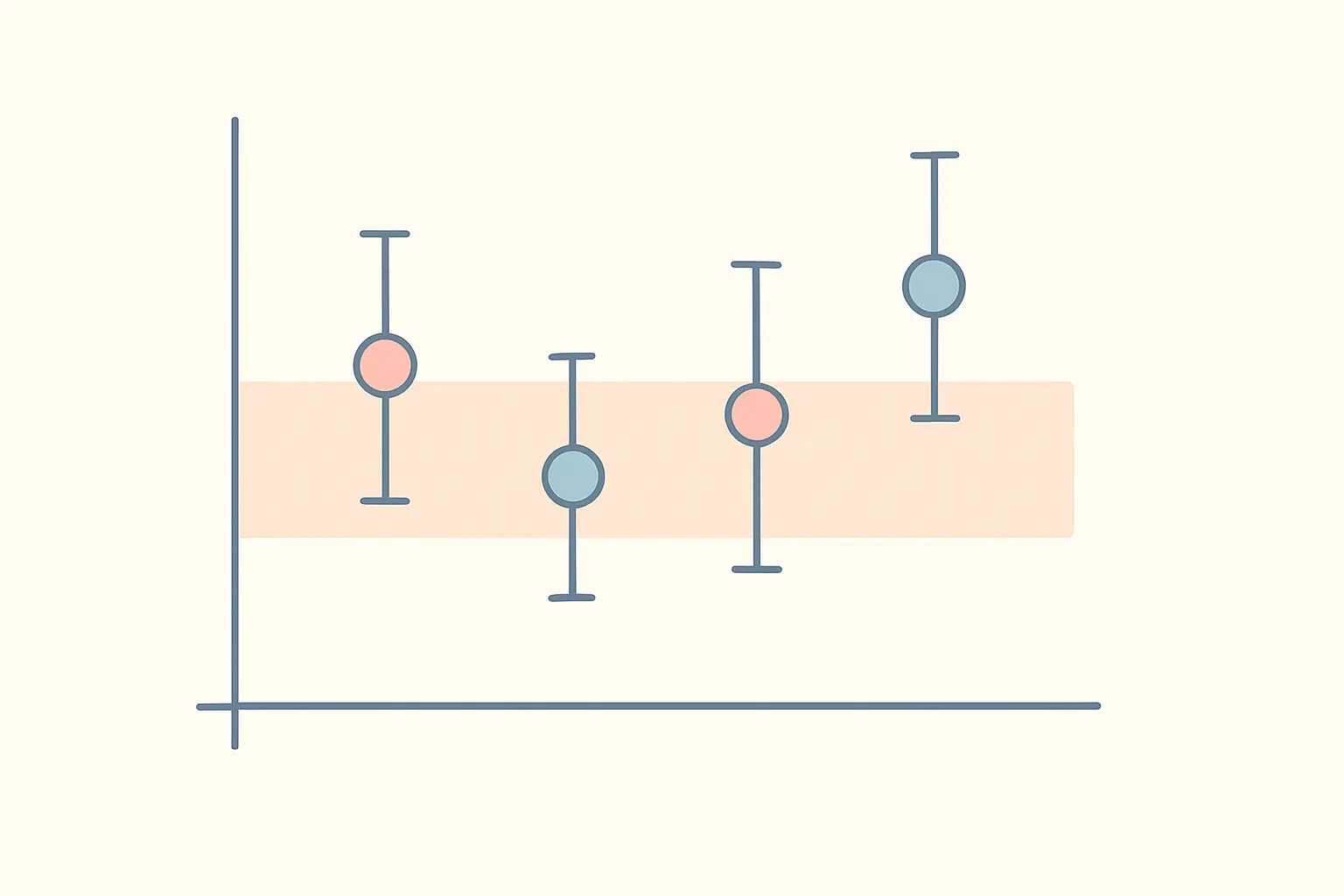
Undergraduate and master’s sports science studies almost always run small. Twelve to twenty participants is normal, and that has direct consequences for how you should analyse and report.
Lead with effect sizes and confidence intervals. A non-significant p-value from n=14 tells the reader almost nothing — it is entirely compatible with a large true effect the study was too small to detect. An effect size with an interval communicates both the estimate and your uncertainty about it, which is what a reader actually needs. Our guide to effect size and confidence intervals covers the reporting conventions.
Other practices markers reward:
- Run and report an a priori power calculation. Even if the required sample was unachievable, showing you knew that is a strength. Reporting a post-hoc power calculation instead is a recognised error.
- Prefer within-subject designs. Crossover and repeated-measures designs use each participant as their own control, which buys statistical power you cannot otherwise afford.
- Randomise and counterbalance condition order, and say how. Learning and fatigue effects are real across repeat visits.
- Report descriptive statistics fully — means, standard deviations and individual responses. Individual response plots are increasingly expected and often reveal more than a group mean.
Your sampling approach also needs stating properly. Most sports science recruitment is convenience sampling, and saying so plainly is better than dressing it up; see sampling methods in research for how to describe and defend it.
What structure should the dissertation follow?
| Chapter | What it must establish |
|---|---|
| Introduction | The applied problem and why it matters to athletes, coaches or clinicians |
| Literature review | What is known, what conflicts, and the specific gap you address |
| Methods | Participants, screening, protocol, equipment, reliability, analysis plan |
| Results | Descriptives, effect sizes with intervals, individual responses; no interpretation |
| Discussion | Interpretation against the literature, mechanisms, practical application |
| Conclusion | What a practitioner should do differently, and what remains unknown |
The methods chapter carries more weight here than in most disciplines. Write it so another researcher could replicate your protocol exactly: equipment make and model, calibration procedure, environmental conditions, participant preparation and standardisation instructions, and the precise timing of each measurement.
The discussion is where applied sciences distinguish themselves. A statistically detectable change that is smaller than the smallest worthwhile change is not a practical finding, and saying so demonstrates better judgement than overselling it. Examiners consistently reward candidates who translate findings into what a coach should actually do — and who are honest when the answer is “nothing yet”.
Frequently asked questions
How many participants does a sports science dissertation need?
There is no fixed number; it depends on your design and expected effect size. Undergraduate studies commonly run twelve to twenty participants. What matters to markers is that you performed an a priori power calculation, reported it, and acknowledged the consequences honestly if recruitment fell short.
Do I need ethical approval for exercise testing?
Almost always. Physical exertion carries risk, so committees expect documented health screening, clear exclusion criteria, stated test termination criteria, and appropriate supervision. Maximal tests, participants under 18, clinical populations and any ingested supplement all attract additional scrutiny.
Can I do a sports science dissertation without collecting data?
Yes. Systematic reviews, meta-analyses and retrospective analyses of existing match, GPS or competition data are all accepted routes, and they remove recruitment risk entirely. Confirm your programme permits a non-empirical project before committing to one.
Should I report p-values or effect sizes?
Both, but lead with effect sizes and confidence intervals. With the small samples typical of sports science, a non-significant p-value is uninformative — it is consistent with a large effect the study lacked power to detect. Interval estimates communicate the magnitude and your uncertainty about it.
What is the smallest worthwhile change and why does it matter?
It is the smallest difference in a performance measure that would matter practically to an athlete or coach. Defining it before you analyse your data lets you distinguish changes that are meaningful from changes that are merely detectable, and stops you overselling a trivial difference.
How do I get access to athletes for my study?
Start with university sports teams, local clubs and your department’s existing partnerships, and approach gatekeepers — coaches and club officials — well before your proposal is due. Access is the most common practical constraint on sports science projects, so secure it before you design around it.
Tesify builds the scaffolding around your write-up — a chapter outline matched to your design, a formatted bibliography, cited references and an AI-use declaration for submission.
Write your thesis with AI
Structure, draft, cite, and format your thesis faster with Tesify’s AI writing tools, automatic bibliography, and plagiarism checker. Free to start, no credit card required.






Leave a Reply