

How to Write a Thesis: Finish a Solid Draft in 6 Weeks
How to write a thesis is one of the most-searched questions in academic life — and also one of the most anxiety-inducing. You’ve got a deadline looming, a blank document staring back at you, and approximately fourteen browser tabs open with zero idea where to actually start. Sound familiar?
Here’s the thing most students don’t realise until it’s almost too late: finishing a thesis isn’t about raw intelligence or even brilliant research. It’s about having a structured plan and sticking to it. According to the Council of Graduate Schools, roughly 50% of doctoral students who begin a PhD never complete their dissertation. The research is rarely the problem. The writing process is.
This guide gives you a battle-tested, week-by-week framework to take your thesis from nothing to a solid, submission-ready draft in six weeks. Whether you’re an undergraduate at UCL, a Master’s student at the University of Melbourne, or a PhD candidate at MIT, the core principles are the same.
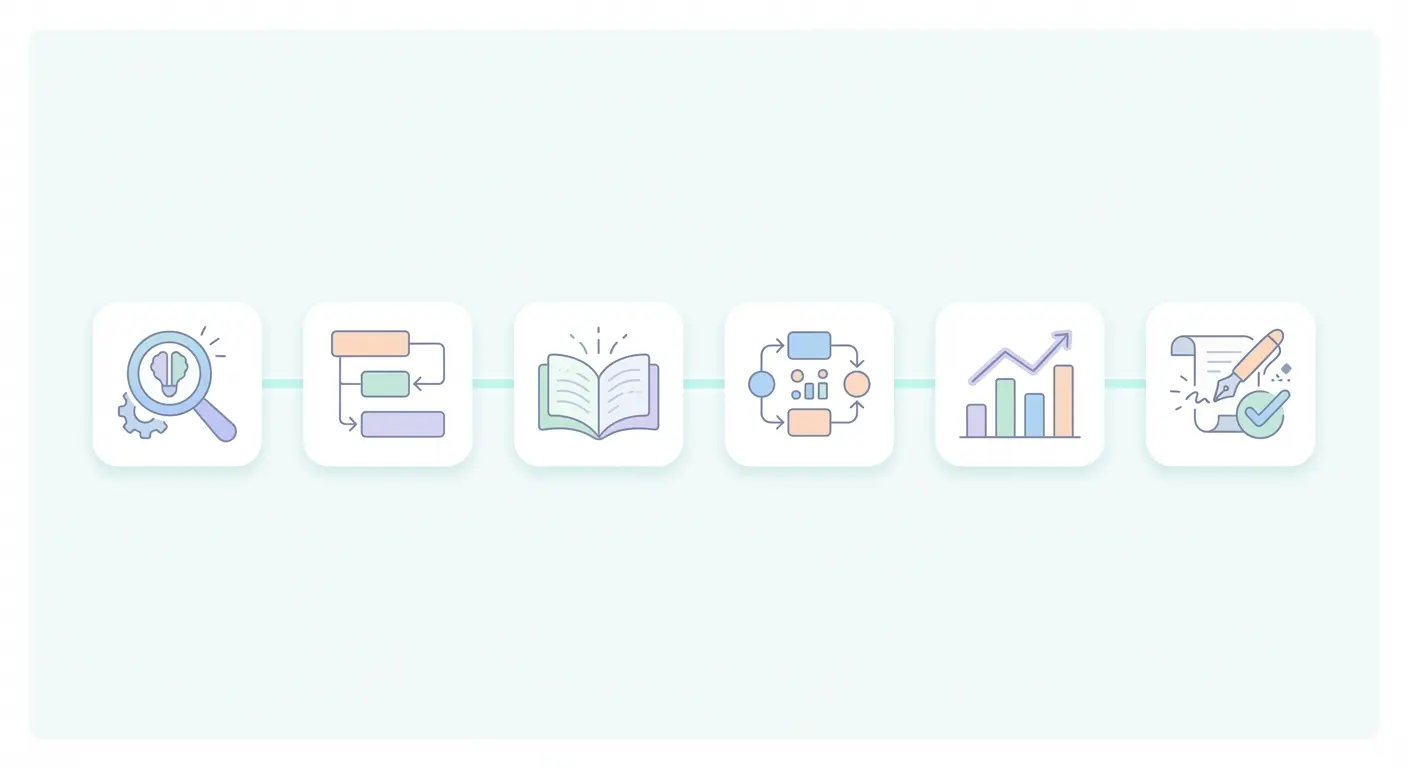
Break your thesis into six distinct phases: research question and outline (Week 1), literature review (Week 2), methodology (Week 3), results and analysis (Week 4), discussion and conclusion (Week 5), and full revision plus formatting (Week 6). Write a minimum of 500 words per day, protect your writing time, and treat each week as a non-negotiable sprint with a clear deliverable.
What Is a Thesis and How Is It Different from a Dissertation?
A thesis is a substantial piece of academic writing that presents original research, analysis, or argumentation in support of a central claim or hypothesis. Typically submitted at the end of a degree programme, a thesis demonstrates a student’s ability to conduct independent scholarly inquiry within their field. It ranges from 10,000 words at undergraduate level to 80,000+ words for a PhD.
The terms “thesis” and “dissertation” get used interchangeably — and confusingly — across different countries and degree levels. Here’s a quick breakdown so you know exactly what you’re working with.
| Term | Country / Region | Degree Level | Typical Word Count |
|---|---|---|---|
| Dissertation | UK, Australia, New Zealand | Undergraduate / Master’s | 10,000 – 20,000 words |
| Thesis | UK, Australia | PhD / Doctoral | 60,000 – 100,000 words |
| Thesis | US, Canada, Ireland | Master’s Level | 15,000 – 40,000 words |
| Dissertation | US, Canada | Doctoral Level | 60,000 – 90,000 words |
For the purposes of this guide, “thesis” and “dissertation” are used interchangeably. The writing strategy is the same regardless of what your institution calls it. What matters is the process — and that’s exactly what we’re going to walk through.
Before You Write a Single Word: The Foundation Phase
Most students skip the foundation phase and pay for it in Week 4, when their argument collapses under its own weight. Don’t be that student.
Before you open a new document and type “Chapter One,” you need three things locked in place: a clear research question, a working outline, and a realistic schedule. These three elements are the scaffolding that holds everything else together.
Clarify Your Research Question First
Your research question is the compass for your entire thesis. Every chapter, every paragraph, every sentence should ultimately serve that question. If the question is vague, your thesis will be vague. If it’s too broad, you’ll drown. If it’s too narrow, you’ll run out of material by Chapter 2.
A strong research question is specific, researchable, and genuinely interesting to you (that last part matters more than you think — you’re going to spend six weeks with this thing). Watch Grad Coach’s step-by-step method for choosing a dissertation research topic — it’s one of the most practical breakdowns available for free.
Build a Working Outline Before Week 1
A working outline isn’t a final structure. It’s a hypothesis for what your thesis will look like. You’ll revise it. But having something on paper stops you from staring at a blank screen wondering what comes next.
Your outline should include: a working title, your research question, each chapter name, and 3–5 bullet points describing what each chapter will do. That’s it. One hour of work that saves ten hours of confusion later.
The 6-Week Thesis Writing Plan (Week-by-Week Breakdown)
This is the engine of the whole guide. Six weeks. Six distinct phases. Each one builds directly on the last.
The plan assumes you’re writing roughly 500–800 words per day on working days (that’s a sustainable target for most people). You can scale up if you have more time, or tighten things with the accelerated 4-week dissertation writing plan if your deadline is tighter.
Week 1 — Research Question, Outline, and Reading Strategy
Week 1 is about building your intellectual architecture. You’re not writing prose yet — you’re thinking, planning, and reading strategically.
Your Week 1 goals:
- Finalise your research question — write it down in one sentence and pin it where you can see it
- Complete your chapter outline — 3–5 bullet points per chapter explaining what each section will argue or demonstrate
- Identify 40–60 core sources — use Google Scholar, JSTOR, your university library, and reference lists in relevant papers
- Create a reference management system — Zotero and Mendeley are both free and excellent
- Write your working thesis statement — one or two sentences summarising the central argument of your entire thesis
What most people miss in Week 1 is the importance of the reading strategy. You cannot read everything. You shouldn’t try. Read abstracts and conclusions first, then decide whether a source deserves full attention. Aim to annotate as you read — brief notes on how each source connects to your argument saves enormous time later.
Week 2 — Writing the Literature Review
The literature review intimidates almost everyone. Students often treat it as a list of summaries — “Smith (2018) said X, Jones (2020) said Y” — and that approach produces weak, directionless chapters that supervisors hate.
A literature review is a critical synthesis. It shows the examiner that you understand the existing conversation in your field, can identify its gaps and contradictions, and have positioned your own research meaningfully within it.
Your Week 2 goals:
- Group your sources thematically, not chronologically — themes, debates, and methodological approaches are the natural organising principles
- Identify the gap your thesis addresses — this is the most important sentence in your literature review
- Write a first draft of 2,000–4,000 words (or whatever length your institution specifies)
- Use transitional language to connect sources and show relationships between ideas — the Academic Phrasebank from the University of Manchester is an invaluable free resource for exactly this
The Grad Coach’s full tutorial on writing a literature review in 3 steps walks you through the synthesis process in a way that’s genuinely practical and clear. Worth 20 minutes of your time before you start drafting.
Week 3 — Drafting the Methodology Chapter
Here’s a counterintuitive truth: the methodology chapter is often the easiest one to write, because you’re describing what you actually did (or plan to do). It’s not speculative or interpretive — it’s a transparent account of your research design.
The methodology chapter should answer these questions clearly:
- What is your overall research approach (qualitative, quantitative, mixed methods)?
- What is your research design (case study, survey, experiment, ethnography, systematic review)?
- How did you collect your data, and why did you choose that method?
- How did you analyse your data?
- What are the limitations and ethical considerations of your approach?
Week 3 goal: A complete draft of your methodology chapter. Aim for 1,500–3,000 words depending on your field and degree level. Sciences tend to require more methodological detail; humanities less so.
One thing students consistently underestimate is the importance of justifying their choices. Don’t just say you used semi-structured interviews. Explain why semi-structured interviews were the most appropriate tool for your specific research question. That’s where the marks live.
Week 4 — Results and Analysis
Week 4 is often the most intellectually demanding week of the six. This is where your actual findings go on the page — and where the temptation to describe rather than analyse is strongest.
The distinction matters enormously. Description tells the reader what happened. Analysis tells the reader what it means, why it matters, and how it relates to your research question and the existing literature. Examiners at Oxford, Cambridge, and Harvard all look for the same thing: evidence that you can think critically about your own data.
Practical tips for Week 4:
- Organise results by theme or research question, not by the order in which data was collected
- Use figures, tables, and charts to present quantitative data — visual presentation is clearer and saves words
- Annotate every figure — never leave a table without explaining what the reader should notice
- Link your findings back to your literature review — this is where your chapter becomes analytical rather than descriptive

Week 5 — Discussion and Conclusion
The discussion chapter is where your thesis either lands or falls flat. It’s the intellectual centrepiece. And it’s the chapter most students find genuinely hard to write — because it requires you to step back, synthesise everything, and make a confident argument about what your research means.
Inger Mewburn (known widely as the Thesis Whisperer) has a superb, candid breakdown of exactly this challenge. Her piece “No, really — how do you write a discussion section?” is one of the most honest and useful things written about this topic. Recommended reading before you start Week 5.
Your discussion chapter should:
- Interpret your findings in light of your research question
- Connect your results explicitly back to the literature you reviewed in Week 2
- Acknowledge unexpected findings without apologising for them
- Address limitations of your study honestly and specifically
- Suggest directions for future research
Your conclusion is shorter — typically 500–1,000 words. It should summarise your key argument, restate what your thesis has contributed to the field, and close with a clear, confident final statement. Avoid introducing new evidence here. Your conclusion wraps things up; it doesn’t start new threads.
Week 6 — Revision, Editing, and Final Formatting
Week 6 is where a decent draft becomes a good one. Don’t skip this week or compress it into a single frantic night. Revision is not proofreading. It’s structural rethinking, argument tightening, and coherence checking.
The Week 6 revision process:
- Read the whole thesis aloud — you’ll catch problems your eyes skip over
- Check argument flow — does each chapter logically lead to the next? Does the discussion actually discuss what the results found?
- Verify all citations — missing references are a common and easily avoidable mark-loser
- Check your formatting against your institution’s style guide (APA, Harvard, Chicago, etc.)
- Proofread systematically — one pass for grammar, one for spelling, one for consistency of terminology
- Format your document professionally — if you’re using LaTeX, Overleaf’s thesis template gallery has ready-made templates for virtually every university style
For a complete week-by-week schedule with daily word targets, session planning, and tick-box checklists, the full 6-week dissertation writing plan on Tesify gives you every detail you need to manage your time from Day 1 to submission day.
Thesis Structure: What Every Chapter Needs
Every thesis is different, but the core structure is remarkably consistent across disciplines and institutions. Understanding what each chapter is for — and what it is not for — is half the battle.
| Chapter | Core Purpose | Approx. % of Word Count |
|---|---|---|
| Introduction | Sets context, states research question, outlines structure | 8–10% |
| Literature Review | Reviews and critiques existing scholarship; identifies the gap | 20–25% |
| Methodology | Justifies and explains research design and methods | 10–15% |
| Results / Findings | Presents data clearly; begins initial interpretation | 20–25% |
| Discussion | Interprets findings; connects to literature; addresses implications | 20–25% |
| Conclusion | Summarises argument; contribution to knowledge; limitations | 5–8% |
Note: some disciplines (particularly in the sciences) merge results and discussion into a single chapter. Some humanities theses don’t have a separate methodology chapter at all. Always follow your department’s specific guidelines over any generic template.
Daily Writing Habits That Actually Work
The six-week plan only works if you actually write every day. That sounds obvious until Day 3, when you can’t find your notes, your flatmate wants to watch TV, and your brain has decided today is not the day.
Here’s what the research on academic productivity actually shows — and what experienced writers at places like Harvard’s Writing Center have quietly known for years: consistency beats intensity every single time.

The 500-Word Floor Rule
Set 500 words as your daily floor — not a goal, a minimum. On good days you’ll write 1,000. On terrible days you’ll write 500. But you’ll always write something. That consistency is what compounds into a complete thesis.
Robert Boice’s research on faculty writing productivity (published in his 1990 book Professors as Writers) found that academics who wrote in short daily sessions consistently outproduced those who waited for big blocks of time. The daily habit rewires how your brain approaches the work.
Protect Your Peak Hours
Know when you write best — and protect those hours like they’re seminars you can’t miss. Most people have a 2–4 hour window of peak cognitive performance per day. For many, it’s morning. Use that window exclusively for writing. Save email, admin, and reading for the afternoon.
Use a Writing Log
Track your daily word count in a simple spreadsheet or notebook. Seeing the numbers build creates momentum. Missing a day becomes visible — which means you’re more likely to make it up the next day rather than quietly sliding into avoidance.
If you want to check your progress against the full daily targets and weekly milestones, the Tesify 6-week dissertation writing guide includes a detailed schedule with session-by-session breakdowns.
7 Common Thesis Writing Mistakes (and How to Fix Them)
These aren’t abstract warnings — they’re the exact patterns that supervisors flag in first drafts, year after year, across disciplines and institutions.
- Starting too late: The six-week plan only works if you start it with six weeks to spare. Build your schedule backwards from your submission date before anything else.
- Vague research questions: “What factors affect student performance?” is not a research question. “How do sleep patterns among first-year undergraduates at UK Russell Group universities correlate with end-of-year exam results?” is.
- Descriptive literature reviews: Summarising sources isn’t reviewing them. Every source you cite should either support, challenge, or contextualise your argument.
- Methodology without justification: Saying what you did is not enough. Explain why your chosen methods were the most appropriate for your specific research question.
- Results without analysis: Data presented without interpretation is a collection, not a chapter. Always explain what your results mean in relation to your research question.
- A disconnected discussion: Your discussion should explicitly reference your literature review. If the two chapters could be swapped out without affecting each other, the discussion isn’t doing its job.
- Skipping revision: A first draft is always a rough draft. The difference between a 2:1 and a First — or between a pass and a distinction — often lives in the quality of revision, not the original writing.
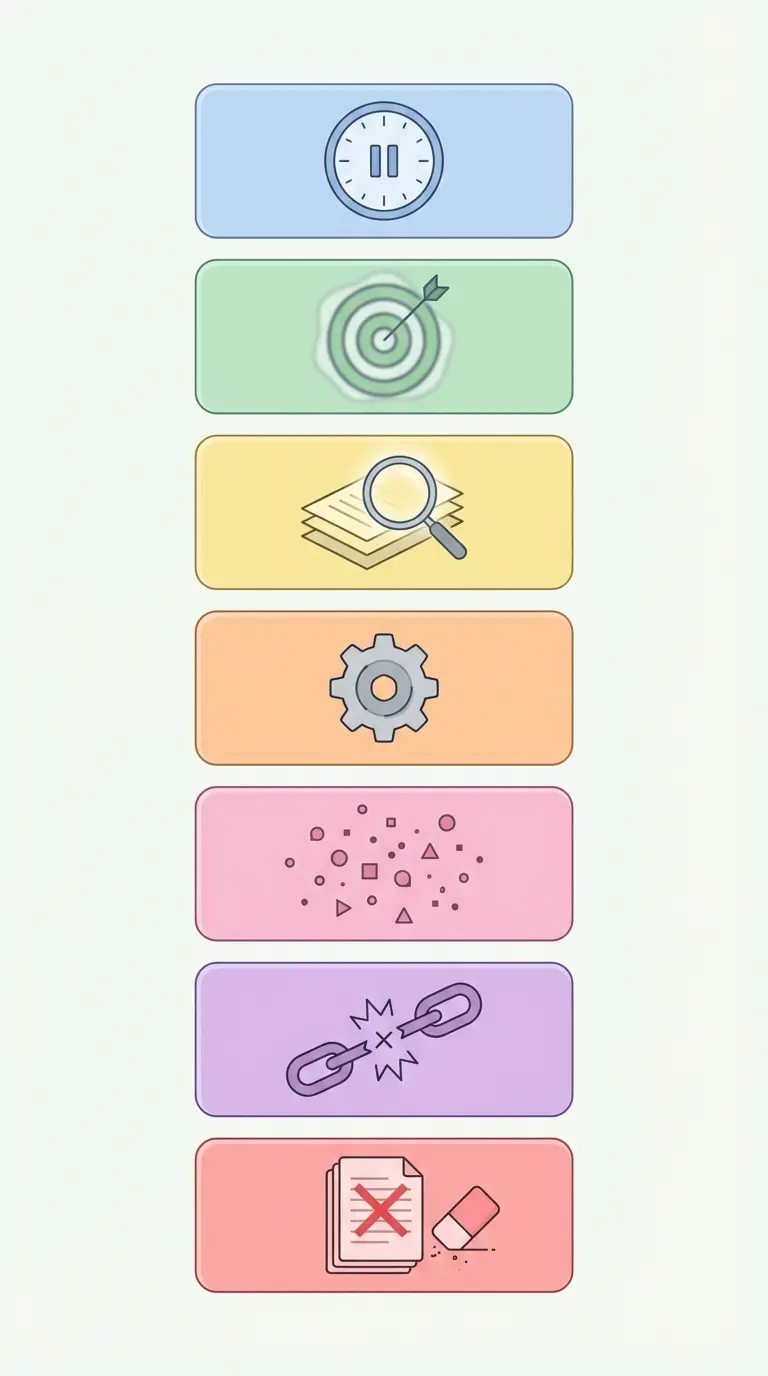
If you’ve already hit one of these blockers and your progress has stalled, the Tesify dissertation writing fix guide walks through targeted solutions for each of the most common stall points — including what to do when you’ve lost momentum halfway through.
Essential Tools and Resources for Dissertation Writing
You don’t need expensive software to write a good thesis. You need the right free tools used consistently.
| Tool | Purpose | Best For |
|---|---|---|
| Zotero | Reference management and citation generation | All students |
| Google Scholar | Literature searches and citation tracking | All students |
| Overleaf | LaTeX document preparation with thesis templates | STEM / PhD students |
| Manchester Academic Phrasebank | Academic language and sentence starters | Non-native English speakers; all levels |
| Scrivener | Long-form document organisation and outlining | Humanities / social sciences |
| Grammarly | Grammar, style, and clarity checking | All students, especially for revision week |
For writing improvement at postgraduate level specifically, this guide to improving academic writing for PhD students and researchers is worth bookmarking. It addresses the gap between “academic enough” and genuinely clear, compelling scholarly prose.
4-Week vs 6-Week Thesis Plan: Which One Is Right for You?
Six weeks is the recommended timeline for most students because it gives you space to think, revise, and manage the inevitable interruptions of academic life. But not everyone has six weeks.
If your deadline is tighter — or if you’ve already completed significant chunks of your research — the 4-week dissertation writing plan compresses the schedule without cutting corners on quality. The trade-off is intensity: you’re writing more per day with less revision buffer.
| Factor | 6-Week Plan | 4-Week Plan |
|---|---|---|
| Daily word target | 500–800 words | 800–1,200 words |
| Revision buffer | Full week (Week 6) | 3–4 days |
| Research phase | Week 1 dedicated | Assumes prior research |
| Best for | Starting from scratch | Research largely done |
| Stress level | Manageable with discipline | High — requires full commitment |
This won’t work for everyone, but if you’re a part-time student or managing significant other commitments alongside your thesis, the 6-week plan will almost always serve you better. The extra two weeks aren’t padding — they’re the margin that makes quality possible.
Frequently Asked Questions About Writing a Thesis
How long does it take to write a thesis?
Most undergraduate and Master’s students complete their thesis draft in 6–12 weeks of focused writing, assuming research is already underway. A PhD thesis typically takes 6–18 months to write after data collection. The 6-week sprint in this guide is designed for students who have their research question and core sources in place and need a structured drafting schedule.
What is the difference between a thesis and a dissertation?
Write your thesis with AI
Structure, draft, cite, and format your thesis faster with Tesify’s AI writing tools, automatic bibliography, and plagiarism checker. Free to start, no credit card required.

Latest Articles
- Non-Parametric Tests Explained 2026: Mann-Whitney, Wilcoxon and Kruskal-Wallis
- The Last 48 Hours Before Thesis Submission: An AI-Assisted Checklist (2026)

- Disabled Students’ Allowance and Neurodiversity Support for Postgraduates 2026

- Best Open-Source Alternatives to Paid Research Tools Compared (2026)

- What Happens If Your Supervisor Leaves the University Mid-PhD? (2026)

Leave a Reply