
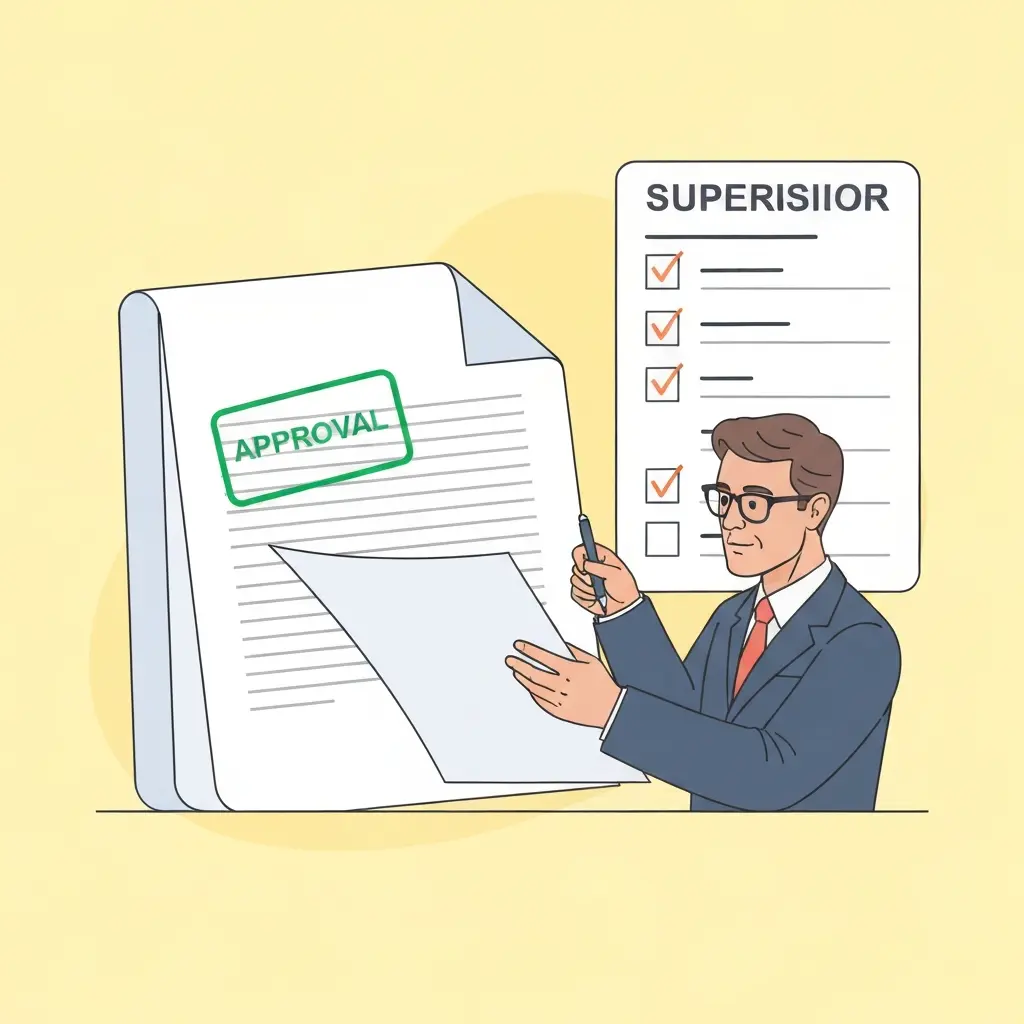
Thesis Proposal Example: How to Write One That Gets Approved 2026
A thesis proposal is your first major piece of academic persuasion. Before you write a single chapter of your thesis, you must convince your supervisor and department that your research is original, feasible, and academically worthwhile. Many students treat the proposal as a bureaucratic formality — they write it quickly and move on. The students who get their proposals approved on the first submission treat it as a mini-version of the thesis itself.
This guide provides a fully annotated thesis proposal example, a section-by-section breakdown of what goes where, the most common reasons proposals are rejected, and a ready-to-adapt template you can use immediately. Based on the conventions at Oxford, UCL, University of Manchester, Harvard, and MIT.
According to data from the UK Council for Graduate Education, approximately 35% of PhD proposals require significant revision before approval, and the most common issue is not originality — it is feasibility. The proposal fails to convince the committee that the study can actually be done within the stated timeframe and with available resources.
What Is a Thesis Proposal?
A thesis proposal (also called a research proposal or prospectus) is a written plan that describes what you intend to research, why it matters, and how you will do it. It is submitted before the main thesis research begins and must be approved by your supervisor or department committee before you can proceed.
| Level | Typical Length | Who Approves | Timing |
|---|---|---|---|
| Undergraduate | 500–1,000 words | Supervisor | Start of final year |
| Master’s | 1,000–2,500 words | Supervisor and department | End of taught modules |
| PhD | 2,000–5,000 words | Department committee | Before programme begins or at Year 1 review |
Full Thesis Proposal Example: Annotated
The following is a master’s dissertation proposal in the field of education, annotated with commentary explaining what each section achieves.
Working Title
“The Impact of Hybrid Learning Models on Student Engagement and Academic Self-Efficacy in UK Secondary Schools: A Mixed-Methods Investigation”
Annotation: The title communicates the key variables (hybrid learning, student engagement, academic self-efficacy), the population (UK secondary schools), and the methodology (mixed methods). An examiner can understand the entire study from the title alone. Note it is called a “working title” — proposals are allowed to evolve.
Research Problem and Rationale
“The COVID-19 pandemic forced a rapid, unplanned shift to remote learning across UK secondary schools in 2020–21. As schools have returned to in-person instruction, a subset of institutions have retained elements of remote delivery in hybrid models — combining face-to-face teaching with asynchronous digital content. While hybrid models offer potential benefits in terms of scheduling flexibility and personalised learning pace, their effects on student engagement and academic self-efficacy in secondary school contexts remain poorly understood. Government-commissioned reviews (DfE, 2023) have identified hybrid learning as a ‘priority area for evidence generation,’ yet the peer-reviewed literature on secondary school hybrid learning is dominated by studies conducted in the US and Australia, with UK-specific evidence remaining scarce.”
Annotation: This paragraph does three things in quick succession: establishes context (post-COVID hybrid models), identifies the gap (poor understanding of effects in UK secondary schools), and provides external validation (DfE report). The final sentence explicitly justifies why UK-specific research is needed, addressing the “why not just use existing research?” question before the reader asks it.
Research Question(s)
Primary: To what extent does participation in a hybrid learning model affect academic self-efficacy in UK secondary school students aged 14–16?
Secondary: (i) How do students in hybrid learning environments describe their engagement with online versus in-person components? (ii) What contextual factors mediate the relationship between hybrid learning and self-efficacy?
Annotation: One primary quantitative question (measurable, specific age group) and two qualitative secondary questions (exploratory, about experience and mechanism). This structure directly justifies the mixed-methods design described in the methodology section.
Literature Overview
“Existing research on hybrid learning in higher education is more extensive than in secondary settings. Garrison and Kanuka (2004) established the theoretical framework of blended learning as the ‘thoughtful integration’ of classroom and online experience, later refined by Graham (2006) and Picciano (2017). More recent meta-analyses (Means et al., 2013; Larson and Sung, 2021) report hybrid approaches to be moderately more effective than purely online or purely face-to-face instruction for adult learners, though the effect size varies considerably by subject and implementation quality. In secondary school contexts, the evidence base is substantially thinner. Kim and Bonk (2006) found that structured hybrid schedules improved student satisfaction but not measured achievement outcomes. UK-specific studies remain rare: McFarlane and Sparrowhawk (2023) examined hybrid delivery in Further Education colleges but their findings may not transfer to compulsory secondary education, where motivational and self-regulatory profiles differ.”
Annotation: In fewer than 200 words, this section establishes what is known, cites key foundational and recent sources, notes the limitation of existing research (higher education focus), and restates the specific gap (UK secondary schools). This is not a full literature review — it is a map of the landscape, sufficient to justify the gap claim.
Proposed Methodology
“This study will adopt a pragmatic epistemological stance and a mixed-methods sequential explanatory design (Creswell and Plano Clark, 2018). Phase 1 will administer the Academic Self-Efficacy Scale (Bandura, 1990) and a validated student engagement questionnaire to approximately 120 Year 10 students across three schools with established hybrid models, providing quantitative data on engagement and self-efficacy levels. Phase 2 will conduct semi-structured interviews with 12 purposively selected students (6 with high, 6 with low self-efficacy scores) to explore the qualitative experiences behind the Phase 1 findings. Ethical approval will be sought from the university ethics committee and from the relevant school headteachers. All participation will be voluntary and consented by both students and parents/guardians.”
Annotation: The methodology paragraph names the philosophical stance, the design type (with citation), the specific instruments, the sample sizes, and the ethical plan. This is the feasibility section — it shows the committee that you have thought through how the study will actually work.
Expected Outcomes
“It is anticipated that hybrid learning will show a moderate positive association with self-efficacy scores in students who express a preference for self-directed study, but a neutral or negative association in students who report a preference for structured in-person interaction. Qualitatively, I expect to identify contextual mediators including teacher responsiveness and the clarity of task instructions in online components. If the hypotheses are confirmed, findings will contribute to evidence-based guidance for UK secondary schools implementing or evaluating hybrid models. If the hypotheses are disconfirmed, the negative results will contribute equally important evidence to an emerging policy debate.”
Annotation: Expected outcomes are presented as anticipated, not certain — appropriate academic caution. The final sentence (“If the hypotheses are disconfirmed…”) is particularly strong: it shows the committee that the study is genuinely exploratory and will produce valuable results regardless of whether the hypothesis holds.
Timeline
| Month | Activity |
|---|---|
| 1–2 | Systematic literature review; finalise instruments; apply for ethical approval |
| 3 | Ethical approval received; school access negotiated; Phase 1 surveys distributed |
| 4 | Phase 1 data collected and analysed; participants selected for Phase 2 |
| 5 | Phase 2 interviews conducted and transcribed |
| 6–7 | Thematic analysis; write literature review and methodology chapters |
| 8–9 | Write results and discussion chapters; initial supervisor review |
| 10 | Write introduction and conclusion; full draft to supervisor |
| 11 | Revisions, proofreading, formatting |
| 12 | Submission |
Ready-to-Use Thesis Proposal Template
Adapt this template for your own proposal. Replace the italicised guidance with your own content:
- Working Title: [Phenomenon / Variables + Population + Method hint]
- Background and Rationale (200–400 words): Context → problem → why this matters now → gap in existing knowledge → why your study is needed
- Research Question(s): One primary question + 1–3 secondary questions. Make them specific and answerable.
- Literature Overview (300–500 words): Map the key debates → identify the gap → connect the gap to your research question
- Proposed Methodology (300–500 words): Research philosophy → approach (deductive/inductive) → design (survey, interviews, experiment, etc.) → instruments → sample → analysis plan → ethics
- Expected Outcomes (100–200 words): State anticipated findings as hypotheses, not certainties. Explain what both positive and negative results would contribute.
- Timeline: Month-by-month plan showing that the work is achievable
- Bibliography: 10–20 key sources in your institution’s referencing style
Why Proposals Get Rejected (and How to Avoid It)
| Rejection Reason | How to Avoid It |
|---|---|
| Topic too broad | Narrow to a specific population, context, and time period. “Social media and mental health” → “Passive Instagram use and anxiety in UK female undergraduates.” |
| Not feasible in the time given | Build your timeline in the proposal and show it works. Account for ethics approval, access negotiation, and delays. |
| No clear research gap | Include an explicit gap statement. Never assume the committee can see the gap themselves. |
| Method doesn’t match question | If you are asking an experiential “how/why” question, you need qualitative methods. If you are asking “how much/how many,” you need quantitative. |
| No ethical plan | Address participant consent, confidentiality, and ethics approval timeline explicitly — even at proposal stage. |
How to Work With Your Supervisor on the Proposal
- Book a meeting before writing: A 20-minute conversation before you write your first draft saves hours of wrong-direction effort.
- Share a draft early: Send a rough draft well before the submission deadline so your supervisor has time to give meaningful feedback.
- Ask specifically: “Does the research question feel appropriately scoped?” is more useful than “Is this okay?”
- Revise before resubmitting: If your proposal is returned for revision, address every single comment — even the minor ones.
For a full guide to the writing process, see our complete thesis writing guide and our research methodology types guide. For related guidance in French, see Tesify.fr’s mémoire writing guide.
Frequently Asked Questions
How long should a thesis proposal be?
Length varies by level and institution. Undergraduate proposals are typically 500–1,000 words; master’s proposals are 1,000–2,500 words; PhD proposals are 2,000–5,000 words. Some departments specify an exact word count, others give a range, and some specify a page count with particular formatting requirements. Always check your department’s specific guidelines. When in doubt, ask your supervisor — a slightly too-long, thorough proposal is generally better received than a superficial one that hits the minimum.
Can I change my research topic after my proposal is approved?
Minor changes are normal and generally acceptable — research rarely proceeds exactly as planned. Significant changes to the research question, methodology, or population typically require a revised proposal or at least notification of your supervisor. For PhD students, changes beyond a certain scope may trigger a formal “change of topic” process with the department. The earlier you identify the need for a major change, the easier it is to handle. Never silently change direction without telling your supervisor.
What is the difference between a thesis proposal and a thesis introduction?
A thesis proposal is written before the research happens, to seek approval for what you plan to do. It is written in the future tense (“This study will…”). A thesis introduction is written after the research is complete, as the first chapter of the submitted thesis. It is written in the present or past tense and describes what the thesis actually contains. The content overlaps — both establish context, research question, and structure — but the proposal is a plan and the introduction is a description of completed work.
Do I need to read all my sources before writing the proposal?
You need to read enough to write a credible literature overview and identify a genuine gap. For a master’s proposal, this typically means reading 15–30 relevant sources — not superficially, but with enough depth to understand the key debates and identify what is missing. You do not need to have read everything in your field before writing the proposal; the full systematic literature review comes later. However, you do need to know enough to make a convincing case that your research question is original and that the gap you have identified is real.
What if my proposal is rejected?
Most proposal “rejections” are actually requests for revision — the committee wants to see specific improvements before approving. Read the feedback carefully, address every point, and resubmit. If the rejection is more fundamental (topic not viable, not original enough, methodology not feasible), meet with your supervisor to redesign the project before rewriting. Very few proposals are flatly rejected without a path to approval. Treat feedback as guidance, not failure — supervisors and committees want you to succeed.
Write your thesis with AI
Structure, draft, cite, and format your thesis faster with Tesify’s AI writing tools, automatic bibliography, and plagiarism checker. Free to start, no credit card required.




Leave a Reply