
How to Write a Thesis Abstract: Examples & Templates for Every Discipline (2026)
Your thesis abstract is the single most-read section of your entire dissertation — and also the section most students write last, in a hurry, after months of exhaustion. A weak abstract buries research that deserves to be found. A strong thesis abstract example does the opposite: it earns clicks, signals rigour, and gives examiners an immediate reason to keep reading. This guide gives you five complete, discipline-specific examples alongside a proven six-step writing process and a free copy-paste template.
Whether you are finishing a BSc at UCL, a Master’s at MIT, or a PhD at the University of Melbourne, the principles are the same. By the end of this article you will have a model abstract ready to adapt for your own work — no vague advice, no fluff.
What Is a Thesis Abstract?
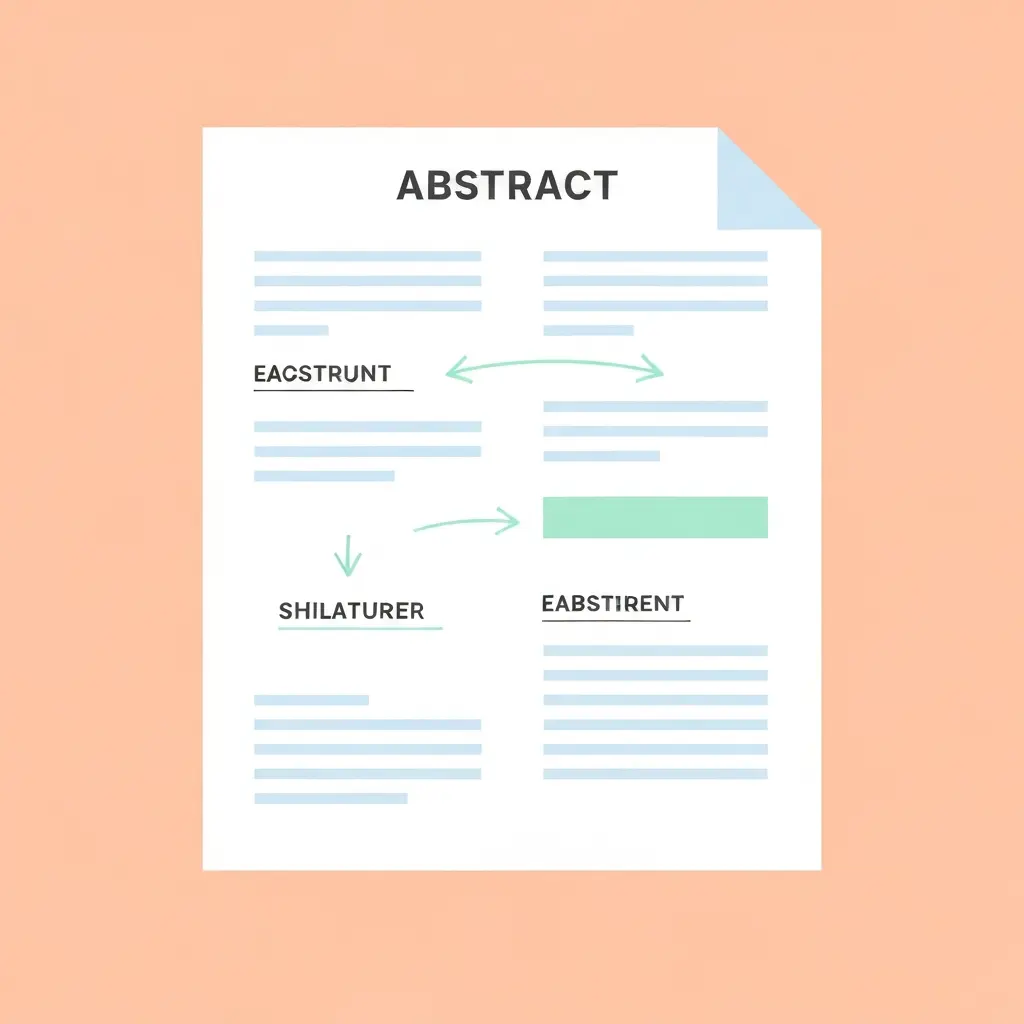
A thesis abstract is a concise, self-contained summary of your entire dissertation. It sits before the main text — typically immediately after the title page and before the table of contents — and is the first substantive thing an examiner, library database user, or future researcher will read.
Think of the abstract as an elevator pitch for your research. It must answer four questions without the reader having to open a single chapter:
- Why? — What problem or gap does your research address?
- How? — What methodology or approach did you use?
- What? — What did you find?
- So what? — What do the findings mean for the field?
Unlike an introduction, the abstract does not build suspense or contextualise at length. It delivers conclusions upfront. Unlike an executive summary in business reports, it does not include bullet points, headings, or recommendations — it is a single piece of flowing prose.
Abstracts are also indexed by Google Scholar, ProQuest, JSTOR, and every major academic database. A well-written abstract with precise keywords dramatically increases the discoverability of your research long after submission.
How Long Should a Thesis Abstract Be?
The short answer: check your institution’s guidelines first. That said, most universities and disciplines operate within a fairly consistent range:
| Level | Typical Word Count | Notes |
|---|---|---|
| Undergraduate dissertation | 150–200 words | Often not required; check your handbook |
| Master’s thesis | 200–300 words | Standard across UK, US, and Australian universities |
| PhD thesis | 250–350 words | Some institutions allow up to 500 words |
| Journal submission | 150–250 words | Strict limits; always check author guidelines |
The University of Edinburgh caps PhD abstracts at 300 words; Oxford requires abstracts not to exceed one side of A4 (roughly 350–400 words). When in doubt, aim for 250 words — it is long enough to cover all four components and short enough to read in under two minutes.
How to Write a Thesis Abstract: 6 Steps
The golden rule: write the abstract last. Attempting to write it before your thesis is finished almost always produces vague, uncommitted language. Once your full draft is complete, follow these six steps.
Step 1: Re-read Your Introduction and Conclusion
Your introduction defines the research problem; your conclusion states what you found. These two chapters contain 80% of what belongs in your abstract. Read them back-to-back and highlight the three or four most important sentences in each.
Step 2: Write One Sentence for Each Component
Start with a rough draft that has exactly one sentence per component — problem, context, methodology, findings, implications. This forces precision. Many students try to write abstracts as flowing paragraphs from the start and end up with vague language like “this study examines important aspects of…” — which tells the reader nothing.
Step 3: Expand Each Sentence to 2–3 Sentences
Now add one sentence of supporting detail to each component. For methodology, name the specific approach (e.g. “semi-structured interviews with 24 participants,” or “randomised controlled trial with n=180”). For findings, include at least one concrete data point or specific claim rather than a general statement.
Step 4: Add Your Focus Keyword Naturally
Identify the two or three terms a researcher in your field would use to search for your topic and ensure they appear naturally in your abstract. These function as academic SEO — databases index abstracts and match them to search queries. Do not stuff keywords unnaturally; a single well-placed appearance per term is enough. For broader research methodology grounding, ensure your methodological terms are precise.
Step 5: Cut Ruthlessly to Your Word Limit
Edit down by removing: (a) background information that belongs in the introduction; (b) definitions of terms the examiner already knows; (c) hedging phrases like “it could be argued that” — in abstracts, state conclusions directly. Read the abstract aloud; any sentence that sounds weak or hedged should be cut or sharpened.
Step 6: Check It Stands Alone
Give the abstract to someone unfamiliar with your thesis. Can they answer all four questions (Why? How? What? So what?) after reading it? If not, something is missing. Also confirm: no citations, no undefined acronyms, no bullet points, no tables, and no promises of content that does not appear in the thesis itself.
5 Full Thesis Abstract Examples by Discipline
Each example below is written to the standards of a strong Master’s or PhD abstract. They demonstrate the four-component structure in different disciplinary voices — from the data-first precision of the sciences to the argument-driven narrative of the humanities. Use them as templates, not as content to copy.
Example 1: Sciences (Biomedical Research)
Sciences Example — Master’s Thesis in Biomedical Science (~250 words)
The Role of SIRT3 Deacetylase in Mitochondrial Dysfunction Associated with Type 2 Diabetes Mellitus
Mitochondrial dysfunction is a central feature of type 2 diabetes mellitus (T2DM), yet the molecular mechanisms linking metabolic stress to mitochondrial impairment remain incompletely understood. This study investigates the role of sirtuin 3 (SIRT3), a mitochondrial NAD+-dependent deacetylase, in mediating oxidative stress and bioenergetic failure in pancreatic beta cells under hyperglycaemic conditions.
Using a combination of in vitro cell culture models (INS-1E cells exposed to 30 mM glucose for 72 hours) and ex vivo analysis of pancreatic tissue from streptozotocin-induced diabetic Wistar rats (n=24), this study applied Western blotting, Seahorse XF respirometry, and fluorescence-based reactive oxygen species (ROS) quantification to characterise SIRT3 expression and mitochondrial function.
Results demonstrated a 58% reduction in SIRT3 protein expression in hyperglycaemia-treated cells compared with normoglycaemic controls (p<0.001), accompanied by a 43% decrease in mitochondrial oxygen consumption rate and a 2.7-fold increase in ROS production. Overexpression of SIRT3 via adenoviral transduction partially rescued mitochondrial respiratory capacity (restoration to 74% of control levels) and attenuated apoptotic signalling as measured by reduced caspase-3 cleavage.
These findings identify SIRT3 downregulation as a key mechanism in glucotoxicity-induced mitochondrial dysfunction and suggest that pharmacological activation of SIRT3 may represent a viable therapeutic target for preserving beta cell viability in T2DM. Future work should investigate SIRT3 activators in human islet models and long-term animal studies.
Why this works: The problem is specific (SIRT3 in T2DM), the methodology names exact models and sample sizes, the results include precise percentages and p-values, and the conclusion points directly to a therapeutic application. Every sentence earns its place.
Example 2: Humanities (History)
Humanities Example — PhD Thesis in Modern History (~250 words)
Manufacturing Consent on the Home Front: British Propaganda, Working-Class Identity, and the Industrial Press, 1939–1945
This thesis examines the role of the British Ministry of Information (MoI) in shaping working-class political identity through the industrial press during the Second World War. Existing historiography has focused predominantly on mass-market print media and BBC broadcasting as vectors of wartime propaganda; this study argues that the factory newspaper — a genre of workplace-specific publication with a combined circulation of over two million by 1943 — constituted a distinctive and underexamined site of ideological production.
Drawing on archival research at the National Archives (Kew), the Imperial War Museum, and the Modern Records Centre at the University of Warwick, this thesis analyses 847 issues from 62 factory newspapers published between 1939 and 1945, alongside correspondence files from the MoI’s Industrial Division. Discourse analysis and close reading are combined with quantitative content analysis to trace shifts in the representation of class solidarity, production quotas, and post-war social reconstruction.
The study demonstrates that the MoI pursued a dual strategy: instrumentalising existing trade union solidarity to maximise production while simultaneously containing radical labour politics through the language of national unity. This dynamic produced a measurable contradiction — workers’ compliance with production targets increased, yet trade union membership and left-wing political affiliation also grew significantly between 1940 and 1945.
The thesis contributes a new framework for understanding propaganda’s relationship to class formation, challenging reductive models in which wartime messaging functions as simple top-down manipulation.
Why this works: The humanities abstract foregrounds the argument and its contribution to the field. It names archives, specifies the corpus (847 issues, 62 newspapers), and articulates the contradiction at the heart of the finding. The final sentence states the theoretical contribution clearly.
Example 3: Social Sciences (Psychology)
Social Sciences Example — Master’s Thesis in Developmental Psychology (~250 words)
Screen Time, Sleep Architecture, and Executive Function in Early Adolescents: A Longitudinal Study
The proliferation of smartphone use among children aged 10–14 has prompted concern about effects on sleep and cognitive development, yet longitudinal evidence from non-clinical populations remains limited. This study examines the relationship between evening screen time exposure, polysomnographic sleep measures, and executive function outcomes in early adolescents over a 12-month follow-up period.
A total of 112 participants (aged 10–12 at baseline; 54% female) were recruited from four state secondary schools in Greater Manchester, UK. Participants wore wrist actigraphy monitors for two weeks at three time points (baseline, 6 months, 12 months) and completed validated laboratory-based assessments of working memory, cognitive flexibility, and inhibitory control (CANTAB battery). Evening screen time was measured using a validated parent-report diary and corroborated by device usage logs. Hierarchical linear modelling controlled for socioeconomic status, physical activity, and prior sleep history.
Findings revealed that each additional hour of evening screen time was associated with a 14-minute reduction in total sleep time (p=0.003) and a 19% reduction in slow-wave sleep duration (p=0.008). Reduced slow-wave sleep at 6 months significantly predicted lower working memory performance at 12 months (β=−0.31, p=0.01), even after controlling for baseline cognitive ability.
These results suggest that the pathway from screen time to cognitive impairment in adolescents is mediated by disrupted sleep architecture rather than direct cognitive displacement. Interventions targeting screen-free periods before bedtime may be more effective than general screen time limits.
Why this works: The study population and recruitment context are specific (four schools in Greater Manchester). The methodology names validated instruments (CANTAB, actigraphy). The finding specifies a mediation pathway — not just a correlation — which is exactly the kind of precision an examiner wants to see.
Example 4: Engineering (Civil & Environmental)
Engineering Example — Master’s Thesis in Civil Engineering (~200 words)
Compressive Strength and Durability of Geopolymer Concrete Incorporating Recycled Glass Aggregate Under Freeze-Thaw Cycling
The construction sector accounts for approximately 39% of global CO₂ emissions, with Portland cement production contributing 8% of that total. This study investigates geopolymer concrete (GPC) incorporating recycled glass aggregate (RGA) as a low-carbon alternative, with a focus on compressive strength development and durability under freeze-thaw cycling conditions representative of Northern European climates.
Six GPC mixes were prepared using fly ash and ground granulated blast-furnace slag (GGBS) as binders, with RGA substitution rates of 0%, 25%, 50%, 75%, and 100% by volume. Specimens (100 × 100 × 100 mm cubes, n=180 total) underwent compressive testing at 7, 28, and 90 days and were subjected to 300 freeze-thaw cycles per ASTM C666. Microstructural analysis was performed using SEM-EDX and mercury intrusion porosimetry.
GPC mixes with 25–50% RGA substitution achieved 28-day compressive strengths of 48–52 MPa — comparable to C40 Portland cement concrete — and exhibited superior durability with mass loss below 1.2% after 300 cycles. Beyond 75% RGA substitution, alkali-silica reaction increased porosity and reduced strength by 22%.
These results support 25–50% RGA substitution as a structurally and environmentally viable design parameter for low-carbon infrastructure in freeze-thaw environments.
Why this works: Engineering abstracts are typically tighter — under 250 words — and lead with a real-world motivation (39% of CO₂ emissions) before moving quickly into methods and results. Numbers dominate: mix ratios, sample sizes, strength values, and mass loss percentages all appear.
Example 5: Business & Management
Business Example — Master’s Thesis in International Business (~200 words)
Institutional Voids, Entry Mode Choice, and Performance Outcomes: Evidence from UK SMEs Entering Sub-Saharan African Markets, 2016–2024
Emerging market entry by small and medium enterprises (SMEs) from developed economies has grown substantially over the past decade, yet the relationship between host-country institutional quality, entry mode selection, and subsequent venture performance remains theoretically underdeveloped for sub-Saharan African (SSA) contexts.
This study draws on Institutional Theory and the Eclectic Paradigm (OLI framework) to analyse entry mode decisions made by 78 UK SMEs entering SSA markets between 2016 and 2024. Data were collected through structured interviews with senior executives (n=78) and supplemented by Companies House filings and World Bank Governance Indicators. Binary logistic regression and hierarchical OLS models were applied to test hypotheses linking institutional distance, ownership advantages, and entry mode to three-year revenue performance.
Results indicate that high institutional distance significantly increases the probability of joint venture formation over wholly owned subsidiary entry (OR=3.41, p=0.002). Joint ventures with local partners in high-void environments outperformed wholly owned subsidiaries by 34% on three-year revenue growth, primarily through reductions in regulatory compliance costs.
The findings extend institutional theory to SME internationalisation in SSA contexts and offer practitioners a clear decision framework: local partnership should be prioritised when the World Bank Rule of Law Index score falls below −0.5 for the target market.
Why this works: This abstract names its theoretical frameworks (Institutional Theory, OLI), specifies the sample precisely (78 UK SMEs, 2016–2024), reports an odds ratio with a p-value, and ends with a directly actionable practitioner recommendation — a hallmark of business school abstracts.
Abstract vs Executive Summary: What Is the Difference?
Students in business, public policy, and engineering programmes are sometimes unsure whether their thesis needs an abstract, an executive summary, or both. Here is the key distinction:
| Feature | Abstract | Executive Summary |
|---|---|---|
| Primary audience | Academic researchers, examiners | Practitioners, policymakers, executives |
| Length | 150–350 words | 1–3 pages (500–1,500 words) |
| Format | Continuous prose, no headings | Headings, bullet points, visuals permitted |
| Citations | Never included | Occasionally included |
| Recommendations | Implied through conclusions | Explicitly stated |
| Position in document | Before table of contents | After title page; before or after ToC |
Most traditional academic theses require only an abstract. Some applied research theses — particularly in business schools, engineering, and public administration — require both. Your departmental thesis handbook will specify which is expected.
7 Common Abstract Mistakes to Avoid
After reviewing hundreds of student drafts, these are the errors that appear most frequently. Eliminate them before submission.
- Writing it first. Writing the abstract before the thesis means writing it based on what you intend to find rather than what you actually found. Always write it last.
- Omitting the methodology. “This study analyses the relationship between X and Y” tells an examiner nothing about how. Name your design, sample, and analytic approach — even if briefly.
- Using hedged language for results. “The findings seem to suggest” is not acceptable in an abstract. State: “The findings demonstrate” or “Results indicate.” Report what your data showed.
- Including citations. Abstracts never cite sources. If you need to reference another study, rephrase to exclude the in-text citation.
- Introducing undefined acronyms. Even common acronyms should be defined on first use. Write “type 2 diabetes mellitus (T2DM)” not just “T2DM.”
- Promising content that does not appear in the thesis. Every claim in the abstract must correspond to content in the body. If a chapter was cut, update the abstract accordingly.
- Exceeding the word limit. A 351-word abstract submitted to an institution with a 350-word cap will be returned for revision. Use a word counter and leave five words of margin.
For a broader look at how the abstract fits into your overall document, see our guide to thesis structure — it walks through every section from title page to appendices with annotated examples.
Free Thesis Abstract Template
Copy and adapt the template below. The bracketed prompts correspond exactly to the six-step process described above. A completed abstract using this template should land between 220 and 280 words for a Master’s thesis.
[THESIS ABSTRACT TEMPLATE — 220–280 words]
[CONTEXT/PROBLEM — 2–3 sentences]
[State the broader problem your research addresses. Identify the specific gap in knowledge that your study fills. End this section with a clear statement of your research aim or question.]
[METHODOLOGY — 2–3 sentences]
[Name your research design (e.g. mixed methods, randomised controlled trial, ethnographic case study). Specify your sample or corpus, data collection instruments, and analytic approach. Include key technical terms your field uses — these function as database search keywords.]
[FINDINGS — 2–3 sentences]
[State your most important finding first. Include at least one specific data point, statistic, or concrete claim. If you have a secondary finding that significantly qualifies or extends the primary finding, include it here.]
[CONCLUSION/IMPLICATIONS — 1–2 sentences]
[State what your findings mean for theory, practice, or policy in your field. Optionally, identify the most important direction for future research — but only if space permits.]
Understanding how your abstract connects to the deeper analytical work in your thesis is equally important. Our article on dissertation methodology chapter writing explains exactly how to frame your methodological choices in language that translates well into your abstract. For further guidance on structuring your argument from the ground up, see our full research methodology types guide.
Draft your abstract faster with Tesify
Tesify’s AI thesis assistant helps you condense chapter summaries into a tight, well-structured abstract — while keeping your voice and meeting your institution’s word limit. Try Tesify free →
Frequently Asked Questions
Can I include references in my thesis abstract?
No. Abstracts should never include in-text citations or a reference list. The abstract is a standalone summary of your own work. If you need to reference the broader field (e.g. “building on established social learning theory”), do so without a citation — the full reference will appear in your introduction and literature review.
Should I write the abstract in past or present tense?
This depends on the component. Use past tense for what you did and found (“participants completed,” “results demonstrated”). Use present tense for established facts and the implications of your research (“the findings suggest that X represents a viable approach”). Humanities abstracts often use present tense throughout to describe both the study and its argument. When in doubt, follow the conventions of journal articles in your specific field.
Do I need an abstract for an undergraduate dissertation?
It depends on your institution and department. Many undergraduate dissertation handbooks at UK universities (including those at the Russell Group) do not require a formal abstract, though they often recommend one. Check your module handbook first. If in doubt, include a 150–200 word abstract — it demonstrates professionalism and helps your marker navigate your work immediately.
What is the difference between an abstract and a synopsis?
A synopsis is typically used at the proposal stage to describe what your research will do — it is prospective. An abstract summarises completed research and reports what was actually found — it is retrospective. In some disciplines (particularly creative writing PhDs and practice-based research), the term “synopsis” is also used for the non-technical summary accompanying a creative component. In STEM and social sciences, “abstract” is always the correct term.
How is a structured abstract different from a standard abstract?
A structured abstract uses labelled subheadings — typically Background, Methods, Results, and Conclusions — each followed by one or two sentences. They are standard in medical and clinical research journals (JAMA, The Lancet, BMJ) and some psychology journals. Most academic theses use an unstructured (continuous prose) abstract unless your department specifies otherwise. Structured abstracts make it easier to scan but may feel overly clinical in humanities or social science contexts.
Should my thesis abstract appear in the thesis PDF and separately in a database?
Yes. Most universities submit your abstract separately to national thesis databases such as ProQuest Dissertations & Theses (US), EThOS (UK), or DART-Europe. The version submitted to these databases is often the only freely visible part of your thesis — everything else may be embargoed for one to five years. This is precisely why abstracts must be self-contained and keyword-rich: they are frequently the permanent public face of your research.
Can I reuse my thesis abstract for journal article submissions?
You can use it as a starting point, but you will almost certainly need to revise it. Journal abstracts have strict word limits (often 150–250 words, sometimes structured), require you to highlight the novelty of the contribution more sharply, and should be tailored to the journal’s specific audience. Run your thesis abstract through the target journal’s author guidelines before submitting. Some journals also require you to add a “significance statement” or “impact statement” as a separate field beyond the abstract.
How do I make my abstract appear as a Google featured snippet?
While this question applies more to published blog content than to thesis submission, it is relevant if you publish your abstract on a personal or institutional research page. Google favours abstracts that directly answer a specific question in the first one or two sentences, use plain language alongside technical terms, and are between 40 and 60 words for definition-type queries. For longer excerpts, a clear structure — problem, method, finding — mirrors the format Google typically pulls for featured snippets in academic and educational searches.
Ready to Write Your Thesis Faster?
Tesify is the AI thesis assistant built specifically for university students. It helps you structure your abstract, refine your thesis statement, and draft every chapter — while keeping you 100% in control of your academic voice. Thousands of Master’s and PhD students at Oxford, Imperial, UCL, MIT, and Stanford are already using it.


Leave a Reply