
Best University Libraries and Free Research Database Access in 2026 (UK, US, AU, CA)
Getting locked out of a journal article at 11 pm — paper due tomorrow, paywall standing between you and the source you need — is one of the most common frustrations in academic life. The good news: free research database access is broader in 2026 than at any previous point in academic history. Between open-access mandates, national library programmes, alumni cards, and purpose-built aggregators, the majority of published research is now reachable without spending a penny. This guide maps every reliable route, so you can spend your time reading rather than searching.
Whether you are a current student in the UK, an independent researcher in the US, a postgraduate in Australia, or a scholar in Canada, there is a combination of resources here that fits your situation. We cover the 20+ databases worth bookmarking, the national and public library cards that unlock premium content for free, and the alumni programmes that keep doors open after graduation.
The fastest routes to free research database access in 2026 are: (1) Google Scholar + Unpaywall browser extension for immediate open-access copies, (2) a free CORE or BASE search for repository-hosted full texts, (3) a British Library Reader Pass or Library of Congress card for in-person database access, and (4) a JSTOR free personal account for up to 100 articles per month. For biomedical research, PubMed Central provides unrestricted full-text access to millions of papers at no cost.
1. Open-Access Aggregators and Discovery Tools
Open-access aggregators do not host journals — they index free legal copies from thousands of institutional repositories, publisher platforms, and government archives. These are the tools to run first before assuming a paper is paywalled.
1. OpenAlex
URL: openalex.org — Free, no account required.
OpenAlex is the most comprehensive free alternative to Web of Science and Scopus in 2026. Following a major update in late 2025 (codenamed “Walden”), the database now covers over 270 million indexed works, with an additional 192 million records from DataCite and institutional repositories available via its expanded collection. Coverage includes journal articles, conference papers, preprints, datasets, and software — academic output that commercial databases routinely omit. The API allows 100,000 free requests per day, making it viable for systematic literature reviews and bibliometric analysis at scale.
Practical tip: Use the filter open_access.is_oa:true in the API, or click the “Open Access” toggle in the web UI, to surface only papers you can download immediately.
2. CORE
URL: core.ac.uk — Free, no account required.
CORE, developed at The Open University in the UK, is the world’s largest aggregator of open-access research papers. As of late 2025, it provides access to more than 431 million metadata records and direct full-text hosting for 46 million papers, with links to free-to-read versions for approximately 323 million more. CORE only indexes genuinely open-access content — every paper it surfaces is legally available. It draws from institutional repositories, open-access journals, and government research archives across 197 countries.
Practical tip: The CORE Recommender browser plugin suggests open-access versions while you browse journal websites — useful if you regularly hit publisher paywalls.
3. BASE (Bielefeld Academic Search Engine)
URL: base-search.net — Free, no account required.
BASE, operated by Bielefeld University Library in Germany, indexes over 380 million documents from more than 12,000 content providers. Roughly 60% of indexed records link directly to open-access full texts. BASE is particularly strong for European research, institutional repositories, and grey literature that does not appear in Google Scholar.
Practical tip: Filter by “Open Access” and set document type to “Article” to cut through the noise quickly.
4. Internet Archive Scholar
URL: scholar.archive.org — Free, no account required.
The Internet Archive’s academic search interface indexes millions of scholarly papers preserved from the web, including older content that has disappeared from publisher sites and papers from defunct open-access journals. It is especially valuable for historical research and for finding the last accessible copy of a paper whose original URL has gone dead.
2. Best Free Subject-Specific Databases
General aggregators cover breadth; subject databases go deep. Each of the following is fully free and peer-reviewed in its domain.
5. PubMed Central (PMC)
URL: ncbi.nlm.nih.gov/pmc — Free, no account required.
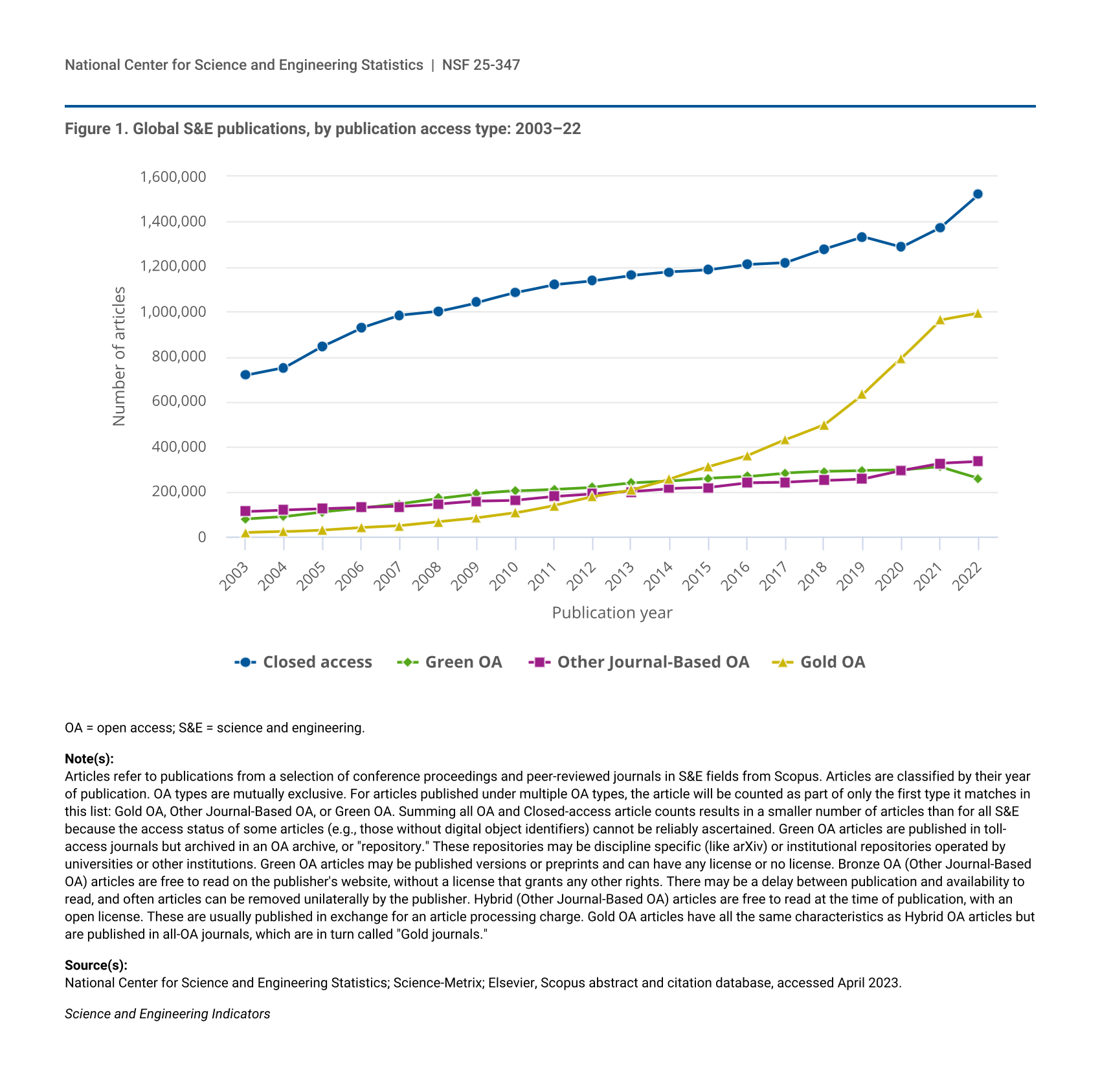
PubMed Central is the US National Institutes of Health’s free full-text archive of biomedical and life sciences literature. It holds millions of articles made freely available under open-access mandates from NIH, the Wellcome Trust, and the UK Medical Research Council, among others. PMC is the first stop for anyone working in medicine, biology, public health, or related fields.
Practical tip: Use the “Free full text” filter on PubMed (pubmed.ncbi.nlm.nih.gov) and results link directly to PMC. For the research proposal writing process, PMC is indispensable for health-sciences literature reviews.
6. arXiv
URL: arxiv.org — Free, no account required.
Operated by Cornell University Library, arXiv hosts over one million preprints in physics, mathematics, computer science, quantitative biology, statistics, electrical engineering, and economics. Preprints are submitted before or alongside journal peer review, meaning arXiv often carries the most current version of research months before the journal version appears. Most arXiv papers are eventually published in peer-reviewed venues; the preprint is almost always identical in content to the final article.
Practical tip: Check the journal status of an arXiv paper before citing it. The submission page usually lists the DOI of the peer-reviewed version if one exists.
7. SSRN (Social Science Research Network)
URL: ssrn.com — Free, account required for downloads.
SSRN is the leading preprint and working-paper repository for social sciences, economics, law, and finance. It hosts more than 700,000 full-text working papers. Like arXiv, SSRN papers are often the definitive accessible version of research that later appears behind a journal paywall. A free account takes under two minutes to create.
8. ERIC (Education Resources Information Center)
URL: eric.ed.gov — Free, no account required.
ERIC is the US Department of Education’s database for education research. It indexes over 1.9 million records, and a significant proportion link directly to free full-text PDFs. For dissertations, curriculum research, policy papers, and education psychology, ERIC is the authoritative free source.
9. DOAJ (Directory of Open Access Journals)
URL: doaj.org — Free, no account required.
DOAJ lists over 21,480 peer-reviewed open-access journals covering every discipline, with more than 11 million individual articles searchable and downloadable for free. Unlike aggregators that index repository copies, DOAJ indexes journals where every article is permanently open access by design — no embargo, no paywall. It is the gold standard for identifying legitimate open-access publications, which matters when you are assessing whether a journal is predatory or genuine.
Practical tip: If a journal is listed in DOAJ, it has passed a quality-assurance review. Use DOAJ membership as a credibility filter when evaluating sources.
10. Google Scholar
URL: scholar.google.com — Free, no account required.
Google Scholar remains the broadest single discovery tool for academic literature, indexing journals, conference papers, theses, court opinions, and patents. While it does not guarantee full-text access, it frequently links to legal open-access copies hosted on author websites, ResearchGate, or institutional repositories. The “All versions” link below each result is particularly useful — it shows every available copy, often including one that is free. For advanced filtering techniques, our guide to Google Scholar advanced search tips for researchers covers operators, date filters, and citation-chaining strategies that can save hours on a literature review.
3. National Library Cards: UK, US, AU, CA
National libraries provide access to resources that no single university library can match. Getting a reader card is free in every case below — the main requirement is turning up in person with valid ID.
11. The British Library (UK)
The British Library holds over 170 million items, including the largest newspaper collection in the world and extensive journal back-runs. A British Library Reader Pass is completely free. At present (2026), online pre-registration is not available following a 2023 cyber attack, so you need to visit Reader Registration in person at the St Pancras site in London or the Boston Spa facility in Yorkshire, bringing valid photo ID. Once issued, the pass is valid for use in the Reading Rooms, where you can access the physical collection and a range of licensed databases on-site terminals. The BL is the resource of last resort for obscure or historical materials unavailable anywhere else.
Practical tip: Book a seat in the Reading Rooms in advance via the BL website. Seat availability can be tight for specialist reading rooms during term time.
12. The Library of Congress (US)
URL: loc.gov — Get Your Library Card
The Library of Congress in Washington DC is the largest library in the world by number of items. A free Reader Card is available to anyone aged 16 or older with valid government-issued photo ID. You can pre-register online up to two weeks before your visit and collect the card at a Reader Registration Station on arrival. Cards are valid for two years. On-site, researchers access a vast range of licensed databases and the LC’s unmatched collection of government documents, maps, manuscripts, and newspapers. Remote access to most licensed databases is not available without a current institutional affiliation, so the card is primarily useful for in-person visits.
Practical tip: The LC’s free digital collections at loc.gov — including digitised newspapers, photographs, and historical documents — are accessible to anyone worldwide with no card required.
13. National Library of Australia + Trove (AU)
URL: trove.nla.gov.au — Free online, no account required.
Trove is Australia’s extraordinary national research portal, a collaboration between the National Library of Australia and hundreds of partner institutions. It indexes over 6 billion records covering books, journal articles, newspapers, photographs, maps, and archival materials. For Australian historical and government research, Trove is unrivalled. State libraries — including the State Library of Victoria and the State Library of NSW — are partner organisations, meaning Trove aggregates content from across the entire Australian library network. Online access to Trove is completely free. For physical access to the National Library’s collections in Canberra, free reader registration is available to all Australian residents.
Practical tip: Trove’s digitised newspaper archive covers Australian newspapers from the 1800s to the present — invaluable for history, media studies, and social science research.
14. Library and Archives Canada (CA)
URL: canada.ca/en/library-archives
Library and Archives Canada (LAC) holds the national collection of Canadian government publications, manuscripts, photographs, and historical records. A free LAC account enables you to save searches, track requests, and manage contributions online. For physical access to materials at the Ottawa location, a free user card (valid two years) is required. LAC’s Ottawa service point is co-locating with the Ottawa Public Library at the new Ādisōke facility, scheduled to open in 2026 — significantly expanding public access to the national collection. Regional service centres in Halifax, Winnipeg, and Vancouver do not require a card for walk-in use. Canada’s National Science Library (science-libraries.canada.ca) additionally provides access to scientific literature and research datasets for Canadian researchers.
4. Public Library Routes to Database Access
Public library cards are one of the most overlooked routes to free research database access. Many public library systems negotiate institutional subscriptions to major academic databases and offer them free to cardholders.
15. UK Public Libraries
Public library cards in England, Scotland, Wales, and Northern Ireland typically provide free access to a range of online resources. The specifics vary by local authority, but common offerings include access to newspaper archives (such as PressReader), business databases, and — in some areas — Oxford Reference Online. The SCONUL Access scheme allows students and researchers affiliated with UK higher education institutions to use other university libraries’ reading facilities when away from their home institution. Check your local council’s library website for the current database list.
Practical tip: Some UK public libraries provide free access to LinkedIn Learning and other professional-development platforms alongside research tools — worth checking even if your primary interest is academic databases.
16. US Public Libraries
US public library systems are among the most database-rich in the world. Many major city and county library systems — including the New York Public Library, the Los Angeles Public Library, and the Chicago Public Library — provide cardholders with free remote access to databases such as ProQuest, Gale Academic OneFile, JSTOR (via library partnership), and EBSCO Academic Search. A card is usually free to any resident and often to non-residents who work or study in the jurisdiction. For a detailed breakdown of every free access route into JSTOR specifically, see our guide to free JSTOR access routes in 2026.
Practical tip: The New York Public Library offers remote database access to anyone who lives, works, or studies in New York State — even from outside New York City.
17. Australian State Libraries
Every Australian state library offers free membership to residents. State Library Victoria, State Library of NSW, State Library Queensland, and their counterparts provide remote access to databases including EBSCO Business Source, ProQuest Historical Newspapers, and Oxford Reference Online. Many also participate in the Trove network, adding their digitised collections to the national portal. Registration is typically done online with proof of address, and a physical card is mailed to you for borrowing privileges.
18. Canadian Public Libraries
Canadian public library systems vary by province, but major metropolitan systems offer significant database access. The Toronto Public Library provides cardholders with free access to databases including Business Source Complete, Academic Search Complete, and various newspaper archives. The Vancouver Public Library and the Calgary Public Library offer similar ranges. Provincial digital library programmes — such as the Ontario Library Service consortium — further extend database access to library cardholders across the province.
5. Alumni Library Access Programmes
Graduating does not have to mean losing access to academic databases. Many universities maintain alumni library programmes that offer at least borrowing rights and, in some cases, remote database access.
UK Universities
| University | Alumni Access | Remote Databases? |
|---|---|---|
| University of Cambridge | Free in-person access to University Library | Limited remote access via alumni portal |
| University of Bristol | Graduate Visitor Card — free borrowing | No (in-person database terminals only) |
| London South Bank University | Alumni Access Card — free library use | Selected resources |
| University of Liverpool | Alumni membership — borrow up to 10 books | Selected e-resources |
Practical tip: The SCONUL Access scheme listed above also applies to alumni of participating institutions — check the SCONUL website for your university’s alumni policy.
US Universities
Several major US research universities offer robust alumni database access. Harvard alumni can apply for a Visitor Access and Borrowing Card at no charge and have access to a growing collection of e-resources. University of Chicago alumni retain access to JSTOR content and all Adam Matthew databases through their online accounts. Duke University alumni receive lifetime borrowing privileges and limited remote database access via their OneLink account. Boston University alumni access ABI/INFORM Complete, Annual Reviews, and EBSCO Academic Search (Alumni Edition) remotely. Columbia University alumni enjoy free lifetime access to library services including a selection of e-resources.
Practical tip: If you are planning to apply for a research position, making sure your alumni library access is set up before you leave campus can save significant time later. Our guide on studying abroad in 2026 covers how to navigate institutional access differences when you are enrolled at a foreign university.
6. Browser Tools That Find Free Copies Automatically
The most efficient approach to free research database access in 2026 is to install tools that do the hunting for you in the background.
19. Unpaywall
URL: unpaywall.org — Free Chrome and Firefox extension.
Unpaywall is a browser extension that automatically detects whether a legal open-access copy of any paper you are viewing exists. When you land on a journal paywall page, Unpaywall checks its database of 50+ million open-access papers and displays a green tab if a free version is available. Crucially, it only surfaces genuinely legal copies — open-access publisher versions, author accepted manuscripts in institutional repositories, or preprints — not pirated content. It requires no account and works silently in the background.
Practical tip: Unpaywall is the single most useful tool you can install for academic research. Set it up before you start your next literature review and it will save hours of manual searching.
20. Open Access Button
URL: openaccessbutton.org — Free browser extension and web tool.
Similar to Unpaywall, the Open Access Button finds legal free copies of paywalled papers. Its additional feature is a request function: if no open-access copy exists, the tool can help you send a request directly to the author for a legal copy. Many researchers respond promptly — author sharing of accepted manuscripts is permitted under most journal agreements.
7. Interlibrary Loan and Document Delivery
When a paper is not available through any open-access route, interlibrary loan (ILL) is the legitimate fallback. Every university library system in the UK, US, Australia, and Canada provides ILL services to enrolled students and staff, typically free of charge.
In the UK, the British Library Document Supply Service is the backbone of ILL, providing access to items held nowhere else. In the US, OCLC WorldShare ILL connects thousands of libraries into a national lending network. In Australia, the National Library’s LADD (Libraries Australia Document Delivery) system serves researchers across the country. Canadian universities use CISTI (Canada Institute for Scientific and Technical Information) for scientific and technical literature.
Response times for ILL requests typically range from 24 hours to two weeks depending on the source library and format. Digital delivery is now standard for most journal articles; physical books are shipped between libraries. The service is free for current students and staff; some institutions extend ILL access to registered alumni or community borrowers.
Practical tip: Submit ILL requests as early as possible in your research process. Waiting until the week before submission for a key source is a common and avoidable problem.
8. A Practical Research Workflow for 2026
The following workflow uses only free resources and covers the vast majority of academic literature without cost.
- Start with Google Scholar. Search your topic and check for the green “Access” links or click “All versions” to find open-access copies. For advanced filtering, our Google Scholar power tips guide covers operators and citation-chaining that can dramatically narrow your results.
- Run a parallel search on OpenAlex. Filter to open-access works. OpenAlex’s coverage of conference papers and grey literature often surfaces results Google Scholar misses.
- Check CORE and BASE. Especially useful for European research and institutional repository content.
- For biomedical research, go directly to PubMed Central. Use the “Free full text” filter on PubMed to surface PMC-hosted papers.
- Install Unpaywall. It covers any gaps automatically as you browse.
- For JSTOR specifically, a free personal account provides access to up to 100 articles per month across the JSTOR collection. For a complete breakdown of every free route into JSTOR — including alumni programmes, public library partnerships, and interlibrary loan — see our dedicated JSTOR free access guide for 2026.
- For discipline-specific depth, use arXiv (STEM), SSRN (social science, economics, law), ERIC (education), or DOAJ (any field, open-access journals only).
- If still blocked, submit an ILL request through your institution or contact the author directly via the Open Access Button.
When your research reaches the writing stage, keeping track of originality across a large literature review is important. Tesify’s plagiarism checker can scan your draft against the academic literature to flag unintentional overlap before submission, helping you submit with confidence. For students also navigating competitive university admissions in the US, our data-backed Ivy League admission tips guide for 2026 covers how access to top university libraries and research resources factors into building a compelling application profile.
Tesify’s AI thesis writer helps you structure, draft, and refine academic writing — from literature review chapters to full thesis drafts. The built-in Tesify Plagiarism Checker scans your work against millions of academic sources so you can submit knowing your originality is intact. Get started free.
Frequently Asked Questions
What is the best free research database for students in 2026?
There is no single best database — the right choice depends on your discipline. For broad discovery across all fields, Google Scholar combined with the Unpaywall extension is the fastest starting point. For biomedical and life sciences research, PubMed Central provides unrestricted full-text access. For social sciences and economics, SSRN and OpenAlex are strong choices. For education research, ERIC is the authoritative free source. For open-access journals across every discipline, DOAJ is the quality-controlled index to use.
Can I access university library databases without being enrolled?
Yes, through several routes. National library reader cards (British Library, Library of Congress, National Library of Australia, Library and Archives Canada) provide in-person database access for free. Many public library systems — including major US city libraries and UK county libraries — provide remote database access to cardholders. Alumni programmes at universities like Cambridge, Harvard, and University of Chicago offer continued access to selected databases. Open-access aggregators such as CORE, OpenAlex, BASE, and Internet Archive Scholar require no institutional affiliation at all.
Is it legal to use sites like ResearchGate or Academia.edu to download papers?
It depends on the specific paper. Some papers on ResearchGate and Academia.edu are uploaded by authors under licences that permit sharing (Creative Commons or open-access publisher agreements). Others are uploaded in violation of copyright. The safest approach is to use Unpaywall or the Open Access Button, which only surface copies that are definitively legal to access. CORE, OpenAlex, BASE, and DOAJ are similarly restricted to legal open-access content. If you want to be certain a copy is legitimate, check whether the paper’s DOI resolves to an open-access publisher version or an institutional repository record.
How do I access JSTOR for free without a university subscription?
There are several legitimate free routes into JSTOR in 2026. The most accessible is JSTOR’s free personal account, which allows you to read up to 100 articles per month online (no download) after registering at jstor.org. JSTOR Early Journal Content — journals published before 1924 in the US and before 1870 elsewhere — is entirely free without an account. Many public library systems in the US and UK provide JSTOR access to cardholders through library partnership programmes. Some universities offer alumni database access that includes JSTOR. For a full breakdown of every route, see our detailed guide on free JSTOR access methods.
What is the difference between a preprint and a peer-reviewed article?
A preprint is a version of a research paper that has not yet completed formal peer review. Authors post preprints to servers such as arXiv or SSRN to share findings quickly and gather community feedback. A peer-reviewed article has been evaluated by independent experts and accepted for publication in a journal. For most preprints on arXiv and SSRN, the research eventually appears in a peer-reviewed journal with the same core findings, making preprints reliable for literature review purposes — but you should check whether a peer-reviewed version now exists before citing the preprint in your own work.
How do I get a British Library Reader Pass?
As of 2026, you must register in person. Online pre-registration is not available while the British Library rebuilds systems following a cyber attack in late 2023. Visit Reader Registration at St Pancras in London or the Boston Spa facility in Yorkshire, bringing valid government-issued photo ID. Registration is free. Once registered, your Reader Pass gives you free access to the Reading Rooms and the British Library’s on-site databases and physical collection. It is worth booking a Reading Room seat in advance via the BL website.
Write your thesis with AI
Structure, draft, cite, and format your thesis faster with Tesify’s AI writing tools, automatic bibliography, and plagiarism checker. Free to start, no credit card required.





Leave a Reply