
JSTOR Access Free in 2026: Every Legitimate Route for Students and Independent Researchers
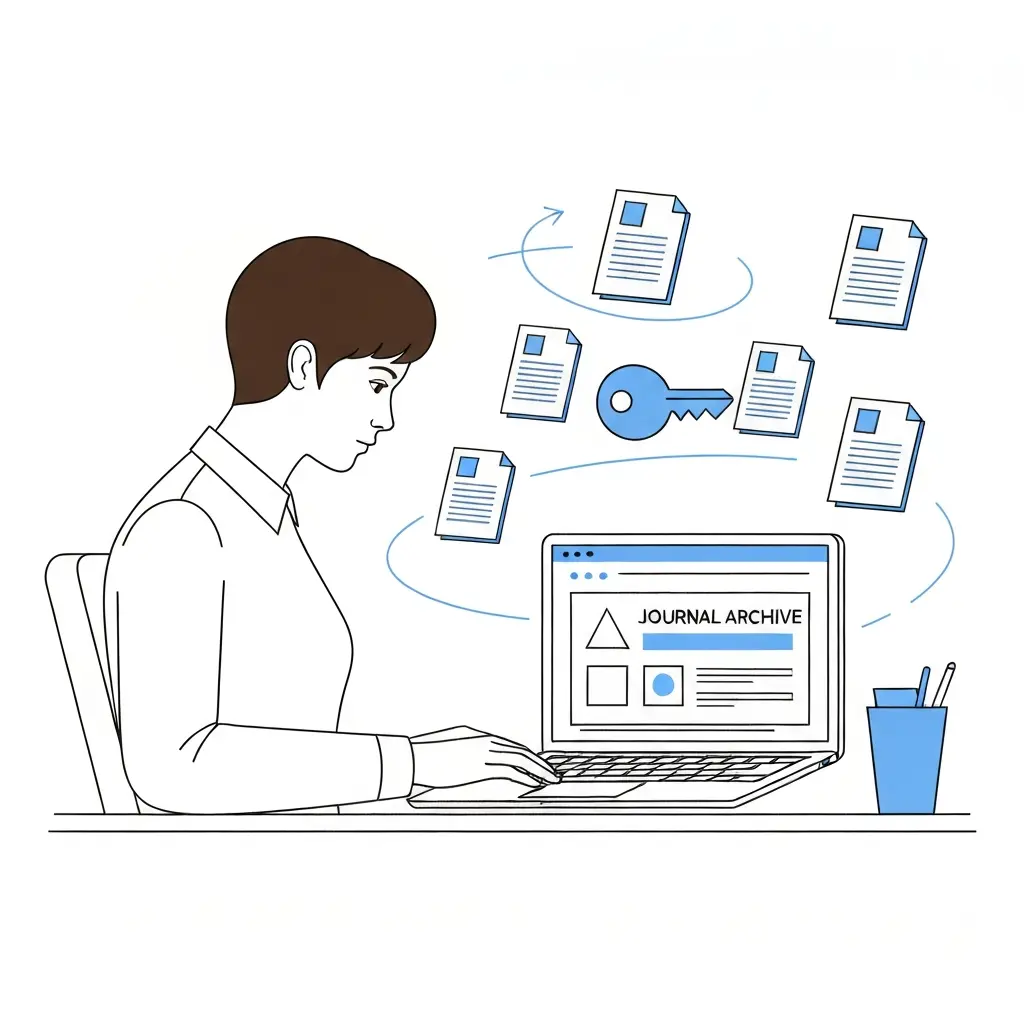
The scenario is familiar: you locate the exact article your literature review needs, confirm its relevance from the abstract, and then encounter a $42 paywall for 24-hour access. For students whose institutions hold JSTOR licences, the solution is usually one login away — but a surprising number never configure off-campus access. For independent researchers, journalists, and lifelong learners with no institutional affiliation, the route to JSTOR access free takes more planning but is entirely achievable through official channels. This guide maps every legitimate pathway available in 2026, with step-by-step instructions for each.
JSTOR (Journal Storage) holds more than twelve million academic articles, books, images, and primary source documents from over 75 disciplines. Its archive spans journals dating back to the nineteenth century. Understanding the different layers of access — institutional, personal, open, and community-funded — is the first step toward never paying out of pocket for scholarly content. For a broader survey of free academic databases beyond JSTOR, see our complete guide to university library and free research database access in 2026.
Route 1: JSTOR’s Free Personal Account (Register & Read)
The single most underused official programme is JSTOR’s own free-account tier, commonly known as Register & Read. Any person with a valid email address can register at jstor.org and immediately receive access to up to 100 articles per 30-day rolling period at no cost. There is no institutional affiliation required, no geographic restriction, and no application process beyond email verification.
How to register step by step
- Navigate to jstor.org and click Register in the top-right corner.
- Enter your email address. This becomes your permanent login username.
- Create a password (minimum 6 characters; must include at least one letter and one number or special character; no spaces; maximum 72 characters).
- Check your inbox for a verification link — it expires in 15 minutes. JSTOR will automatically resend it if it expires.
- Accept the Terms and Conditions. Optional: enable the Keep me logged in setting for persistent access.
- Once verified, run a search and open any article. Look for the Read Online button beneath the download options.
Understanding the 100-article counter
The counter resets on a rolling 30-day basis, not on a calendar month. The count tracks articles you open, not articles you save to JSTOR’s Workspace. Articles from JSTOR’s fully open access collections do not count against your 100-article allowance. The moving wall — an embargo window of typically 3 to 5 years on the most recently published issues — applies to personal account users, meaning very recent journal issues may not be available through this tier. For most literature review purposes, however, foundational and established scholarship is well within reach.
Route 2: University SSO and Off-Campus Access
Enrolled students at institutions with JSTOR licences have full access to JSTOR’s subscribed collections — often far more extensive than the free personal account tier. The challenge for many students is not access itself but knowing how to authenticate when working off-campus. A surprising number of students assume JSTOR requires campus Wi-Fi, when in fact three off-campus routes work reliably in 2026.
Authentication methods
| Method | How it works | Best for |
|---|---|---|
| Shibboleth / SSO | Log in via your institution’s identity provider. On JSTOR, click Access through your institution and search for your university name. | Daily off-campus access — seamless once configured |
| EZProxy / Library portal | Access JSTOR through your library’s database list. The library portal wraps your session in an authenticated proxy. | When Shibboleth is unavailable; browsing multiple databases in one session |
| Institutional VPN | Connect to your university’s VPN client (usually free for students). Your traffic originates from a campus IP address, giving automatic JSTOR access. | Comprehensive off-campus access to all licensed resources at once |
If you are unsure whether your institution subscribes to JSTOR, search your library’s A-Z database list for “JSTOR.” If it appears, click through from the library link rather than navigating directly to jstor.org — this ensures the proxy authentication attaches correctly. When conducting a thorough literature review for your thesis, configuring institutional access at the outset saves significant time later.
Linking personal and institutional accounts
JSTOR allows you to link your personal account to your institution. Once linked, articles you open through institutional access count toward your personal Workspace, allowing you to build an annotated library of research across your degree. Navigate to Account → Access Settings after logging in to set up this link.
Route 3: Alumni Access
Many students are unaware that their JSTOR access may continue after graduation. A number of universities extend JSTOR access to alumni as part of their alumni benefits package. Coverage varies: some institutions grant full subscription access, while others offer limited collections. The access is typically contingent on maintaining an active alumni association relationship.
How to check your eligibility
- Visit your university’s alumni association website and look for a “library” or “research resources” section.
- Search for your university name on the JSTOR alumni access support page, which lists participating institutions.
- Contact your university’s alumni relations office directly — they can confirm participation and explain the activation process.
- If eligible, you will typically be asked to verify your graduation record and link your personal JSTOR account to the institution.
Even where full alumni JSTOR access is unavailable, many universities provide alumni with continued library card access — which in turn unlocks database access. Check with your alumni office specifically about electronic resource privileges.
Route 4: Early Journal Content — Public Domain Archive
JSTOR’s Early Journal Content (EJC) is permanently and freely accessible to anyone, without registration, covering a substantial historical corpus. The cutoff dates follow US and international copyright law:
- United States publications: Articles published before 1928 are freely available (works published before 1928 entered the US public domain on 1 January 2023 under the 95-year rule; the rolling window continues each year).
- International publications: Articles published more than 143 years ago are freely available — covering most publications before 1883.
The EJC spans hundreds of journals across the humanities, social sciences, economics, political science, mathematics, and natural sciences. For historians, literary scholars, economists studying intellectual history, and researchers engaging with foundational theoretical texts, this collection is remarkably rich. Darwin’s original journal publications, early volumes of the American Journal of Sociology, foundational economics papers from the late nineteenth and early twentieth centuries — all freely accessible without an account.
How to find Early Journal Content
- Go to jstor.org and run your search.
- In the left-hand filter panel, select Content I can access → Free to read to surface available content immediately.
- Alternatively, use the advanced search date filter to restrict results to pre-1928 (or pre-1883 for international journals).
- EJC articles show a green Open Access badge — these include full-text PDF downloads with no counter deduction.
Route 5: JSTOR’s Open Access Collections
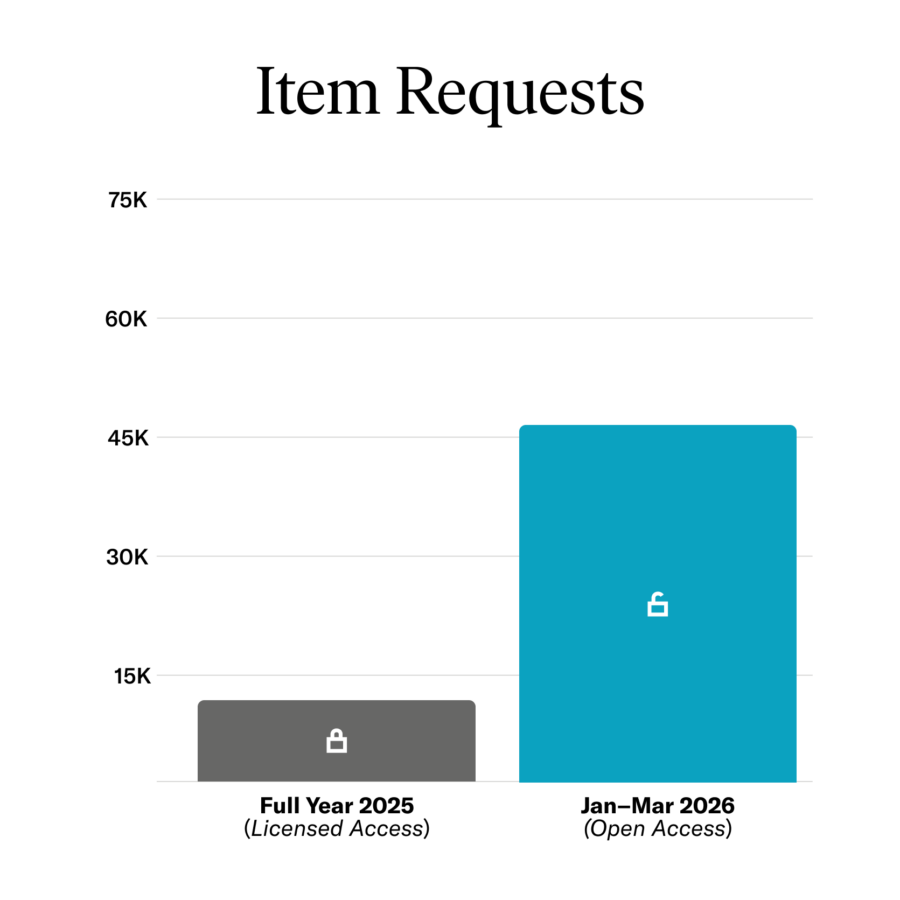
Beyond Early Journal Content, JSTOR hosts a growing body of permanently open access material contributed by partner publishers and institutions under several programmes:
Open access journals
Hundreds of peer-reviewed journals have been published as fully open access on JSTOR, spanning humanities, social sciences, and sciences. These are complete journal runs — all issues, all articles, freely downloadable as PDF — with no moving wall.
Path to Open (books)
JSTOR’s Path to Open programme converts commercially published scholarly ebooks to open access after a defined period. Thousands of DRM-free academic monographs from major university presses are now freely available under this initiative. These are complete, peer-reviewed scholarly books — not summaries or excerpts. For the level of source depth expected in a well-constructed dissertation methodology chapter, these monographs provide the kind of foundational theoretical grounding that strengthens any research design.
Reveal Digital collections
Community-funded collections focusing on underrepresented voices in twentieth-century American scholarship — including independent journals from civil rights, feminist, and LGBTQ+ movements. These primary source collections are permanently open access and free to all.
Research reports
Over 80,000 open access reports from more than 187 think tanks, covering policy, economics, education, and public health — all freely downloadable. For researchers in applied social sciences, public policy, or development studies, this repository often contains data and analysis not found in peer-reviewed journals. The scale of open access content on JSTOR has grown substantially; in 2026, millions of items across all categories are freely accessible.
Images and primary sources
Nearly one million images from institutions including the Metropolitan Museum of Art and the Wellcome Collection are freely accessible through JSTOR for research and educational purposes. Library and archive collections from Reveal Digital projects add further primary source depth.
Route 6: JSTOR Daily
JSTOR Daily is a free online magazine published by JSTOR that connects academic research to current events, cultural topics, and historical questions. Each article is written for a general educated audience and links directly to the underlying peer-reviewed scholarship — which JSTOR makes freely readable alongside each Daily piece.
This means JSTOR Daily functions as a curated, free window into the archive. When a Daily article cites a JSTOR paper, that paper is typically made freely available to read in full for the duration of the article’s active promotion cycle. For researchers who want to understand how academic scholarship intersects with contemporary issues, JSTOR Daily is an underused resource — and the linked papers are available without depleting your 100-article personal account allowance.
JSTOR Daily also produces subject-based reading lists and archival dossiers on topics ranging from climate science and economic inequality to literary history and public health. These curated collections surface relevant scholarship that would otherwise require expertise in JSTOR’s own search syntax to locate.
Route 7: Public and National Library Partnerships
A significant but poorly advertised route to JSTOR access is through public library systems. In several countries, national or regional library programmes include JSTOR access as part of their digital resource offering:
United States
Some public library systems — including major systems such as the New York Public Library and the Austin Public Library — hold JSTOR institutional licences. Access is typically available on-site at the library. Remote access for public library cardholders is limited, but in-library use is generally unrestricted. To find out whether your local public library offers JSTOR, search for “[Your City] public library JSTOR” or ask a reference librarian directly.
United Kingdom
The British Library’s Electronic Access for Researchers (EThOS) programme and selected regional library networks provide database access to registered users. University of the Third Age (U3A) members at some institutions have negotiated academic database access. The Society of Antiquaries and similar learned societies also sometimes hold JSTOR licences accessible to members.
Other countries
National libraries in several countries hold JSTOR agreements. Check with your national library directly — in many cases, a free national library reader card provides on-site access to JSTOR and other scholarly databases. The cost-free route is verifying this before assuming access does not exist.
Professional and learned society membership
According to JSTOR’s Society Access programme, numerous professional and scholarly societies hold JSTOR licences accessible to their members as a membership benefit. Societies in history, economics, sociology, philosophy, political science, and area studies are among those with active agreements. Annual membership fees for many learned societies are modest — often £40–£80 per year — and include journal subscriptions, conference discounts, and JSTOR access as bundled benefits.
Route 8: Interlibrary Loan
For any article not reachable through the routes above, interlibrary loan (ILL) remains the universal backstop — and it is free for students at virtually all accredited universities. ILL is a formal inter-library lending network in which your library requests a digital copy of a specific article from another library that holds it. JSTOR itself supports ILL for books at JSTOR, and the broader academic library network handles journal articles routinely.
How to submit an ILL request
- Locate your library’s ILL request portal — usually accessible through the library website under “Request an Article” or “Interlibrary Loan.”
- Enter the article’s bibliographic details: author(s), article title, journal name, volume, issue, year, and page range. A DOI, if available, speeds processing significantly.
- Specify the format (digital PDF preferred) and your deadline if one applies.
- Submit. Most institutions use automated ILL platforms such as OCLC WorldShare or Ex Libris Alma, which can locate and deliver digital articles within 24 to 72 hours.
- You will receive an email notification when the article is available, typically with a secure link valid for a defined download window.
There is no practical limit to the number of ILL requests a student can submit at most institutions, though some libraries impose soft caps during peak periods. Submitting requests early — as soon as you identify necessary sources during your systematic search of academic databases — avoids the pressure of waiting on ILL when a submission deadline is approaching.
For independent researchers without institutional affiliation
ILL is primarily an institutional service. Independent researchers without current university affiliation have several alternatives:
- Public library ILL: Many public library systems in the US, UK, Canada, and Australia offer ILL to cardholders. The network is smaller than academic ILL but covers a meaningful proportion of requests.
- Author contact: Emailing the corresponding author directly is highly effective. Most academics are glad to share their published work. Find the author’s institutional email on their university profile or within the article’s abstract page, and send a brief, professional request. Response rates are consistently reported to be above 50%, particularly for papers more than five years old.
- ResearchGate request: Many authors maintain ResearchGate profiles where you can click “Request full-text” — this sends the author an automated notification, and many respond within 24 hours.
Route 9: JPASS — The Paid Option Worth Knowing
While this guide focuses on free access, it would be incomplete without noting JSTOR’s individual subscription product, JPASS, for researchers who need sustained high-volume access and have exhausted free options. JPASS pricing in 2026:
| Plan | Cost | Downloads | Reading |
|---|---|---|---|
| Monthly | $19.50/month | 10 PDF downloads | Unlimited online reading |
| Annual | $199/year | 120 PDF downloads | Unlimited online reading |
JPASS covers over 2,000 academic journals plus the Struggles for Freedom primary source collection. For an independent researcher undertaking a book-length project or sustained research outside an institutional setting, an annual JPASS plan is more cost-effective than ad-hoc single-article purchases at $19–42 per article.
Choosing the Right Route for Your Situation
The appropriate access route depends on your status, the volume of articles you need, and how recent the material must be. The following framework helps match situation to strategy:
| Your situation | Recommended primary route | Backup route |
|---|---|---|
| Currently enrolled student | Institutional access via Shibboleth or library portal | ILL for out-of-coverage articles |
| Recent graduate (within 3 years) | Check alumni access; if unavailable, Register & Read free account | JSTOR open collections + public library ILL |
| Independent researcher, general | Register & Read (100 articles/month free) | Learned society membership; author outreach; public library ILL |
| Independent researcher, high volume | JPASS annual ($199/year) + Register & Read for supplementary reading | JSTOR open collections for unrestricted downloads |
| Historian / humanist (pre-1928 focus) | Early Journal Content — no account needed | Register & Read for material outside EJC range |
| Journalist or policy researcher | JSTOR Daily + open access collections + Register & Read | Think tank reports (80,000+ free on JSTOR) + author contact |
For research requiring citation management across multiple sources, combining free JSTOR access with a dedicated reference manager is essential. Once you have gathered articles through any of the routes above, managing them alongside other sources from Web of Science or Google Scholar becomes considerably more tractable with systematic tooling — a principle that applies whether you are writing a thesis or a standalone research report. If you are also pursuing international study or research funding, the Fulbright and Chevening scholarships guide for 2026 covers how postgraduate funding can unlock access to institutional library resources at UK and partner universities.
Frequently Asked Questions
How many articles can I read on JSTOR for free without an institutional subscription?
With a free JSTOR personal account (Register & Read), you can read up to 100 articles per rolling 30-day period at no cost. Articles from JSTOR’s fully open access collections — including Early Journal Content and open access journals — do not count against this limit. There is no cap on open access content. Registration requires only an email address; no institutional affiliation is needed.
Can I access JSTOR for free as an independent researcher with no university affiliation?
Yes. Independent researchers have several legitimate free routes: (1) the free personal account (100 articles/month); (2) JSTOR’s Early Journal Content (unlimited free access to pre-1928 US and pre-1883 international articles); (3) JSTOR’s open access journal and book collections; (4) public library access where your local library holds a JSTOR licence; (5) learned society membership where the society holds a JSTOR agreement; and (6) contacting article authors directly for copies of their work. For high-volume needs, JPASS at $199/year is available as a paid option.
What is the JSTOR moving wall and does it affect free access?
The moving wall is a contractual embargo period that restricts access to the most recently published issues of participating journals on JSTOR. Typical moving wall periods range from 1 to 5 years, meaning the most recent 1 to 5 years of a journal’s content may not be accessible through JSTOR even with institutional access. The moving wall applies regardless of access tier — institutional subscribers, free personal accounts, and JPASS users all encounter it. For articles within the embargo window, Google Scholar, the journal’s own website, PubMed Central (for biomedical content), or interlibrary loan are the appropriate alternatives.
Does my university library’s access to JSTOR work off campus?
Yes, in virtually all cases. Off-campus access works through three mechanisms: Shibboleth/SSO (click “Access through your institution” on jstor.org and authenticate with your university credentials), EZProxy (access JSTOR through your library’s database portal, which wraps your session in an authenticated proxy), or your university’s VPN client (connect to the VPN and your traffic routes through a campus IP that JSTOR recognises). If you are unsure which method your institution uses, your subject librarian can provide the exact login steps in minutes.
Is JSTOR Early Journal Content really free, or do I need to create an account?
JSTOR’s Early Journal Content is genuinely free to anyone — no account, no login, no institutional affiliation required. It covers journal articles published in the United States before 1928 and internationally before 1883. You can search directly on jstor.org and filter by “Free to read” to surface EJC articles. Full-text PDFs are freely downloadable and the content is also mirrored on the Internet Archive. Creating a free JSTOR account is still worthwhile for EJC users, because it enables JSTOR’s Workspace features for saving and annotating articles.
How does interlibrary loan work for JSTOR articles, and how long does it take?
Interlibrary loan (ILL) is a free service available to students at virtually all accredited universities. To request a JSTOR article via ILL, locate your library’s ILL portal (usually on the library website), enter the article’s bibliographic details including the DOI if available, and submit. For digital journal articles, most requests are fulfilled within 24 to 72 hours using automated ILL platforms such as OCLC WorldShare. You receive the article as a secure PDF link by email. There is generally no practical limit on the number of ILL requests, though submitting early — well ahead of any deadline — is strongly advised.
Write your thesis with AI
Structure, draft, cite, and format your thesis faster with Tesify’s AI writing tools, automatic bibliography, and plagiarism checker. Free to start, no credit card required.



Leave a Reply