
Will Turnitin Detect ChatGPT in Your Thesis? (2026 Answer)
Turnitin will detect unedited ChatGPT text in a thesis with high accuracy, but detection becomes far less reliable once that text has been edited, paraphrased, or blended with original writing. Turnitin’s own published false positive rate is below 1% on documents flagged with more than 20% AI content, while independent testing puts raw ChatGPT detection around 96-98%.
Does Turnitin Actually Detect ChatGPT Text?
Yes. Turnitin’s AI writing detection feature, built into Turnitin Originality, analyzes a submitted document in segments and estimates the likelihood each segment was generated by an AI model rather than written by a human. According to Turnitin’s own published documentation, the detector was validated on 800,000 academic writing samples written before ChatGPT’s public release, giving it a large baseline of confirmed human writing to compare against.
Most UK, US, and Australian universities that license Turnitin have this AI writing feature switched on by default for thesis and dissertation submissions, alongside the long-standing similarity report, so it is reasonable to assume your final submission will pass through it at some stage of the examination process.
How Accurate Is Turnitin’s AI Detector, Exactly?
The table below compares Turnitin’s own published figures against independent third-party testing referenced in current AI detector reviews.
| Metric | Turnitin’s stated figure | Independent testing (various reviewers) |
|---|---|---|
| False positive rate (above 20% AI-content threshold) | Below 1% | Roughly 3-4% reported in some independent reviews |
| Detection rate, unedited ChatGPT-4o text | Not separately published | ~96-98% |
| Detection rate, unedited Claude / Gemini text | Not separately published | ~91-92% |
| Detection rate, “humanized” or heavily edited AI text | Not separately published | ~12% |
The gap between Turnitin’s own figures and some independent test results is expected: Turnitin’s published methodology is tested under controlled conditions on its own validation set, while third-party reviewers test against a smaller, more varied sample of real-world AI outputs, including edited and “humanized” text that Turnitin’s own documentation acknowledges is harder to detect.
How Does Turnitin Compare to Other AI Detectors?
Turnitin is not the only AI detection tool universities use, and results are not always consistent between systems. GPTZero and Copyleaks are the two other detectors most commonly referenced alongside Turnitin in independent comparison testing, and both show similar patterns: strong detection on raw, unedited AI text and weaker detection once that text is edited or blended with human writing. Because institutions vary in which tool, or combination of tools, they license, a document that scores low on one detector is not a reliable guarantee it would score low on another. For students, the practical implication is the same regardless of which detector a program uses: the deciding factor is whether the underlying work and argument are genuinely your own, not which specific tool a university happens to use.
Can Editing or Paraphrasing AI Text Beat Turnitin?
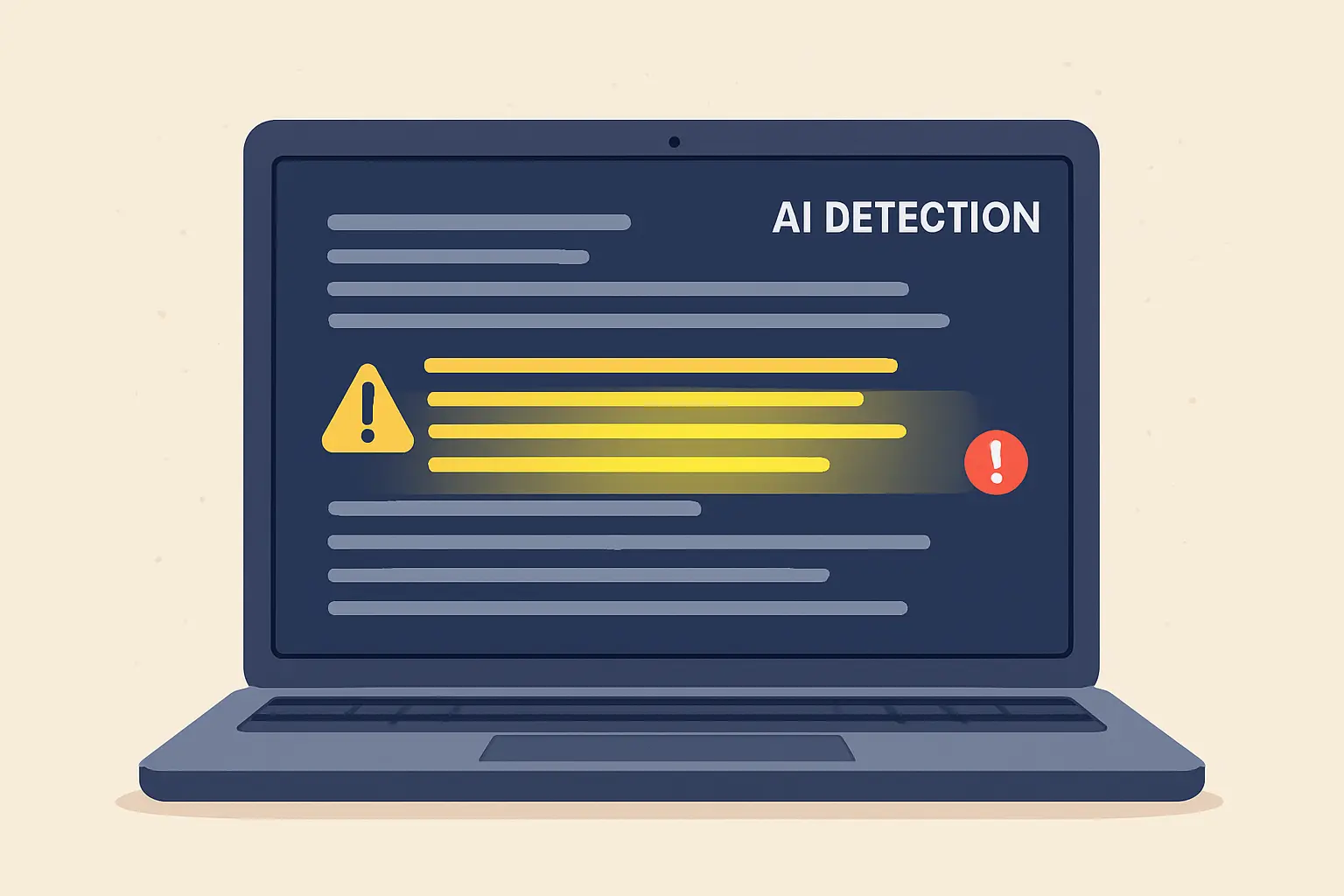
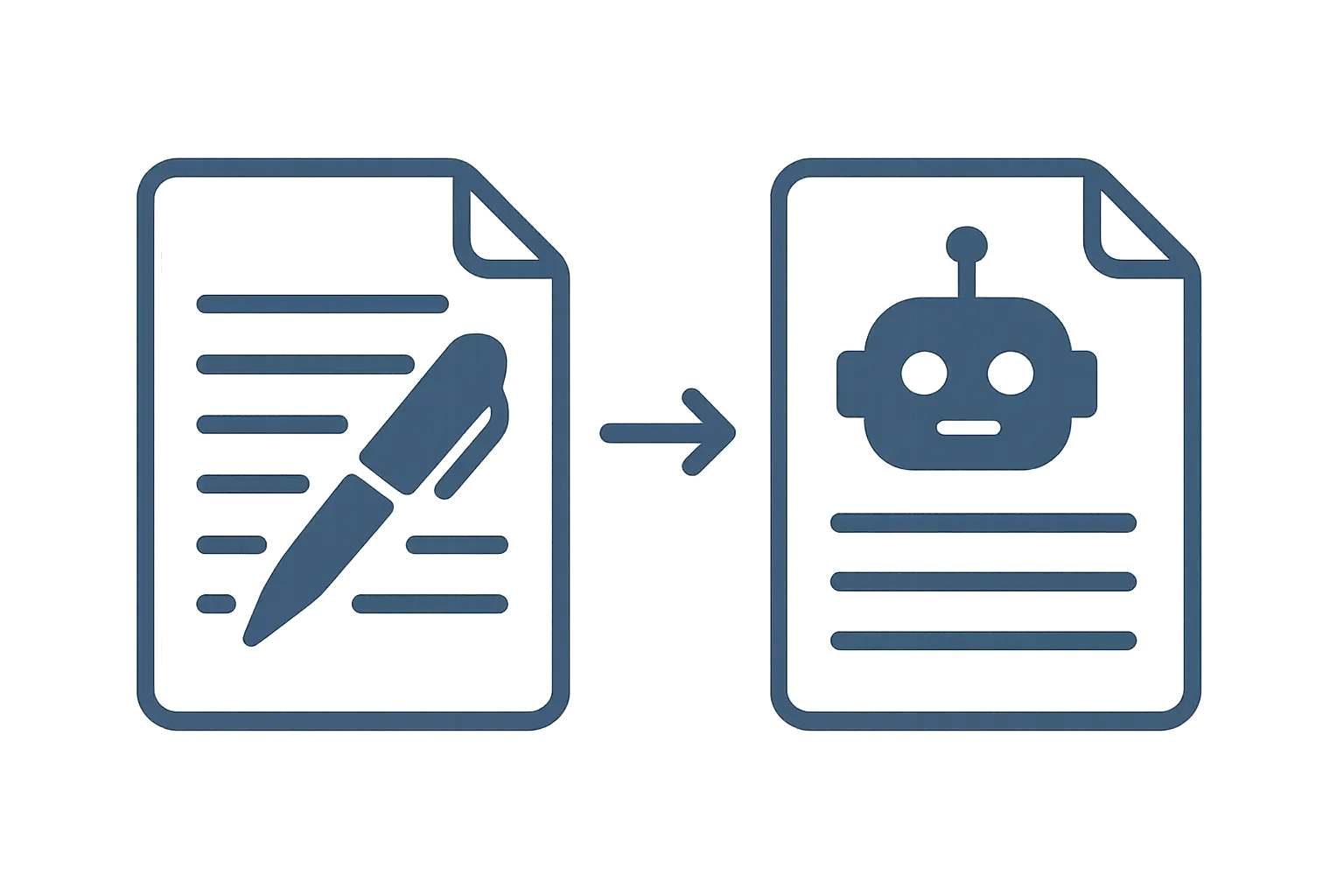
To a significant degree, yes. Turnitin’s detection model is strongest on raw, unedited AI output because that text has statistical patterns, such as word choice and sentence rhythm, that differ measurably from typical human academic writing. Once that text is substantially paraphrased, restructured, or blended with the writer’s own sentences, those statistical signals weaken. Independent testing referenced in current detector reviews has found detection rates falling to around 12% for text that has been heavily reworded, even though the underlying ideas, structure, and argument still originated from an AI tool.
This matters for a specific reason: paraphrasing AI output does not resolve the underlying academic integrity question, only the detection question. Whether that kind of use counts as plagiarism at your institution is a separate policy issue, covered in detail in our guide to whether paraphrasing with AI is considered plagiarism.
How Often Does Turnitin Falsely Flag Human Writing?
Turnitin states its false positive rate is below 1% for documents where more than 20% of the content is flagged as AI-generated. Deliberately, no AI score or highlighting is shown at all for documents in the 1-19% range, because Turnitin’s own testing found a higher incidence of false positives at that lower threshold. Some independent reviews report a somewhat higher overall false positive rate, in the 3-4% range, when testing against a broader and more varied sample of genuinely human-written academic text, including dense literature reviews and highly formulaic technical writing that can read as formulaic to a pattern-matching model.
This is directly relevant to how you should interpret your own Turnitin similarity score, which measures textual overlap with existing sources and is a completely separate metric from the AI writing score.
Does Turnitin’s Detector Show Bias Against Non-Native English Speakers?
Turnitin has published research stating its detector shows no statistically significant bias against English language learners in its own testing. However, some independently reported figures cited in third-party AI detector reviews put the false positive rate for ESL academic writing at 6-8%, notably higher than the general false positive rate. The discrepancy likely comes down to differing test samples and methodologies rather than a single settled number, which is one reason many universities require a human reviewer to confirm any AI writing flag before it affects a student’s outcome, rather than treating the score as a final determination.
What Happens If Your Thesis Gets Flagged?
An AI writing flag on its own is not a misconduct finding. Turnitin is explicit that its tool “does not make a determination of misconduct” and instead provides data for educators to interpret against their own institutional policy. In practice, most universities require a supervisor or academic integrity panel to review the flagged sections manually, consider context such as your drafting history and the nature of your writing process, and only proceed to a formal case if the evidence supports it. If you are asked to explain AI use in your work, having a clear record of your own drafting process, and a properly documented AI use declaration where your institution requires one, makes that conversation far more straightforward.
What Is the Safest Way to Use AI Tools on a Thesis?
The lowest-risk approach is to treat AI tools as support for structure, formatting, and feedback rather than as a source of substantive text you submit as your own. Tools like the Tesify thesis writing assistant are built for this workflow, helping with chapter structure, citation formatting, and drafting support while keeping the core research and argument the student’s own. Running your own draft through a Tesify Plagiarism Checker before submission is also a practical way to catch unintentional overlap or improperly cited paraphrasing before your supervisor or an institutional Turnitin check does, since the underlying question of whether AI-assisted writing counts as plagiarism at your institution is ultimately a policy question your program can answer directly.
Frequently Asked Questions
Will Turnitin detect ChatGPT text in my thesis?
Yes, for unedited output. Turnitin reports a false positive rate below 1% on documents with more than 20% AI content, and independent testing has found detection rates around 96-98% for raw, unedited ChatGPT text.
Can Turnitin be fooled by editing or paraphrasing AI text?
Detection accuracy drops significantly once AI-generated text is edited or paraphrased. Independent testing has found detection can fall to around 12% for text that has been substantially reworded, even though the ideas and structure still originated from an AI tool.
What is Turnitin’s official false positive rate?
Turnitin states its AI writing detector has a false positive rate below 1% for documents where more than 20% of the content is flagged as AI-generated, based on testing against 800,000 human-written samples predating ChatGPT’s release.
Does Turnitin’s AI detector show bias against non-native English speakers?
Turnitin has published research stating its detector shows no statistically significant bias against English language learners, though independent testing referenced in some third-party reviews has reported higher false positive rates in the 6-8% range for ESL writing, so results can vary by testing methodology.
What happens if Turnitin flags my thesis for AI writing?
An AI writing flag is not itself a misconduct finding. Turnitin explicitly states that its tool provides data for instructors and examiners to interpret according to their own institutional policy, and most universities require a human academic integrity review before any formal case proceeds.
Write your thesis with structure built in from day one
Tesify helps you plan chapters, manage citations, and draft with consistent formatting, so your own research and argument stay front and center. Start your thesis with Tesify →
Sources: Turnitin, Turnitin (ELL bias research), Turnitin Guides.
Write your thesis with AI
Structure, draft, cite, and format your thesis faster with Tesify’s AI writing tools, automatic bibliography, and plagiarism checker. Free to start, no credit card required.




Leave a Reply