

PhD or PsyD in Psychology, by the Numbers (2026): Match Rates, Time to Degree, Funding and What Each Doctorate Asks You to Write
Two doctorates lead to licensure as a psychologist in the United States, and the choice between them is usually argued in adjectives — scientist-practitioner against practitioner-scholar, research against clinical training. The federal and association data say something more concrete. This guide assembles the numbers a prospective or current doctoral student actually needs: how many psychology doctorates are awarded and in which sub-fields, how long they take, how they are funded, how the internship match treats each degree, and what the culminating document looks like in each case. Every figure below is attributed to its source, and the two big datasets count different things — a distinction that trips up most comparisons you will read.
Key findings first
- US institutions awarded 3,900 psychology research doctorates in 2022, up from 3,698 in 2021, according to the National Science Foundation’s Survey of Earned Doctorates. Within that total, 1,144 were in clinical psychology, 1,438 in counseling and other applied fields, 854 in research and experimental psychology and 464 in other psychology fields.
- The Survey of Earned Doctorates counts research doctorates only. The PsyD, as a professional doctorate, is largely outside its frame — which is why PsyD volume has to be read from the internship match rather than from federal degree counts.
- The 2026 APPIC Phase I Match placed 3,513 of 4,358 applicants who submitted rankings, an 81 percent match rate, leaving 845 unmatched. Of 3,969 positions offered, 3,513 were filled and 456 went unfilled.
- The match rate splits sharply by degree and by accreditation. Clinical PhD applicants matched at 83.4 percent (1,286 of 1,542); clinical PsyD applicants at 70.9 percent (1,540 of 2,171). In counseling psychology the gap is wider still: 81.3 percent for PhD applicants against 48.4 percent for PsyD applicants.
- Median time from the start of graduate school to the doctorate was 6.9 years in psychology overall — 6.8 in clinical, 7.1 in counseling and applied, 6.3 in research and experimental. Median age at doctorate was 31.3, and 74.8 percent of psychology doctorate recipients were women.
- 80.8 percent of psychology research-doctorate recipients reported tuition remission, but the sub-field spread is the story: 91.9 percent in research and experimental psychology against 78.7 percent in clinical.
How many psychology doctorates the United States awards, and in what
The National Science Foundation’s Survey of Earned Doctorates is a census of every research doctorate awarded by a US institution, completed by the graduates themselves at the point of degree. Its 2022 cycle recorded 3,900 psychology doctorates, and its detailed field table shows how uneven the discipline is inside that total. Counseling and other applied fields are the largest block, clinical psychology the second, and the experimental core smaller than most applicants assume.
| Field group | Doctorates awarded, 2022 | Share of psychology total |
|---|---|---|
| Counseling and other applied psychology | 1,438 | 37 percent |
| Clinical psychology | 1,144 | 29 percent |
| Research and experimental psychology | 854 | 22 percent |
| Other psychology fields | 464 | 12 percent |
| Psychology, all fields | 3,900 | 100 percent |
Inside the finer detailed-field table the named specialisms are small: counseling psychology 399, school psychology 247, social psychology 221 and industrial-organizational psychology 198 in the same year. If you are choosing a sub-field, those counts are a useful proxy for how many programs, how many advisors and how many peer dissertations exist in your area.
What the table does not contain is the PsyD. The Survey of Earned Doctorates is restricted to research doctorates, so professional doctorates in psychology are, for the most part, not counted in these figures. Treating the 3,900 as the size of the psychology doctoral cohort is the single most common misreading of this dataset. The internship match, described below, is the place where both degrees appear side by side.
Time to degree, and what the median hides
Psychology doctorates take longer than the discipline’s reputation suggests, largely because the licensure-track degrees carry a full-time predoctoral internship year that other fields do not. The 2022 Survey of Earned Doctorates reported these medians for psychology.
| Measure | Psychology, all fields | Clinical | Counseling and applied | Research and experimental |
|---|---|---|---|---|
| Years since starting graduate school | 6.9 | 6.8 | 7.1 | 6.3 |
| Years since the doctoral program itself began | 5.9 | — | — | — |
| Years since the bachelor’s degree | 8.6 | — | — | — |
| Median age at doctorate | 31.3 | — | — | — |
The gap between 6.9 years since graduate school started and 8.6 years since the bachelor’s is the time spent out of study or in a terminal master’s programme; 89.4 percent of psychology doctorate recipients had already earned a master’s degree. The gap between 6.9 and 5.9 is the master’s embedded inside a doctoral track. For planning purposes, count the internship year as a year in which the dissertation moves slowly or not at all, and build your timeline around that. Our data guide to how long a PhD takes across fields puts these psychology medians next to the rest of the disciplines.
The internship match: the number that most distinguishes the two degrees
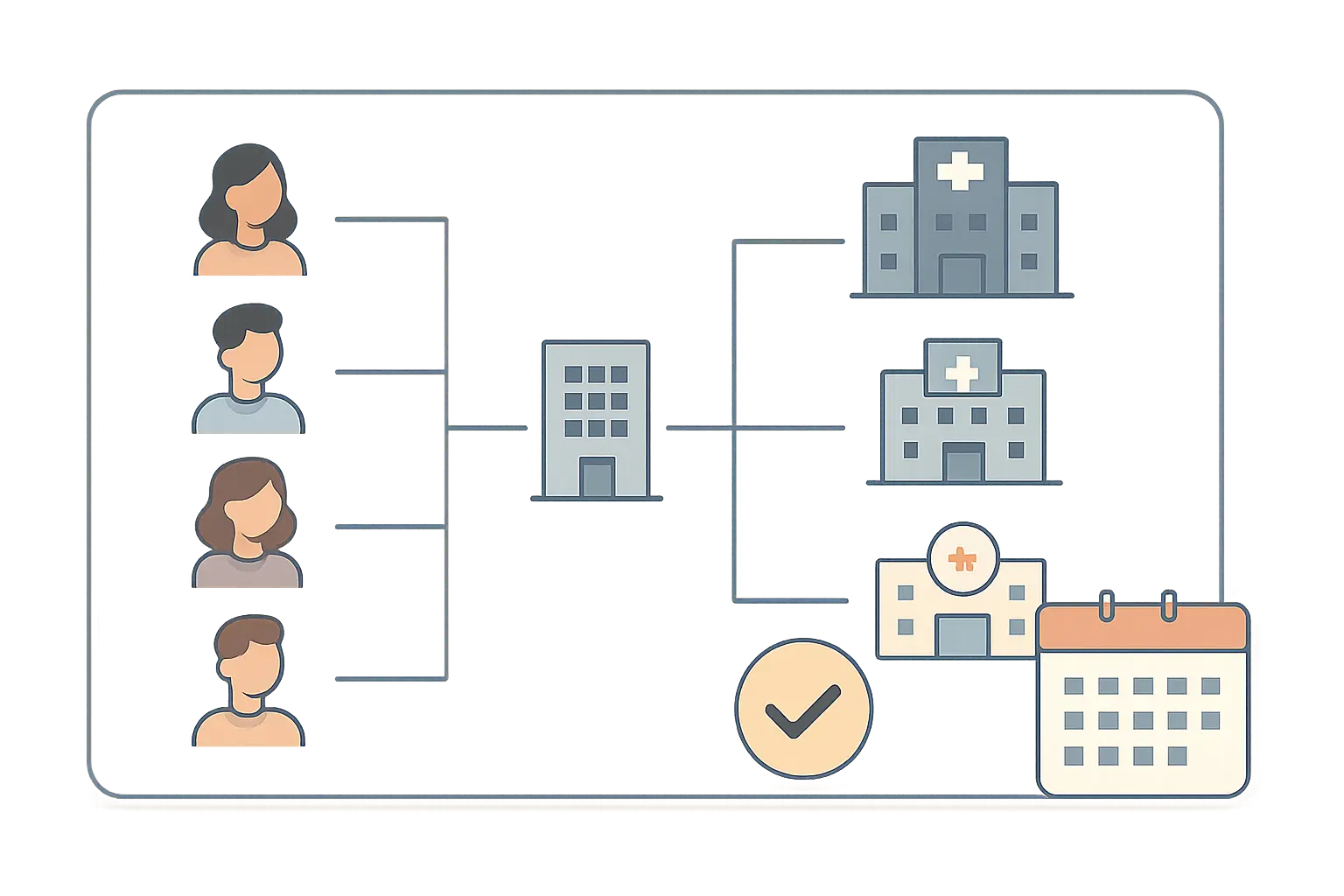
Both the PhD and the PsyD in health-service psychology require an accredited predoctoral internship, and both compete for it in the same national match run by the Association of Psychology Postdoctoral and Internship Centers. The 2026 Phase I statistics, published by APPIC, are the cleanest side-by-side data that exist on the two degrees, because they cover the same applicants in the same year.
| Applicant group | Applicants | Matched | Match rate |
|---|---|---|---|
| All applicants who submitted rankings | 4,358 | 3,513 | 81 percent |
| Clinical psychology, PhD | 1,542 | 1,286 | 83.4 percent |
| Clinical psychology, PsyD | 2,171 | 1,540 | 70.9 percent |
| Counseling psychology, PhD | 331 | 269 | 81.3 percent |
| Counseling psychology, PsyD | 128 | 62 | 48.4 percent |
Two further figures from the same release matter more than the headline. First, accreditation: 3,373 of 3,680 positions at APA- or CPA-accredited sites were filled, a 92 percent fill rate, against 140 of 289 positions at non-accredited sites, 48 percent. Applicants concentrate on accredited internships because postdoctoral hours, licensure and many employers depend on them. Second, quality of match: 44 percent of matched applicants got their first-ranked site, 67 percent one of their top two and 81 percent one of their top three. Being matched and being matched where you wanted to live are different outcomes.
Read the degree gap carefully before drawing a conclusion from it. PsyD cohorts are larger, are more concentrated in a handful of high-enrolment programmes and include a higher proportion of students at non-accredited or newer sites, all of which push the aggregate rate down. The match rate is a property of applicant pools, not a measure of individual candidates. What it does tell you to ask of any programme you are considering is a single concrete question: what percentage of your students matched at accredited sites in the last three cycles?
Funding, and the number nobody puts in the brochure
Tuition remission is the practical difference between finishing a doctorate with savings and finishing it with a mortgage-sized balance. Among psychology research-doctorate recipients in 2022, 80.8 percent reported tuition remission, but the distribution across sub-fields is steep: 91.9 percent in research and experimental psychology against 78.7 percent in clinical psychology. Funded PhD places typically bundle a stipend with an assistantship; many practice-focused programmes, PsyD programmes prominently among them, are tuition-driven and offer partial scholarships rather than full funding.
Ask each programme for three numbers rather than for a funding philosophy: the proportion of students on full tuition remission in each year of the programme, the stipend and whether it continues through the internship year, and the median graduate debt of their last three cohorts. A programme that will not give you the third number has told you something.
What each doctorate asks you to write
The document at the end differs less than the marketing implies, and more than most applicants expect in one specific respect: what counts as an original contribution.
- The PhD dissertation is an empirical study answering a question the literature has not answered, with a data-collection or secondary-analysis design of your own, a defensible sampling and power rationale, and a discussion that positions the finding in the theoretical literature. Five chapters is the common shape in US programmes.
- The PsyD doctoral project or dissertation is more variable by programme. It may be an empirical study of the same form, a programme evaluation, a systematic review with clinical recommendations, a case-based or theoretical dissertation, or a clinical dissertation built around applied outcome data. What is constant is the requirement that it be a scholarly product with a method section that a committee can evaluate.
- Both are governed by the same reporting standards. If your study is quantitative, the American Psychological Association’s Journal Article Reporting Standards define what the method and results sections must contain; APA 7 governs the formatting of both documents.
The practical consequence for the work in front of you is that the analysis and write-up obligations are identical whichever degree you hold. Constructing the variables is the same task either way — our worked guide to research questions, hypotheses and variables in psychology covers the move from a research question to testable predictions — and so is the interpretation, which our step-by-step on the discussion chapter of a psychology dissertation handles. The pillar guide to writing a psychology dissertation covers the document end to end.
How to use these numbers when you choose
- Start from the job, not the letters. If the target is independent clinical practice, both degrees reach licensure and the match data show both routes working at scale. If the target is a research post, a tenure-track position or a role where you will run studies, the funded PhD with a research advisor is the route the data support.
- Weigh accreditation above degree type. The 92 percent fill rate at accredited internship sites against 48 percent at non-accredited ones is the strongest structural signal in the APPIC release. Programme accreditation and internship placement history should outrank the PhD-versus-PsyD label in your decision.
- Price the whole degree, including the internship year. Seven years at median, an internship year at a modest stipend, and tuition remission that varies from 79 to 92 percent by sub-field: those three facts determine your financial outcome more than any ranking.
- Match the dissertation you want to write to the programme’s norms. Read three recent dissertations from any programme you are considering. If none of them look like the project you have in mind, the mismatch will be a supervision problem for four years.
If you are weighing a practice doctorate against a research doctorate in a different discipline, the same structure of question recurs; our comparison of the DNP project and the PhD dissertation in nursing and our guide to professional doctorates such as the DBA, EdD and DProf set out how other fields draw the same line.
Draft your psychology dissertation with the standards built in
Tell Tesify your design, your measures and your hypotheses, and it drafts the chapters in APA 7 with the reporting elements a psychology committee looks for: the method section written to reporting-standard level of detail, effect sizes and intervals in the results, and every source formatted automatically by Auto Bibliography.
Start your psychology dissertation with Tesify, free to begin
Frequently asked questions
Is a PsyD easier to get into than a PhD in psychology?
Admission rates at funded clinical PhD programmes are famously low, and PsyD cohorts are larger, so entry is generally less competitive. The competition returns later: in the 2026 APPIC Phase I Match, clinical PsyD applicants matched at 70.9 percent against 83.4 percent for clinical PhD applicants. Judge a specific programme by its own accredited-internship placement rate, not by the degree letters.
Do PsyD graduates appear in the federal doctorate statistics?
Largely not. The NSF Survey of Earned Doctorates covers research doctorates, so the 3,900 psychology doctorates it recorded for 2022 are not the full doctoral output of the discipline. For a count that includes both degrees, the APPIC match statistics are the better source, because they report applicants by degree type.
How long does a psychology doctorate take?
The 2022 median was 6.9 years from the start of graduate school, 6.3 years in research and experimental psychology and 7.1 years in counseling and applied fields. Median age at the doctorate was 31.3 years. The predoctoral internship year is inside those totals.
Is a PsyD dissertation different from a PhD dissertation?
Often in form, rarely in standard. PsyD programmes accept a wider range of culminating projects, including programme evaluations, systematic reviews and clinical or theoretical dissertations, while PhD programmes almost always require an original empirical study. Both are assessed on the quality of the method and the defensibility of the conclusions, and both follow APA 7.
What proportion of applicants get their first-choice internship?
In the 2026 Phase I Match, 44 percent of matched applicants were placed at their first-ranked site, 67 percent within their top two and 81 percent within their top three. Geography is the usual reason a matched applicant is disappointed.
Which degree is better funded?
Research-oriented doctorates are, on the available evidence. Among 2022 psychology research-doctorate recipients, 91.9 percent in research and experimental psychology reported tuition remission against 78.7 percent in clinical psychology, and practice-focused programmes are more often tuition-driven. Ask every programme for the proportion of students on full remission and the median debt of recent cohorts.
Write your thesis with AI
Structure, draft, cite, and format your thesis faster with Tesify’s AI writing tools, automatic bibliography, and plagiarism checker. Free to start, no credit card required.





Leave a Reply