

This guide covers the sourcing layer specifically — for the full chapter structure, project types and reporting guidelines a pharmacy or PharmD thesis needs, see our complete guide to writing a pharmacy thesis. A pharmacy thesis lives or dies on whether its literature review draws from the right sources — and pharmacy research is split across several databases that each cover a different slice of the field, so a search built only on Google Scholar or a single general database will miss entire categories of relevant evidence. This guide maps the journals, databases and professional bodies a pharmacy or PharmD thesis actually needs, what each one covers, and how to combine them so your literature review is not silently missing a whole evidence base.
Start with PubMed/MEDLINE — but know what it does not cover
PubMed, the U.S. National Library of Medicine’s free biomedical database, indexes tens of millions of citations from MEDLINE, life-science journals and online books, and requires no subscription or institutional login to search. For a pharmacy thesis it is the right starting point for clinical pharmacology, pharmacotherapy outcomes, and drug-safety literature. What it does not reliably cover is the pharmacy-practice and pharmacoeconomics literature published in trade and practice-focused journals outside MEDLINE’s core indexing, and conference abstracts — both of which matter for a practice-based PharmD thesis and require a second database.
The pharmacy-specific databases MEDLINE misses
- International Pharmaceutical Abstracts (IPA) — indexes pharmacy practice, pharmacoeconomics, pharmacy education and pharmacy law literature with deeper coverage than MEDLINE in these areas; typically accessed through an institutional subscription on a platform such as EBSCOhost, so check what your library provides before assuming it is unavailable.
- Embase — an Elsevier database with broader international and conference-abstract coverage than MEDLINE, particularly valuable for pharmacovigilance and drug-safety literature published outside North America.
- Cochrane Library — the primary source for systematic reviews and meta-analyses on drug efficacy and safety; a thesis proposing a systematic-review methodology should search here first, since an existing Cochrane review on your exact question changes what contribution your own review can credibly claim.
Named journals a pharmacy thesis is expected to cite from
Two flagship journals anchor most PharmD and pharmacy-practice literature reviews. The American Journal of Health-System Pharmacy (AJHP), published in partnership with Oxford University Press on behalf of the American Society of Health-System Pharmacists (ASHP), covers clinical research and practice reports on medication safety, pharmacotherapy, pharmacy operations and professional practice — the natural home journal for a health-system or hospital-pharmacy thesis. The Journal of the American Pharmacists Association (JAPhA) is the equivalent flagship for community and ambulatory-care pharmacy practice, published on behalf of the American Pharmacists Association. A thesis that cites neither of these two, if its topic sits in their scope, reads as having searched incompletely rather than as having chosen genuinely different sources.
Where to verify a drug’s regulatory and trial status
ClinicalTrials.gov, operated by the U.S. National Institutes of Health and National Library of Medicine, is the free registry of ongoing and completed clinical trials and is the correct source for verifying whether a trial you are citing has published results, is still recruiting, or was terminated early — a detail literature reviews frequently get wrong by citing a trial’s registration record as though it reported an outcome. For regulatory status (approval date, labeled indications, safety communications), the FDA’s own drug database and Drugs@FDA tool are the primary source; a pharmacoeconomics or health-outcomes thesis that states a drug’s approval date should cite the FDA record directly rather than a secondary summary.
Professional bodies worth searching directly

Beyond the journal-indexing databases, several pharmacy professional bodies publish guidance, position statements and practice standards that function as primary sources in their own right: ASHP (health-system pharmacy practice standards), APhA (community pharmacy practice), the American College of Clinical Pharmacy (ACCP, clinical pharmacotherapy position statements), and the American Society of Consultant Pharmacists (ASCP, long-term-care pharmacy). A thesis arguing for or against a specific practice change should check whether the relevant professional body has already issued guidance on it — citing that guidance, and explaining where your study agrees or departs from it, is expected in a practice-focused pharmacy thesis discussion chapter.
Searching PubMed effectively with MeSH terms
A pharmacy literature search that relies on free-text keywords alone under-retrieves, because the same drug or condition can be indexed under several synonyms across different papers. PubMed’s Medical Subject Headings (MeSH) vocabulary assigns each indexed article a controlled set of subject terms, and searching by MeSH term rather than free text catches papers that use different wording for the same concept. A pharmacy thesis search strategy should combine a MeSH-term search with a free-text search for the same concept and take the union of results, since MeSH indexing lags publication by weeks to months and very recent articles may not yet carry the right heading. Report both strands of the search explicitly in your methods chapter, not just the combined result count.
Citing pharmacy sources in the right format
Many pharmacy and pharmaceutical-sciences journals use numbered, AMA-based reference styles rather than APA — a distinction that catches many pharmacy students who learned APA as an undergraduate. AJHP, for example, uses its own AJHP reference citation style and refers authors to the AMA Manual of Style for anything that style does not cover. Our AMA citation style guide covers the numbered in-text citation format and reference-list rules AMA requires, which differ meaningfully from the author-date system APA uses. Confirm which style your specific program or target journal requires before drafting your reference list, since converting a full pharmacy bibliography between styles late in the process is time-consuming to do by hand.
Open-access pharmacy and biomedical resources beyond the paywalled databases
Where an institutional subscription to IPA or Embase is not available, several free resources fill part of the gap: PubMed Central (PMC) holds full-text open-access biomedical articles, and our directory of free datasets and open data repositories covers the health-sciences section relevant to pharmacoepidemiology projects that need population-level drug-utilization or adverse-event data rather than published literature. Neither substitutes fully for a paywalled database’s practice-literature coverage, but both extend what is searchable without institutional access.
Building a search strategy across databases
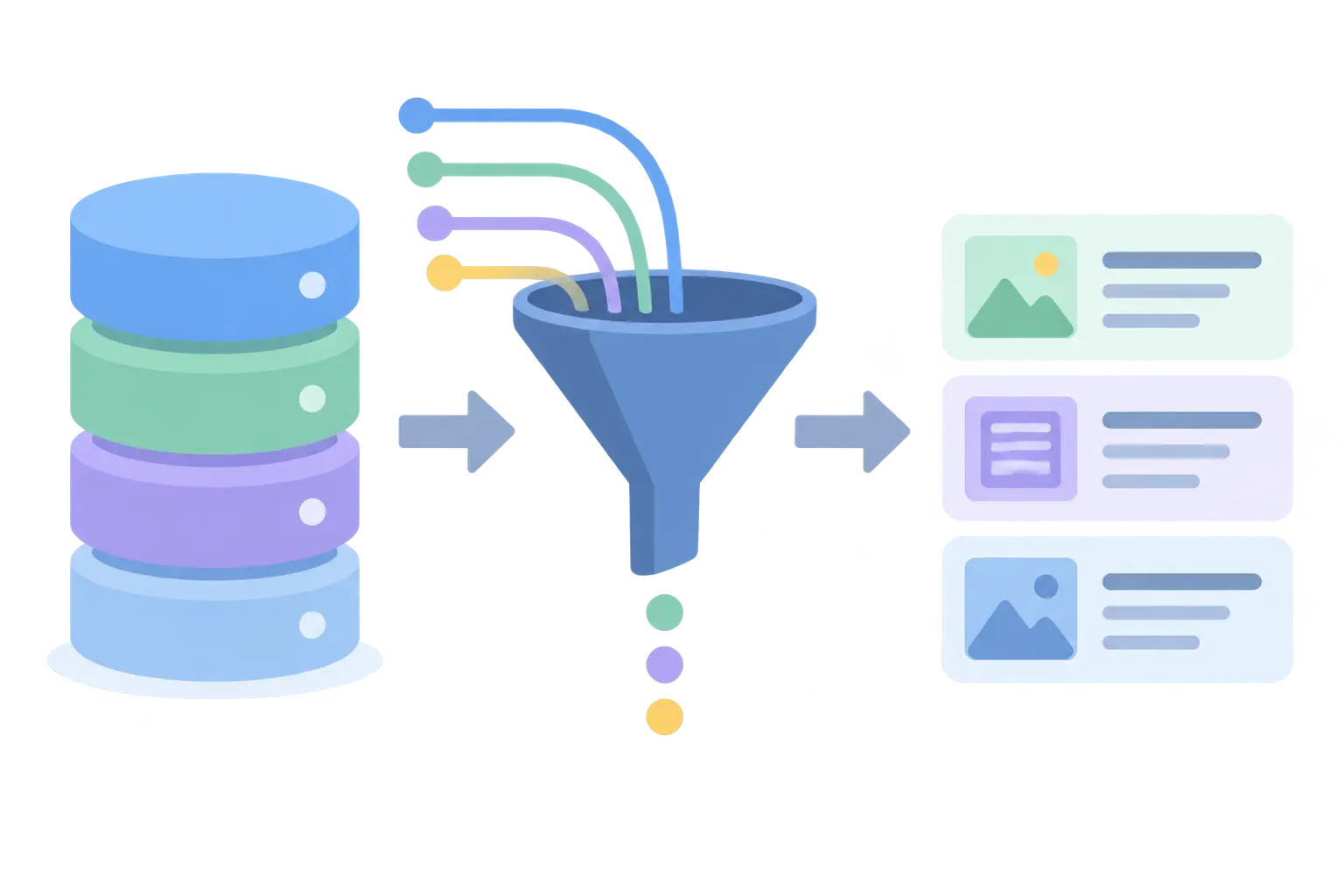
The mechanical part of a literature search matters as much as knowing the right databases exist:
- Run the same core search string across at least two databases (typically PubMed plus IPA or Embase) and compare hit overlap — a search that returns nearly identical results in both databases has likely saturated the available literature; one that diverges sharply means one database is finding something the other misses.
- Search grey literature separately. FDA advisory committee documents, professional-body position statements and conference abstracts (often in Embase but not MEDLINE) do not show up in a standard PubMed search and need to be searched as their own step, not assumed to be covered incidentally.
- Track your search strategy explicitly — database name, search string, date run, and number of results — since many programs expect documented, PRISMA-style search reporting even for a literature chapter that is not a full systematic review.
- Search conference proceedings separately for very recent evidence. Major pharmacy meetings (ASHP Midyear, APhA Annual, ACCP) often present findings months before the resulting paper is indexed in any database; Embase indexes some conference abstracts, but the conference organization’s own proceedings archive is usually the more complete source for a specific meeting.
None of this replaces a clear scope decision up front: a literature review that tries to cover every database exhaustively without first narrowing to a specific research question produces an unmanageable source list rather than a focused review. Decide your question, then let the question determine which two or three sources from this list actually apply, rather than working through the full list for every project regardless of topic.
Clinical/practice thesis versus pharmaceutical-sciences bench thesis: different source mix
The right database mix depends heavily on which kind of pharmacy thesis you are writing. A clinical or practice-based PharmD thesis (medication-therapy outcomes, pharmacy service delivery, patient counselling interventions) draws primarily on MEDLINE, IPA and the AJHP/JAPhA journal pair described above. A pharmaceutical-sciences thesis (drug formulation, pharmacokinetics, medicinal chemistry) draws more heavily on chemistry- and biology-indexed literature — PubMed still applies, but Embase’s broader international coverage and subject-specific databases such as Reaxys (for chemical compound data) become more important, and the flagship journals shift toward titles like the Journal of Pharmaceutical Sciences rather than AJHP or JAPhA. Naming which type of pharmacy thesis you are writing, explicitly, in your methods chapter’s search-strategy section helps a committee judge whether your database choices were appropriate for your actual topic.
Mistakes examiners flag in a pharmacy literature review
- PubMed-only searches for a practice-focused topic that needed IPA or Embase coverage.
- Citing a clinical trial registration as though it reported a result, without checking ClinicalTrials.gov for the actual posted outcome or verifying the study completed.
- No professional-body guidance cited on a practice-change argument where ASHP, APhA or ACCP has already published a relevant position statement.
- Regulatory facts sourced from a secondary summary instead of the FDA’s own record.
- No documented search strategy — a literature review that cannot show which databases were searched, with what terms, on what date.
- Free-text-only PubMed searches that never incorporate a MeSH-term strand, under-retrieving papers indexed under a standard heading with different wording in the abstract.
- Mismatched database choice for thesis type — a pharmaceutical-sciences bench thesis relying only on the clinical-practice database mix, or vice versa.
Frequently asked questions
Is PubMed enough for a pharmacy thesis literature review?
Not on its own for most practice-focused topics. PubMed/MEDLINE is the right starting point for clinical pharmacology and pharmacotherapy outcomes, but pharmacy-practice, pharmacoeconomics and pharmacy-law literature is better covered by International Pharmaceutical Abstracts (IPA) or Embase.
Is International Pharmaceutical Abstracts free?
No. IPA is typically accessed through an institutional subscription on a platform such as EBSCOhost. Check what your library provides before assuming it is unavailable.
Where do I check whether a clinical trial actually reported results?
ClinicalTrials.gov, the free NIH/NLM registry, shows a trial’s recruitment status and, where available, its posted results — always verify this directly rather than assuming a registered trial published a completed outcome.
Which journal should a hospital-pharmacy thesis cite from first?
The American Journal of Health-System Pharmacy (AJHP), published in partnership with Oxford University Press on behalf of ASHP, is the flagship journal for health-system and hospital-pharmacy practice research.
Do I need to cite professional-body guidance, or only peer-reviewed studies?
Both, where relevant. Professional bodies such as ASHP, APhA and ACCP publish position statements and practice standards that function as primary sources for practice-focused pharmacy theses, and examiners expect a practice-change argument to engage with existing guidance directly.
What is MeSH and why does my search strategy need it?
MeSH (Medical Subject Headings) is PubMed’s controlled vocabulary. Searching by MeSH term catches papers indexed under a standard subject heading even when the abstract uses different wording than your search terms, which a free-text-only search misses. Combine both approaches and report the combined strategy in your methods chapter.
Should a pharmaceutical-sciences thesis use the same databases as a clinical PharmD thesis?
Not entirely. A pharmaceutical-sciences (formulation, pharmacokinetics, medicinal chemistry) thesis needs broader chemistry- and biology-indexed coverage and different flagship journals than a clinical or practice-based PharmD thesis, which relies more on MEDLINE, IPA and journals like AJHP and JAPhA. Name which type of thesis you are writing when you justify your database choices.
Build a pharmacy literature review that covers every source
Tesify’s thesis workspace, used by 9,000+ students and 15,000+ chapters, helps pharmacy and PharmD students structure a search strategy across the databases and professional bodies their topic needs, instead of a PubMed-only search that misses the practice literature. Every word stays 100% written by you.
Write your thesis with AI
Structure, draft, cite, and format your thesis faster with Tesify’s AI writing tools, automatic bibliography, and plagiarism checker. Free to start, no credit card required.





Leave a Reply