
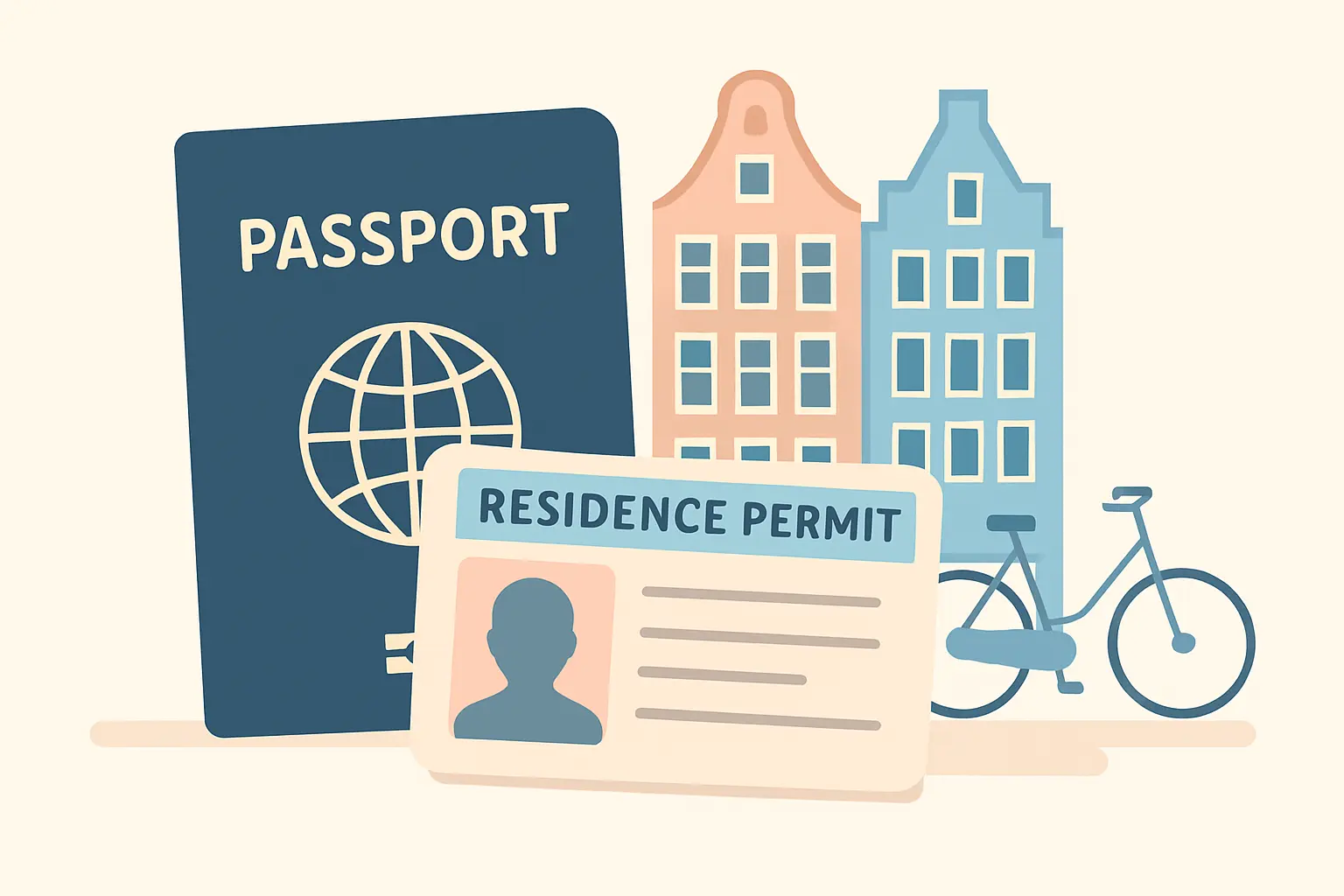
The Netherlands student visa is not one document but two: an MVV entry visa valid for 90 days, and a VVR residence permit covering the length of your course. Non-EU students obtain both through a single TEV application that your Dutch university submits on your behalf as a recognised sponsor — you never apply directly.
Who needs a Dutch student visa?
EU, EEA and Swiss nationals need no visa or residence permit and may study in the Netherlands on the same basis as Dutch students, though they must still register with their municipality.
Everyone else needs a residence permit. Whether you also need an MVV depends on nationality: citizens of a short list of countries including the United States, Canada, Australia, New Zealand, Japan and South Korea are MVV-exempt and need only the residence permit. All other non-EU nationals need both, obtained together through the TEV procedure.
What is the TEV procedure?
TEV stands for Toegang en Verblijf — Entry and Residence. It is a combined application in which your educational institution asks the Immigration and Naturalisation Service (IND) for your MVV and residence permit at the same time.
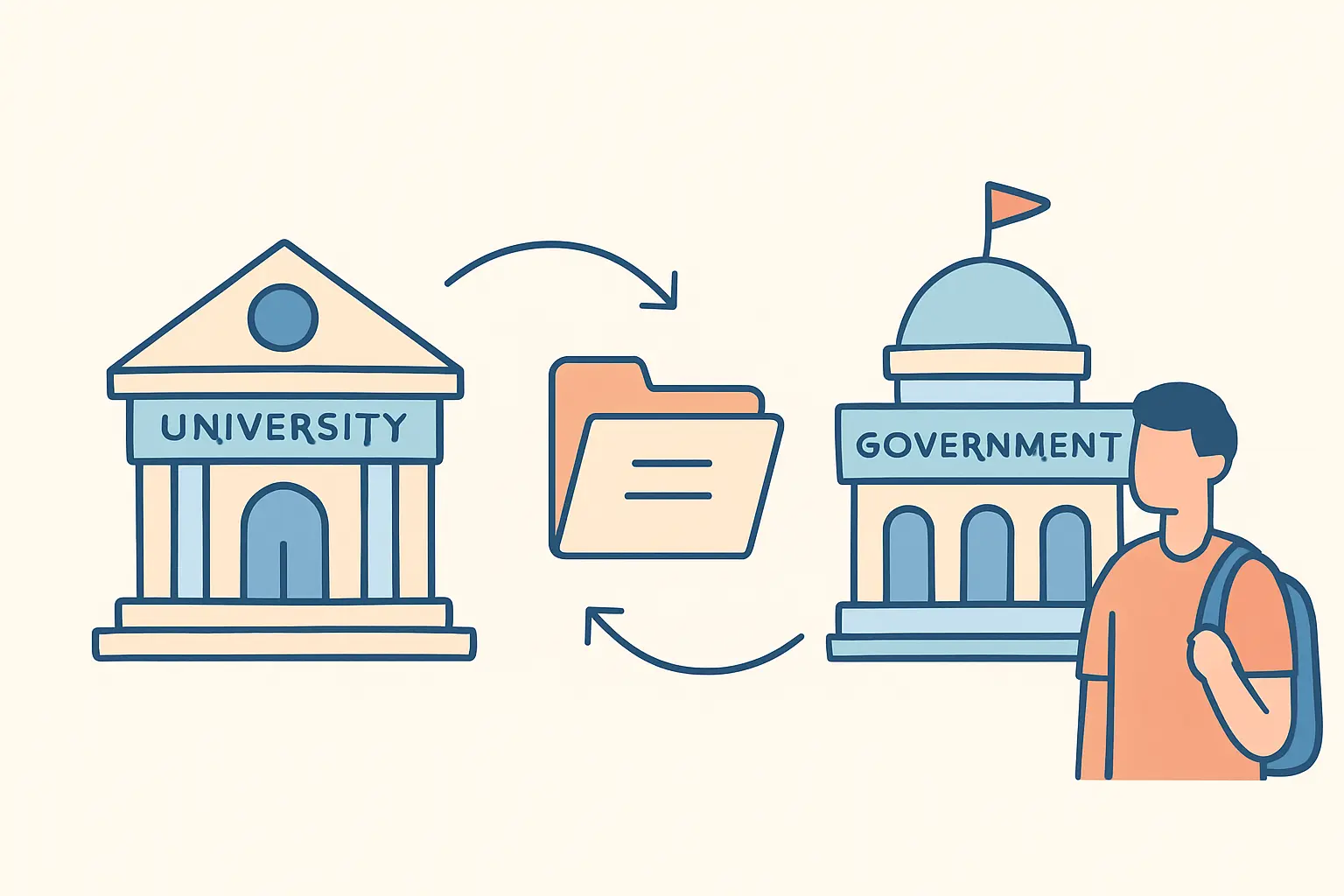
The critical structural point is that your university, not you, is the applicant. Dutch universities and universities of applied sciences are “recognised sponsors” (erkend referent), and only recognised sponsors may submit study applications. This makes the Dutch system considerably less burdensome than most: you supply documents to an international office, and they handle the immigration authority.
| Element | Detail |
|---|---|
| Who applies | Your university, as recognised sponsor |
| MVV | Entry visa, valid 90 days, collected at a Dutch embassy or consulate |
| VVR | Residence permit for the duration of the course, plus three months |
| IND standard decision period | 60 days; peak season (May–August) can extend this |
| Proof of funds (2026) | Approximately €1,130 per month of study |
| Application fee | Set annually by the IND; confirm the current figure with your institution |
| Work rights | 16 hours per week during term, or full-time in June, July and August |
| Health insurance | Mandatory; type depends on whether you work |
How much money do you need to show?
The IND sets a monthly “norm amount” that students must demonstrate. For 2026 this stands at approximately €1,130 per month, and universities generally require proof covering twelve months, so budget on demonstrating around €13,500 in available funds.
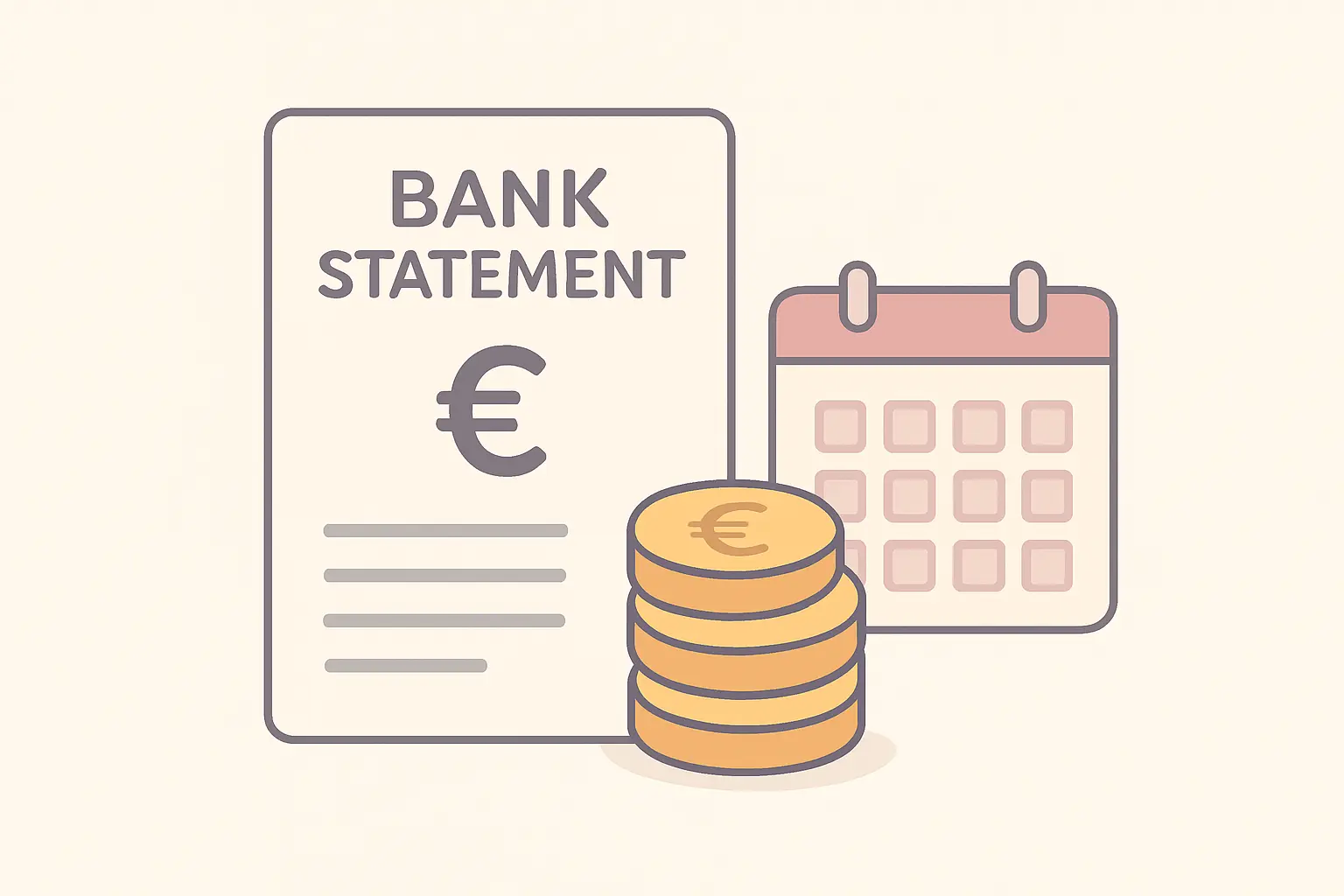
Two details cause most rejections. The funds must be genuinely available to you — typically in your own account, in a blocked account held by the university, or covered by a scholarship letter — and a parental bank statement alone is often not accepted without a formal declaration of support. The norm amount is also revised periodically, usually in January and July, so confirm the figure applicable to your intake rather than the one you read last year.
Tuition for non-EU students at Dutch institutions typically runs from around €6,000 to €20,000 per year depending on programme and institution, and this sits on top of the living-cost requirement. If cost is a deciding factor in where you study, our ranking of the cheapest countries to study abroad puts the Netherlands in context.
What is the timeline?
The IND’s standard decision period for a TEV application is 60 days. In practice, recognised-sponsor applications are frequently decided faster — often within two to four weeks — but the peak intake period from May to August pushes this out, and you should plan against the statutory 60 days rather than the optimistic case.
- Accept your offer and complete the institution’s enrolment steps. The visa process cannot begin before this.
- Submit documents to the international office: passport copy, proof of funds, birth certificate where required, and any legalisation or apostille the institution asks for.
- The university files the TEV application with the IND.
- The IND decides and notifies your sponsor.
- Collect your MVV at the designated Dutch embassy or consulate, usually within three months of approval.
- Travel to the Netherlands within the MVV’s 90-day validity.
- Collect your residence permit card at an IND desk and give biometrics if not already provided.
- Register with your municipality to obtain a BSN, the Dutch citizen service number.
Step eight is not optional and is often underestimated. Without a BSN you cannot open most bank accounts, take out health insurance, or be paid for work — and municipal registration appointments in Amsterdam, Rotterdam and Utrecht can be booked out for weeks in September.
What are the study progress requirements?
Dutch student residence permits carry a progress condition that surprises many international students. Institutions must report to the IND if a student fails to earn at least 50% of the annual credits — normally 30 of 60 ECTS — and persistent underperformance can lead to the permit being withdrawn.
This is a real enforcement mechanism rather than a formality, and it applies to research master’s students as well as taught ones. If illness or personal circumstances put your credits at risk, tell your study adviser early: documented mitigating circumstances are recognised, undocumented ones generally are not.
Can you stay after graduating?
Yes. The Netherlands operates a zoekjaar, or orientation year, permitting graduates of Dutch higher education to stay for twelve months to look for work, with full labour-market access during that period and no employer sponsorship required.
You may apply for the orientation year within three years of graduating, which means you can leave, work elsewhere, and return to use it. It also applies to graduates of certain top-ranked universities abroad. For how this compares internationally, see our overview of the post-study work visa by country.
How does the Netherlands compare with other study destinations?
The Dutch model’s distinguishing feature is sponsor-led application: the burden of proof sits substantially with the institution rather than the student, which removes much of the anxiety associated with the UK, US and Australian systems.
The trade-offs are housing and the credit requirement. Student accommodation shortages in the major Dutch cities are severe and well documented, and several universities now explicitly warn incoming international students not to travel without confirmed housing. For comparison with other systems, see our guides to the UK Graduate Route visa, the Irish study visa and Stamp 2, and the Canadian study permit.
Funding your studies in the Netherlands
Dutch institutional scholarships such as the Holland Scholarship and university-specific excellence awards are typically partial rather than full, and application deadlines usually fall between December and February for a September intake — well before most students begin thinking about visas.
EU-wide schemes are often the better route for a fully funded place. Our guides to Erasmus Mundus Joint Masters scholarships and fully funded PhD scholarships for international students cover the main options, several of which include Dutch partner institutions.
Frequently asked questions
Do I apply for the Dutch student visa myself?
No. Your Dutch university applies on your behalf as a recognised sponsor through the TEV procedure. You supply documents and pay the fee, usually via the institution, but you do not file with the IND directly.
How long does a Netherlands student visa take?
The IND’s statutory decision period is 60 days. Recognised-sponsor applications are often decided sooner, but the May-to-August peak slows processing. Start the process as soon as you accept your offer.
How much money do I need for a Dutch student visa in 2026?
Roughly €1,130 per month of study, typically evidenced for twelve months — around €13,500. The IND revises this norm amount periodically, so confirm the current figure for your intake with your institution.
Can I work while studying in the Netherlands?
Yes. Non-EU students may work up to 16 hours per week during term time, or full-time during June, July and August. Your employer needs a work permit (TWV) for you, which they arrange. EU students face no restriction.
What is a BSN and why do I need one?
The BSN (burgerservicenummer) is the Dutch citizen service number, issued when you register with your municipality. You need it for banking, health insurance, employment and most administrative processes. Book the registration appointment before you arrive if possible.
What happens if I fail too many credits?
Institutions must report students who earn less than 50% of the annual credit load — normally under 30 ECTS — to the IND, and the residence permit can be withdrawn. Document any mitigating circumstances with your study adviser as they arise.
Can I stay in the Netherlands after I graduate?
Yes, via the orientation year (zoekjaar), which grants twelve months of unrestricted labour-market access. You can apply within three years of graduating.
Arriving ready to write
A Dutch master’s is short and intensive, and the thesis arrives faster than most international students expect. Tesify helps you draft, structure and proofread academic work in English, which matters when you are writing a thesis in your second or third language against a compressed Dutch timetable.
Write your thesis with AI
Structure, draft, cite, and format your thesis faster with Tesify’s AI writing tools, automatic bibliography, and plagiarism checker. Free to start, no credit card required.




Leave a Reply