

If your supervisor leaves the university, your institution remains responsible for supervising you to completion. In practice you will have four options: a new internal supervisor, your former supervisor continuing as an external or visiting co-supervisor, transferring with them to their new institution, or a restructured team. Nothing about your registration lapses automatically.
Who is actually responsible for your supervision?
The institution, not the individual. Universities award the degree, register the student and carry the regulatory obligation to provide adequate supervision — a duty reflected in UK Quality Code expectations and equivalent frameworks elsewhere.
This matters because it reframes the conversation. You are not asking your department for a favour when a supervisor leaves; you are asking it to meet an obligation it already has. Students who understand this negotiate very differently from those who feel they are imposing.
What are the four realistic options?
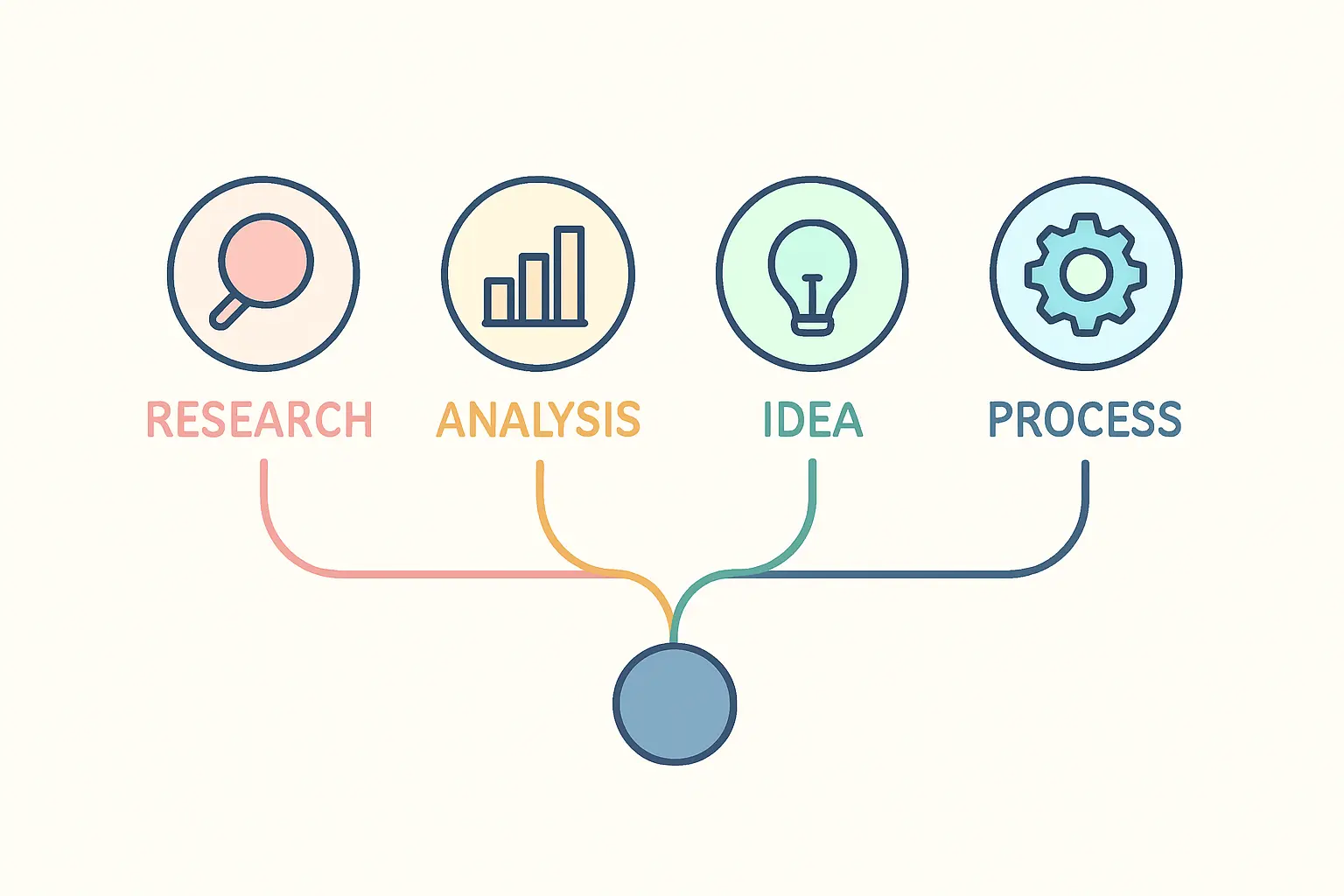
| Option | Works best when | Main risk |
|---|---|---|
| New internal supervisor | Another academic in the department knows the field | Expertise mismatch; a change of direction late in the project |
| Former supervisor continues externally | You are past mid-point; the relationship works | Informal arrangements that quietly lapse |
| Transfer with them to the new institution | You are early; funding and visa permit it | Funding rarely transfers; fees and timeline reset |
| Restructured team | Internal expertise is partial | Diffuse responsibility; nobody clearly in charge |
The second option is the most common and the most frequently mishandled. A departing supervisor who agrees to “stay involved” without a formal appointment as visiting or external supervisor has no institutional obligation to you and no allocated workload for it. Goodwill is real, but it is not a supervision arrangement — insist that the continuing role is formalised in writing.
Does the stage of your PhD change the answer?
Substantially. The same departure produces very different problems depending on when it happens.
In year one, a supervisor’s departure is disruptive but survivable, and a new internal supervisor with adjacent expertise can reasonably reshape the project. In the middle years, when the design is fixed and data collection is under way, the priority is continuity of expertise rather than a fresh perspective — this is where a formal external role for the departing supervisor is usually the best answer. In the final year, the overwhelming priority is that someone who has read your thesis can advise on the viva and sign off submission; a new supervisor appointed at this stage is realistically a reader and an administrative signatory rather than a research mentor.
If the departure coincides with your progression checkpoint, flag that immediately — panels can and do take supervisory disruption into account. Our guides to confirmation of candidature and surviving the final year cover those stages.
What should you do in the first week?
Move quickly, because supervisory reallocation decisions are made in the weeks around a departure, and students who are absent from that conversation get whoever is left.
- Ask your supervisor directly about their timeline, whether they can continue in any capacity, and who they recommend internally.
- Contact the postgraduate research director or equivalent in writing. This creates a record and triggers the institutional process.
- Write a one-page project summary — question, method, stage reached, remaining work, deadline. Whoever takes you on will need this, and producing it yourself shapes how the project is understood.
- Ask about data, equipment and funding tied to the departing supervisor’s grants, since these are the arrangements most likely to fail silently.
- Get the new arrangement in writing, naming each supervisor, their role, and the expected meeting frequency.
That last step is the one students skip. Our data review on supervisor meeting frequency shows how widely contact varies even in stable arrangements; after a disruption, an unwritten expectation is close to no expectation at all.
What happens to your funding?
This is the question with the least reassuring answer, and it needs checking before anything else is agreed.
Studentships attached to a specific research grant held by the departing supervisor may not survive their departure, and grant portability varies by funder and by the terms of the individual award. Studentships awarded by the institution or by a doctoral training partnership are generally tied to the institution and continue regardless of who supervises.
Transferring to a new institution is the highest-risk option financially. It typically means a new registration, potentially new fees, a possible loss of time already served, and — for international students — a new visa application. Ask your funder directly rather than relying on either supervisor’s understanding of the rules. Our overview of PhD funding in the UK covers how different award types are structured.
Should you follow your supervisor to their new institution?
Sometimes, but less often than students initially assume. The case is strongest when you are early in the project, your work depends specifically on their expertise or their lab, your funding transfers, and the new institution is a comparable or better environment.
The case against is usually practical rather than academic: lost time, new fees, visa complexity, and the loss of a departmental network you have already built. Beyond roughly the halfway point, transferring rarely makes sense, and the external co-supervision route delivers most of the benefit at a fraction of the cost.
What if the new supervision arrangement is not working?
Say so early and in writing. Supervisory relationships that fail after a forced reallocation follow a recognisable pattern: meetings become infrequent, feedback turns generic, and the student quietly stops asking.
Every institution has an escalation route — usually the postgraduate research director, then the graduate school, then a formal complaints procedure. Raising a concern about supervision is a normal administrative act, not a betrayal, and departments would generally far rather reallocate a student in year two than defend a non-completion in year five. Our guide to managing the supervisor relationship covers how to raise problems constructively, and if things have already slipped, getting a thesis moving again when you are behind covers the recovery.
Frequently asked questions
Can a university leave you without a supervisor?
No. The institution carries the obligation to provide adequate supervision for the duration of your registration. A gap of days or weeks during reallocation is common; a sustained absence of supervision is a legitimate basis for formal complaint.
Can your former supervisor still supervise you after leaving?
Yes, commonly, as an external or visiting supervisor. This must be formally arranged by the institution rather than left as an informal understanding. Ask for the appointment in writing, with a defined role and meeting frequency.
Will your thesis topic have to change?
Usually not, and it should not have to. A new supervisor with adjacent expertise can supervise an existing project. If a proposed supervisor wants to substantially redirect the work, raise it with the postgraduate research director before agreeing — late redirection is a serious risk to completion.
Can you get an extension because your supervisor left?
Frequently, yes. Supervisory disruption is widely recognised as a legitimate ground for an extension or a period of interruption. Apply promptly with documentation rather than waiting until a deadline is already missed. See our guide to extensions and late submission.
What happens to data collected under your supervisor’s grant?
Data ownership normally rests with the institution where the research was conducted, not with the individual researcher. Confirm access arrangements in writing before your supervisor leaves, particularly for data held on their personal or lab systems.
Does a supervisor leaving affect your viva?
Not directly. Supervisors do not examine their own students, so the examination is unaffected. What matters is that someone who knows your thesis can advise on preparation and mock viva. See our viva preparation guide.
Keep the thesis moving through the disruption
Supervisory changes cost months mostly because writing stalls while arrangements are settled. Tesify helps you keep drafting, structuring and refining chapters during the gap, so a change of supervisor costs you a handover rather than a semester.
Write your thesis with AI
Structure, draft, cite, and format your thesis faster with Tesify’s AI writing tools, automatic bibliography, and plagiarism checker. Free to start, no credit card required.




Leave a Reply