

A work-based learning agreement is the document that defines what you will learn at work, how it will be assessed, and what your employer and your university are each committing to. It is signed by three parties — you, your employer and your provider — and it is the thing you point at when the arrangement stops working.
Most learners treat it as enrolment paperwork and sign whatever they are given. That is a mistake, because it is the only document in a work-based programme that binds anyone other than you.
Why it exists

On a conventional course, the provider controls everything that is assessed. On a work-based programme it does not — your evidence comes from a workplace that has its own priorities, and your job could change next month.
The agreement exists to make that dependency explicit. It records what learning the work is expected to generate, what access and support the employer will provide, and how the provider will assess it. Without it, a gap between what your job actually involves and what your qualification requires is entirely your problem to solve, usually at the point when it is too late.
| Party | Typically commits to |
|---|---|
| You | Undertaking the agreed activities, gathering evidence, meeting deadlines and attending reviews |
| Your employer | Providing access to the relevant work, releasing time, and supporting a workplace mentor or supervisor |
| Your provider | Academic supervision, assessment against stated outcomes, and review points |
What goes in it
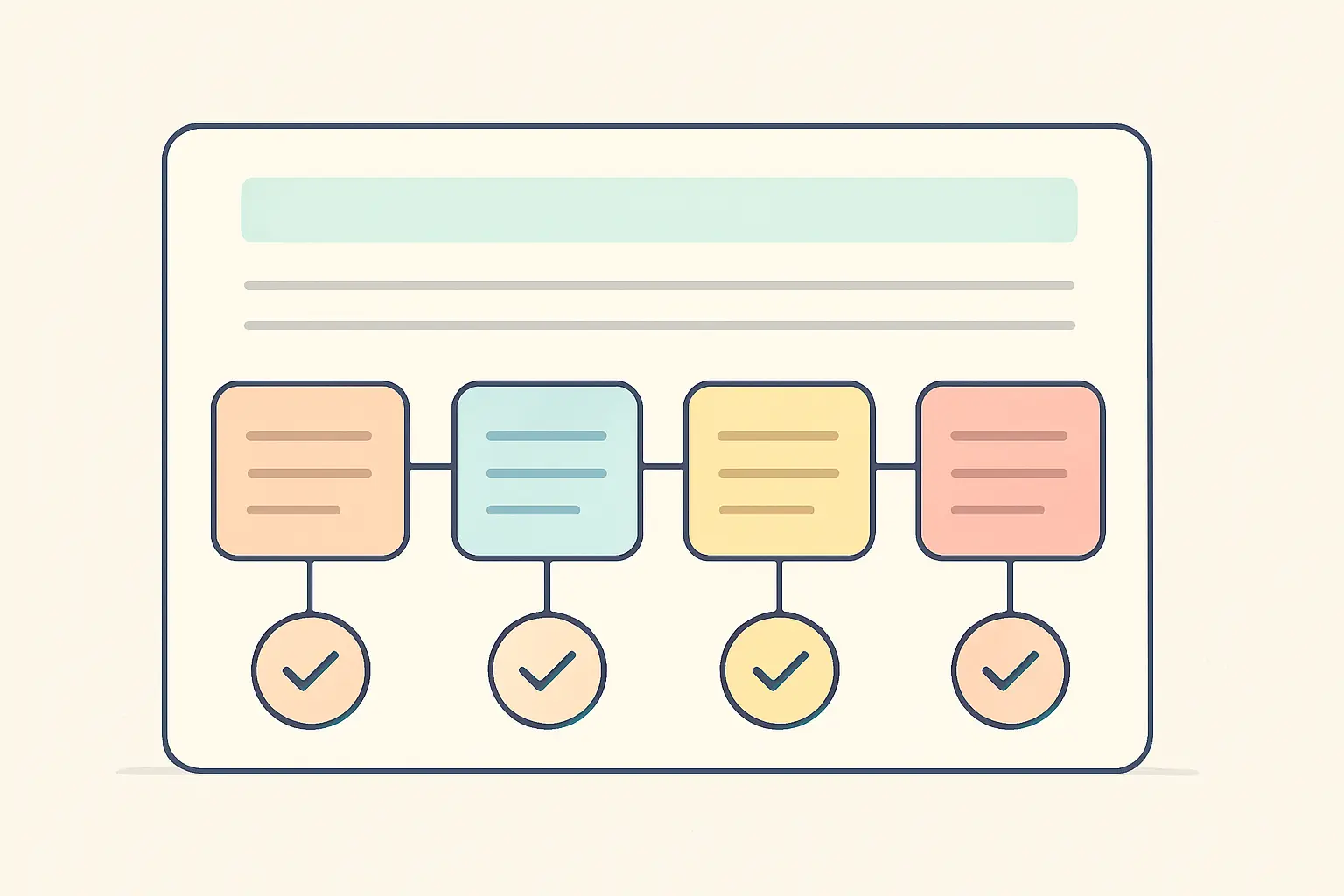
Formats vary by provider, but a workable agreement covers eight things:
- The learning outcomes you are working towards, in the provider’s exact wording rather than paraphrased.
- The workplace activities that will generate evidence against each one — the mapping is the heart of the document.
- The assessment: what you will submit, in what form, and when.
- Time and access: study time released, systems and people you can reach, and any training the employer will provide.
- Supervision: who supervises academically, who mentors in the workplace, and how often you meet each.
- Confidentiality and intellectual property: what you may write about, who will read it, and who owns anything you produce.
- Review points: dates at which all three parties check the arrangement is working.
- What happens if things change — the section everyone omits and everyone eventually needs.
Make the mapping specific
The single most common weakness is vagueness in section two. “The learner will gain experience in project management” is not a mapping. It cannot be evidenced, cannot be checked, and gives you nothing to point at if the work never materialises.
| Too vague | Specific enough to be useful |
|---|---|
| Gain experience in project management | Lead the scheduling and risk log for at least one project of three months or longer, with sign-off responsibility |
| Develop leadership skills | Chair the weekly operations meeting from January, and conduct two appraisals with support |
| Improve data analysis capability | Produce the monthly performance report independently from Q2, including the commentary |
Write it so a third person could tell whether it happened. That is the test, and it is the same discipline that makes an evidence claim work — our guide to recognition of prior learning covers the equivalent problem for learning you have already done.
Check your role actually covers the standard
Before signing, read the standard or the module outcomes against your real job — not your job description, which is usually aspirational, but what you did last month.
Where there is a gap, that is a negotiation to have now. Employers can often arrange exposure to a missing activity — a secondment, a shadowing arrangement, a place on a project — and are far more willing to do it at the planning stage than in your final term. If a required activity is genuinely impossible in your organisation, you need to know before you enrol, because no amount of good writing evidences work you never did.
Our guide to occupational standards covers how knowledge, skills and behaviours are structured, and behaviours in particular need sustained exposure rather than a single project. If your programme is competence-assessed rather than graded, the evidence model is the one described in our guide to what an NVQ is — and the agreement is precisely what guarantees you access to the work that evidence has to come from.
Settle confidentiality and IP in writing
This is the section that causes the most trouble later, and it takes ten minutes to fix at the start.
Agree who will read your submissions — normally a supervisor, a second marker and potentially an external examiner — and confirm your employer is content with that readership. Agree whether the organisation will be named or anonymised. Agree what happens to anything commercially valuable you produce.
Get it written down even if everyone is relaxed about it, because the person who was relaxed may not be the person in post when you submit. If material is genuinely sensitive, the usual solutions are anonymising the organisation, aggregating figures, or a confidential appendix submitted but not circulated.
Write the change clause

Over a two- or three-year programme, something will change: a restructure, a promotion, a new manager, a site closure, your sponsor leaving. Treating that as unforeseeable is what turns it into a crisis.
A good agreement says what happens if the role changes, if the workplace mentor leaves, or if the planned project is cancelled — usually a review triggered within a set period and a renegotiated mapping. Name a fallback contact at the employer as well as a primary one.
The practical rule: if something material changes, trigger the review immediately rather than hoping the evidence still fits. Renegotiating a mapping in month eight is routine; discovering in month thirty that half your outcomes are unevidenced is not.
Negotiating it: what to push for
Learners rarely realise this is negotiable at all. Three things are worth asking for explicitly, because they are cheap for an employer to grant at the start and expensive to retrofit.
Protected study time, stated in hours or days. “Reasonable time” means nothing when your team is short-staffed. A number is a commitment.
A named mentor with agreed contact time. Not “support from the line manager” — a person and a frequency.
Access in writing to the systems and data you will need. Access refused in month fourteen has ended more work-based projects than any academic difficulty.
Common mistakes
| Mistake | What it costs |
|---|---|
| Signing the template unchanged | Nothing is tailored to your actual role |
| Vague activity descriptions | Nothing is checkable, so nothing is enforceable |
| No confidentiality or IP clause | A dispute at submission, when it is too late |
| Only the line manager involved | The agreement leaves when they do |
| No change clause | A restructure becomes an academic emergency |
| No review dates | Drift goes unnoticed until the final term |
Frequently asked questions
What is a work-based learning agreement?
A document signed by the learner, the employer and the provider, setting out what learning the work will generate, how it will be assessed, and what each party commits to providing.
Is it legally binding?
Treat it as a formal commitment between three parties rather than a contract you would litigate. Its practical force is that it is written, signed and specific — which is usually enough to resolve a disagreement about what was promised.
Can I change it after signing?
Normally yes, through the review process, and you should when circumstances change. Renegotiating early is routine; discovering unevidenced outcomes late is not.
What if my employer will not release study time?
Raise it before signing and get a number rather than a phrase. If an employer will not commit to any specific time, that is important information about whether the programme is feasible in that role.
What if I change jobs during the programme?
Tell your provider immediately and trigger a review. Many programmes can continue with a renegotiated mapping at a new employer, but not if the change is discovered at submission.
Who owns what I produce?
It depends on your employment contract and on what the agreement says, which is exactly why the intellectual property clause should be settled in writing at the start rather than assumed.
Can I write about my employer in my assignments?
Usually yes, with permission and appropriate anonymisation, and the agreement is where that permission should be recorded along with who will read the work.
Once the agreement is signed, everything you submit is assessed against the outcomes written into it. Tesify maps an outline to those exact outcomes, keeps references consistent and produces an AI-use declaration for submission — a starting draft to rewrite in your own words, evidencing work only you did.
Write your thesis with AI
Structure, draft, cite, and format your thesis faster with Tesify’s AI writing tools, automatic bibliography, and plagiarism checker. Free to start, no credit card required.






Leave a Reply