
How to Start Writing a Thesis When You Don’t Know Where to Begin (2026)
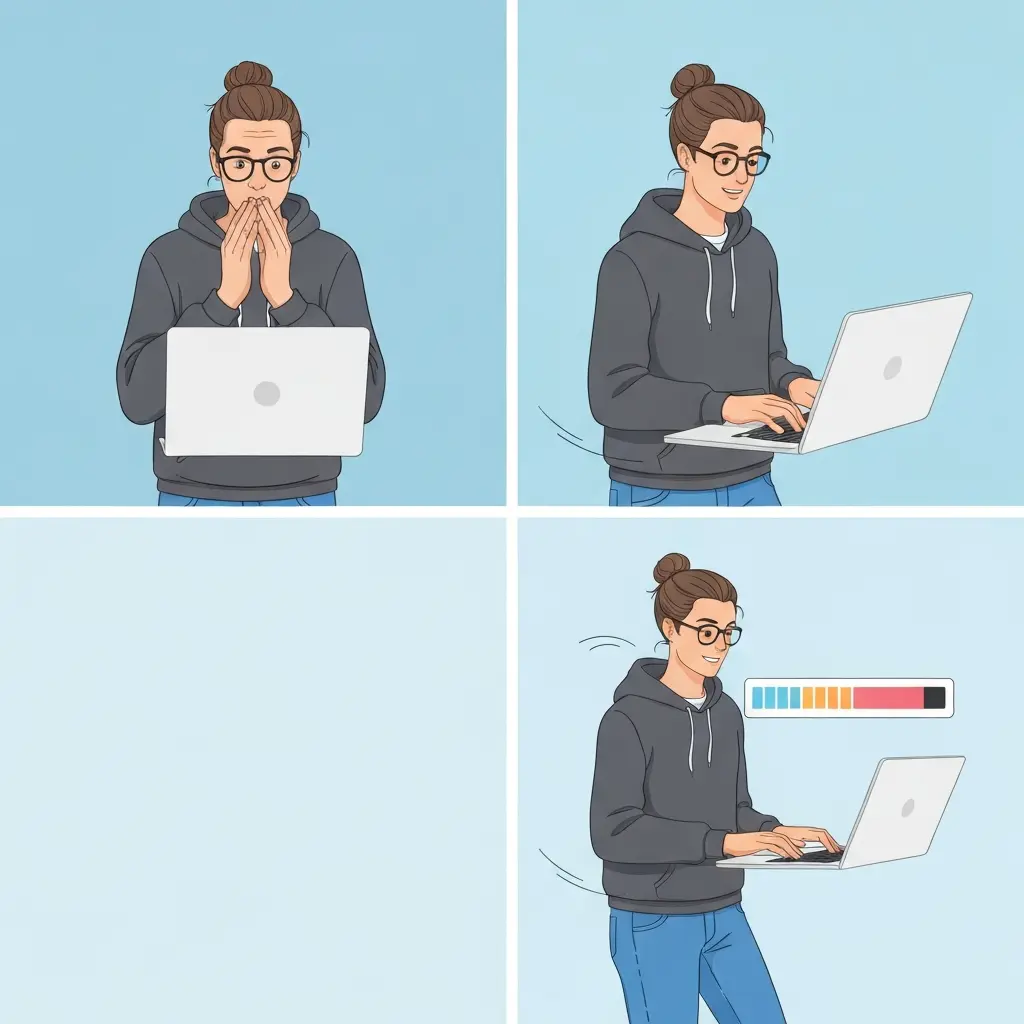
You have your research question. Your supervisor has approved your proposal. The data is collected. And yet — you open a blank document and nothing happens. Learning how to start writing a thesis is one of the most under-discussed challenges in graduate education, because the skills required to research a thesis (reading, analysing, note-taking) are completely different from the skills required to write it. This guide gives you a concrete, practical system for getting from paralysis to first draft in 2026.
The good news: thesis writing paralysis is nearly universal, is well understood by writing researchers, and has evidence-based solutions. The bad news: most of those solutions require you to break habits you have spent years building. This guide explains both the strategy and the psychology, so you can get started — and keep going.
Why Thesis Writing Paralysis Happens
Thesis writing paralysis is not a character flaw. It is the predictable result of combining several genuinely difficult challenges at once:
- Scale: A 15,000–20,000 word document is unlike anything most students have written before. The sheer size triggers avoidance.
- Perfectionism: Academic training rewards critical thinking, which means your internal editor is highly active. Every sentence you write, you immediately evaluate against an imagined examiner — and find it wanting.
- Lack of structure: Unlike coursework essays with a clear brief, a thesis has to be constructed from scratch. The freedom is paralysing rather than liberating.
- Emotional investment: The thesis represents years of work and professional identity. The stakes of writing poorly feel higher than any previous assignment.
- Wrong starting point: Most students start with the introduction — which is actually one of the hardest parts to write well, because it requires you to know what you are introducing before you have written it.
Understanding these causes is the first step to addressing them systematically.
Which Chapter Should You Write First?
The conventional answer is: start with the introduction. The better answer is: start with the chapter that is most concrete and most certain, given where you are in the research process.
For most students who have completed their data collection and analysis, that chapter is the methodology chapter. You know exactly what you did — you were there. You can describe your research design, sample, instruments, and analysis procedure without needing to synthesise anything or make any interpretive claims. Write this chapter first as a confidence-building exercise.
After methodology, the sequencing that most writing experts recommend is:
- Methodology — most concrete; describes factual decisions you made
- Findings/Results — presentation of data; relatively objective once you know your themes or statistics
- Literature Review — now you know your findings, you know which parts of the literature matter most
- Discussion — this links your findings to the literature you have now written; the connections are clear
- Conclusion — summarises what you have already said; now straightforward
- Introduction — last, because you can only introduce what you have already written
- Abstract — very last; one sentence per section of the thesis
Your First Week: A Concrete Day-by-Day Plan
The goal of your first week is not to produce perfect text. It is to generate raw material and establish the habit of daily writing. Here is a day-by-day plan that works for most students starting from scratch:
| Day | Task | Target Output |
|---|---|---|
| Day 1 | Create a full chapter outline with H2 and H3 headings for the methodology chapter | A complete skeleton with no prose yet |
| Day 2 | Write the research philosophy and research design sections (draft quality, no editing) | 500–700 words |
| Day 3 | Write the data collection methods section and sampling rationale | 500–700 words |
| Day 4 | Write the data analysis and limitations sections | 500–700 words |
| Day 5 | Review and light edit the methodology chapter; create outline for findings chapter | ~2,000 word methodology draft + findings skeleton |
| Day 6 | Send methodology draft to supervisor; begin writing findings section 1 | 400–600 words of findings |
| Day 7 | Rest or light reading — do not write. Protect recovery time. | — |
After one week, you will have approximately 2,500 words of methodology chapter plus a findings chapter outline. That is not nothing — it is a foundation.
How to Structure Your Writing Sessions
Research on academic productivity consistently shows that short, frequent writing sessions produce more total output than rare, marathon sessions. Paul Silvia’s research on academic writing habits (summarised in How to Write a Lot, 2007) found that faculty who wrote for 30–90 minutes every day published significantly more than those who relied on large uninterrupted blocks.
For thesis writing, the evidence points to these session structures:
- Session length: 90 minutes is the optimal uninterrupted writing session. After 90 minutes, cognitive performance declines sharply. Take a 15–20 minute break, then start another session if you have time.
- Frequency: Daily sessions are far more productive than three-hour sessions twice a week. Write seven days a week during intensive periods, even if some sessions are only 30 minutes.
- Daily word target: Set a word target, not a time target. 500 words per day adds up to 3,500 per week — that’s 35,000 words in 10 weeks (more than a 20,000-word thesis). Do not stop before hitting the target; do not feel obligated to continue after hitting it.
- First session task: Begin each session by re-reading the last 150 words you wrote. This re-enters your cognitive state and usually generates the next sentence without effort.
- No editing during drafting: The most destructive habit in thesis writing is editing while you draft. If you stop to rewrite the previous paragraph, you will never produce a first draft. Write forward. Editing comes in the next pass.
Overcoming the Blank Page: Practical Techniques
When you sit down to write and genuinely cannot start, these evidence-based techniques work:
1. Write the Outline in Prose
Take your chapter outline (the bullet-point version) and expand each bullet into two sentences of prose. This turns planning into writing without triggering the perfectionism response. You already know what to say — you are just describing it.
2. Lower the Stakes with a “Rubbish Draft”
Explicitly tell yourself you are writing a rubbish draft. The goal is not quality — it is words on a page. You cannot edit a blank document. Once you have a rubbish draft, you have something to work with. Anne Lamott’s concept of “shitty first drafts” (in Bird by Bird, 1994) is the most evidence-aligned writing advice available for academic writers.
3. Talk-to-Text
Use voice dictation (built into both Windows and macOS) to speak your next paragraph out loud. Speaking removes the visual perfection cue of the cursor and allows ideas to flow more naturally. Clean up the transcription afterwards — it only takes a few minutes and produces surprisingly usable prose.
4. Write the Sentence You Are Afraid to Write
Identify the claim that feels most uncertain, most exposed, most likely to be challenged by an examiner. Write it first. The avoidance that causes paralysis is almost always avoidance of a specific difficult sentence. Writing it — even imperfectly — breaks the block.
5. Change Location
Writing research consistently shows that environmental change reduces avoidance. A library carrel, a coffee shop, a different room — a new environment associated specifically with writing trains your brain to shift into writing mode on arrival. Your usual workspace, associated with everything else you do on your computer, is often the worst place to start.
Chapter Sequencing: The Most Efficient Order
The chapter sequencing described above (methodology first, introduction last) reflects a principle: write from certainty to uncertainty. Start with what you know and build outward. Here is a more detailed breakdown of this principle in practice:
Write findings immediately after your analysis is complete. Memory of your data is freshest then. Every week you delay writing the findings chapter, the nuance of what you observed becomes flatter and less rich. Most students wait too long.
Write the literature review after you know your findings. Counter-intuitive, but powerful. Once you know what you found, you know exactly which parts of the literature matter — and you can make your literature review a purposeful argument building toward your study, rather than a comprehensive survey that meanders.
Write the discussion immediately after the literature review. The connections are still live in your memory. If you let weeks pass between writing the literature review and the discussion, you will need to reread the whole literature review to find the connections again.
Write the introduction last. You are introducing the thesis you have written, not the thesis you imagined. The real thesis — with its actual findings and its specific contribution — is better introduced once it exists.
Writing Tools That Help in 2026
The right tools do not write your thesis for you, but they remove friction and free cognitive resources for actual thinking and writing.
Reference Management
Zotero (free) or Mendeley (free tier) are the two standard options for UK and US students. Both integrate with Word and Google Docs to insert citations and auto-generate bibliographies. Set up your reference manager before you write a single word — retrofitting citations is painful. For a comparison, see our Google Scholar guide.
AI Writing Assistance
In 2026, AI writing tools are part of the academic toolkit at most institutions — with strict rules about disclosure and use. Tesify is built specifically for thesis writing: it understands chapter structure, citation formats, and the academic register expected by UK and US universities. Unlike general-purpose AI tools, Tesify preserves your argument and your data while helping you find the words to express them clearly.
Key distinction: using AI to generate your thesis without disclosure is misconduct at almost all universities. Using AI as an editing and structuring assistant — while declaring this use — is permitted at a growing number of institutions. Always check your university’s specific AI policy before using any tool. See our guide on using AI to write your dissertation for a full breakdown of university policies.
Distraction-Free Writing Environments
Freedom (paid) or Cold Turkey (freemium) block distracting websites during writing sessions. The research is unambiguous: even brief task-switching to social media or email resets concentration and costs far more than the seconds spent on the distraction.
Writing Progress Trackers
A simple Google Sheet tracking your daily word count creates accountability and motivation. Seeing a streak of consecutive writing days is psychologically powerful — you will work hard not to break it. This is sometimes called the “Seinfeld Strategy” after the comedian’s advice to “don’t break the chain.”
Using Supervisor Feedback to Maintain Momentum
One of the most common thesis-writing mistakes is waiting for a supervisor meeting to find out what to write next. Your supervisor is not a project manager — they are an expert reader. Use them accordingly:
- Send drafts before meetings. Share your draft chapter at least four to seven days before your scheduled meeting. This makes the meeting substantive rather than introductory.
- Ask specific questions. “Does this argument flow logically from the literature review?” is better than “What do you think?” Specific questions generate actionable feedback.
- Act on feedback immediately. Implement supervisor feedback within 48 hours of receiving it while the conversation is fresh. Delayed implementation leads to re-explaining the same issues in the next meeting.
- Use feedback as a writing prompt. Every point of supervisor feedback is a specific thing to write. “The methodology section needs more justification for your sampling approach” translates directly to: “I need to write 200 words explaining why I used purposive sampling rather than random sampling.” That is not a daunting task.
For a complete guide to thesis structure and chapter requirements, see our How to Write a Thesis guide and our Thesis Structure guide. For tools compared, see our Best Thesis Writing Software comparison.
Frequently Asked Questions
How long does it take to write a 15,000 word thesis?
Writing a 15,000-word thesis from scratch typically takes 8–12 weeks of consistent daily writing, assuming research and analysis are complete. At 500 words per day (a realistic sustainable target), you reach 15,000 words in 30 working days — just over six weeks. However, most students do not write 500 words every day, and they also spend substantial time on revision, supervisor feedback, and formatting. A realistic working timeline is 10–14 weeks from first draft to submission-ready document. Students who struggle to maintain momentum typically take 16–24 weeks.
Can I write my thesis in one month?
Writing a 15,000–20,000 word thesis in one month is possible but requires writing 500–700 words every single day with no days off, assuming data collection and analysis are already complete. It also assumes that you have a fully developed outline and clear chapter plans before you begin writing. The resulting first draft will need substantial revision, so factor in additional time after the initial writing month. A more sustainable approach is six to eight weeks for the first draft, then two to four weeks for revision and supervisor feedback integration.
Is it normal to struggle with thesis writing?
Yes — thesis writing difficulty is nearly universal among graduate students, including at the most elite universities. A 2021 Nature survey found that 36% of PhD students reported seeking help for anxiety or depression, often connected to writing and productivity challenges. Master’s students face similar challenges at a compressed timescale. The skills required for thesis writing — sustained argument construction over tens of thousands of words, tolerance for ambiguity, ability to produce under pressure — are genuinely difficult and are not explicitly taught in most programmes. Struggling does not indicate intellectual inadequacy; it indicates that you are doing something genuinely hard.
Can I use AI to help write my thesis?
At most UK and US universities in 2026, you may use AI tools as writing aids — for structuring arguments, improving clarity, or generating draft text that you substantially revise — provided you declare this use in your dissertation. Using AI to generate substantial portions of text without declaration and revision is treated as academic misconduct by most institutions. Tools like Tesify are designed specifically for academic use: they help you write your own thesis rather than replacing your intellectual contribution. Always consult your university’s specific AI use policy before using any AI tool in your dissertation work.
How do I deal with procrastination when writing a thesis?
Thesis procrastination is almost always caused by one of four things: the task feels too large (break it into 500-word daily targets); the task feels too uncertain (start with the most concrete chapter — methodology); perfectionism (give yourself explicit permission to write a rubbish first draft); or anxiety about judgment (remind yourself that examiners expect a good thesis, not a perfect one — a distinction thesis is not flawless, it is analytically rigorous). Treating procrastination as an emotional regulation problem — rather than a time management problem — and addressing the underlying fear is more effective than scheduling strategies alone.
When should I start writing my thesis?
Earlier than you think. For a 15,000-word Master’s thesis due in September, most UK students should begin writing in June — once research data is substantially collected, even if analysis is not fully complete. Writing up your methodology chapter before analysis is finished is not just acceptable but useful, because the act of writing clarifies your thinking. For a PhD, many supervisors recommend writing conference paper versions of each chapter as you go — a 5,000-word paper for each chapter effectively builds your thesis alongside your research, rather than after it.
Ready to Start Writing?
Tesify is the AI writing tool built for thesis students. It structures your chapters, keeps your argument coherent across 20,000 words, and generates properly referenced academic text — in the citation style your university requires. No blank page paralysis. Just writing.
Write your thesis with AI
Structure, draft, cite, and format your thesis faster with Tesify’s AI writing tools, automatic bibliography, and plagiarism checker. Free to start, no credit card required.





Leave a Reply