
Does Your Dissertation Grade Actually Matter for Jobs and PhD Admission? (2026)
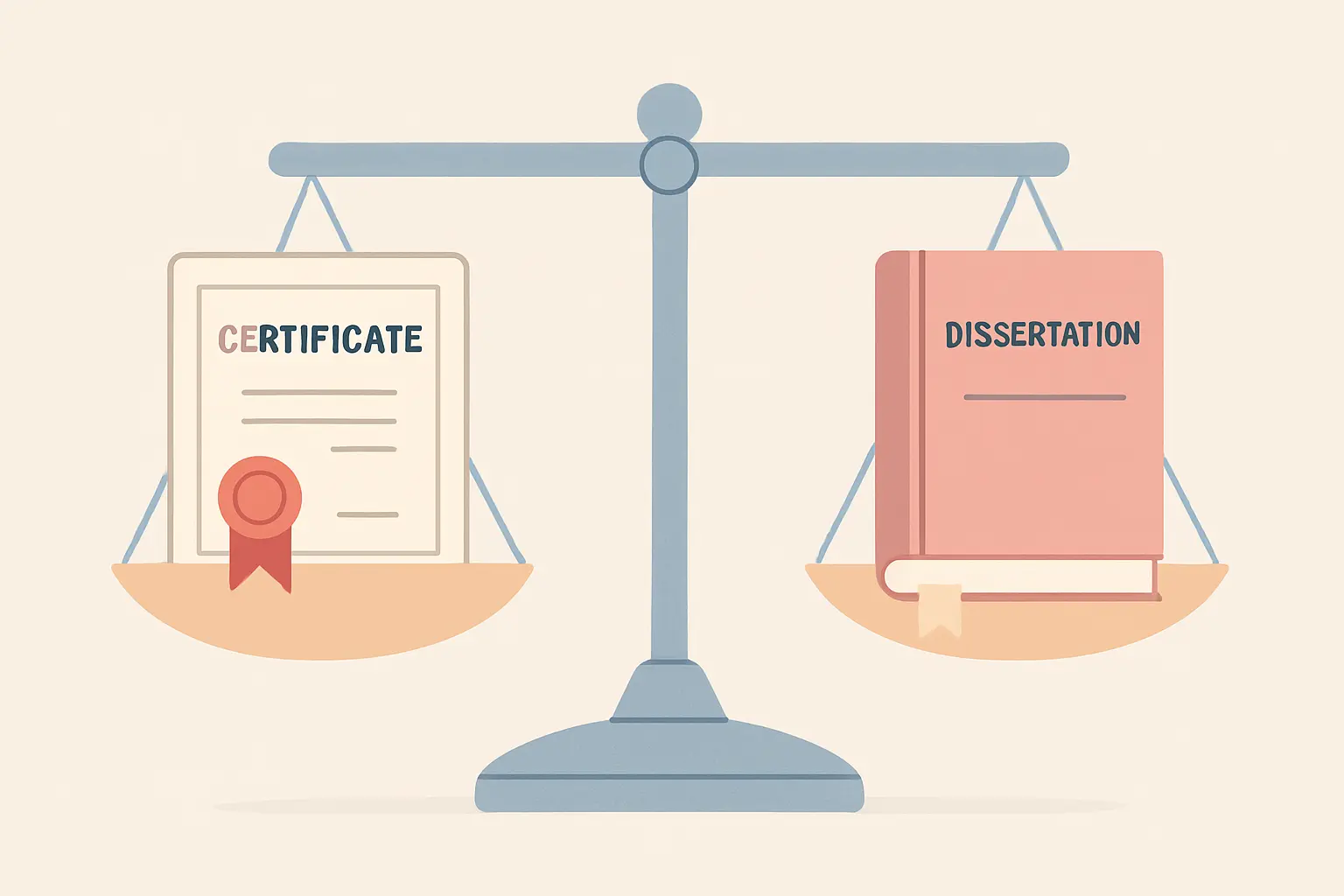
For most graduate jobs, no — employers screen on degree classification, and almost no application form asks for a dissertation mark. For postgraduate research admission, yes — it is often the single piece of evidence a supervisor reads most closely, and some will ask for the dissertation itself.
Do employers ever see your dissertation mark?

Rarely, and almost never at the screening stage. Graduate recruitment at scale filters on a small number of structured fields: degree subject, classification or predicted classification, institution in some cases, and eligibility to work. A dissertation mark is not one of them.
Your transcript, which does show it, generally appears much later — at offer stage, as part of verification — by which point the hiring decision has been made on interviews and assessments.
There are exceptions worth knowing. Research-adjacent roles in policy, consultancy analytics, and R&D sometimes ask about your dissertation at interview, though they are asking about the work rather than the number. Some competitive schemes request a full transcript up front. And a dissertation prize or a publication arising from it is a genuine differentiator, because it is externally validated in a way a mark is not.
So why does the dissertation still change your outcome?
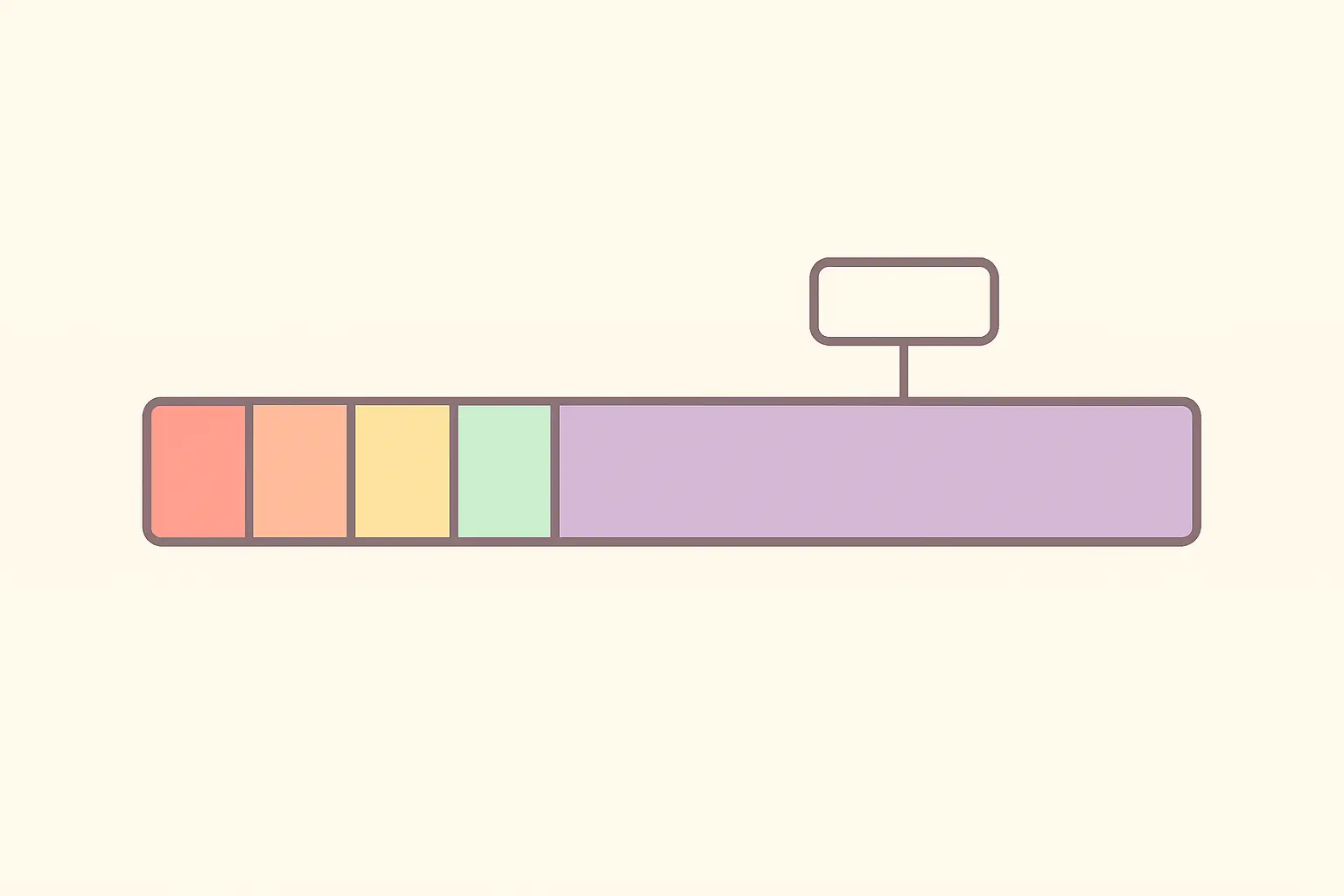
This is the mechanism students miss. The dissertation matters enormously, but indirectly: it matters through your classification, not alongside it.
A dissertation is typically worth 30, 40 or 60 credits where a taught module is worth 15 or 20. It usually sits in the final year, which most UK classification algorithms weight most heavily. That combination means it is frequently the largest single contributor to your final classification of any component you take.
The practical consequence: a dissertation mark cannot appear on an application form, but it can move you from a 2:2 to a 2:1 — and the 2:1 threshold is the filter that a large share of graduate schemes actually apply.
Borderline rules amplify this further. Most UK universities have a discretionary zone just below each classification boundary, where an examination board considers the profile of marks rather than the arithmetic mean alone. A strong dissertation sitting in that profile is exactly the kind of evidence boards use to round upward. Your programme regulations will state the rule your institution applies.
When does the mark itself carry real weight?
| Context | How much the dissertation mark matters |
|---|---|
| Volume graduate schemes | Almost none directly; classification is the filter |
| Small employers and direct applications | Low, though the topic may come up at interview |
| Taught master’s admission | Low to moderate; classification usually governs |
| Research master’s and PhD admission | High — often decisive |
| Competitive studentships and scholarships | High, alongside the proposal and references |
| Academic references | High — your supervisor writes from this evidence |
| Second job onwards | None |
Why does PhD admission weigh it so heavily?
Because it is the only thing in your application that demonstrates you can actually do research.
Everything else — module marks, a personal statement, enthusiasm at interview — shows that you can learn taught material and that you want to do a PhD. The dissertation shows that you have designed a study, executed it, hit obstacles, and produced something defensible under your own direction. That is the capability a supervisor is committing three or four years to.
Practically, expect supervisors to look at the mark, ask what your dissertation was about, and in many cases ask to read it or a chapter of it. Some applications require a writing sample outright, and your dissertation is usually the strongest thing you have.
This is also why the topic matters as much as the mark for research applications. A dissertation adjacent to your proposed PhD area is stronger evidence of fit than a higher mark in an unrelated field, and it gives you something concrete to discuss at interview. If you are still deciding between routes, our master’s versus PhD decision guide covers what each pathway assesses.
What if your dissertation mark is lower than the rest of your profile?
It is recoverable, and it is more common than students assume. Three things help.
Be able to explain it without excuses. A recruitment failure, a delayed ethics approval, or a data source that fell through are legitimate research realities. An examiner or supervisor will respect a candidate who can say what went wrong, what they did about it, and what they would do differently. That is research maturity, and it reads far better than defensiveness.
Lead with the classification if it is strong. If your overall degree came out well, that is the number employers use, and there is no obligation to volunteer a component mark nobody asked for.
Build newer evidence for research applications. A master’s dissertation, a research assistant post, a conference poster or a co-authored paper all supersede an undergraduate dissertation mark. Admissions readers weight recent evidence more heavily.
Honest treatment of what did not work is a skill in itself — the same discipline that produces a good research limitations section is what makes this explanation convincing rather than defensive.
Does it matter if your programme sets something other than a dissertation?
The logic transfers directly. A consulting project, design project, portfolio or end-point assessment project occupies the same structural position: a large, final-stage, independently produced piece of work carrying disproportionate credit.
For employers, the same thing is true — the classification is what gets screened. For research admission, an applied capstone is weaker evidence of research capability than an empirical dissertation, which is worth knowing if a PhD is a possibility. Our catalogue of alternatives to a dissertation sets out what each deliverable actually demonstrates.
How long does any of this matter?
Less time than it feels like during final year. For a first graduate role, classification is a real filter. By your second job, employers are assessing what you have done professionally, and the degree becomes a line at the bottom of a CV.
Academia is the exception, and only for the first step. A doctoral application weighs your undergraduate and master’s work heavily. Once you hold a PhD, nobody asks about the dissertation that got you in.
For the broader picture of what actually predicts graduate outcomes, our graduate employability statistics cover the sector-level data on degree level, field and destination.
Frequently asked questions
Do employers ask for your dissertation grade?
Very rarely at application stage. Graduate recruiters filter on degree classification, and most application forms have no field for a dissertation mark. A full transcript is usually requested only at offer stage for verification, after the hiring decision has been made.
Can a bad dissertation lower my degree classification?
Yes, and this is the main way it affects your outcome. A dissertation typically carries two to four times the credit of a taught module and usually sits in the most heavily weighted year, so it is often the single largest contributor to your final classification.
Does my dissertation mark matter for a PhD application?
Substantially. It is usually the only evidence in your application that you can design and execute independent research. Supervisors frequently ask about it, and many will request the dissertation or a chapter as a writing sample. Its topic and its relevance to your proposed area matter as much as the number.
Is the dissertation topic more important than the grade?
For research applications, often yes. A dissertation closely related to your proposed PhD area demonstrates fit and gives you substance to discuss at interview, which can outweigh a slightly higher mark in an unrelated field. For employment, neither is typically screened.
What counts as a good dissertation mark?
In the UK, 70 and above is a first-class mark and is the usual benchmark for a strong research application; 60 to 69 is an upper second and remains competitive for most postgraduate study. Marking is stricter at postgraduate level, so compare against your own cohort rather than across degree levels.
Should I put my dissertation on my CV?
Include the title, and one line on the method or finding, where it is relevant to the role or to a research application. Include the mark only if it is strong and the context rewards it — a research application or a role that has asked about academic performance. Do not volunteer a weak one.
The dissertation is usually the largest single component of your classification. Tesify helps you build the scaffolding around it — a chapter outline, a formatted bibliography, cited references and an AI-use declaration for submission.
Write your thesis with AI
Structure, draft, cite, and format your thesis faster with Tesify’s AI writing tools, automatic bibliography, and plagiarism checker. Free to start, no credit card required.






Leave a Reply