

Masters vs PhD: The Complete Decision Guide for 2026
The masters vs PhD difference is one of the most consequential decisions a graduate student makes — yet most guides reduce it to a simple comparison table and leave you none the wiser. Should you spend one intensive year in a taught Master’s, or commit three to seven years to an original research doctorate? The answer depends on your career goals, financial situation, and appetite for independent research. This guide gives you every piece of information you need to make the right call in 2026.
Whether you are a final-year undergraduate weighing up postgraduate options, a professional looking to upskill, or a Master’s graduate wondering whether to go further, the masters vs PhD difference touches everything from your day-to-day academic life to your long-term salary and career trajectory. Read on for a complete breakdown.
What Is the Core Difference Between a Masters and a PhD?
The masters vs PhD difference comes down to one fundamental distinction: a Master’s degree trains you to apply and synthesise existing knowledge, while a PhD requires you to create entirely new knowledge. In practical terms:
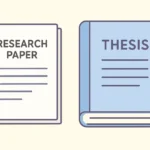
- A Master’s thesis demonstrates that you can identify a gap in the literature, design a study, and reach defensible conclusions. You are expected to add analytical value to existing research.
- A PhD dissertation must make an original contribution to its field that did not previously exist anywhere in the academic literature. Examiners — typically two professors — scrutinise this claim rigorously in an oral examination (viva voce in the UK; dissertation defence in the US).
This distinction drives every other difference: the duration, the supervision model, the funding structure, and the career paths each degree unlocks. A Master’s graduate is a specialist; a PhD graduate is an expert who has advanced the boundaries of their discipline.
Types of Master’s Degree
| Type | Duration | Format | Example |
|---|---|---|---|
| MA / MSc / MEng (Taught) | 1 year (UK) / 2 years (US) | Lectures, seminars, dissertation | MSc Data Science, UCL |
| MRes (Research) | 1–2 years | Primarily research-focused | MRes Biomedical Sciences |
| MPhil | 1–2 years | Research, often PhD stepping stone | MPhil History, Oxford |
| MBA / LLM / MPH | 1–2 years | Professional postgraduate | MBA, London Business School |
Duration and Programme Structure
Duration is one of the sharpest practical differences between a Master’s and a PhD. Understanding the typical timeline for each degree — and how it varies by country — is essential when planning your next academic steps.
Master’s Degree Duration
- UK: Taught Master’s typically run for 12 months full-time (three 15-week terms plus a summer dissertation period). Research Master’s (MRes, MPhil) take 12–24 months.
- US: Most Master’s programmes take two years full-time. Some STEM programmes offer 12–18 month tracks.
- Europe: Bologna Process standard is two years (120 ECTS credits).
PhD Duration
- UK: Three to four years full-time (UKRI-funded studentships typically run three years plus one year write-up). Part-time PhDs run five to seven years.
- US: Average completion time is 5.7 years according to the National Science Foundation Survey of Earned Doctorates. The first two years are coursework; the remainder is dissertation research.
- Europe: Three to four years structured doctoral programmes, usually with required coursework in year one.
Cost and Funding in 2026
Cost is where the masters vs PhD difference becomes most significant for many students. The funding landscape differs dramatically between the two degrees.
Master’s Degree Costs and Funding (UK 2026)
- Home students: tuition fees range from £9,000 to £14,000 per year for most taught Master’s. Some specialist programmes (MBAs, LLMs) charge £25,000–£50,000+.
- International students: typically £18,000–£35,000 per year for tuition.
- Postgraduate Master’s Loan (UK): up to £13,348 (2025–26 rate) available to UK students under 60, regardless of your subject or university. This is a loan, not a grant.
- UKRI Master’s studentships exist for selected programmes — around 2,000–3,000 per year — and include tuition plus a living allowance.
- Employer sponsorship is increasingly common, particularly for MBA and professional Master’s programmes.
PhD Costs and Funding (UK 2026)
- UKRI awards approximately 5,000 doctoral studentships per year. In 2025–26, stipends are £20,780 per year (£22,780 in London), plus tuition fees of £5,006 paid directly.
- Many Russell Group universities offer departmental bursaries ranging from £18,000 to £25,000 per year for home students.
- International PhD students should specifically target DTP (Doctoral Training Partnership) and CDT (Centre for Doctoral Training) schemes, which explicitly allocate a percentage of places to international students.
- In the US, the majority of funded PhD positions in STEM include full tuition remission plus a stipend, typically $25,000–$40,000 per year, in exchange for teaching or research assistant duties.
| Degree | UK Home Tuition | UK International | Funded Options Available? |
|---|---|---|---|
| Master’s (taught) | £9,000–£14,000/yr | £18,000–£35,000/yr | Limited (loan, rare studentships) |
| PhD | £5,006/yr (UKRI rate) | £20,000–£28,000/yr | Very common (UKRI, DTP, CDT) |
The key insight: a fully funded PhD can actually cost you less money than a self-funded Master’s, provided you win the studentship. Roughly 60% of UK PhD students starting in STEM receive full funding; in arts and humanities the figure is closer to 30%.
Admission Requirements
The admissions process for a Master’s and a PhD are fundamentally different in what they assess.
Master’s Admission
Most UK taught Master’s programmes require a minimum 2:1 undergraduate degree (or equivalent). Selectors read your personal statement, look at your degree transcript, and may request a reference. Admission is competitive but primarily academic in nature.
PhD Admission
PhD admission is about finding a research match. Before applying, you must:
- Identify a supervisor whose current research interests align with yours
- Write a research proposal (typically 1,500–3,000 words) outlining your question, methodology, and contribution
- Demonstrate research experience — either through a research-focused Master’s (MRes, MPhil) or through research papers, lab work, or an undergraduate dissertation of exceptional quality
- Pass an informal interview with the potential supervisor
In the US, PhD programmes additionally require GRE scores (though many programmes now waive this), letters of recommendation from at least three academic referees, and a statement of purpose. Harvard’s Graduate School of Arts and Sciences, for example, has acceptance rates below 10% across most doctoral programmes.
Day-to-Day Life: What You Actually Do
Understanding the lived reality of each degree often matters more than statistics. Here is what your typical week looks like in each programme.
Master’s Student Week
- Attend lectures and seminars (12–18 contact hours per week in taught programmes)
- Complete weekly readings, problem sets, or coursework assignments
- In the final months: work on a supervised dissertation (typically 15,000–25,000 words)
- Network with peers, attend departmental events, begin job applications
PhD Student Week
- Work autonomously on your research project (experimental work, fieldwork, archival research, coding, writing)
- Meet your supervisor once every two to four weeks for progress discussions
- Attend research group meetings and departmental seminars
- Present work in progress at internal and external conferences
- Teach undergraduate tutorials or seminars (especially in the US, where teaching assistantships fund your stipend)
- Spend years three and four writing a dissertation of 80,000–100,000 words (UK) or 200–400 pages (US)
Career Outcomes and Salary Data
One of the most searched questions in the masters vs PhD difference debate is: which one earns more? The data is clear — but with important nuances.
UK Salary Data (2024 HESA Graduate Outcomes)
- Median earnings five years after graduation: PhD graduates earned £41,200 vs Master’s graduates at £36,100
- 96% of PhD graduates earned above £30,000 at five years; only 63% of Master’s graduates did
- PhD holders earned approximately £1.60–£3.10 more per hour than Master’s graduates, controlling for field of study
US Salary Data (Bureau of Labor Statistics 2025)
- Master’s degree holders earn approximately 18% more than bachelor’s graduates
- PhD holders earn approximately 43% more than bachelor’s graduates
- The PhD premium over a Master’s is approximately 21% on average — but varies enormously by field
- Median annual salaries: Master’s $70,000–$90,000; PhD $100,000+ in most STEM fields
Career Paths: Where Each Degree Takes You
| Career Goal | Master’s Sufficient? | PhD Required/Preferred? |
|---|---|---|
| University lecturer / professor | No | Yes — essential |
| Government / policy research | Often yes | Increasingly preferred |
| Senior industry R&D | In some sectors | Often required (pharma, AI labs) |
| Management consulting | Yes — MBA preferred | Not required but valued |
| Data science / machine learning | Yes | Preferred for research roles at top labs |
| Clinical psychology / medicine | Partial (clinical training) | Yes — DPhil/DClinPsych |
| Finance / banking | Yes — MSc Finance | Not typically required |
| Law (barrister / solicitor) | LLM for specialisation | Only for academic law careers |
UK vs US: Key Structural Differences
The masters vs PhD difference also varies significantly depending on which country you study in. Students comparing UK and US graduate options need to understand these structural distinctions.
UK System
- Separate degrees: A Master’s and PhD are completely separate programmes. Most PhD applicants hold a taught or research Master’s first.
- PhD entry: You typically begin dissertation research in month one. There is minimal taught coursework.
- Duration: PhD = 3–4 years full-time. Very focused.
- Visa: Graduate Route Visa allows 2 years post-Master’s, 3 years post-PhD.
US System
- Integrated pathway: Many US PhD programmes admit students directly from a bachelor’s degree. The first two years of the PhD include coursework equivalent to a Master’s.
- Master’s along the way: Most US PhD students receive a Master’s degree automatically after completing coursework and qualifying exams, around year two.
- Duration: PhD = 5–7 years on average. Longer coursework phase, then dissertation.
- Funding: STEM PhDs are almost universally funded; humanities funding is competitive but more common than in the UK.
For a deeper dive on studying in the UK or US, see our Best Universities UK Ranking guide and our Graduate School USA Application Guide.
How to Choose: Masters vs PhD Decision Framework
Use this decision framework to identify which degree is right for your situation in 2026:
Choose a Master’s Degree If…
- Your goal is career advancement, a salary increase, or a professional pivot within the next 2–3 years
- You want to sample a field before committing to a longer research programme
- You do not have a specific research question you want to spend years investigating
- Your target career does not require a PhD (management consulting, finance, law, most technology roles)
- You want maximum flexibility: online, part-time, and distance-learning Master’s options are widely available
- You value the structured learning environment of taught modules and clear assessment deadlines
Choose a PhD If…
- You want to work as a university lecturer, professor, or senior academic researcher
- Your target sector is one where a PhD is the expected credential (pharmaceutical R&D, AI research labs, clinical research)
- You have a specific, original research question that genuinely motivates you
- You can secure full funding — do not self-fund a PhD unless the career upside is unambiguous
- You are comfortable with ambiguity, self-direction, and the emotional demands of multi-year solitary research
- You want the Graduate Route Visa’s 3-year post-study work allowance (vs 2 years for Master’s)
The One Question That Settles Most Cases
Ask yourself: do I need to create new knowledge, or do I need to apply existing knowledge? If your career goal requires the former — academia, R&D leadership, policy research at the frontier — the PhD is the right choice. If it requires the latter — practice, management, consulting, most commercial roles — a Master’s will get you there faster and often at lower financial cost.
You can also explore our PhD Funding UK guide and our Master’s Degree UK guide for detailed next steps on whichever path you choose.
Frequently Asked Questions
Can I do a PhD without a Master’s degree?
In the US, yes — most PhD programmes admit students directly from a bachelor’s degree and the programme includes equivalent Master’s-level coursework in years one and two. In the UK, it is technically possible but rare; most successful PhD applicants hold at least a 2:1 Master’s degree or a first-class honours Bachelor’s degree with a strong research component. Some integrated MPhil/PhD pathways exist for outstanding bachelor’s graduates.
Is a PhD harder than a Master’s degree?
A PhD is not necessarily harder in terms of individual tasks, but it is far more demanding in terms of duration, ambiguity, and self-direction. A Master’s has a structured curriculum with clear deadlines and expectations. A PhD requires you to define your own research problem, manage years of uncertainty, and produce original work that withstands expert scrutiny. The psychological demands of a PhD are substantial — roughly 36% of PhD students report anxiety or depression severe enough to seek support.
What is the salary difference between a Master’s and PhD graduate?
In the UK, PhD graduates earn a median of £41,200 five years after graduation versus £36,100 for Master’s graduates (HESA 2024 data). In the US, PhD holders earn approximately 21% more than Master’s holders on average. However, because a PhD takes 3–7 years longer to complete, it typically takes over a decade to recover the opportunity cost of foregone earnings — making the financial case most compelling in high-earning fields like engineering, computer science, and medicine.
How long does a PhD take in the UK vs the US?
UK PhDs typically take 3–4 years full-time (with most UKRI-funded studentships covering three years plus one year write-up). US PhDs average 5.7 years, according to the NSF Survey of Earned Doctorates 2024, because the first two years involve required coursework. Part-time PhDs in the UK typically take 5–7 years.
Should I do a Master’s before a PhD in the UK?
Yes, for most UK PhD applicants a Master’s is strongly advisable. While not strictly required, the vast majority of successful UK PhD candidates hold a Master’s degree (typically an MRes, MPhil, or strong MSc) because it demonstrates research competence and strengthens your application. In STEM fields, an MRes is particularly valued as it includes a substantial research component. In the arts and humanities, a well-graded MA with a strong dissertation is the standard entry point.
Is a PhD funded in the UK?
Fully funded PhDs (tuition + living stipend) are common in STEM fields and increasingly available in social sciences through UKRI Doctoral Training Partnerships. In 2025–26, UKRI stipends are £20,780 per year (£22,780 in London). Approximately 60% of STEM PhD students in the UK receive full funding, while in arts and humanities the figure is closer to 30%. Many students without funding use the Doctoral Loan (up to £29,390 in 2025–26) to self-fund.
Writing Your Thesis or Dissertation?
Whether you are completing a Master’s thesis or a doctoral dissertation, Tesify helps you write faster without sacrificing academic rigour. Built specifically for graduate students, Tesify’s AI follows your university’s citation style, structures chapters correctly, and integrates with your bibliography — all while you maintain full control of the final text.
Write your thesis with AI
Structure, draft, cite, and format your thesis faster with Tesify’s AI writing tools, automatic bibliography, and plagiarism checker. Free to start, no credit card required.



Leave a Reply