
Do You Need a DBS Check for Your Dissertation Research? (2026)
You want to interview school pupils, observe a classroom, or run focus groups in a care setting — and somebody has mentioned a “DBS check”. What follows is a direct answer to the questions students actually ask: what a Disclosure and Barring Service check is, who can request one (spoiler: not you, for the level you probably need), when dissertation fieldwork triggers one, and what to do about the timeline. It draws on the UK government’s own DBS guidance.
What is a DBS check?
A DBS check is a criminal-record check used in England and Wales to assess someone’s suitability for a role. Scotland and Northern Ireland run separate regimes (Disclosure Scotland and AccessNI), so if your fieldwork happens there, the equivalent process applies — the four-type structure below is the England-and-Wales system.
The four types of check
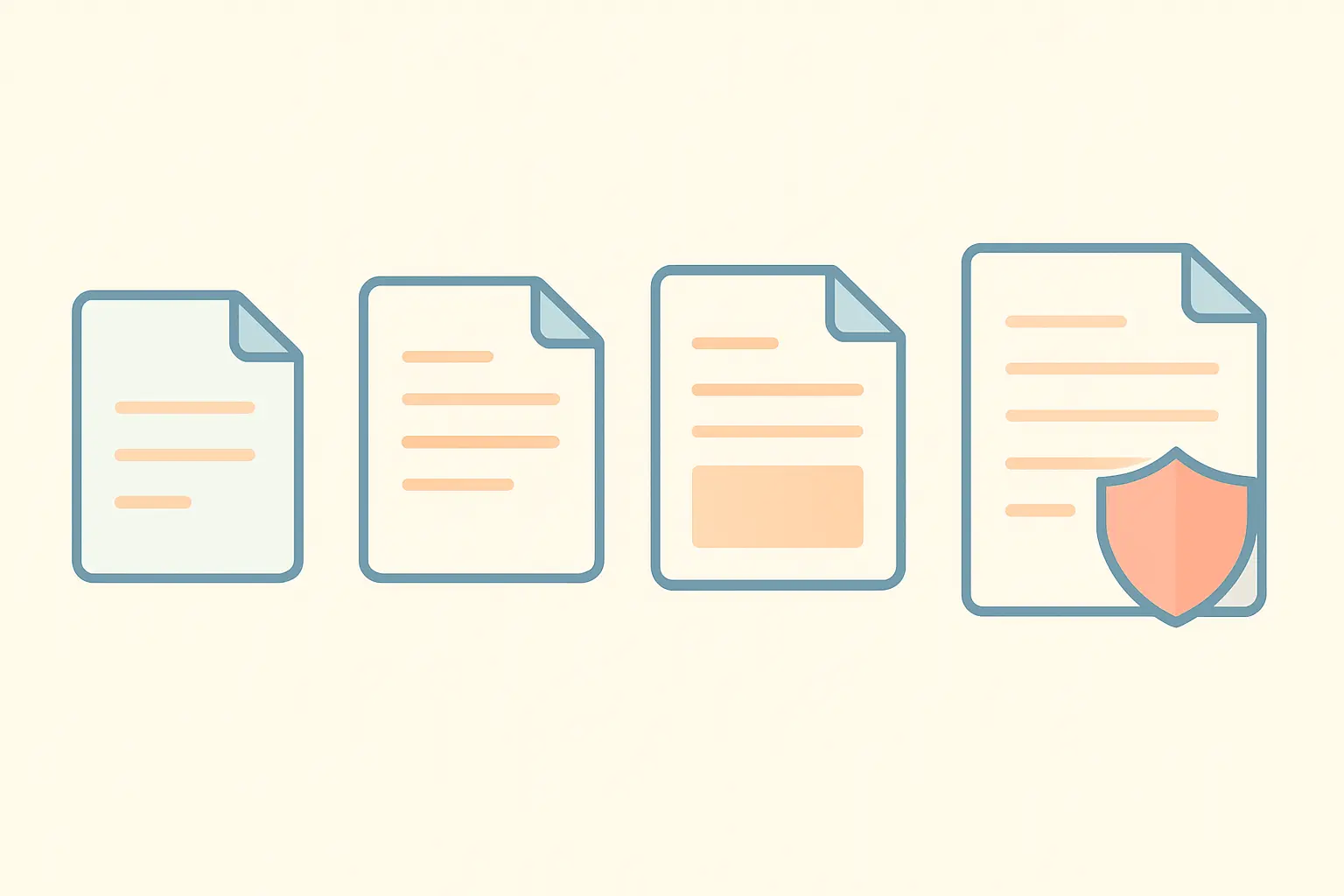
| Type | What it shows |
|---|---|
| Basic | Unspent convictions and conditional cautions |
| Standard | Spent and unspent convictions and cautions |
| Enhanced | Everything in a standard check, plus any information held by local police that is considered relevant to the role |
| Enhanced with barred lists | Everything in an enhanced check, plus whether the applicant is on the list of people barred from doing the role |
The two facts that shape everything else:
- You can only request your own basic check. Standard and enhanced checks are requested by an employer, a voluntary organisation, or a third party managing checks on their behalf — and eligibility depends on the role, with more detailed checks reserved for work such as healthcare or childcare. There is no route where a student orders themselves an enhanced check for fieldwork.
- Eligibility is about the role, not the person. Whether your fieldwork is checkable at standard or enhanced level depends on what you will actually be doing with whom, and the requesting organisation determines that against the rules — GOV.UK provides a “Find out which DBS check is right” tool for exactly this assessment.
So when does a dissertation trigger one?
Work through the three typical cases:
Case 1: Research with children or vulnerable adults, face to face
If your design involves direct work with children (interviews, observation in schools, activity sessions) or with adults in care settings, expect the gatekeeping organisation — the school, the trust, the charity — and/or your university to require an enhanced-level check arranged through them. UK research governance treats research with children as a higher-risk category requiring disclosure checks for researchers, alongside the consent and safeguarding requirements described in our guide to ethics approval for dissertations. Because the check is role-based, it is the host or the university, not you, who initiates it.
Case 2: Research about children, without contact
Analysing anonymised attainment data, surveying teachers about workload, or interviewing parents recruited independently does not put you in a checkable role with children at all. What you need here is ethics approval and, often, the gatekeeper’s cooperation — not a criminal-record check. Do not let a form-template demand for “a DBS” add six weeks to a project that never involved contact.
Case 3: You already hold a check from a placement or job
Checks are issued for a role, and a certificate from your care job or teaching placement does not automatically transfer to a research role — whether it is accepted is the host organisation’s call (the DBS Update Service, where subscribed, is what makes a certificate portable enough to re-verify). State what you hold in your ethics application and let the gatekeeper decide; never assume portability in your project timeline.
The safeguarding duties that come with the territory
A DBS check is about your suitability; it does nothing about what happens during data collection. If you research with children or vulnerable groups, your ethics application must also handle disclosure protocols — what you do if a participant reveals a risk of harm — with named contacts and limits-of-confidentiality statements in your participant information sheets. Our social work methodology and ethics guide sets out those elements in detail; they apply well beyond social work.
Why the university is the requester, and what that means for you
Because standard and enhanced checks can only be requested by an organisation against a role, the practical machinery for student researchers runs through institutions. Universities routinely act as the requesting body for course-related activity that involves checkable work, and host organisations (schools, trusts, charities) often prefer to run visiting researchers through their own volunteer-checking processes instead. Neither route is something you can start unilaterally, which has two consequences. First, the conversation with the gatekeeper and your supervisor is the application process — raise the check in the same email that requests access, and ask explicitly which organisation will request it and at what level. Second, the level is not yours to choose: the requester assesses the role against the eligibility rules (GOV.UK’s “Find out which DBS check is right” tool exists for requesters to do precisely this), and demanding “the highest one, to be safe” is not how the system works — checks above what the role permits are not lawful to request.
What to write in your ethics application
Ethics reviewers read the safeguarding section before almost anything else when children are involved. Cover four things plainly: whether your design involves direct contact with children or vulnerable adults (and if not, say so — it removes the check question entirely); what check you hold or which organisation will request one, at what level; how access is gatekept (named school contact, trust R&D office); and your disclosure protocol. Vague phrasing (“DBS will be obtained as required”) reads as not having asked; one concrete sentence per item reads as a fieldwork plan. The surrounding ethics statement — consent, anonymisation, data handling — has its own structure, set out in our guide to writing a research ethics statement.
Plan the timeline like an approval, because it is one
Treat the check as one more governance stage in sequence: gatekeeper agreement, ethics approval, DBS check (where required), then data collection. UK guidance on research with higher-risk groups advises building a minimum of eight weeks into the timeline for ethics review, with additional time where NHS or DBS processes are involved. The practical corollary for a one-term dissertation: if enhanced checks and school gatekeepers stand between you and your data, either start the process in the term before, or choose a design from Case 2 — many excellent education dissertations never meet a child.
Worried about your own record?
Some students avoid fieldwork with children not because of gatekeeping but because they are anxious about what a check would show. Know the structure before deciding anything: a basic check shows only unspent convictions and conditional cautions, while standard and enhanced checks also show spent ones — and enhanced checks can add locally held police information considered relevant to the role. Organisations that run criminal-record checks are required to have a policy on employing ex-offenders and to show it to any applicant who asks, which means you are entitled to see how a host organisation says it treats disclosed information before you consent to a check. A record is a conversation with the requesting organisation, not an automatic bar — and designing yourself out of contact-based research pre-emptively, without that conversation, may be giving up a project you could have done.
Frequently asked questions
Can I apply for my own DBS check for my dissertation?
Only a basic check, which shows unspent convictions and conditional cautions. Standard and enhanced checks must be requested by an organisation against a specific role — for student research, that is typically the university or the host organisation.
Does interviewing under-18s always require an enhanced check?
The check attaches to the role and the organisation’s assessment of it. Face-to-face research activity with children in a school or similar setting will usually be treated as requiring an enhanced-level check arranged via the host or university — confirm with both before writing the fieldwork schedule.
Do online surveys of teenagers need a DBS check?
A check is about suitability for a role involving contact; an anonymous online survey does not create that role. It absolutely still needs ethics approval, parental-consent handling and safeguarding thought — the ethics route, not the DBS route, is where those live.
My placement DBS is recent. Can I reuse it?
That is the host organisation’s decision, not yours; certificates attach to roles. The DBS Update Service makes re-verification possible where you are subscribed. Declare what you hold and ask early.
What about fieldwork in Scotland or Northern Ireland?
Different schemes: Disclosure Scotland and AccessNI. If your participants are there, the host organisation’s scheme governs — build it into the same timeline slot.
Who pays for the check?
Arrangements vary: universities commonly arrange and fund checks required for course-related activity, and hosts sometimes run researchers through their own volunteer processes. It is a question for your supervisor and the gatekeeper in the same email that asks about access.
Design the access before the instrument
Gatekeepers, ethics and checks decide whether your fieldwork happens at all — settle them before you polish a single interview question. Tesify helps you plan the methodology chapter around the approvals you actually need, with the timeline visible from day one — 100% written by you.
Write your thesis with AI
Structure, draft, cite, and format your thesis faster with Tesify’s AI writing tools, automatic bibliography, and plagiarism checker. Free to start, no credit card required.




Leave a Reply