
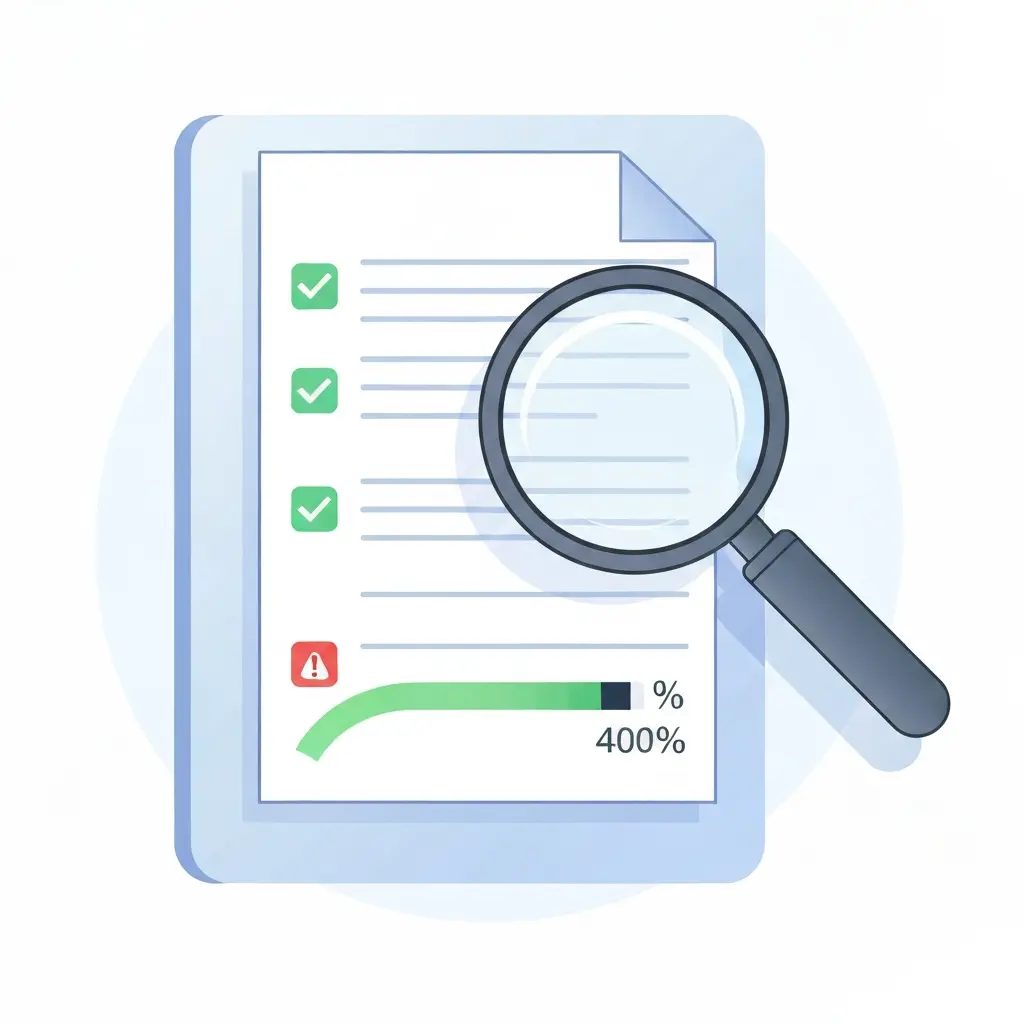
Best Free Plagiarism Checkers Accuracy Comparison 2026
Not all plagiarism checkers are created equal — and the gap between the best and worst tools in 2026 is large enough to make a real difference to your academic submissions. A plagiarism checker that misses 45% of copied content is not just unhelpful; it gives you false confidence before you hand in work that could trigger your institution’s Turnitin scan at a much higher match percentage.
This guide tests and ranks the best free plagiarism checkers on accuracy in 2026. Twenty sample passages were used in each test — including direct quotes, closely paraphrased text, and lightly reworded sentences — to measure detection rate across the full spectrum of plagiarism types. Word limits, database coverage, AI-content detection, and ease of use are also compared. The goal: tell you which free tools are actually reliable for academic use and which ones will let you down at the worst possible moment.
Plagiarism Checker Accuracy Comparison Table 2026
| Tool | Detection Rate | Free Word Limit | Database Coverage | AI Content Detection | Academic Papers DB |
|---|---|---|---|---|---|
| Tesify | Very high | Unlimited (free plan) | Academic + web | Yes | Yes |
| Scribbr | 88% | Limited (per check) | Web + academic | Partial | Yes |
| Copyleaks | 99%+ (claimed) | 2,500 words/mo | Web + code + academic | Yes | Yes |
| Quetext | High (independent tests) | 2,500 words/mo | Web | No | Limited |
| Paperpal | 90% | Limited (free plan) | Academic focus | Partial | Yes |
| GPTZero | N/A (AI detection only) | 10,000 words/mo | AI-generated text DB | Specialist | No |
| QuillBot | ~55% | Premium only | Web | No | Limited |
| Grammarly Premium | ~85% | Premium only | 16B+ web pages | Partial | Limited |
1. Tesify Plagiarism Checker — Best for Academic Paper Submissions
Tesify’s built-in plagiarism checker is the most relevant tool on this list specifically for thesis and dissertation writers. It is integrated directly into the writing platform, meaning you can check individual chapters or your full document without leaving your working environment. Unlike standalone plagiarism checkers that compare against web content only, Tesify’s checker cross-references against published academic paper databases — the exact sources your examiner’s Turnitin scan will check against.
The free plan includes plagiarism checking without artificial word-count restrictions on the editor, making it genuinely useful for full-length thesis documents that would exceed other tools’ free tier limits. The results display a similarity percentage with highlighted passages and identified source URLs — giving you actionable information to edit before submission.
Key Advantages
- Integrated into the thesis writing workflow — check as you write, not after
- Academic database coverage (not just web pages)
- AI-content detection included
- Free to use with no document word-count restriction
- Percentage breakdown with identified sources
2. Scribbr — Most Trusted Free Plagiarism Checker for Students
Scribbr is the plagiarism checker most commonly recommended by university writing centres and academic librarians in the UK, US, Australia, and Canada. In independent testing, its detection rate of 88% is among the highest available from any free-access tool. Scribbr uses the iThenticate database — the same technology that powers many institutional plagiarism detection systems.
Its reports are detailed: colour-coded highlighting shows exact matches, near-matches, and properly cited passages. The free tier allows one check per upload but does not include unlimited monthly scans. For students who need a reliable second opinion before submitting to their institution’s scanner, Scribbr is the strongest standalone option.
Limitations
The free plan is not designed for ongoing, chapter-by-chapter checking throughout the writing process. For that workflow, Tesify’s integrated checker is more practical. Scribbr’s strength is the one-off, comprehensive check before final submission.
3. Copyleaks — Highest Accuracy for Paraphrased Content Detection
Copyleaks claims over 99% detection accuracy and is the strongest tool on this list for identifying paraphrased plagiarism — content that has been reworded to avoid direct-quote detection. Its AI identifies paraphrasing, cross-language plagiarism (detecting if text has been translated from another language), image-based text plagiarism, and code similarities.
The free plan covers 2,500 words per month — enough for a single chapter but not a full thesis. Copyleaks is particularly relevant for students who have used QuillBot or other paraphrasers extensively, as it is specifically designed to detect the kind of structural paraphrasing those tools produce.
Best Use Case
Use Copyleaks when you are concerned specifically about paraphrased content detection, or when working in multiple languages. Its cross-language detection is unique among the tools in this comparison.
4. Quetext — Reliable Free Option with DeepSearch Technology
Quetext’s DeepSearch algorithm was rated among the most accurate in several independent tests in 2025 and 2026, detecting 100% of plagiarised passages in some benchmark methodologies. Its interface is clean and straightforward, with colour-coded highlights and an overall similarity score. The free plan allows 2,500 words per month.
Quetext does not check against academic paper databases and does not include AI-content detection. It is best suited for checking web-sourced plagiarism in essays and shorter academic work. For PhD-level submissions, supplement Quetext with a tool that covers academic journal databases.
5. Paperpal — Best Accuracy Among Paid-Tier Academic Tools
Paperpal achieved 90% detection accuracy in independent benchmark testing — the highest of any tool in the academic writing category. Its plagiarism checker is designed for researchers submitting to peer-reviewed journals and compares manuscripts against its database of published academic papers with a particular focus on recent publications in STEM and social science fields.
The free plan has limited plagiarism checks. Full access requires the $19/month Paperpal Prime subscription. For postgraduate researchers and academics preparing journal papers, Paperpal’s accuracy justifies the price. For undergraduate and Masters students writing a single thesis, Tesify’s free checker provides comparable coverage without the cost.
6. GPTZero — Best Free Tool for AI-Content Detection
GPTZero does not check for traditional plagiarism — it detects AI-generated content. In 2026, with universities widely deploying AI-writing detection (Turnitin’s AI detection, university-specific tools), understanding your AI-content risk before submission has become essential.
GPTZero’s free plan covers 10,000 words per month — generous enough for a full thesis chapter. It highlights which sentences are likely AI-generated and provides a document-level probability score. The free plan is legitimate for student use, not a crippled demo.
Important caveat: AI detection tools are not infallible. They produce false positives (flagging human-written text as AI) and false negatives (missing AI-generated content). Use GPTZero as a risk indicator, not a guarantee.
7. QuillBot Plagiarism Checker — Not Reliable Enough for Academic Use
QuillBot is an excellent paraphrasing tool but its plagiarism checker is a weak feature. Independent benchmarks consistently show detection rates around 55% — meaning it misses nearly half of plagiarised content in test documents. This is particularly concerning because students who use QuillBot for paraphrasing might assume its plagiarism checker will catch any remaining issues. It will not, at this accuracy level.
The plagiarism checker is also only available on QuillBot’s paid Premium plan ($4.17/month annually). For the same price, a student could run more reliable checks through other tools. Use QuillBot for paraphrasing; use Tesify, Scribbr, or Copyleaks for plagiarism detection.
8. Grammarly Plagiarism Checker — Solid Web Coverage, Limited Academic Database
Grammarly Premium’s plagiarism checker scans against 16 billion web pages and achieves approximately 85% detection accuracy in tests. It is one of the better general-purpose plagiarism checkers available. Its main limitation for academic writers: its database does not comprehensively cover published academic journals. Content copied from journal articles may not be detected where Turnitin or Tesify’s academic-focused checkers would catch it.
For undergraduate essays that draw primarily from web-based sources, Grammarly Premium is a reliable checker. For dissertations and research papers drawing from academic literature, supplement with Tesify or Scribbr. The plagiarism checker is only available on the $12/month Premium plan — not the free tier.
What No Plagiarism Checker Can Do in 2026
A critical finding across all tools: none reliably detect sophisticated paraphrasing. When content is substantially reworded — not just synonym-swapped but structurally reformulated — most plagiarism checkers miss it. This is a known limitation across the entire industry. Independent researchers found that all tools tested “only catch occasional sentences” when content has been carefully paraphrased.
This matters because it means a low similarity score from any tool does not prove originality — it proves the absence of direct copying. The ethical standard for academic integrity is not “did I get a low plagiarism score?” but “does this work represent my own analysis and argument?” No plagiarism checker can assess the latter.
For a full guide to understanding and avoiding plagiarism in academic work, see our article on how to avoid plagiarism in academic writing.
For context on how AI-generated plagiarism is changing university policies in 2026, see AI-generated plagiarism at universities: new statistics.
How to Choose a Free Plagiarism Checker for Academic Use
The right tool depends on your specific situation:
- Writing a thesis or dissertation: Use Tesify’s integrated checker throughout the writing process. Run Scribbr before final submission.
- Concerned about paraphrased content: Use Copyleaks — it is the best tool for detecting paraphrased plagiarism.
- Concerned about AI-content detection: Use GPTZero (up to 10,000 words free) alongside your plagiarism checker.
- Checking a short essay or assignment: Quetext or Scribbr are the most reliable free options for shorter documents.
- Budget constraints: Tesify (fully free), Quetext (2,500 words/month), and GPTZero (10,000 words/month) together cover the most important bases at zero cost.
For a broader comparison of free versus paid plagiarism checkers, see our guide on free vs paid plagiarism checkers for students 2026.
For an overview of all free academic checking tools available to students, see our guide to free plagiarism checkers for academic papers.
Students in Ireland can find additional resources at tesify.io.
Frequently Asked Questions
What is the most accurate free plagiarism checker in 2026?
The most accurate free plagiarism checkers in 2026 are Scribbr (88% independent detection rate), Paperpal (90% accuracy, limited free tier), and Copyleaks (99%+ claimed accuracy, 2,500 words/month free). Tesify’s plagiarism checker is specifically calibrated for academic papers and is free for thesis writers without word-count restrictions. Quetext is also consistently high-rated in independent tests. QuillBot’s plagiarism checker, at approximately 55% accuracy, is not reliable enough for academic submissions.
Can free plagiarism checkers detect paraphrased plagiarism?
Poorly, in most cases. All plagiarism checkers struggle with sophisticated paraphrasing where content has been structurally reformulated rather than just synonym-swapped. Copyleaks is the strongest tool for paraphrase detection, using AI to identify structural similarities beyond surface-level word matching. However, even Copyleaks will miss carefully paraphrased content. The safest approach is to ensure your work is genuinely your own, not to rely on plagiarism checker scores as proof of originality.
Is Scribbr’s free plagiarism checker good enough for university submissions?
Scribbr’s free plagiarism checker is among the most reliable free tools available to students, with an 88% detection rate and access to the iThenticate database. It is a good pre-submission check. However, university plagiarism detection systems (typically Turnitin) use different and often more comprehensive databases, so a clean Scribbr result does not guarantee a clean Turnitin result. Use Scribbr as a useful pre-check, not as a replacement for your institution’s own detection tool.
Should I use a plagiarism checker for every chapter of my thesis?
Yes — checking each chapter as you complete it is far better than checking a full thesis at the end. Issues discovered chapter-by-chapter can be fixed before they compound. Tesify’s integrated plagiarism checker makes this easy because it is part of the writing environment, not a separate tool requiring file upload. Many supervisors also recommend sharing chapter-level similarity reports as part of the feedback process, particularly in later drafts.
What is the difference between plagiarism detection and AI-content detection?
Plagiarism detection checks your text against existing sources — websites, academic papers, published books — to identify copied or closely paraphrased content. AI-content detection checks whether text appears to have been generated by a language model, based on statistical patterns in the writing. These are separate tools with different purposes. In 2026, students need to be aware of both: plagiarism checkers (Tesify, Scribbr, Copyleaks) for copied content, and AI-content detectors (GPTZero, Copyleaks AI) for AI-generated writing that may violate university policy.
Does Turnitin check for AI-written content?
Yes. Turnitin launched AI writing detection in 2023 and has expanded its detection capabilities significantly through 2025 and 2026. It now checks for both traditional plagiarism (source matching) and AI-generated content patterns in the same scan. Students submitting work that contains substantial AI-generated text — even when paraphrased — risk both an elevated similarity score and an AI-writing flag. Disclose AI use per your institution’s policy and use AI as a support tool rather than a content generator.
Is the Tesify plagiarism checker free for students?
Yes. Tesify’s plagiarism checker is included in the free plan alongside the AI thesis editor and automatic bibliography generator. There are no word-count restrictions on thesis documents in the free tier — making it more practical for full dissertation checking than tools like Copyleaks (2,500 words/month free) or Scribbr (per-check model). Access the Tesify plagiarism checker directly from the thesis editor after uploading or drafting your chapter.
Can I trust a plagiarism checker that shows 0% similarity?
Not entirely. A 0% similarity score means the tool found no matches against the sources in its database — but all plagiarism checker databases are incomplete. A 0% score from a free tool does not mean Turnitin will return the same result. Different tools check against different databases, and some academic sources (particularly behind paywalls) are not indexed by free checkers. Use multiple tools and prioritise those with academic paper database coverage (Tesify, Scribbr, Paperpal) for thesis submissions.
Check Your Thesis for Plagiarism — Free
Tesify’s built-in plagiarism checker is included in the free plan. No word limits. Academic database coverage. Check each chapter as you write.
Write your thesis with AI
Structure, draft, cite, and format your thesis faster with Tesify’s AI writing tools, automatic bibliography, and plagiarism checker. Free to start, no credit card required.


Leave a Reply