
Academic Writing Readability Statistics 2026
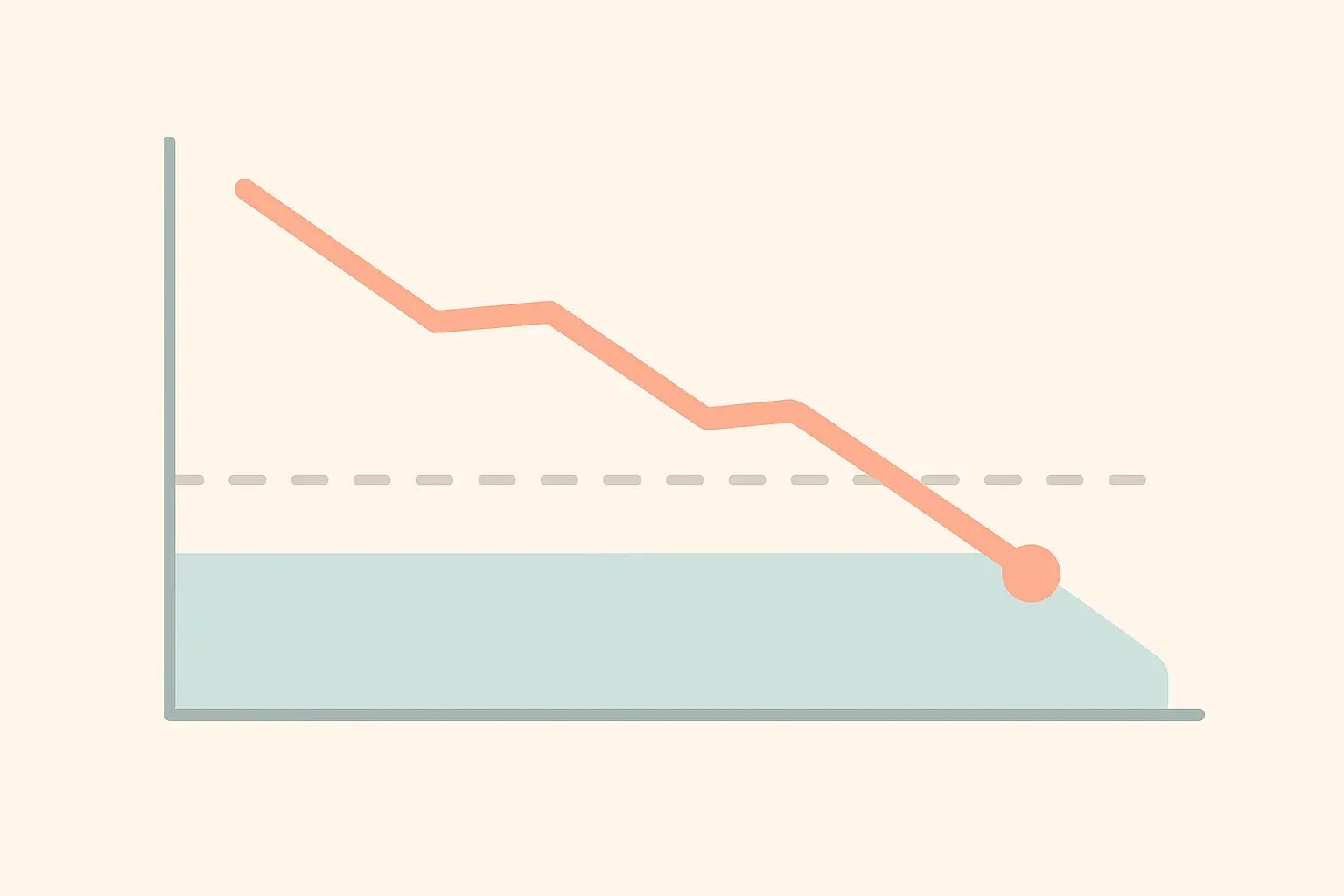
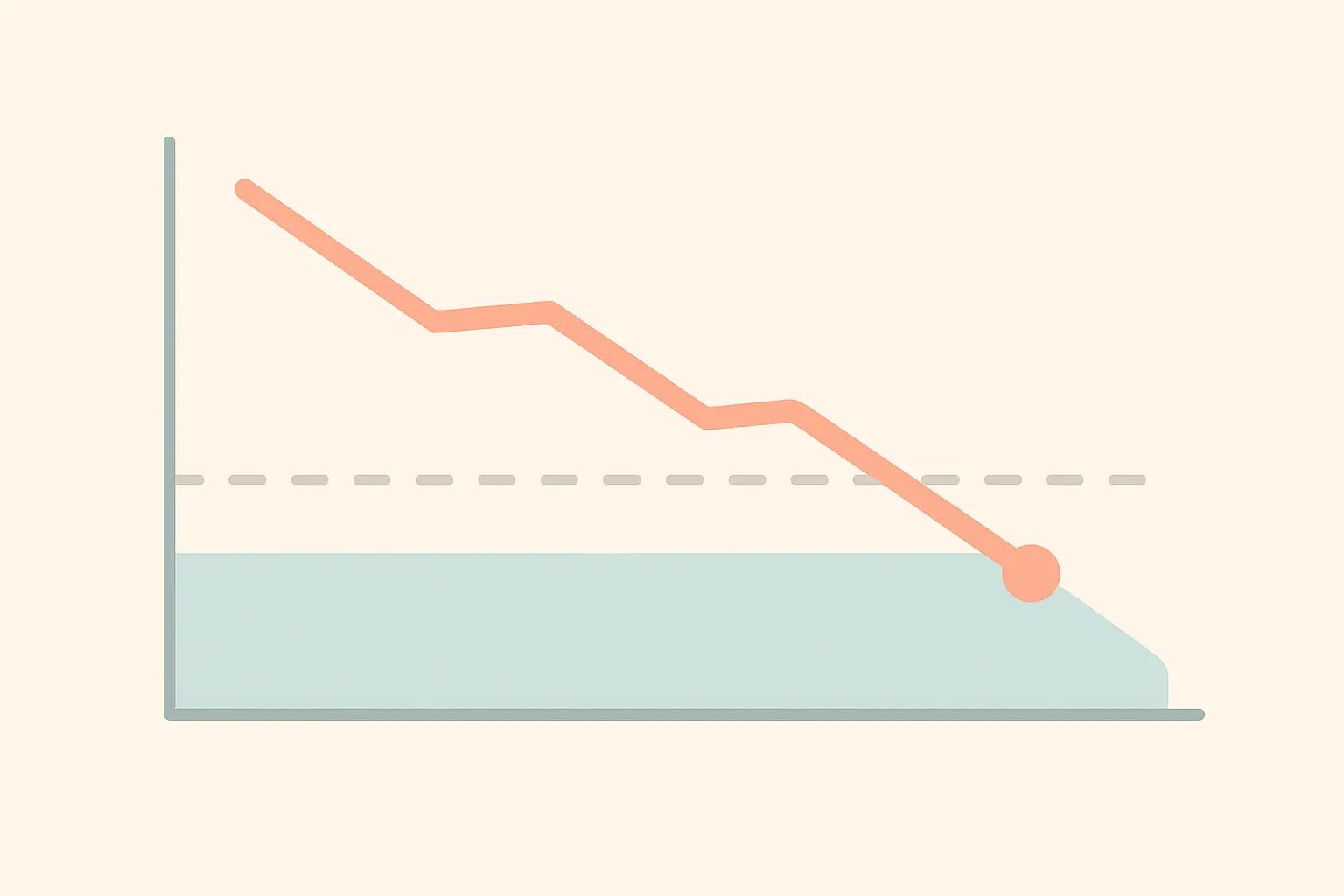
Scientific writing has been getting measurably harder to read for more than a century, and the largest study of the question is unambiguous about it. Analysing 709,577 abstracts published between 1881 and 2015 across 123 journals, Plavén-Sigray and colleagues found a steady decline in Flesch Reading Ease scores and a matching rise in New Dale-Chall difficulty scores — two independent measures moving in the same direction across 134 years.
The finding matters to a thesis writer for a practical reason. The prose you are reading all day, and unconsciously imitating, sits at the difficult end of a measurable scale — and examiners routinely mark down for clarity while the literature trains you in the opposite direction. This page collects what the data actually shows, what the readability formulas do and do not measure, and which of the numbers are worth acting on.
Key findings
- A corpus of 709,577 abstracts from 123 journals spanning 1881 to 2015 shows readability declining steadily over the whole period.
- The decline appears on two independent metrics — falling Flesch Reading Ease and rising New Dale-Chall difficulty — which rules out an artefact of one formula.
- The proportion of abstracts scoring below zero on Flesch Reading Ease, a band beyond “extremely difficult”, has risen substantially. A negative score is not a normal outcome for prose intended to be read.
- The main driver is word choice, not sentence length: a growing reliance on what the authors call “general scientific jargon” or science-ese — vocabulary used almost exclusively by scientists.
- Sentence length has been increasing slightly since around 1960, but contributes far less to the decline than vocabulary does.
- Coxhead’s Academic Word List identifies 570 word families that account for roughly 10% of the running words in academic texts across disciplines — a substantial shared vocabulary layer sitting above ordinary English.
What the readability scores actually measure
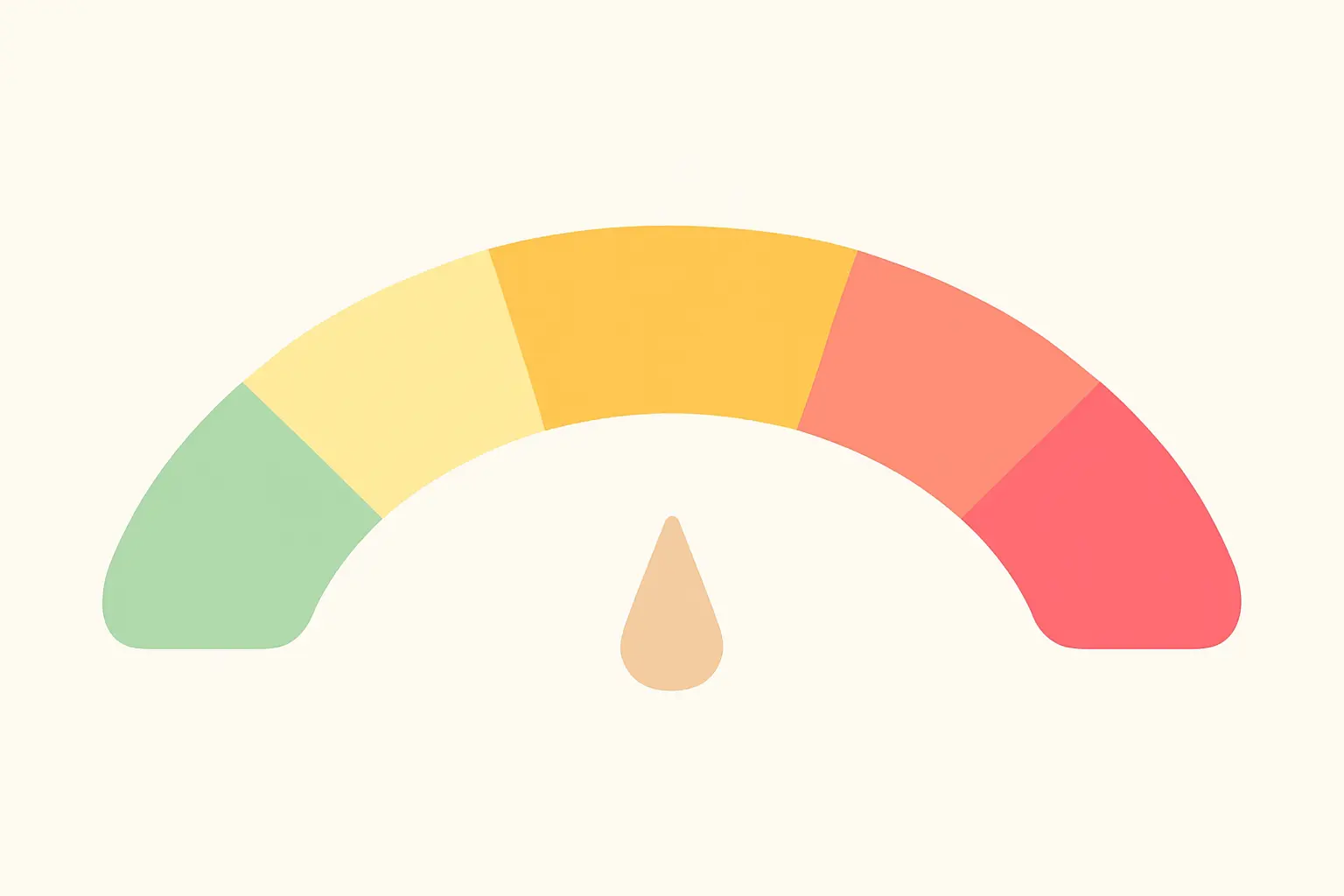
Before reading anything into a score, understand what the formula is counting. Flesch Reading Ease combines two variables only: average sentence length in words, and average word length in syllables. It does not assess argument, organisation, or whether a sentence makes sense.
| Flesch Reading Ease | Band | Typical text |
|---|---|---|
| 90–100 | Very easy | Text aimed at early readers |
| 60–70 | Plain English | General-audience journalism, public information |
| 50–60 | Fairly difficult | Broadsheet feature writing, quality magazines |
| 30–50 | Difficult | Undergraduate textbooks, professional guidance |
| 0–30 | Very difficult | Academic articles, legal and technical documents |
| Below 0 | Beyond the scale | Dense specialist prose, often unintentionally so |
Two consequences follow. First, a thesis in a technical field will score low no matter how well written it is, because polysyllabic terminology is doing the work — heteroscedasticity is five syllables whether or not the sentence around it is clear. Second, and less obviously, the formula can be gamed in ways that make writing worse: chopping every sentence into eight words raises the score and destroys the connective logic that makes a paragraph argue.
Treat the score as a smoke alarm, not a grade. It is useful for finding the one paragraph in a chapter that is dramatically harder than everything around it. It is not useful as a target.
The jargon finding, and what it means for your thesis
The most actionable result in the readability literature is that vocabulary — not sentence length — drives most of the measured decline. Science-ese is defined as vocabulary almost exclusively used by scientists, and its share of scientific prose has grown steadily.
This is worth separating into two categories, because they call for opposite responses.
- Technical terms with no plain equivalent. Heteroscedasticity, allele, hermeneutic. These are precise, they save whole sentences of paraphrase, and removing them would make the writing worse. Define on first use and then use them freely.
- General academic register with plain equivalents. Utilise for use, facilitate for help, elucidate for explain, ameliorate for improve, a paucity of for few. These add syllables and subtract clarity. They are the ones a readability score is actually detecting, and the ones an examiner reads as padding.
The distinction is easy to apply: if a plain word means exactly the same thing, the plain word is better. If it does not, keep the technical term. Nearly all defensible academic vocabulary falls on the technical side, and nearly all of the vocabulary that makes a thesis unpleasant to read falls on the other.
A related caution applies to the register-inflation habit generally. Writers who are least confident tend to reach hardest for elevated vocabulary, which is why an over-formal passage often marks the place where an argument is thinnest.
Sentence length: what the numbers support
Academic prose has the longest sentences of any major written register, and corpus linguistics has shown that its complexity is largely phrasal rather than clausal — the length comes from elaborate noun phrases packed with modifiers, not from long chains of subordinate clauses. Biber and Gray’s work on this overturned a longstanding assumption that academic writing is complex because of its clause structure.
That has a direct implication for editing. If your sentences are too long, the fix is usually not to split them at a conjunction; it is to unpack an overloaded noun phrase. “The implementation of a comprehensive stakeholder engagement evaluation framework” is one noun phrase carrying five modifiers, and no amount of splitting will help until it becomes something closer to “how we evaluated the way stakeholders were engaged”.
On targets, be careful what you take from plain-language guidance. Public-information style guides commonly recommend an average around 15 to 20 words per sentence, and that recommendation is aimed at general audiences reading unfamiliar material once. Academic prose runs longer, legitimately. What the evidence does support is this:
- Average length matters less than variation. A paragraph of uniformly long sentences is exhausting regardless of the mean; alternating long and short is what makes dense material readable.
- The outliers are the problem. One 60-word sentence in a paragraph of 20-word sentences will not move your average much, but it is where a reader loses the thread. Find the longest sentence on each page and check it can be read once.
- Length is a symptom. Sentences run long when a writer has not yet decided what the sentence is about. Rewriting from the idea usually shortens it without any conscious trimming.
How to run the numbers on your own thesis
You do not need specialist software. Every mainstream word processor will produce the two scores that matter.
- Microsoft Word. Enable readability statistics in the proofing options, then run a spelling and grammar check. Word reports Flesch Reading Ease, Flesch-Kincaid Grade Level, average words per sentence and percentage of passive sentences.
- Measure chapter by chapter, not whole-document. A single figure for an 80,000-word thesis tells you nothing. Per-chapter figures show you which chapter is the outlier, which is the only comparison worth making.
- Compare against yourself. Your discussion chapter should not be dramatically harder to read than your introduction. If it is, that usually reflects unfinished thinking rather than necessary complexity.
- Ignore the grade level. Flesch-Kincaid Grade Level is calibrated on American school reading levels and is meaningless for postgraduate research prose.
- Check the passive percentage against context. A high figure in a methods chapter is expected; a high figure in a discussion chapter usually means agency is being hidden. Which passives are worth keeping is covered in our guide to first person and passive voice in a thesis.
Why the decline happened, and why it is not simply carelessness
Three explanations are usually offered, and the evidence supports a combination rather than any single one.
Specialisation. As fields subdivide, the assumed reader becomes narrower, and vocabulary that once needed explaining does not. Some of the measured decline is a genuine and unavoidable consequence of accumulating knowledge.
Signalling. Dense prose can function as a marker of membership. This is the least defensible driver and the one most within an individual writer’s control.
Volume and pace. More is published, faster, with less editorial attention per paper than a century ago. Length limits also push authors to compress, and compression usually means packing noun phrases rather than cutting content — the exact mechanism corpus research identifies as the source of difficulty.
Whatever the mix, the consequence for a student is the same. You are learning to write by reading prose at the hard end of the scale, so the pull is towards difficulty. Writing clearly requires resisting your own reading diet, which is why it takes deliberate effort rather than talent.
What to do with this
Five changes with a real effect on how a thesis reads, in order of return.
- Replace elevated vocabulary that has an exact plain equivalent. This is where most of the measured difficulty lives and it costs nothing to fix.
- Unpack the three longest noun phrases in each chapter. More effective than splitting sentences, because it addresses the actual source of complexity.
- Find the longest sentence on each page and check it reads once. Outliers, not averages, are where readers stall.
- Vary sentence length deliberately in dense passages. A short sentence after two long ones does more for readability than lowering the average ever will.
- Compare chapters and investigate the outlier. The hardest chapter usually marks unresolved thinking, not necessary technicality.
Two things worth doing alongside: the punctuation choices that carry structural load in long sentences are set out in our guide to the punctuation rules examiners actually notice, and if English is not your first language, several of the patterns that mark a draft as second-language writing also depress readability scores directly. For cutting length rather than difficulty, our guide to reducing thesis word count covers the nominalisation pass, which improves both at once.
Sources
- Plavén-Sigray, P., Matheson, G. J., Schiffler, B. C., & Thompson, W. H. (2017). The readability of scientific texts is decreasing over time. eLife, 6, e27725.
- Coxhead, A. (2000). A new academic word list. TESOL Quarterly, 34(2), 213–238.
- Biber, D., & Gray, B. (2010). Challenging stereotypes about academic writing: Complexity, elaboration, explicitness. Journal of English for Academic Purposes, 9(1), 2–20.
- Flesch, R. (1948). A new readability yardstick. Journal of Applied Psychology, 32(3), 221–233.
Write prose your examiner can read once
Tesify drafts in academic register without the vocabulary inflation, keeps noun phrases unpacked, and flags the sentences a reader will have to go back over.
Start writing your thesis with Tesify
Frequently Asked Questions
Is academic writing really getting harder to read?
Yes, and the evidence is large-scale. An analysis of 709,577 abstracts from 123 journals published between 1881 and 2015 found Flesch Reading Ease scores falling steadily and New Dale-Chall difficulty scores rising over the same period. Two independent metrics moving together makes a formula artefact unlikely.
What Flesch Reading Ease score should a thesis have?
There is no correct target. Academic and technical prose typically scores between 0 and 30, and a thesis in a technical field will score low because of unavoidable terminology. Use the score to compare your own chapters against each other rather than against an external benchmark, and investigate any chapter that is a clear outlier.
What causes the decline in readability — long sentences or jargon?
Mostly vocabulary. The eLife analysis attributes the decline chiefly to growing use of general scientific jargon rather than sentence length, although average sentence length has risen slightly since around 1960. For a student editing a draft, that means word choice is the higher-return target.
How long should a sentence be in academic writing?
Plain-language guidance commonly suggests an average of 15 to 20 words, but that target is set for general audiences and academic prose legitimately runs longer. Variation matters more than the average: alternate long and short sentences, and check the single longest sentence on each page can be read once without backtracking.
How do I check the readability of my thesis?
Enable readability statistics in Microsoft Word’s proofing options and run a spelling and grammar check; Word reports Flesch Reading Ease, average words per sentence and percentage of passive sentences. Measure chapter by chapter rather than across the whole document, since a single figure for 80,000 words hides exactly the variation you want to find.
Should I remove technical terms to improve readability?
No. Technical terms with no plain equivalent are precise and save whole sentences of paraphrase — define them on first use and then use them. What to remove is general academic vocabulary that has an exact plain synonym: utilise, facilitate, elucidate, a paucity of. That is the layer readability formulas detect and examiners read as padding.
How much of academic text is specialised vocabulary?
Coxhead’s Academic Word List identifies 570 word families that occur across disciplines and account for roughly 10% of the running words in academic texts. That is on top of subject-specific terminology, which varies widely by field — so a reader outside your discipline meets two distinct layers of unfamiliar vocabulary at once.
Write your thesis with AI
Structure, draft, cite, and format your thesis faster with Tesify’s AI writing tools, automatic bibliography, and plagiarism checker. Free to start, no credit card required.





Leave a Reply