

You can turn a thesis into a book, but not by sending the PDF you deposited with your graduate school to a publisher. A dissertation is written to prove to a committee that you can do research; a book is written to persuade readers who never asked to read it. Every successful conversion starts by accepting that difference and rebuilding the manuscript around it.
This guide is for PhD graduates and early-career researchers in the US, UK, Canada and Australia who want to turn a PhD thesis into a book. It covers the choice between an academic monograph and a trade book, what university presses say they expect, what to cut, how to restructure chapters around an argument, how to find a book voice, how to write the proposal, what happens to your rights if the thesis already sits in a repository, and a realistic timeline.
To turn a thesis into a book, decide first whether you are writing a scholarly monograph or a book for general readers. Then cut most of the literature review and methods apparatus, rebuild the chapters around one central argument, rewrite in an authoritative voice, and send a proposal that explains your revisions. Presses such as LSU Press and the University of Manitoba Press state that they do not publish unrevised dissertations.
Academic monograph or trade book?
Before you change a single sentence, decide what kind of book you are writing. The two main routes ask for different manuscripts, different publishers and different amounts of rewriting.
| Question | Academic monograph | Trade or general-audience book |
|---|---|---|
| Who reads it? | Scholars and graduate students in your field and neighbouring fields | Curious non-specialists who buy books in shops and online |
| Typical publisher | University presses and scholarly publishers | Trade publishers, usually reached through a literary agent |
| How it is judged | Peer review of the proposal and manuscript | Market potential, story and the author’s platform |
| Apparatus | Notes and bibliography kept, but trimmed | Minimal; sources often moved to endnotes |
| Amount of rewriting | Substantial revision of structure and voice | Close to a new book built on your research |
For most humanities and social science PhDs the monograph is the natural route, because the research already speaks to a scholarly conversation that peer review is designed to judge. A trade book makes sense when your topic has an obvious public audience and you are willing to write narrative non-fiction rather than revise an academic text. A third option is not to write a book at all: some theses, especially in the sciences and social sciences, work better as a set of articles. Our guide on how to turn your thesis into a journal article covers that route, and our answer to whether you have to publish your thesis explains when publication is expected at all.
What university presses expect from a revised dissertation
University presses are unusually direct about dissertations, and their submission pages are the best brief you will get. LSU Press states that it “does not consider unrevised Ph.D. dissertations” and adds that even the best dissertation will need to be revised before being accepted for publication (LSU Press guidance for prospective authors). The University of Manitoba Press is equally clear: “We do not publish unrevised dissertations,” and to be published as a book the manuscript “must be recast to speak more broadly to a larger audience with an authoritative voice that has absorbed the scholarship in the field and builds on it” (University of Manitoba Press submission guidelines).
Read those two sentences as a checklist. A press is looking for three things a dissertation usually lacks:
- A broader audience. Your committee had to read the thesis. A reader of the book chooses to, and may come from a neighbouring discipline.
- Authority instead of proof. The thesis demonstrates that you know the literature. The book assumes it and gets on with the argument.
- A contribution that builds. The book should leave the field somewhere new, not just document that you mastered it.
If you want a book-length treatment of the process, William Germano’s From Dissertation to Book, published by the University of Chicago Press, is a whole book devoted to this transition, from rethinking the audience to revising chapter by chapter.
What to cut when you turn a thesis into a book
Cutting is the part of the job that hurts most, and the part editors notice first. LSU Press lists what scholars revising a dissertation most commonly need to do, and the list reads like a diagnosis of the typical thesis: eliminate or drastically reduce the review of scholarly literature, pare down the notes and eliminate discursive notes, streamline the bibliography, weed out “scaffolding”, and eliminate irrelevant detail. Its summary is three words long: “Cut, cut, cut.”
- The literature review chapter. In a thesis, the review proves you know the field. In a book, readers trust that you do. Keep only the debates your argument enters, and fold them into the chapters where they matter. If you wrote your review as a synthesis rather than a summary, as our guide to literature review methodology from sources to argument recommends, you will find this easier because the useful parts are already organised by idea.
- The methods apparatus. A full methodology chapter rarely survives. Move the essentials into a short section of the introduction or a methodological appendix, and keep only what a reader needs to trust your evidence.
- Scaffolding. Signposting such as “in this chapter I will”, “as discussed in Chapter 2” and repeated chapter summaries helped examiners navigate. Book readers find it tiring. Keep one clear roadmap in the introduction.
- Discursive notes. Footnotes that argue with other scholars or add asides belong in the text or nowhere.
- Hedging and defensive detail. Paragraphs written to anticipate an examiner’s objection can usually shrink to a sentence.
- Duplicated evidence. If three examples prove a point, the book needs the best one.
The techniques are the same ones you would use to bring a thesis under a word limit, only applied more aggressively; our guide to cutting thesis word count without losing substance walks through them line by line.
Restructuring chapters around an argument
Many dissertations follow the same template: introduction, literature review, methodology, findings, discussion, conclusion. That order serves an examination. A book needs an order that serves an argument, where each chapter answers a question raised by the one before and moves the reader closer to your central claim.
A practical way to start is to write your book’s argument in one paragraph, then list the claims a reader must accept, in order, to agree with it. Each claim becomes a candidate chapter. You will often find that one thesis chapter splits into two, two merge into one, and the findings chapters move to the centre of the book because they are where your original contribution lives.
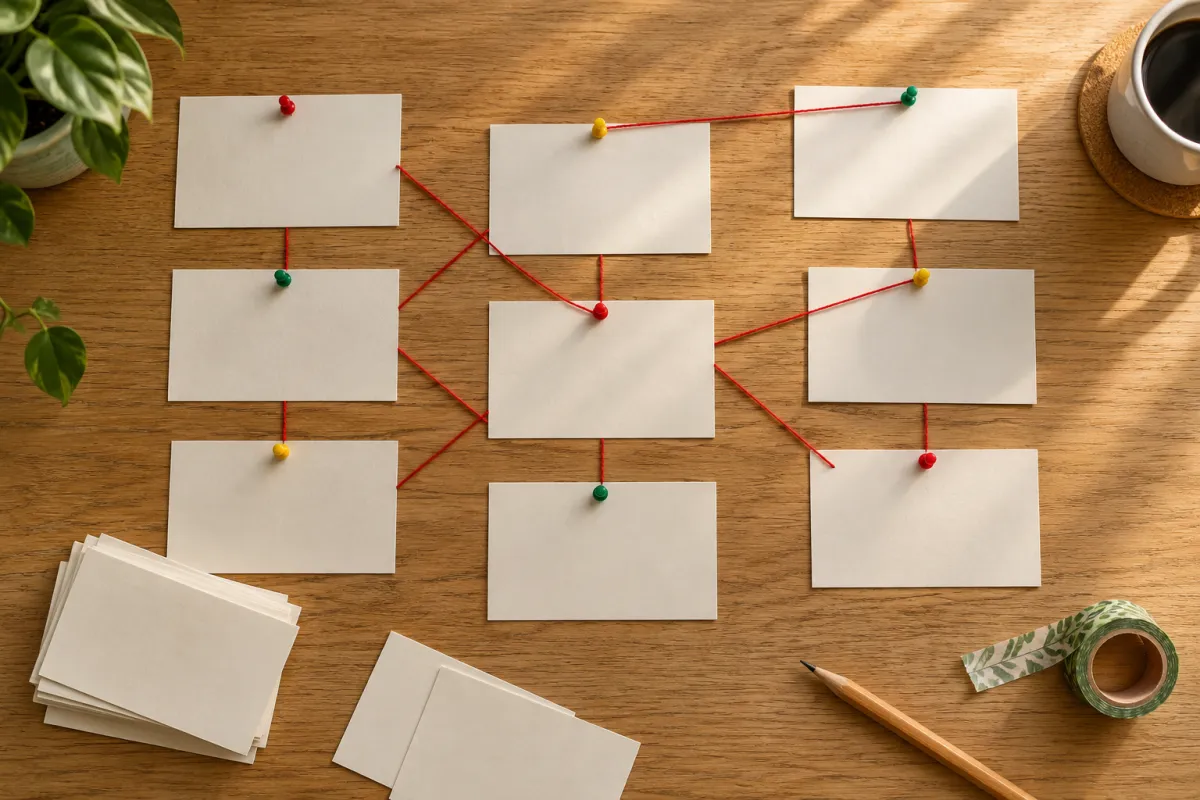
- Thematic structure. Chapters organised around ideas or problems, common in the humanities and social sciences.
- Chronological structure. Useful for historical work, where change over time is the argument.
- Case-based structure. Each chapter is a case or site that tests the argument from a new angle.
- Narrative structure. A story or journey that carries the ideas, typical of trade non-fiction.
If you are leaning towards a general-audience book, it helps to study how storytellers build tension and payoff. This overview of the three-act structure, the hero’s journey and Save the Cat explains the classic models; narrative non-fiction often borrows the same shape, with your research question as the inciting problem and your findings as the resolution.
Whatever shape you choose, test it with an annotated table of contents: a paragraph per chapter saying what it argues and why it comes where it does. You will need that document for the proposal anyway.
Finding a book voice and revising
The most common reason a revised dissertation still reads like a dissertation is voice. Thesis prose is cautious, heavy with citations in the main text and addressed to examiners. Book prose is confident, explains why each point matters and is addressed to a reader who can put the book down at any moment.
- Lead with your claim. Open chapters and sections with what you argue, not with who has argued what before you.
- Move names out of sentences. Replace strings of parenthetical citations with a note, and keep the scholar’s name in the text only when the reader needs to know who said it.
- Define terms once, plainly. A reader from a neighbouring field should never need your committee’s vocabulary.
- Use examples early. A concrete case in the first pages of a chapter does more than a theoretical framing.
- Read aloud. Sentences you stumble over will stop a reader.
For many researchers this is the first time writing for readers rather than examiners. A guide to writing a book for the first time is useful here, because it covers the habits that a thesis never taught: daily drafting targets, finishing a messy first version before polishing, and keeping momentum across months.
Software can help with the mechanics of a long manuscript. Reviews of AI writing tools for book-length projects compare options for outlining, organising chapters and catching inconsistencies. Use them for structure and consistency, not to generate prose: a scholarly book is judged on your own argument and voice, check whether your publisher asks authors to disclose AI use, and remember that the author is answerable for every sentence. Tesify takes the same position for thesis writing, helping you structure and organize chapters while every word stays 100% written by you.
Writing the book proposal
Most university presses decide on the basis of a proposal and sample material before they see a full manuscript, so the proposal is where your revisions must become visible. Requirements differ by press, but the published guidelines overlap closely:

| Proposal element | What it should show |
|---|---|
| Summary or abstract | The argument of the book in plain terms; the University of Manitoba Press asks for one to two pages |
| Rationale and audience | Why the book matters now, who will read it and whether it could be used in courses |
| Comparable and competing books | Recent titles in the area and how yours differs from them |
| Annotated table of contents | A short description of what each chapter argues |
| Revision statement | What you have changed or will change from the dissertation |
| Length, illustrations, delivery date | Total word count including notes and references, number of images or tables, and when you can deliver |
| Author information and samples | Your CV and one or more sample chapters |
Three details matter specifically for a revised dissertation. UBC Press asks that, if the manuscript is based on your dissertation, you “describe what major revisions you will undertake prior to submitting the manuscript” (UBC Press book proposal guidelines). The University of Manitoba Press asks when and where you defended your thesis and who was on your committee, and asks for potential reviewers who are not at your own institution or personally connected to you. LSU Press asks for a rough total word count that includes notes and bibliography.
Choose presses whose recent lists already include books near yours; the comparable-titles section of your proposal will often tell you where to send it. Then follow each press’s own instructions exactly, because they differ in what they want first and in what format.
Rights, repositories and embargoes
A common worry is that the thesis is already online, so no publisher will want it. In most cases the deposit itself does not stop you. ProQuest, which distributes many North American dissertations, states that “Authors retain the copyright to their work” and that “The license is non-exclusive”, adding that the work can exist both with ProQuest and elsewhere. If a publisher has concerns, ProQuest lets authors request a “do not sell” restriction on their dissertation (ProQuest Dissertations author FAQ).
Publishers’ attitudes to open-access theses vary, which is why some authors place an embargo on the repository copy while they revise. Embargo rules are set by your university, not by the press, so check your graduate school’s policy before you deposit or extend one; our analysis of how common thesis embargoes and restricted dissertations are shows how institutions handle them. A thoroughly revised book differs substantially from the thesis, and being able to show that difference in your proposal is the strongest answer to the concern.
Two more rights questions belong in your plan. If you published a chapter as a journal article, check that journal’s author agreement before reusing the text, and list it under previously published material in the proposal. If the thesis includes images, maps or long quotations from other people’s work, permissions you had for an examination copy may not cover a commercial book, so budget time to clear them.
A realistic timeline
There is no standard schedule; it depends on your field, your teaching load and how much the manuscript must change. The plan below is illustrative, not a promise from any press, and shows the order of work for a monograph:
- Distance. Many authors set the thesis aside for a while after the defence so they can read it as an editor would.
- Diagnosis. Reread the whole thesis, write the one-paragraph argument and draft the annotated table of contents.
- Proposal. Draft the proposal and revise one chapter, usually the introduction or a strong central chapter, to book standard as your sample.
- Submission and review. Send the proposal to your chosen presses following their guidelines. Peer review of a proposal and later of the manuscript takes months, and a “revise and resubmit” is a normal outcome.
- Full revision. Rewrite the remaining chapters, using reviewer comments as your guide.
- Production. Copyediting, proofs and indexing follow acceptance of the final manuscript.
Seen as a whole, turning a thesis into a book is a multi-year project for most first-time authors. Planning it in stages, with one chapter finished at a time, keeps it manageable alongside a job.
The Tesify AI Editor helps you structure and organize your thesis chapter by chapter, and 9,000+ students have written 15,000+ chapters with Tesify. Every word stays 100% written by you, so the manuscript you later revise is entirely your own.
FAQ
Can you turn a PhD thesis into a book?
Yes, and many first academic books start as dissertations. Presses such as LSU Press and the University of Manitoba Press say they do not publish unrevised dissertations, so expect to cut the literature review and methods apparatus, restructure the chapters and rewrite for a wider audience.
Should I turn my thesis into a book or into journal articles?
It depends on your field and your argument. Book-length arguments are common in the humanities and many social sciences, while article-based publication is the norm in most sciences. If your thesis is a set of separate studies, articles may suit it better than a book.
Will a publisher reject my book because the thesis is in a repository?
Not usually, but policies vary by publisher. ProQuest says authors keep copyright and grant a non-exclusive license, and authors can request a do not sell restriction. Ask the press about its policy and check your university rules on embargoes before depositing.
What should a book proposal for a revised dissertation include?
Typically a summary, rationale and audience, comparable books, an annotated table of contents, length and delivery date, your CV and sample chapters. Presses such as UBC Press also ask you to describe the major revisions you will make to the dissertation.
How long does it take to turn a thesis into a book?
There is no fixed timeline. Revision, peer review of the proposal and manuscript, and production each take months, so most first-time authors should plan for a multi-year project and work one chapter at a time.
Write your thesis with AI
Structure, draft, cite, and format your thesis faster with Tesify’s AI writing tools, automatic bibliography, and plagiarism checker. Free to start, no credit card required.





Leave a Reply