

To teach in a state school in England you need qualified teacher status (QTS). There are several ways to get it: postgraduate teacher training that you pay for, postgraduate teacher training that pays you a salary, a teacher degree apprenticeship, and separate routes if you do not have a degree or have already worked as an unqualified teacher.
The Department for Education states that with QTS you get a minimum starting salary of £32,916. The choice between routes is mostly about whether you can afford to study without earning, and whether you want an academic qualification alongside the status.
QTS and PGCE are not the same thing
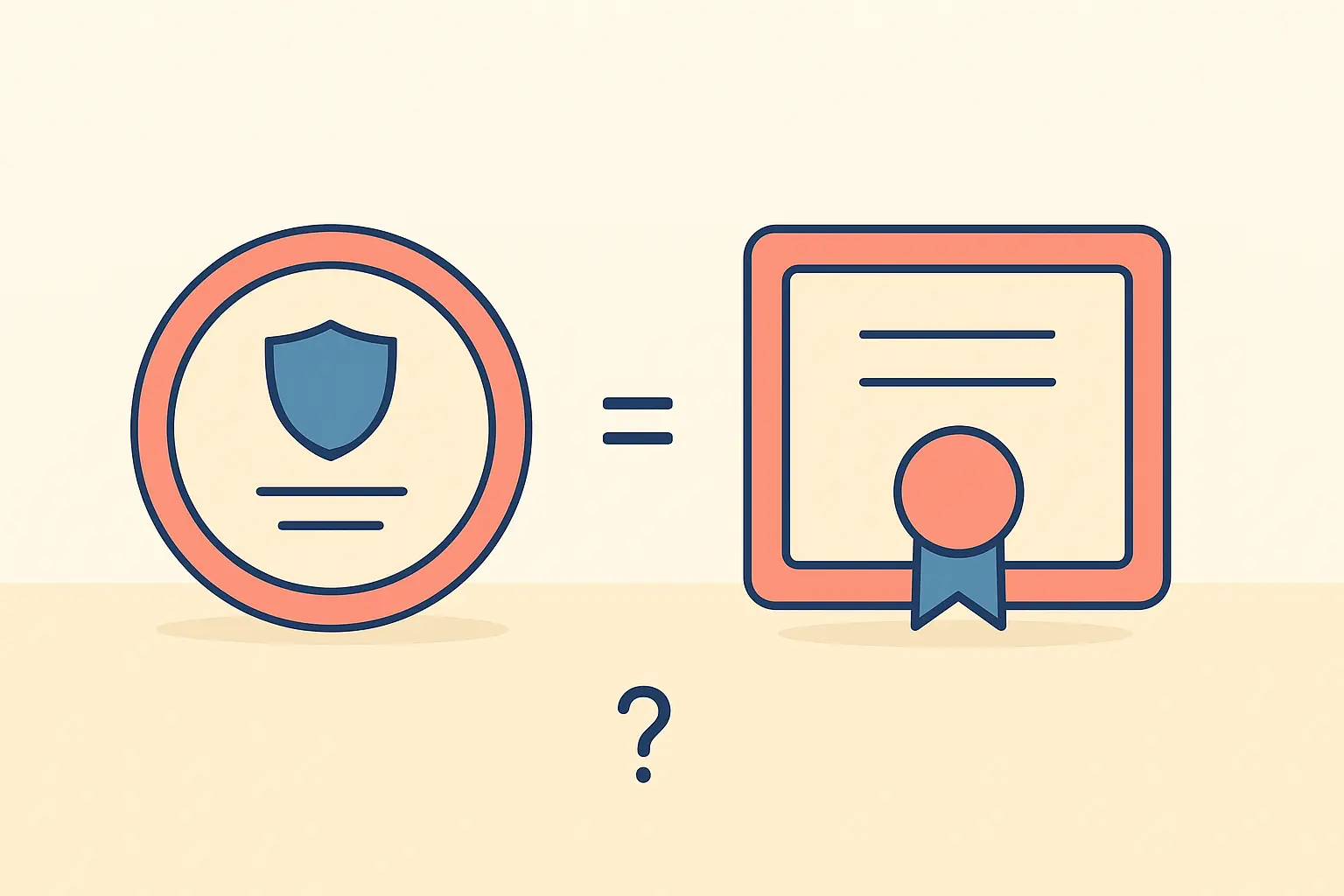
This is the distinction that causes the most confusion, and getting it straight makes every other decision easier.
| QTS | PGCE | |
|---|---|---|
| What it is | The professional status required to teach in state schools in England | An academic qualification, the Postgraduate Certificate in Education |
| Level | Not a qualification level — it is a status | Level 7, alongside a master’s degree |
| Awarded by | Recognised through teacher training | A university |
| Needed to teach in a state school? | Yes | No |
| Portable internationally | Less so | Widely recognised |
Most postgraduate teacher training leads to QTS and a PGCE, but not all of it does — some routes award QTS alone. That matters if you might teach abroad later, or want the Level 7 credits to count towards a full master’s. Our guide to RQF and FHEQ levels confirms the PGCE sits at Level 7, which surprises people who assume it is an undergraduate add-on.
Always check whether a specific course awards QTS only or QTS with PGCE. It is not implied by the course title.
The routes as DfE currently presents them

| Route | Who it is for | Money |
|---|---|---|
| Postgraduate teacher training (fee-based) | You have, or are studying for, a bachelor’s degree | You pay tuition fees; bursaries and scholarships available in some subjects |
| Postgraduate salaried teacher training | Graduates who need to earn while training | You are paid a salary rather than paying fees |
| Teacher degree apprenticeship | Those without a degree, training while employed | Employed and paid; no student tuition fees |
| Routes if you do not have a degree | Career changers and support staff without a bachelor’s | Varies by route |
| If you have worked as an unqualified teacher | People already teaching without QTS | Varies; recognises existing classroom experience |
A note on older route names. A great deal of third-party material still organises this decision around branded route names from previous years. DfE’s own current information is structured around the categories above — degree or no degree, fee-paying or salaried, apprenticeship or not. If you are reading advice that leads with route branding rather than with those questions, check it against the official pages before relying on it.
If you do not yet have a degree
Two of the routes above are open to you, and there is a third option worth considering: getting the degree first, locally and part-time if necessary. Many further education colleges deliver full degrees awarded by a partner university, which our guide to studying a degree at a college explains — a realistic route if you are already working in a school as support staff.
If you are earlier than that and still choosing a Level 3 qualification, the Education and Early Years T Level is one entry point among several; our comparison of T Levels, A levels, BTECs and the Access to HE Diploma covers how those four routes differ, including for adults returning to study.
Paying to train versus being paid to train

This is the decision that actually determines which route most people take.
Fee-based routes mean tuition fees and student finance, but usually a more protected training experience with more time out of the classroom for study. Bursaries and scholarships are available in some subjects, and can be substantial in shortage subjects.
Salaried routes and the teacher degree apprenticeship mean no tuition fee and an income from day one, at the cost of a heavier load: you are an employee with genuine responsibilities as well as a trainee. Places are also generally fewer and more competitive.
The honest trade-off is time, not money. Being paid while training is unambiguously better for cash flow and unambiguously harder to do well, because the protected study time is thinner. If you have caring responsibilities or cannot go a year without income, that may still make it the right — or the only — choice.
What about training outside England?
Teacher training and teaching status are devolved, so Scotland, Wales and Northern Ireland have their own arrangements and their own registration bodies. The routes described here are the England ones. If you plan to teach elsewhere in the UK, check that nation’s requirements before choosing a course — our map of who regulates and awards UK qualifications covers how the four nations differ.
There is also an international qualified teacher status (iQTS) route for people outside the UK, and separate pathways for non-UK citizens training to teach in England.
How to choose
- Do you have a bachelor’s degree? If yes, postgraduate teacher training is the main route. If no, look at the teacher degree apprenticeship and the non-degree routes.
- Can you afford a year without a salary? If not, prioritise salaried training or the apprenticeship.
- Do you want a PGCE as well as QTS? If you may teach abroad or want Level 7 credits, confirm the course awards both.
- Is your subject knowledge sufficient? Subject knowledge enhancement courses exist for candidates whose degree does not match their intended subject closely enough.
- Where will your placements be? Training involves school placements, and travel to them is a practical constraint people consistently underestimate.
Frequently asked questions
What do you need to teach in England?
Qualified teacher status. DfE states that with QTS you get a minimum starting salary of £32,916.
Is a PGCE the same as QTS?
No. QTS is the professional status required to teach in state schools; the PGCE is an academic qualification at Level 7. Many courses award both, but some award QTS alone — check the specific course.
What level is a PGCE?
Level 7, the same level as a master’s degree, a postgraduate diploma and a postgraduate certificate.
Can you train to teach without a degree?
Yes. DfE lists routes for people who do not have a degree, including the teacher degree apprenticeship, where you are employed and paid while training.
Can you get paid while training to teach?
Yes, through postgraduate salaried teacher training or a teacher degree apprenticeship. Both avoid tuition fees but carry a heavier workload and are generally more competitive.
What is subject knowledge enhancement?
A course for candidates whose degree does not sufficiently match the subject they intend to teach, taken before or alongside teacher training.
Do these routes apply across the UK?
No. Teacher training is devolved, so Scotland, Wales and Northern Ireland have separate arrangements and registration bodies. These are the England routes.
Teacher training is assignment-heavy from the first term, and most of it asks you to connect classroom practice to theory. Tesify maps an outline to your module’s learning outcomes, formats references and produces an AI-use declaration for submission — a starting draft to rewrite in your own words, drawing on placements only you were in.
Write your thesis with AI
Structure, draft, cite, and format your thesis faster with Tesify’s AI writing tools, automatic bibliography, and plagiarism checker. Free to start, no credit card required.





Leave a Reply