

Part-time doctoral candidates complete at meaningfully lower rates than full-time candidates, but no statistics agency publishes a clean, current, mode-split figure. The best available UK benchmark is HEFCE’s finding that 72.9% of doctoral students completed within seven years, against institutional and sector estimates placing part-time completion roughly 10 to 20 percentage points lower.
What are the headline completion figures?
Three sources carry most of the evidential weight in this area, and each measures something slightly different. Reading them together matters more than quoting any single number.
| Source | Population | Window | Completion rate |
|---|---|---|---|
| HEFCE (2010–11 data) | UK/EU doctoral students in England | 7 years | 72.9% |
| HEFCE (same series) | UK/EU doctoral students in England | 25 years | 80.5% |
| UK 1996–97 cohort | Full-time PhD students | 7 years | 72% |
| Council of Graduate Schools, PhD Completion Project | US doctoral students | 10 years | ~57% |
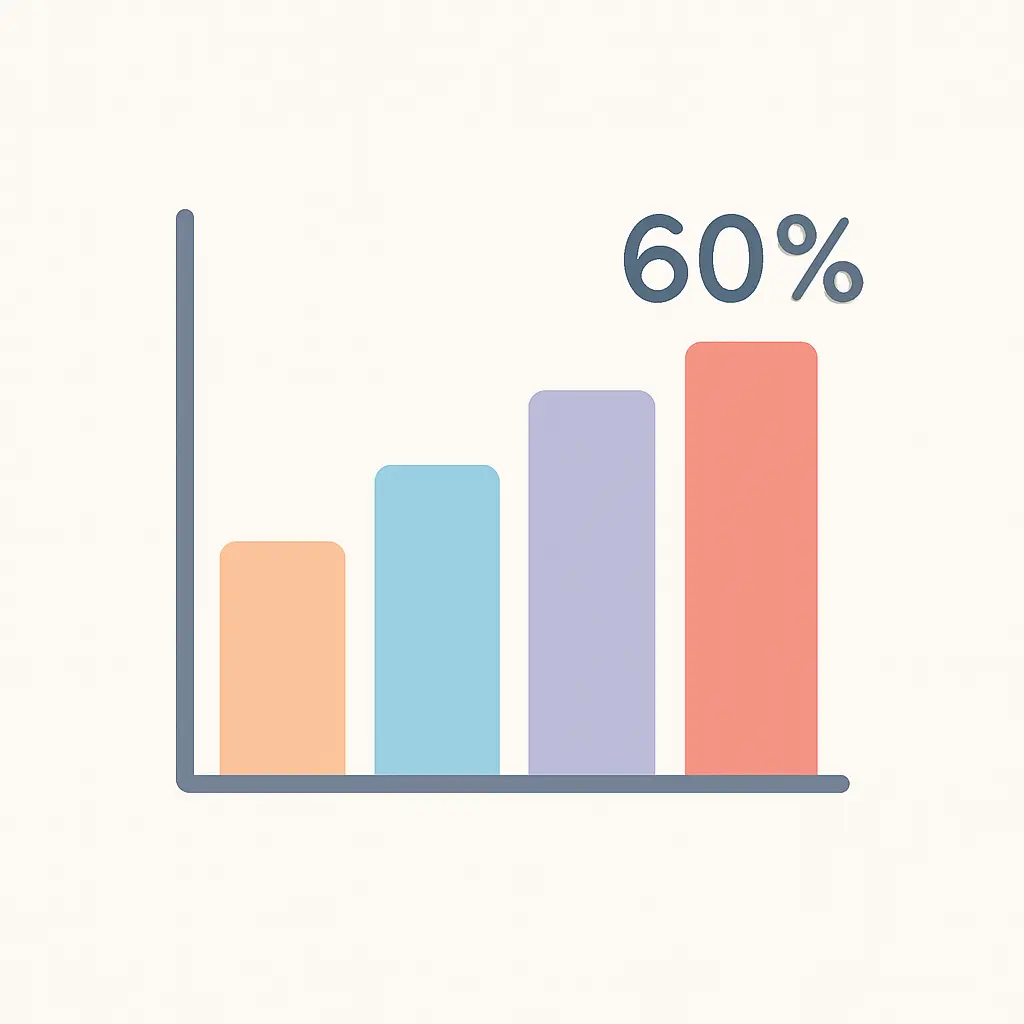
The pattern that emerges is consistent across countries: roughly a quarter to two-fifths of everyone who starts a doctorate does not finish one. The variance between the UK and US figures largely reflects different funding structures, different definitions of the starting cohort, and the fact that US doctoral programmes typically include several years of coursework before candidacy.
How many doctoral students study part-time?
Part-time doctoral study is not a marginal phenomenon. HEPI reported that of approximately 25,000 annual new joiners to UK doctoral research, over 4,700 — around 24% — register part-time.
That means roughly one doctoral candidate in four is in a mode of study for which the sector publishes almost no completion data. For a cohort of that size, the absence is striking rather than a rounding error.
Why is the part-time completion rate so hard to measure?
Three structural problems make mode-split reporting genuinely difficult, and none of them is easily fixed.
First, the tracking window. A full-time doctorate is normally three to four years, so a seven-year window comfortably captures completions. A part-time doctorate typically runs five to eight years or more, which means a seven-year window truncates the part-time cohort mid-flight and understates its eventual completion.
Second, mode switching. Candidates move between full-time and part-time registration — often after a change in funding, employment or caring responsibilities. A candidate who spends two years full-time and four part-time belongs cleanly to neither category, and different institutions resolve this differently.
Third, suspension and extension. Interruptions of study stop the clock in institutional records but not always in sector-level datasets, so the same student can appear to have taken very different lengths of time depending on which system is counting. Our analysis of thesis extension and deferral statistics covers how common these interruptions have become.
What does the attrition pattern look like over time?
Attrition is not evenly spread across a doctorate. Withdrawal clusters in the first and second years for full-time candidates, driven by supervision mismatch, funding problems and project scope. Part-time candidates show a flatter but longer risk profile, with a second cluster of attrition arriving late, when the writing-up phase collides with the job that was funding the degree in the first place.
This is why raw completion percentages can mislead. A part-time cohort measured at year seven looks far worse than the same cohort measured at year ten. Our breakdown of PhD attrition by year of study sets out how the risk profile shifts across the doctorate, and the country-by-country dropout comparison shows how much national funding models change the picture.
What drives the gap between part-time and full-time completion?
The mode of study is rarely the cause in itself. It is a proxy for a cluster of underlying conditions that independently predict non-completion.

| Factor | Typical full-time position | Typical part-time position |
|---|---|---|
| Funding | Stipend or studentship for 3–4 years | Self-funded or employer-supported; fees often personal |
| Supervision contact | Regular, often embedded in a research group | Less frequent; scheduling constrained by employment |
| Peer cohort | Daily contact with other researchers | Frequently isolated from the department |
| Competing demands | Teaching and research assistance | Full-time employment, often unrelated to the research |
| Institutional visibility | High — on campus, in systems | Low — the classic “invisible” doctoral candidate |
Supervision frequency is the single most modifiable of these. Our data review on supervisor meeting frequency shows how sharply reported contact hours vary, and part-time candidates sit consistently at the lower end.
Does part-time study affect thesis quality or examination outcome?
There is no credible evidence that part-time candidates who reach submission produce weaker theses or fail vivas at higher rates. The penalty of part-time study is expressed almost entirely as time-to-completion and attrition risk, not as examination outcome.
This is an important distinction for prospective candidates. The decision to study part-time raises the probability of not finishing; it does not lower the ceiling on the work you produce if you do. For what happens at the examination stage regardless of mode, see our guide to viva outcomes and what happens next.
What should you take from these numbers if you are choosing a mode?
Treat the completion gap as a signal about support conditions rather than a verdict on part-time study. The candidates who complete part-time doctorates tend to have three things in common: a written and realistic timeline, protected and defended writing time each week, and a supervisor who treats a part-time candidate’s calendar as a genuine constraint rather than an inconvenience.
If you are weighing the two modes, our comparison of the difference between a master’s and a PhD covers the prior question of whether a doctorate is the right qualification at all, and our practical guide to writing a thesis while working full time addresses the day-to-day mechanics.
Frequently asked questions
What percentage of PhD students finish their doctorate?
HEFCE data covering doctoral students in England found 72.9% completed within seven years, rising to 80.5% within 25 years. The Council of Graduate Schools’ PhD Completion Project reported approximately 57% completion within ten years for US doctoral students. National figures vary widely with funding structure and programme design.
Is a part-time PhD harder to finish than a full-time one?
Statistically, yes — part-time candidates complete at lower rates and take substantially longer. The gap is driven by funding insecurity, reduced supervision contact, isolation from a peer cohort and competing employment demands rather than by the mode of registration itself.
How long does a part-time PhD take?
Typical part-time doctoral registration runs five to eight years, against three to four years for full-time study. Many institutions set a maximum registration period of around eight years for part-time candidates, with extensions requiring formal approval.
Why does nobody publish part-time PhD completion rates?
Standard reporting windows of seven years truncate part-time cohorts before most have finished, candidates frequently switch between modes mid-degree, and interruptions are recorded inconsistently across institutions. The result is that mode-split completion data is either unpublished or not comparable between sources.
Can you switch from part-time to full-time during a PhD?
Most institutions permit a change of registration mode subject to supervisory approval and, where relevant, visa and funding conditions. The change usually recalculates your submission deadline pro rata, so confirm the new date in writing before agreeing to it.
Does studying part-time affect your chances in the viva?
There is no evidence that mode of study affects examination outcomes for candidates who reach submission. Examiners assess the thesis and the defence, not the registration record.
Writing a doctorate around everything else
The completion gap is fundamentally about protected writing time. Tesify helps part-time and full-time candidates alike turn limited writing sessions into finished chapters — drafting, restructuring and keeping references formatted so that the hours you do get are spent on the argument rather than the admin.
Write your thesis with AI
Structure, draft, cite, and format your thesis faster with Tesify’s AI writing tools, automatic bibliography, and plagiarism checker. Free to start, no credit card required.




Leave a Reply