

How to Write a Degree Apprenticeship End-Point Assessment Project Step by Step (2026)
An end-point assessment project is a real work-based project written against your apprenticeship standard’s knowledge, skills and behaviours — not against academic marking criteria. It is graded by an independent assessment organisation, and the assessment plan for your standard, not your university handbook, is the governing document.
Step 1: Understand who is actually marking you
This is the misconception that costs apprentices the most marks. Your degree apprenticeship has two separate assessments running in parallel, and the EPA project belongs to the second one.
| The degree | The end-point assessment | |
|---|---|---|
| Assessed by | Your university | An independent end-point assessment organisation |
| Judged against | Academic learning outcomes | The apprenticeship standard’s KSBs |
| Governing document | Module handbook | The assessment plan for your standard |
| Typical grading | Percentage and classification | Fail, pass, merit or distinction |
| Rewards | Critical analysis and literature engagement | Demonstrated occupational competence |
Apprentices who write the EPA project as if it were a dissertation produce something well-referenced, analytically sophisticated, and short of evidence that they personally did the work competently. The assessor is not looking for a contribution to knowledge. They are looking for proof that you can do the job to the standard.
Download the assessment plan for your specific standard from the Institute for Apprenticeships and Technical Education before you plan anything. It specifies your assessment methods, word count, grading descriptors and the KSBs each method covers.
Step 2: Clear the gateway
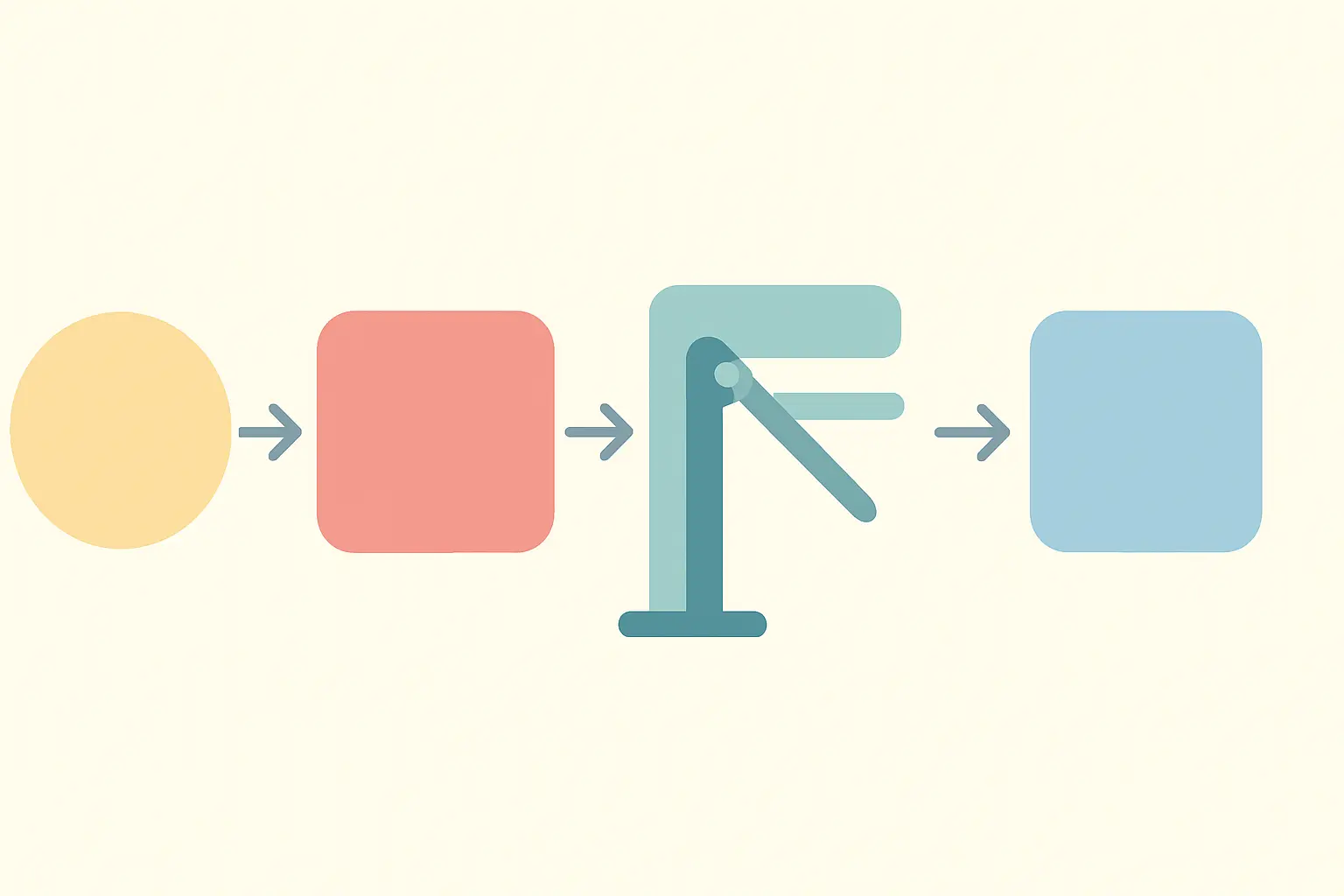
Gateway is the point at which your employer and training provider formally agree you are ready to be assessed. It typically requires that you have completed the on-programme learning, met any English and maths requirements in your standard, and assembled whatever evidence the plan specifies.
Two things follow. First, gateway is a scheduling dependency — your EPA window opens from that date, so delays cascade. Second, many standards require your project proposal to be submitted and approved at or shortly after gateway, which means the topic decision happens earlier than most apprentices expect.
Step 3: Choose a project that generates real business benefit
The strongest EPA projects share three features: the problem is real, the work is genuinely yours, and the outcome is measurable.
Assessors look for evidence of your personal contribution. A project where you were one of eleven people on a large programme is difficult to evidence. A smaller piece of work you led end to end is far easier to defend under questioning.
Practical selection criteria:
- It must cover enough KSBs. Check the assessment plan’s mapping. If your project touches only six of the fourteen KSBs assigned to the project method, it cannot pass regardless of quality.
- It must fit the assessment window. EPA windows are defined in the plan and are usually measured in weeks or a few months.
- It needs a measurable outcome. Time saved, defects reduced, cost avoided, process cycle shortened. Quantify it.
- Your employer must agree to it. You need access, data and sign-off, and the project should matter enough to them that access is not withdrawn mid-way.
Step 4: Map every section to KSBs before you write
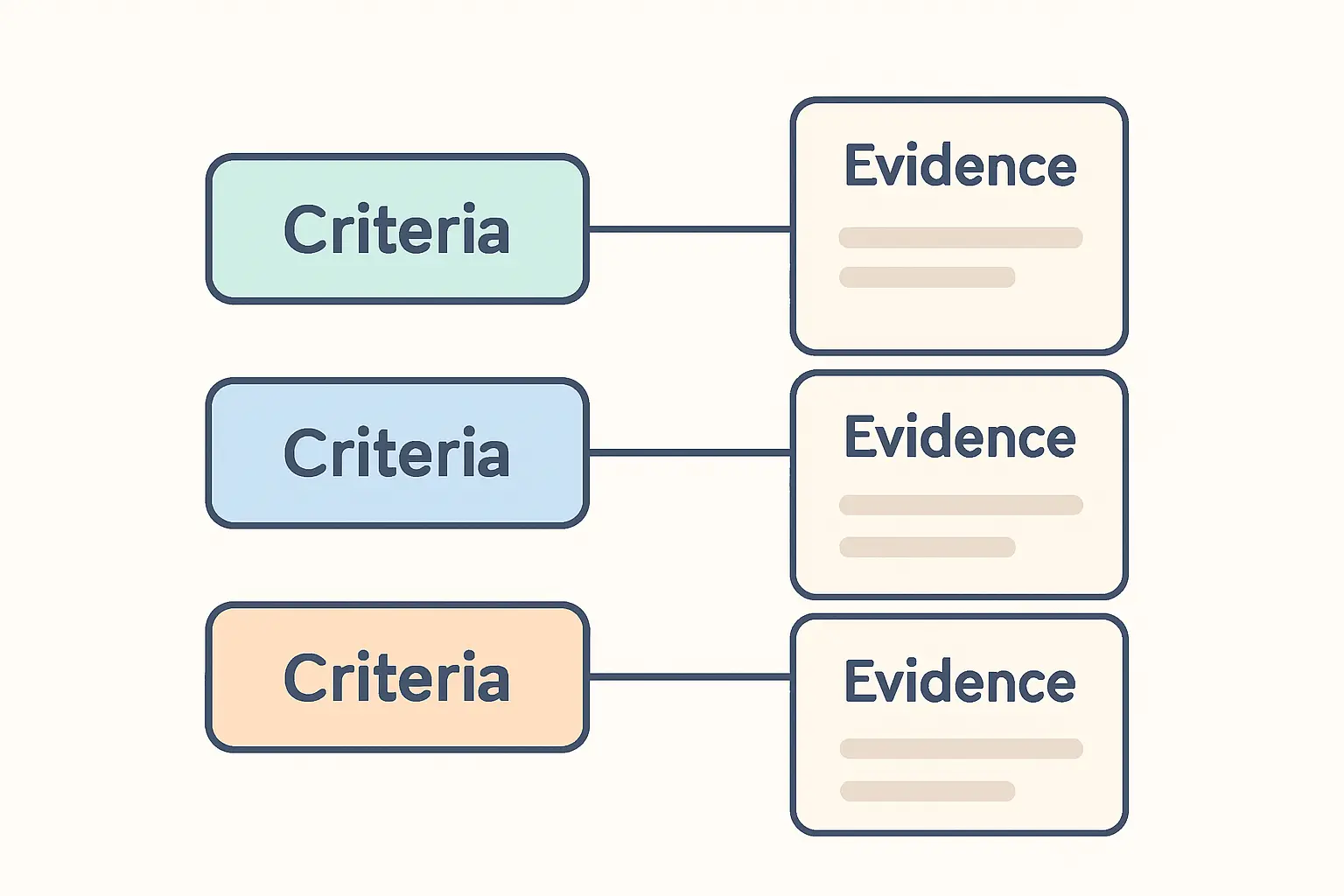
This is the single highest-value technique in EPA writing, and it inverts the usual order of work.
Build a table with every KSB assigned to the project method in your assessment plan. Against each, note where in your project you will evidence it and what that evidence is. Write to fill the table.
Two traps this avoids. Apprentices routinely under-evidence behaviours, because behaviours feel unwritable — things like taking responsibility, working collaboratively, or acting professionally. They are assessed, and the way to evidence them is narrative: describe a decision point, what you did, and why. “When the supplier data arrived incomplete, I escalated to the category manager rather than estimating, because the figure fed a contractual review” evidences a behaviour concretely.
The second trap is claiming a KSB without showing it. Assessors distinguish between asserting that you consulted stakeholders and describing which stakeholders, what the disagreement was, and how you resolved it. Only the second earns the criterion.
Step 5: Write to the structure the plan specifies
Most work-based project reports follow a recognisable shape, though your plan overrides anything generic.
| Section | What it must do |
|---|---|
| Executive summary | Problem, approach, outcome, benefit — in one page |
| Background and rationale | Organisational context and why this problem was worth solving |
| Aims and objectives | Specific and measurable, agreed at proposal stage |
| Approach and methods | What you did, tools used, and why those choices |
| Implementation | The narrative of delivery, including obstacles and decisions |
| Results and benefits | Quantified outcome against the original objectives |
| Reflection and recommendations | What you learned, what you would change, next steps |
| KSB mapping appendix | Explicit criteria-to-evidence table |
Write in the first person and in the active voice. Academic writing trains you out of “I decided”, but in an EPA report that construction is doing essential work: it distinguishes your contribution from the team’s. Passive voice actively obscures the thing being assessed.
Getting objectives right at the proposal stage prevents most later problems — the approach in our guide to writing aims and objectives transfers directly, with the difference that yours must be measurable in business terms.
Step 6: Handle commercial confidentiality
Your project sits inside a real organisation, and the report leaves the building to be read by an external assessor. Establish early what you can disclose.
Anonymise clients and suppliers, present financial impact as percentages or indices where absolute values are sensitive, and get your line manager to review the report before submission. Most EPAOs have a process for handling confidential material — ask rather than assume, and build the review into your timeline.
The same discipline applies here as in a sandwich-year report; our guide to the placement year report covers the confidentiality options in more detail. Supporting evidence belongs in appendices, labelled and redacted — see how to structure an appendix.
Step 7: Prepare for the presentation and professional discussion

Most standards pair the project report with a presentation and questioning session, or with a professional discussion. This is where assessors probe whether the work is genuinely yours.
Prepare by working back through your own report and asking, for every claim: how do I know this, what did I personally do, and what would I say if challenged? Rehearse the difficult answers — the objective you missed, the decision that turned out wrong, the part a colleague did.
Candour scores well here. Grading descriptors for distinction typically reward critical evaluation of your own work, which means an apprentice who can articulate what went wrong and why usually outperforms one who presents a flawless account.
Frequently asked questions
What is the difference between an EPA project and a dissertation?
A dissertation contributes to knowledge and is marked by your university against academic criteria. An EPA project solves a real business problem and is graded by an independent assessment organisation against your apprenticeship standard’s knowledge, skills and behaviours. On a degree apprenticeship you may have to produce both.
Who marks the end-point assessment?
An independent end-point assessment organisation, separate from your employer and your training provider. That independence is a design feature of the apprenticeship system, and it is why your university’s marking conventions do not apply to the EPA.
How long is an EPA project report?
It is set by the assessment plan for your specific standard, and varies considerably between standards. There is no general figure. Download your standard’s assessment plan from the Institute for Apprenticeships and Technical Education and work to the word count stated there.
What is gateway in an apprenticeship?
Gateway is the formal point at which your employer and training provider confirm you are ready for end-point assessment, typically requiring completion of on-programme learning and any English and maths requirements in your standard. EPA cannot begin until you pass gateway.
Can I fail my end-point assessment?
Yes. EPA is graded, commonly as fail, pass, merit or distinction. Resits are usually permitted, with the arrangements and any grade cap set out in your assessment plan. The most common cause of failure is insufficient evidence against the KSBs rather than poor work.
How do I evidence behaviours in my EPA project?
Narratively and specifically. Describe a real situation, the decision you took, and your reasoning. Behaviours such as taking responsibility or collaborating cannot be asserted — they have to be shown through concrete accounts of how you acted when something was difficult.
Tesify helps you structure the written side — a section outline mapped to your assessment criteria, a formatted reference list, and an AI-use declaration to submit alongside your project.
Write your thesis with AI
Structure, draft, cite, and format your thesis faster with Tesify’s AI writing tools, automatic bibliography, and plagiarism checker. Free to start, no credit card required.






Leave a Reply