
The Advanced Higher project–dissertation is the first extended piece of independent research most Scottish students ever write. It is externally marked, it carries a large share of your course award, and it is governed by a course specification that differs — sometimes sharply — from the one your friend in a different Advanced Higher class is working to.
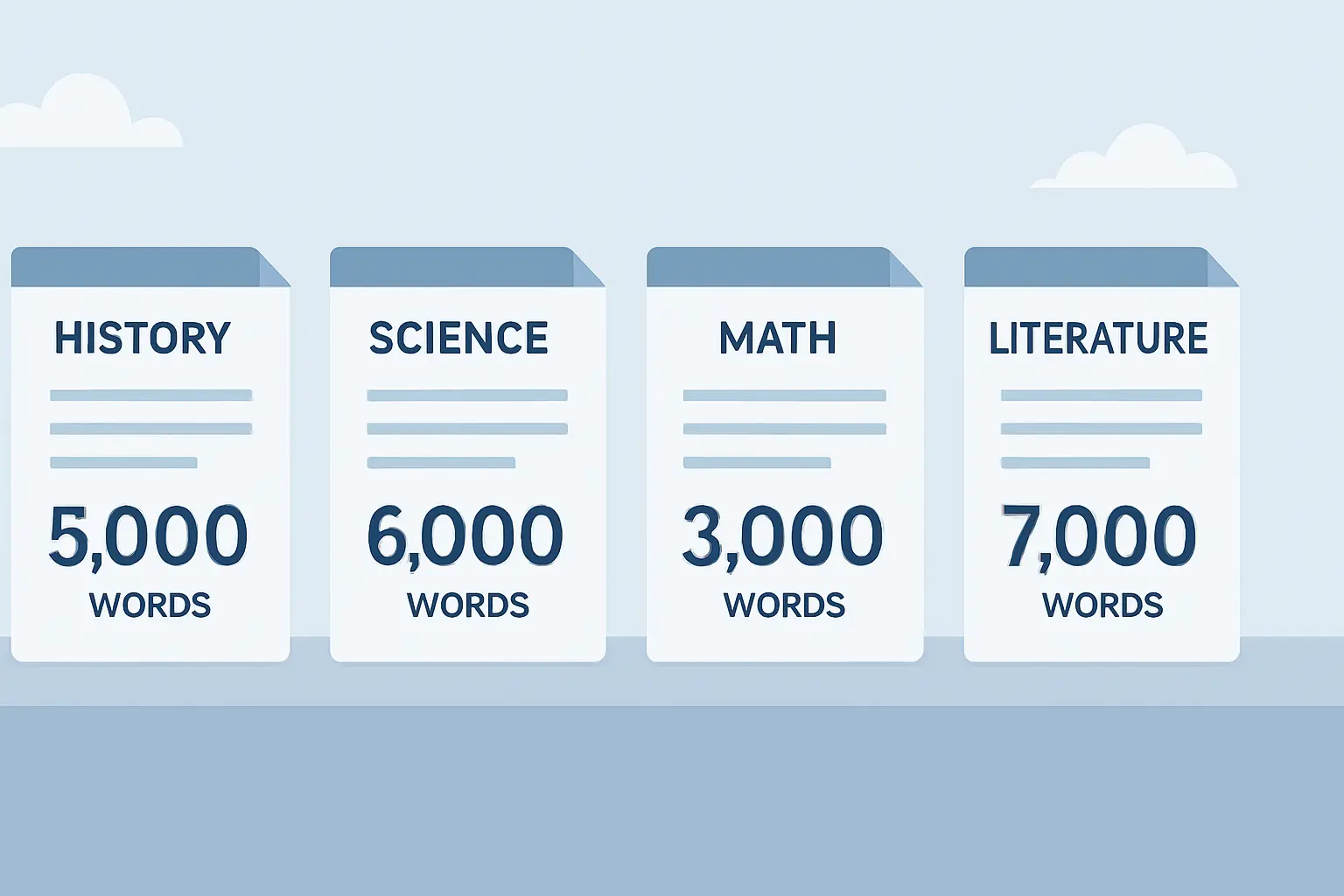
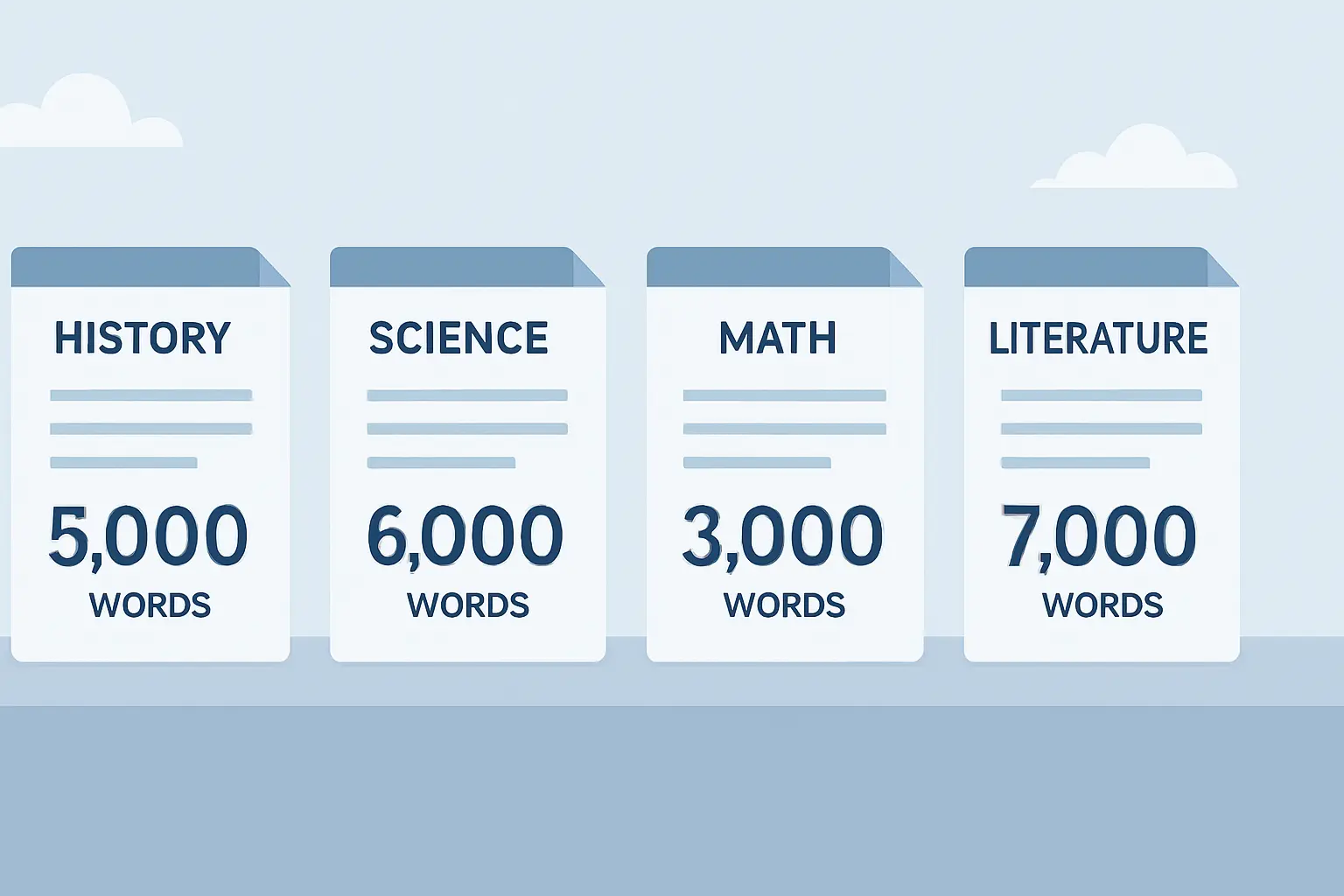
That last point is the one that costs marks. There is no single Advanced Higher dissertation word count, and there is no single rule about what counts towards it. Advanced Higher English requires between 2,500 and 3,500 words including quotations. Advanced Higher Latin requires 3,000 to 4,000 words excluding them. Same qualification, opposite rule, and nobody tells you unless you read your own subject’s specification.
What the project–dissertation actually is
It is a component of the course assessment for an Advanced Higher, which sits at Level 7 on the Scottish Credit and Qualifications Framework — the level immediately below the first year of a Scottish degree. Unlike a class essay, your evidence leaves the school: the Advanced Higher English specification states plainly that “candidates’ evidence is submitted to SQA for external marking.”
The awarding body is Qualifications Scotland, previously the Scottish Qualifications Authority. Both names remain in circulation and the specification documents themselves still say SQA throughout, so do not be thrown when your teacher, your school and the PDF you downloaded all use different names for the same organisation.
Step 1: Download your own subject’s course specification
Not a revision guide, not a past pupil’s notes, and not a summary someone posted in a group chat. The course specification and the coursework assessment task for your subject are the only documents that bind you, and they are published free.
Read three things out of it before you write a single word: the word count, the list of what is included and excluded from that count, and the specific evidence your subject demands. Those three vary more than students expect.
Step 2: Learn your subject’s word count — and what counts
This is where the qualification is genuinely unusual. The limits differ, and the inclusion rules differ independently of the limits.
| Subject | Word count | What the specification says about inclusions |
|---|---|---|
| English | 2,500–3,500 | “including quotations but excluding footnotes and bibliography” |
| Latin | 3,000–4,000 | “excluding quotations, footnotes, captions and bibliography and contents pages” |
| History | 4,000 | “excluding references, bibliographies and appendices” |
| Modern Studies | 5,000 | “the body of the dissertation and evaluation of research methods but does not include the contents page, bibliography, footnotes or appendices” |
Read the English and Latin rows against each other. A quotation-heavy English dissertation spends its own word budget on the text it analyses; a Latin dissertation does not. If you plan an English dissertation as though quotations were free, you will write something that has to be cut late, and cutting quotations out of a literary argument is much harder than cutting your own prose.
Every subject above also requires you to submit the word count with the dissertation. It is a stated requirement, not an administrative courtesy.
The general question of whether footnotes, appendices or reference lists count towards an academic word limit is a wider one, and we answer it for university work in our guide to whether footnotes count towards your word count. Be careful about carrying that guidance across: at Advanced Higher, the university conventions do not govern you. Your subject’s course specification does, and it overrules any general rule you have read — including ours.
Step 3: Understand the 10% rule before you draft, not after
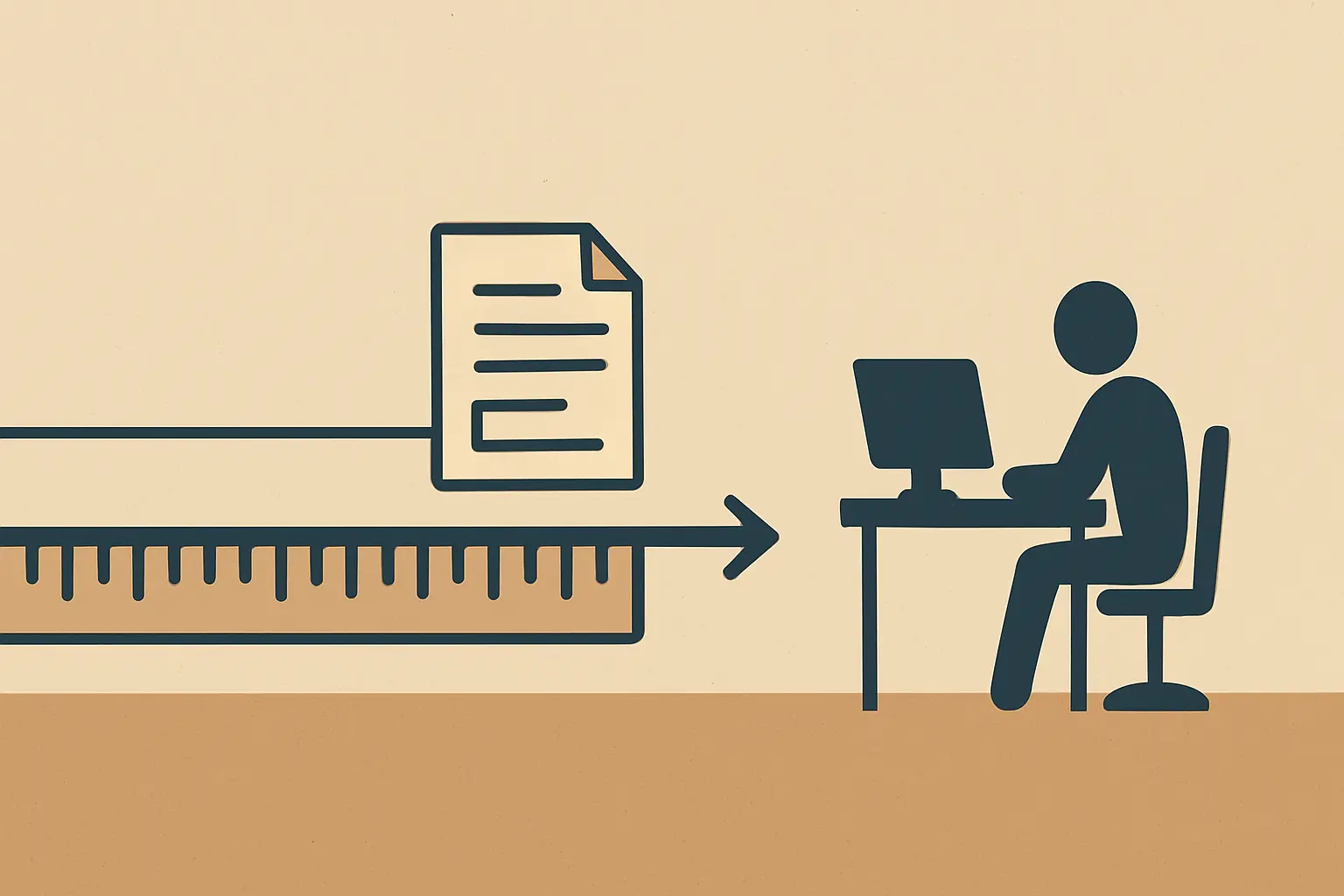
Across these subjects the penalty threshold is stated identically: “If the word count exceeds the maximum by more than 10%, a penalty is applied.”
The History marking instructions go further and describe the mechanism, which is worth knowing because it explains why the threshold is enforced rather than negotiated. Markers are told that if the work is more than 10% over, they should “mark the candidate’s work as normal, then refer it to the principal assessor,” stating clearly that the referral is because the work is over the word limit. It leaves the marker’s desk and becomes someone else’s decision.
Plan to land inside the range rather than inside the tolerance. The 10% is a margin for error in counting, not an extension. If you are already trimming, our guide to cutting a word count covers techniques that remove words without removing argument.
Step 4: Deliver the evidence your subject specifically asks for
Marks are attached to named requirements, and the named requirements are subject-specific. Advanced Higher History, for example, tells markers that candidates “need to show depth in their study and refer to both primary and secondary sources,” and sets out that to meet the requirements candidates must:
- show that they have referred to or quoted from historians, or considered historical schools of thought
- refer to a primary source
- reference one source, using a standard referencing system
Those are checkable, binary things. A History dissertation with no primary source has failed a stated requirement no matter how well written it is. Work out the equivalent list for your subject and treat it as a checklist you tick off, because that is close to how it is marked.
On referencing, you are not asked to master a professional style — you are asked to use a standard system consistently. Any recognised system done properly beats an improvised one, and our Harvard referencing guide is a reasonable place to start if your school has not specified one.
Step 5: Use appendices only if you are going to use them
Modern Studies makes explicit a rule that applies more widely in spirit. Candidates may include statistical or graphical information, but teachers are advised that “the marks available for appendices are only awarded if candidates reference and use evidence from them in the main body of their dissertation.”
An appendix nobody is sent to is worth nothing. If a table matters, cite it in the body, say what it shows, and say what you conclude from it. If it does not matter, leave it out.
Step 6: Follow the presentation conventions
Modern Studies sets out the conventions candidates should follow for the final submission:
- size 12 font
- 1.5 line spacing
- single-sided printing
- include word count per page and chapter
- include an overall word count
The per-page and per-chapter word counts are unusual and easy to miss until the week of submission. If your subject asks for them, build them as you go rather than reconstructing them at the end.
What “positive marking” means for how you write
The History marking instructions state the principle directly: “Always use positive marking. This means candidates accumulate marks for the demonstration of relevant skills, knowledge and understanding; marks are not deducted for errors or omissions.”
The same instructions add that candidates “can structure their project–dissertations in a variety of ways,” and that markers should award marks for relevant skills and understanding “wherever they appear.”
Two practical consequences follow. First, you are not writing to avoid mistakes; you are writing to give a marker things to credit, so an argument you are unsure about is usually better made than omitted. Second, there is no single approved structure to reverse-engineer. A clear, conventional shape helps your reader, but it is not itself where the marks are.
A workable timeline

| Stage | What to do |
|---|---|
| Before you choose | Read the course specification and the coursework assessment task for your subject. Write your word count and inclusion rule at the top of your notes. |
| Choosing | Pick a question narrow enough to answer in your word count, and check the sources your subject requires actually exist for it. |
| Reading | Take notes with full reference details captured at the time. Reconstructing references later is the single most common avoidable loss. |
| Planning | Allocate words to sections. If your subject counts quotations, budget them explicitly. |
| Drafting | Write the analysis first. Introductions are easier to write once you know what you concluded. |
| Finishing | Check the stated requirements one by one, run the word count, add per-chapter counts if required, and proofread. |
Where it leads
Advanced Highers are the qualifications Scottish applicants most often present for competitive university entry, and the research skills the project–dissertation builds are the ones a degree assumes you already have. If you are looking further afield, our guide to Oxford admission requirements covers how Advanced Highers are treated alongside other qualifications.
More to the point: this is the first time you will choose your own question, find your own sources and sustain an argument across several thousand words without weekly deadlines forcing progress. That is the actual skill being assessed, and it is the one that transfers.
Frequently asked questions
How long is an Advanced Higher dissertation?
It depends entirely on the subject. Advanced Higher English is 2,500 to 3,500 words, Latin 3,000 to 4,000, History 4,000, and Modern Studies 5,000. There is no single Advanced Higher word count, so check your own subject’s course specification rather than assuming.
Do quotations count towards the Advanced Higher word count?
In English, yes — the specification requires between 2,500 and 3,500 words “including quotations but excluding footnotes and bibliography”. In Latin, no: quotations, footnotes, captions, bibliography and contents pages are all excluded. This is the clearest example of why the rule must come from your own subject’s document.
What happens if I go over the word count?
The specifications state that if the word count exceeds the maximum by more than 10%, a penalty is applied. In History the marking instructions tell markers to mark the work as normal and then refer it to the principal assessor, stating that the referral is for exceeding the word limit.
Do I have to submit my word count?
Yes. English, History and Modern Studies all state that candidates must submit or include the word count with the completed project–dissertation.
Are marks deducted for mistakes?
Not under positive marking. The History marking instructions state that candidates accumulate marks for demonstrating relevant skills, knowledge and understanding, and that marks are not deducted for errors or omissions.
Is there a required structure for the project–dissertation?
No single one. The History instructions note that candidates may structure their work in a variety of ways and that markers credit relevant skills and understanding wherever they appear. A clear structure helps your reader, but it is not prescribed.
Who marks the Advanced Higher project–dissertation?
It is marked externally rather than by your own teacher. The Advanced Higher English specification states that candidates’ evidence is submitted to SQA — now Qualifications Scotland — for external marking.
What Tesify does not do
Tesify does not write your project–dissertation. It cannot: the whole point of the component is that you chose the question, found the sources and reached the conclusion, and it is externally marked by someone whose job is to assess exactly that. A dissertation you did not reason through yourself also fails the requirement in a duller way, because the specific evidence your subject demands — a primary source, a named historian, a piece of statistical material you actually use — only appears if you went and found it.
What it does is handle the scaffolding around the work: an outline you can map to your subject’s stated requirements, references kept consistent in a standard system from the first note you take, and an AI-use declaration you can submit alongside your own writing.
Plan your project–dissertation against your subject’s stated requirements and keep your references consistent from the first source you read.
Write your thesis with AI
Structure, draft, cite, and format your thesis faster with Tesify’s AI writing tools, automatic bibliography, and plagiarism checker. Free to start, no credit card required.





Leave a Reply