

How to Write a Politics Dissertation (2026): Structure, Topics & Methods
To write a strong politics dissertation, frame a narrow, analytical research question, choose a method that can actually answer it, and build every chapter toward a single sustained argument. The defining feature of a good politics dissertation is that it explains or evaluates rather than merely describes — the descriptive trap is what costs political science students the most marks.
Politics is an unusually broad discipline, spanning empirical political science, international relations, comparative politics, public policy, and normative political theory. That breadth means there is no single template, but there are shared principles that separate a first-class dissertation from a competent summary. This guide walks through topic, argument, method, and structure for 2026.
How Do You Choose a Politics Dissertation Topic?
The most common error is choosing a topic that is far too broad. “The rise of populism” or “the causes of war” are book-length fields, not dissertation questions. A workable topic is narrow enough to investigate in depth within your word limit and sits within a recognised sub-field — comparative politics, international relations, political theory, or public policy — whose literature and methods you can engage with directly.
Start from a puzzle: something in the political world that is not obvious, where a clear answer is not already settled. The gap between what theory predicts and what actually happened is fertile ground for a dissertation, because it gives you something to explain rather than merely report.

What Makes a Strong Research Question?
A strong politics research question is analytical, specific, and answerable. Compare a weak and a strong framing of the same interest:
| Weak (descriptive) | Strong (analytical) |
|---|---|
| The rise of populism in Europe | Why did populist parties gain more support in country A than country B after 2015? |
| The role of the UN in conflict | To what extent did UN peacekeeping affect civilian protection in a specific mission? |
| Social media and democracy | How did a specific platform shape voter mobilisation in one national election? |
Each strong version fixes a case, a time frame, and a causal or evaluative verb (“why”, “to what extent”, “how”). That specificity is what makes the question researchable and the eventual argument assessable. Getting the question right is the single highest-leverage step in the whole project, and it applies across disciplines — the same logic runs through our general guide to writing a dissertation.
Which Methods Suit a Politics Dissertation?
Your method must be able to answer your question. The main options are:
- Case study — deep analysis of a single case (a country, election, policy, or conflict), strong for explaining how and why something happened.
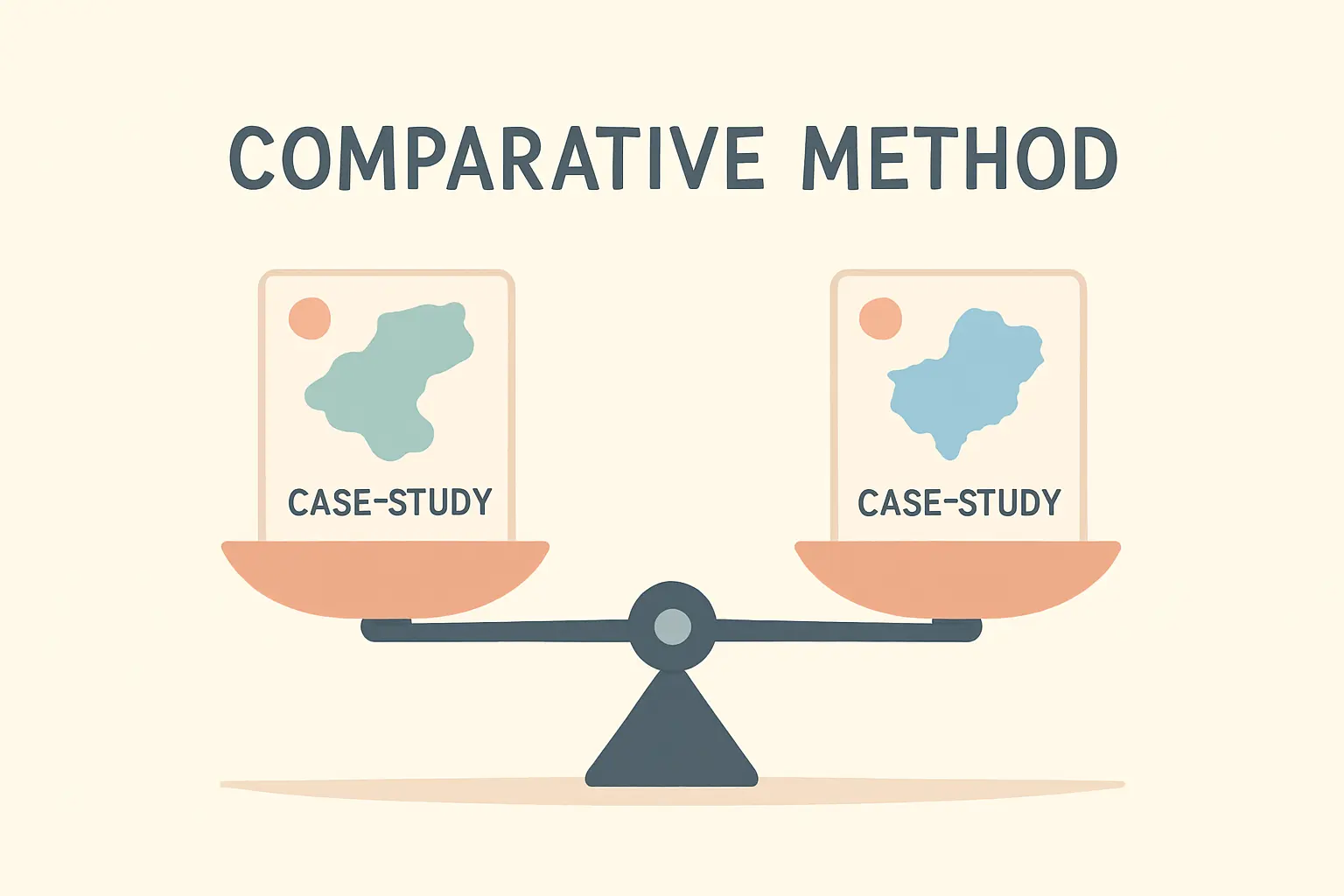
- Comparative method — systematic comparison of two or more cases to isolate what explains a difference in outcomes.
- Quantitative analysis — statistical analysis of electoral, survey, or cross-national data to test hypotheses across many cases.
- Discourse and document analysis — examining speeches, manifestos, treaties, or media to understand how political meaning is constructed.
- Elite interviews — interviewing politicians, officials, or activists for insider perspective, often alongside another method.
- Normative / conceptual analysis — for political theory, reasoning about concepts such as justice, legitimacy, or liberty rather than collecting empirical data.
Choosing well depends on understanding the trade-offs between these approaches; our overview of research methodology types helps you match method to question, whether your work is empirical or theoretical.
How Do You Structure the Dissertation?
An empirical politics dissertation usually follows a familiar arc, with each chapter serving the central argument:
- Introduction — the puzzle, the research question, why it matters, and your argument in brief.
- Literature review — the existing debate and the specific gap you address.
- Theoretical framework — the concepts and theory through which you interpret your case.
- Methodology — your method, case selection, data, and its justification.
- Analysis chapters — your evidence marshalled to build the argument, not just presented.
- Conclusion — what you found, what it contributes, and its limitations.
Political theory dissertations often depart from this, organising chapters around stages of an argument rather than empirical findings. Either way, the test is whether each chapter advances one coherent thesis. Discipline-specific guides such as writing an economics thesis and writing a social work dissertation show how neighbouring social sciences adapt this same structure.
What Mistakes Should You Avoid?
- Description instead of analysis. The cardinal sin: narrating events rather than explaining or evaluating them.
- Conflating normative and empirical claims. Be clear whether you are arguing what is the case or what ought to be — they require different kinds of evidence.
- A topic that is too broad to investigate with any depth.
- Theory bolted on rather than used. Your framework should actively shape the analysis, not sit unused in one chapter.
- Bias presented as analysis. Politics invites strong opinions; a dissertation demands you engage fairly with rival positions.
FAQ
How do you structure a politics dissertation?
A politics dissertation typically follows introduction, literature review, theoretical framework, methodology, analysis or findings chapters, and conclusion. Political theory dissertations may be more thematically structured around arguments rather than empirical chapters, but all should build a single, sustained argument in answer to a clear research question.
What makes a good politics dissertation topic?
A good politics topic is narrow, researchable, and analytically framed rather than descriptive. Instead of ‘the rise of populism’, a stronger topic asks why a specific outcome occurred — for example, why a particular party gained support in a specific election — so the dissertation can explain, not just describe.
What research methods are used in politics dissertations?
Politics dissertations use qualitative methods (case studies, comparative analysis, discourse and document analysis, elite interviews), quantitative methods (statistical analysis of survey or electoral data), and mixed methods. Political theory dissertations use conceptual and normative analysis rather than empirical data collection.
What is the biggest mistake in politics dissertations?
The most common mistake is being descriptive rather than analytical — narrating what happened instead of explaining why it happened or what it means. Examiners reward a clear argument, engagement with theory, and critical analysis, not a well-organised summary of events.
Related Reading
Write your thesis with AI
Structure, draft, cite, and format your thesis faster with Tesify’s AI writing tools, automatic bibliography, and plagiarism checker. Free to start, no credit card required.






Leave a Reply