

How to Conduct a Pilot Study for Your Dissertation Step by Step (2026)
To conduct a pilot study for your dissertation, run a small-scale trial of your data-collection instrument — usually with around 10 to 30 participants — before your main study, then use what it reveals to fix wording, timing, and procedural problems. A pilot is not about generating results; it is about proving your method works so your real data is trustworthy.
Skipping the pilot is one of the most common reasons a dissertation’s data turns out unusable: a confusing survey question or a broken online form only becomes obvious after 200 responses have already been collected. A short, well-run pilot removes that risk. This guide walks through the process step by step and shows how to report it convincingly in your methodology chapter.
What Is a Pilot Study and Why Does It Matter?
A pilot study is a rehearsal. You take the exact instrument you plan to use — a survey, an interview schedule, an experimental task — and run it with a small group who resemble your target sample. The goal is diagnostic: you are looking for anything that does not work as intended, from a question everyone misreads to a lab task that takes twice as long as planned.
Its value is protective. Every problem you catch in a pilot is a problem that would otherwise contaminate your main dataset, where it is far more expensive to fix. Examiners also read a reported pilot as a signal of methodological care, which strengthens the credibility of your whole methodology chapter.
How Do You Run a Pilot Study Step by Step?
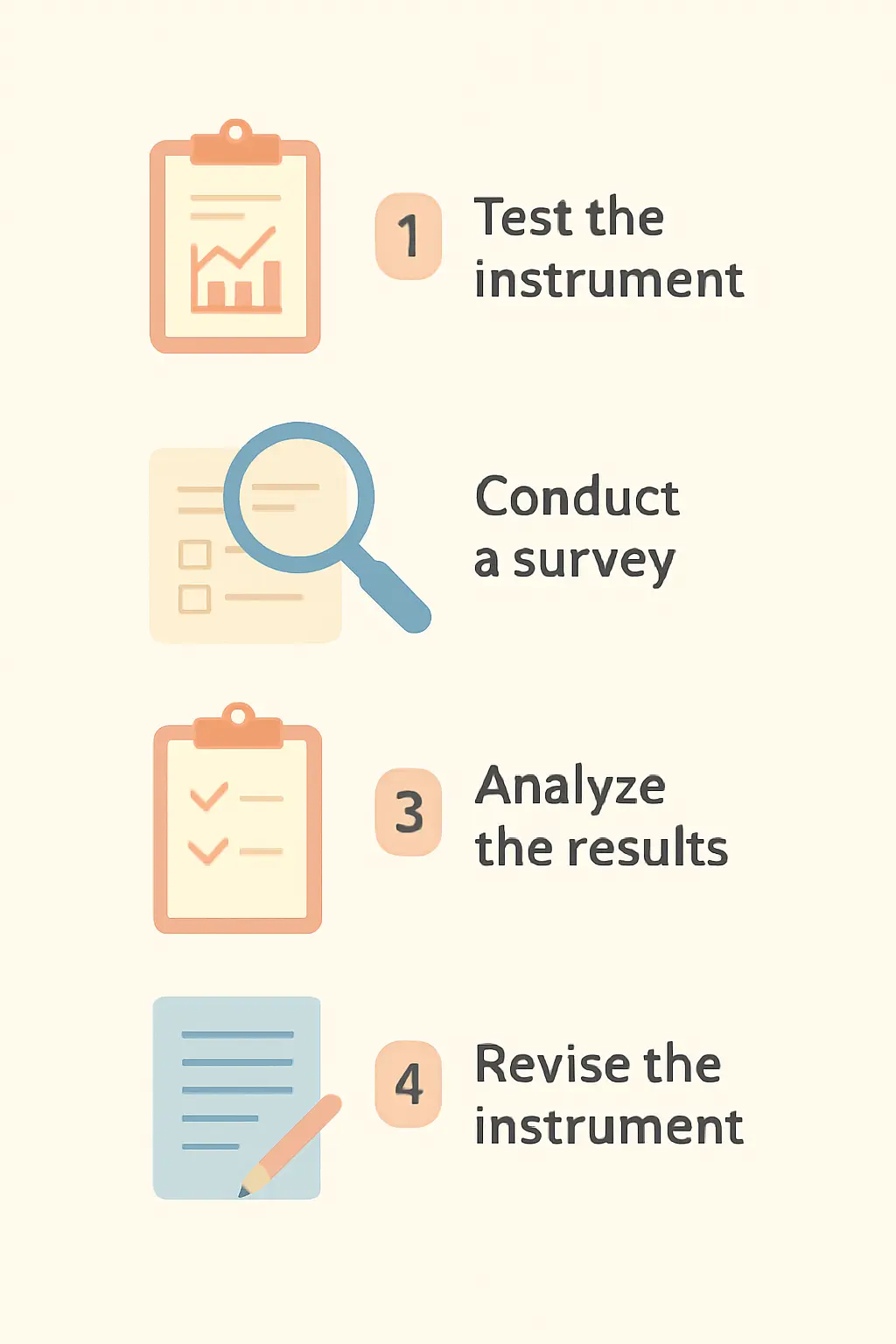
- Finalise the instrument you want to test. Pilot the near-final version of your questionnaire, interview guide, or protocol — not a rough draft. You are testing what you actually intend to deploy.
- Recruit a small, representative sample. Choose participants who resemble your real population but who will not be part of the main study, so you do not “use up” or bias your actual sample.
- Run it under realistic conditions. Administer the pilot the same way you will run the main study — same platform, same setting, same timing — so the rehearsal reflects reality.
- Collect feedback as well as data. Ask pilot participants which questions were confusing, how long it took, and where they hesitated. This qualitative feedback is often more useful than the pilot’s numbers.
- Analyse what went wrong. Look for skipped questions, misread items, timing overruns, technical failures, and any point where participants needed to ask for clarification.
- Revise the instrument. Reword ambiguous items, cut or add questions, fix logistics, and adjust timing. If changes are substantial, consider a second short pilot.
- Document every change. Keep a record of what you altered and why — this becomes the backbone of your methodology write-up.
For survey-based dissertations, piloting pairs naturally with careful instrument design; our guide to designing a Likert-scale questionnaire covers the wording problems a pilot most often exposes. For qualitative work, run your semi-structured interview guide past a pilot participant to check the questions flow.
How Many Participants Do You Need?
There is no universal number, and a pilot is not meant to be statistically powered. A common rule of thumb is around 10% of your planned main sample, which for many student projects lands somewhere between 10 and 30 participants. The right size is “enough to surface the problems,” which for a short questionnaire may be as few as eight to ten people.
| Study type | Typical pilot size | Main goal of the pilot |
|---|---|---|
| Online questionnaire | ~10–30 | Clarity, completion time, drop-off points |
| Interviews | ~2–5 | Question flow, probing, recording setup |
| Experiment / lab task | ~5–15 | Timing, instructions, equipment reliability |
Indicative ranges drawn from common methodological guidance; your discipline, supervisor, and design may call for different numbers. A pilot is distinct from formal sample-size and power analysis for your main study.
What Problems Does a Pilot Catch?
The most valuable pilots reveal issues you would never have predicted from your desk. Common finds include:
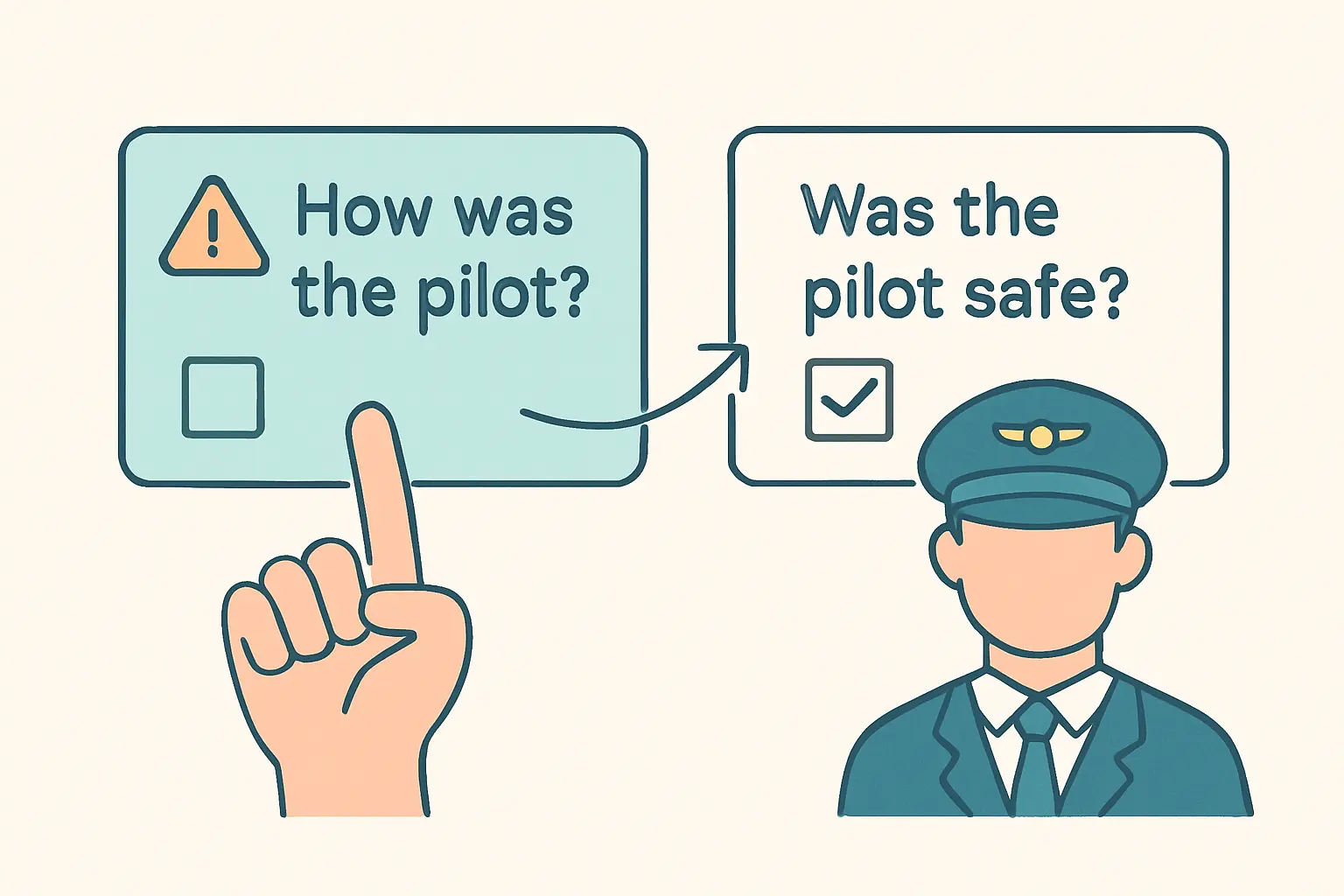
- Ambiguous or leading question wording that skews answers in one direction.
- Double-barrelled questions that ask two things at once, so answers cannot be interpreted cleanly.
- Questions people skip or misunderstand, signalling unclear phrasing or sensitive topics.
- Surveys that take too long, causing fatigue and mid-way drop-off.
- Technical failures in online survey logic, skip patterns, or recording equipment.
- Unclear instructions that force participants to ask what you meant.
How Do You Report the Pilot in Your Methodology?
Devote a short subsection of your methodology chapter to the pilot. A convincing write-up covers four things: what you tested, who took part (number and how they were selected), what problems the pilot revealed, and the specific changes you made in response. Framing it as “the pilot showed X, so I changed Y” demonstrates exactly the reflective rigour examiners look for.
Keep it concise — a few paragraphs is usually enough — but be specific. Vague statements like “a pilot was conducted and minor changes were made” waste the credibility a pilot earns you. If you want help turning your change-log into clean methodology prose, an AI writing assistant such as Tesify can help you draft and structure the subsection while you focus on the substance.
FAQ
What is a pilot study in a dissertation?
A pilot study is a small-scale trial run of your main research, carried out before full data collection. Its purpose is to test whether your questionnaire, interview guide, or experimental procedure works as intended, so you can fix problems with wording, timing, or logistics before they affect your real sample.
How many participants do you need for a pilot study?
There is no fixed rule, but pilot samples are typically small — often around 10 to 30 participants, or roughly 10% of the planned main sample. The aim is to surface problems with the instrument and procedure, not to produce statistically powered results, so a modest number is usually enough.
Can you include pilot study data in your main results?
Generally no, especially if you change the instrument after piloting. Pilot data is used to refine your method, and combining it with main data collected under a different version of the instrument undermines consistency. If the instrument is unchanged, some designs allow it, but check your supervisor’s guidance and report it transparently.
Where do you write about the pilot study in your dissertation?
The pilot study is normally described in the methodology chapter, in a short subsection explaining what you tested, who took part, what problems it revealed, and the changes you made as a result. Reporting it demonstrates methodological rigour to your examiners.
What problems does a pilot study catch?
Pilots commonly reveal ambiguous or leading question wording, questions that participants skip or misunderstand, surveys that take too long, technical failures in online tools, and unclear instructions. Catching these before full data collection protects the validity of your results.
Related Reading
Write your thesis with AI
Structure, draft, cite, and format your thesis faster with Tesify’s AI writing tools, automatic bibliography, and plagiarism checker. Free to start, no credit card required.




Leave a Reply