

ChatGPT Alternative Academic Writers Actually Need: Write 50% Faster With Tesify
You’re three weeks from your dissertation deadline. Your bibliography is a mess of half-formatted citations, your plagiarism checker flagged another paragraph, and ChatGPT just hallucinated a source that doesn’t exist. Sound familiar? You’re not alone — and you’re not out of options. AI tools for dissertation writing have changed what’s possible in 2025, but choosing the wrong one could cost you your grade.
Here’s what most comparison posts won’t tell you: not all AI writing tools are built for academic work. Using a general-purpose chatbot when your degree is on the line isn’t just inefficient — it’s a genuine risk.
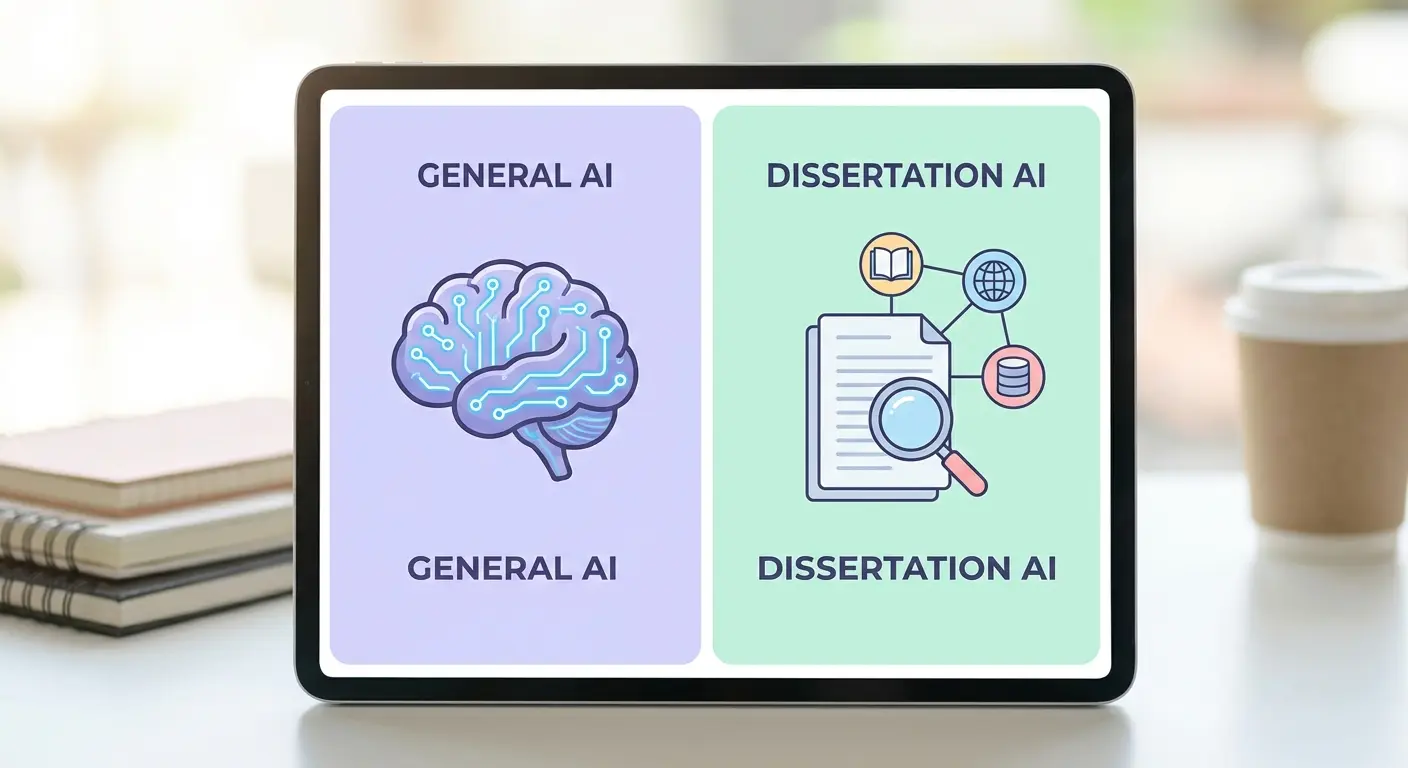
Why ChatGPT Falls Short for Dissertation Writing
ChatGPT became the default AI tool for students almost overnight — but “default” doesn’t mean “best for your dissertation.” The gap between what ChatGPT promises and what dissertation writing actually demands is significant.
According to Scribbr’s analysis of ChatGPT’s academic limitations, the tool consistently struggles with fabricating citations, maintaining consistent argument structure, and producing writing that meets institutional academic standards. That’s not a small footnote — that’s the core of what a dissertation requires.
Here’s what most ChatGPT tutorials conveniently skip: the model has a training knowledge cutoff, no real-time access to academic databases like JSTOR or PubMed, and absolutely no mechanism for verifying whether a source actually exists. A study published in Humanities and Social Sciences Communications (Nature Research) found that AI-generated academic text raises serious concerns around authenticity, citation integrity, and the digitisation of writing norms. These aren’t hypothetical risks — they’re documented patterns.
The Three ChatGPT Problems That Hurt Dissertation Students Most
ChatGPT’s failure points in academic writing cluster around three specific areas:
- Citation hallucination: ChatGPT invents author names, journal volumes, and DOIs that sound plausible but don’t exist. Submitting fabricated sources is academic misconduct — regardless of whether you knew the AI made them up.
- No plagiarism compliance: ChatGPT generates text, but it has no mechanism to check whether that text resembles existing published work. Your university’s detection software doesn’t care what tool you used.
- Generic academic tone: The output reads as produced — competent, but not distinctive. Many supervisors and plagiarism detection systems have developed sensitivity to this pattern, as noted in research showing AI use appears in 11% of student papers since April 2023.
Even Harvard’s guidelines acknowledge the complexity: Harvard’s official ChatGPT guidance urges careful consideration before using general AI tools for academic submissions, particularly around attribution and verification. That’s a significant institutional signal.
The real problem isn’t that AI is bad for dissertation writing. It’s that the wrong AI tool makes academic writing more risky, not less stressful.
AI Tools for Dissertation Writing: ChatGPT vs Tesify Head-to-Head
Stop guessing which tool is actually better for your thesis. Here’s an honest, feature-by-feature breakdown of what matters when your academic career is on the line.
| Feature | ChatGPT (GPT-4) | Tesify |
|---|---|---|
| Built for dissertations | No — general purpose | Yes — purpose-built |
| Automatic bibliography (APA, MLA, Chicago, Vancouver) | Manual, error-prone | One-click, verified sources |
| Plagiarism detection | None | Real-time, vs JSTOR, ProQuest, EThOS, ERIC |
| Source verification | No (hallucination risk) | Yes — cross-referenced databases |
| Academic tone adjustment | Generic | Discipline-specific feedback |
| Export options | Copy/paste only | PDF, Word, LaTeX |
| Dissertation templates | None | Professional templates included |
| Free to start | Limited (GPT-4 requires subscription) | Yes — free sign-up, no credit card |
Tesify wins on every academic-specific metric. But what’s really interesting is why the gap exists. ChatGPT was designed to be a general conversational model. Tesify was designed specifically for students writing theses — and that design intention shows in every feature.
For a deeper breakdown of where Tesify sits among AI writing tools, the 2025 roundup of the best AI writing tools for dissertations covers the full competitive landscape with detailed pros and cons.
What 9,000+ Students Actually Report
Tesify’s user base of over 9,000 students reports finishing their theses roughly twice as fast compared to using traditional tools or general AI models. That’s the cumulative result of removing the three biggest time sinks in dissertation writing: bibliography formatting, plagiarism checking, and structural revision cycles.
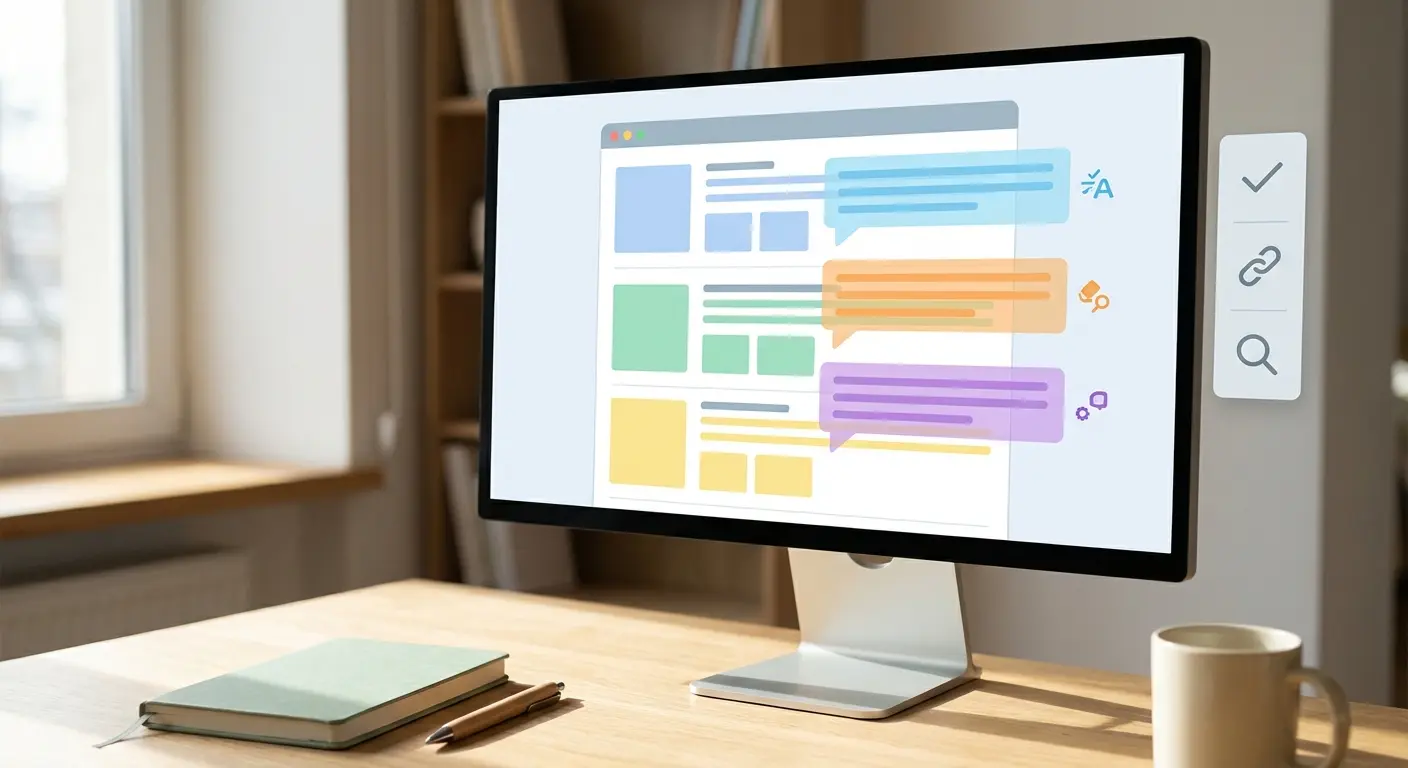
Plagiarism and Citation Solutions That Actually Work
Plagiarism anxiety is real, and it’s one of the least talked-about stressors in dissertation writing. You spend weeks researching, paraphrasing, synthesising — and then you still don’t know if your work is going to flag on Turnitin or your university’s detection system.
Here’s where the ChatGPT workflow breaks down completely: it generates text but gives you no insight into whether that text resembles existing published material. You’re writing blind.
Academic plagiarism detection is the automated comparison of submitted text against databases of published academic work, theses, and web content to identify unattributed similarities. Modern systems like Tesify’s checker cross-reference sources including JSTOR, ProQuest, EThOS, and ERIC — the same databases your university uses.
The guide to writing plagiarism-free academic texts with AI support goes deep on this, but the short version is this: the only safe approach is to run plagiarism checks at multiple draft stages, not just at the end. Most students run one final check and hope for the best. That’s how submissions get flagged.
How Tesify’s Plagiarism Checker Changes the Process
Tesify’s Plagiarism Checker runs real-time analysis against millions of scholarly sources — JSTOR, ProQuest, EThOS, ERIC, Google Scholar, and international databases. The key difference from running a manual check at the end is that Tesify integrates this into your writing environment. You see similarity flags as you write, not after you’ve submitted.
This matters because it changes the feedback loop. Instead of discovering a problematic paragraph the night before your deadline, you catch it at the paragraph level in real time. That’s a fundamentally different — and less stressful — way to work.
The Citation Problem Nobody Warns You About
Bibliography formatting is the silent time-killer of dissertation writing. A typical master’s thesis has 60–120 references. Formatting each one manually in APA 7th edition, checking every DOI, every page range, every author format — it’s hours of work that adds zero intellectual value to your research.
Tesify’s Auto Bibliography generates citations in APA 7th edition, MLA, Chicago, Vancouver, and other formats with one click. It pulls verified sources from Google Scholar, PubMed, JSTOR, and ProQuest — so the sources actually exist, and the formatting is accurate. Compare that to ChatGPT, which generates citations from memory and has no verification layer.
For students working with specific institutional citation requirements, the guide to automatic citation tools and formatting accuracy covers edge cases that most auto-citation tools get wrong.
Worth mentioning: tools like Zotero remain excellent for reference management, and Tesify integrates smoothly into workflows that already include Zotero. You don’t have to choose one or the other.
How Tesify’s AI Editor Fixes What ChatGPT Can’t
Tesify is the purpose-built AI platform for bachelor’s dissertations, master’s theses, and PhD work. Over 9,000 students have used it to finish their thesis twice as fast — and you can start for free, no credit card required.
But what does “built for dissertations” actually mean in practice?
The Tesify AI Editor does things that a general-purpose tool simply can’t. It rewrites paragraphs in academic register, expands underdeveloped arguments with discipline-appropriate depth, corrects academic language errors (passive voice consistency, hedging language, nominalisation), and provides real-time feedback on coherence and argument flow.
Here’s what clicks for most students who make the switch: Tesify doesn’t replace your thinking. It removes the friction between your ideas and their written expression. You still do the intellectual work. The AI handles the parts that drain you — formatting, checking, restructuring — so you can spend your limited time on what actually matters: your argument.
Export to PDF, Word, and LaTeX — Without Reformatting
One underrated Tesify feature: it exports directly to PDF, Word, and LaTeX. If your institution requires LaTeX formatting (common in STEM disciplines), you’ll know how painful it is to paste ChatGPT output into an Overleaf LaTeX template and reformat everything by hand. Tesify handles this export natively — your formatting travels with your content.
Join 9,000+ students who write their dissertations twice as fast with Tesify.
Step-by-Step Dissertation Workflow Using AI Tools
Theory is one thing. Here’s an actual workflow that combines the best AI tools — with Tesify at the centre — to cut your dissertation timeline significantly.
Fair warning: this takes effort to set up properly. But once it’s running, the time savings are substantial.
Phase 1: Literature Review (Week 1–2)
- Map your research territory: Use Tesify’s AI to generate an initial overview of your topic’s key debates, identifying 5–7 core themes to structure your review.
- Source verification: Pull verified sources directly through Tesify’s bibliography system — cross-referenced against Google Scholar, PubMed, and JSTOR. Every source exists before you write a word.
- Synthesis drafting: Write your literature review sections in Tesify’s editor. The AI flags coherence gaps and suggests transitions between arguments. For visual learners, Dr. Amina Yonis’s five-step AI literature review workflow and M. Kiczkowiak’s fast literature review method are worth watching alongside Tesify’s editor.
Phase 2: Core Chapters (Week 3–6)
- Chapter drafting in Tesify: Use the AI editor to expand your outlined arguments. Write rough, let the AI polish academic tone — then review and add your own voice back in.
- Real-time plagiarism monitoring: Run Tesify’s plagiarism checker at the end of each writing session, not just at the final stage. This catches problems early and removes end-deadline panic.
- Citation as you write: Add citations inline. Tesify’s Auto Bibliography formats them instantly in your chosen style — no manual entry, no formatting errors.
Phase 3: Revision and Submission (Week 7–8)
- Full plagiarism audit: Run a comprehensive check across the entire document using Tesify’s checker against all major databases.
- Language and coherence pass: Use the AI editor’s feedback mode to address flagged issues — argument gaps, inconsistent register, unclear transitions.
- Export: Generate your final document in your institution’s required format — PDF, Word, or LaTeX — without reformatting.
The biggest time losses in dissertation writing aren’t in the writing itself — they’re in reformatting, rechecking, and fixing errors that accumulated silently across weeks. A structured AI workflow with the right tool eliminates most of that waste upfront. That’s the difference between finishing with time to spare and scrambling the night before submission.
Frequently Asked Questions About AI Tools for Dissertation Writing
Is Tesify better than ChatGPT for dissertation writing?
Yes, for dissertation-specific tasks, Tesify outperforms ChatGPT significantly. Tesify includes real-time plagiarism detection against JSTOR, ProQuest, and EThOS, automatic bibliography generation in APA, MLA, Chicago, and Vancouver, and an academic AI editor — none of which ChatGPT offers natively. ChatGPT also carries a citation hallucination risk that makes it genuinely dangerous for academic submissions.
Can universities detect if you used ChatGPT or Tesify for your dissertation?
AI detection tools are increasingly common, but what actually gets students in trouble is submitting text that’s plagiarised or improperly attributed — regardless of which tool was used. Tesify’s built-in plagiarism checker helps ensure your work is academically compliant and original before submission. Always check your institution’s policy on AI tool usage, as guidelines vary widely.
Does Tesify generate citations automatically?
Yes. Tesify’s Auto Bibliography generates verified citations in APA 7th edition, MLA, Chicago, Vancouver, and other formats with one click, pulling from Google Scholar, PubMed, JSTOR, and ProQuest. Unlike ChatGPT, Tesify cross-references sources against live databases — so every citation it generates actually exists and is correctly formatted.
Is it safe to use AI tools for dissertation writing?
Using AI tools for dissertation writing is safe when done correctly — meaning you’re using them to support your writing process, not replace your thinking, and you’re checking all AI-generated content for accuracy and originality. Tesify’s integrated plagiarism detection and verified citation system reduce the main risks associated with AI-assisted academic writing.
How much faster can I write my dissertation with Tesify?
Students using Tesify report finishing their thesis roughly twice as fast compared to traditional writing methods or general AI tools. The biggest time savings come from eliminating manual bibliography formatting (often 10–20+ hours per thesis), reducing plagiarism revision cycles, and using the AI editor to accelerate first-draft production without sacrificing academic quality.
What citation formats does Tesify support?
Tesify supports APA 7th edition, MLA, Chicago, Vancouver, and other formats. The Auto Bibliography system generates and formats references automatically from sources accessed via Google Scholar, PubMed, JSTOR, and ProQuest — covering the full range of citation styles required across arts, sciences, and social science disciplines.
Your Dissertation Deadline Isn’t Moving. Your Tools Should.
Over 9,000 students have already stopped wasting time on bibliography formatting, plagiarism panic, and AI tools that weren’t built for academic work.
Tesify gives you everything you need — AI editor, plagiarism checker, auto bibliography, professional templates, and PDF/Word/LaTeX export — in one purpose-built platform. If you’re still comparing AI tools for dissertation writing, the answer is already here.
Start Writing Free — No Credit Card Required
Free sign-up. Trusted by students at universities across the UK, US, Ireland, Australia, New Zealand, and Canada.
Last updated: 2025. Statistics and platform features verified at time of publication. External links open in new tabs and are provided for informational purposes only — Tesify has no commercial relationship with third-party tools referenced in this article unless otherwise stated.
Write your thesis with AI
Structure, draft, cite, and format your thesis faster with Tesify’s AI writing tools, automatic bibliography, and plagiarism checker. Free to start, no credit card required.




Leave a Reply