
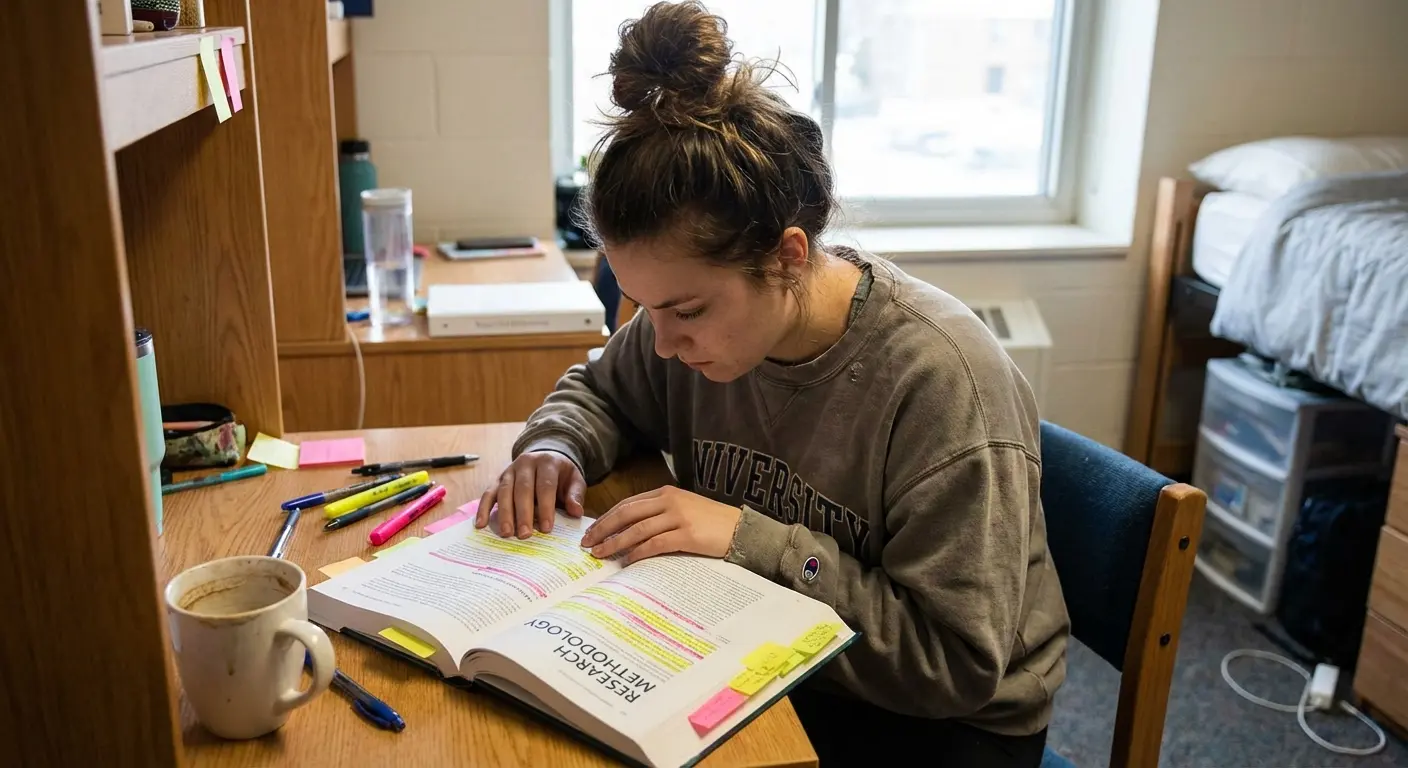
Dissertation AI Tools Compared: ChatGPT vs Tesify Over 7 Days

You’ve got a deadline in seven days. Your chapter outline is half-baked, your bibliography is a disaster, and every time you open ChatGPT you spend the next 45 minutes wrestling it into producing something that doesn’t read like a Wikipedia summary. Sound familiar?
This isn’t a vague “AI might help you write your thesis” post. It’s a direct, day-by-day breakdown of what happens when a dissertation student uses ChatGPT versus Tesify across one intense week — covering literature reviews, argument structuring, citation management, and plagiarism risk. The result might surprise you.
The Real Problem with Using General AI for Dissertations
ChatGPT is genuinely impressive. But impressive at what, exactly? It can draft marketing copy, debug code, and explain Keynesian economics in the style of a pirate. What it wasn’t built to do is help you produce an academically sound, properly cited, plagiarism-clean dissertation chapter under institutional scrutiny.
A 2025 study published in Discover Education (Springer Nature) found that doctoral students using generative AI reported significant challenges around academic integrity, hallucinated citations, and maintaining their own voice — three things that make or break a thesis submission. The opportunity is real, but so is the risk when you pick the wrong tool.
Here’s what most students do: they open ChatGPT, paste a vague prompt like “write my literature review introduction,” get something that sounds decent, then spend three hours manually checking every citation — half of which don’t exist. That’s not productivity. That’s a time trap.
The question isn’t “should I use AI for my dissertation?” That ship has sailed. The question is: which AI tool is actually designed for this job?
Day-by-Day: ChatGPT vs Tesify in a 7-Day Dissertation Sprint
Let’s make this concrete. Imagine two master’s students — same topic, same deadline, same word count target (12,000 words). One uses ChatGPT as their primary dissertation AI tool. The other uses Tesify. Here’s what each day looks like.
Day 1 — Structuring the Dissertation
ChatGPT user: Spends 90 minutes crafting prompts to generate a chapter outline. Gets a generic five-chapter structure that needs substantial reworking to fit their institution’s formatting requirements. No template. No style guide integration.
Tesify user: Opens the platform, selects their degree level and discipline, and gets a purpose-built dissertation template with chapter scaffolding already formatted for academic submission. Time to usable outline: under 15 minutes.
Day 2–3 — Literature Review
This is where the gap gets uncomfortable for ChatGPT. Its training data has a knowledge cutoff, and it has a well-documented tendency to invent sources that sound plausible but don’t exist. Researchers like Prof. David Stuckler have explored how to use ChatGPT ethically for literature reviews — but the process requires rigorous manual verification of every single reference.
Tesify’s AI editor is connected to real academic databases including Google Scholar, PubMed, JSTOR, and ProQuest. When it suggests a source, it’s a real source. The Tesify Auto Bibliography pulls verified citations and formats them automatically in APA 7th, MLA, Chicago, or Vancouver — at the click of a button.
The ChatGPT student spent an estimated 4 hours over days 2–3 manually verifying sources using Google Scholar and Elicit. The Tesify student had a verified, formatted reference list by the end of Day 3.
Day 4–5 — Writing and Rewriting Core Arguments
ChatGPT can rewrite paragraphs, sure. But it doesn’t know your argument. It doesn’t remember what you wrote in Chapter 2 when you’re editing Chapter 4. You have to paste context every single session, rebuild the prompt, re-explain your methodology. It’s like hiring a brilliant assistant who has amnesia every morning.
The Tesify AI Editor works directly inside your dissertation document. It sees your entire thesis in context, rewrites for academic register, flags incoherence between sections, and gives real-time feedback on writing quality — all without breaking your workflow to re-paste content into a separate chatbot.
Day 6 — Plagiarism Check
ChatGPT has zero plagiarism detection. Zero. You write something, it sounds original, but you have no idea what percentage matches existing literature until you run it through a separate tool — often at extra cost, often too late to fix anything significant.
The Tesify student ran the Tesify Plagiarism Checker on each chapter as it was completed. Real-time analysis against millions of scholarly sources including JSTOR, ProQuest, EThOS, and ERIC caught two sections with higher-than-acceptable similarity scores — fixable on Day 6, not the night before submission.
Day 7 — Final Export and Submission Prep
ChatGPT produces plain text. Getting that into a properly formatted Word document, PDF, or LaTeX file that matches your university’s submission requirements is your problem entirely.
Tesify exports directly to PDF, Word, and LaTeX, with formatting already aligned to academic standards. The Tesify student submitted on time. The ChatGPT student was still reformatting their bibliography at midnight.
Feature-by-Feature Comparison: Dissertation AI Tools
Here’s where both tools actually stand when you strip out the marketing and look at what matters for dissertation writing specifically.
| Feature | ChatGPT (Plus) | Tesify |
|---|---|---|
| Academic templates | ❌ None built-in | ✅ Degree-specific templates |
| Automatic bibliography | ❌ Manual only | ✅ APA, MLA, Chicago, Vancouver |
| Verified source citations | ⚠️ Frequently hallucinated | ✅ Pulls from real academic DBs |
| Plagiarism detection | ❌ Not available | ✅ Real-time vs JSTOR, ProQuest, EThOS |
| In-document AI editing | ❌ Separate chat interface | ✅ Edits within your thesis context |
| Export to Word / PDF / LaTeX | ❌ Copy-paste only | ✅ One-click export |
| Academic register enforcement | ⚠️ Requires prompt engineering | ✅ Built-in academic language mode |
| Memory across thesis sections | ❌ Session-based only | ✅ Full document context |
| Free to start | ✅ Free tier available | ✅ Free sign-up, no credit card |
Plagiarism, AI Detection, and Academic Risk
Here’s something most comparison articles won’t tell you: AI detection tools used by universities are, right now, deeply unreliable. A 2025 investigation by Undark found that AI detectors in California colleges flagged legitimate student work as AI-generated, leading to serious academic consequences for innocent students. False positives are a real, documented risk.
That makes your defence strategy critical. It’s not enough to write good content — you need to be able to prove originality, and that means having a plagiarism report you can actually show a supervisor.
ChatGPT gives you no such report. Tesify does — generated against millions of scholarly sources across JSTOR, ProQuest, EThOS, ERIC, and Google Scholar, with a certified originality output you can attach to your submission. If your institution ever challenges the authenticity of your work, that document matters enormously.
There’s also the question of what your institution actually permits. Regulations vary widely — if you’re studying in a German university context, for instance, the rules around ChatGPT in master’s theses are stricter than many students realise. Using a purpose-built academic tool that produces an originality certificate is a much safer position than pasting ChatGPT output and hoping for the best.
UNESCO’s guidance on generative AI in education and research recommends that institutions and students both prioritise transparency and verifiability when AI is used in academic work. A plagiarism certificate from Tesify is exactly that kind of verifiable record.
The Bibliography Problem That Wastes 8+ Hours Per Dissertation
Ask any recent graduate what they spent the most unexpected time on. Nine times out of ten, the answer involves references. Missing DOIs, inconsistent formatting, sources that can’t be verified — the bibliography is where dissertations quietly fall apart.
ChatGPT’s relationship with citations is, frankly, dangerous for academic work. It will confidently produce a reference list that includes authors who never published on the topic, journals that don’t exist, and page numbers that are simply invented. This isn’t a failure of intelligence — it’s a structural limitation of how large language models work. They predict plausible text. A plausible-looking citation and a real one look identical to the model.
For a literature review following PRISMA 2020 guidelines, or any systematic review methodology, citation accuracy isn’t optional. Every source in your flow diagram needs to be traceable, real, and correctly formatted. Using ChatGPT for this and then manually verifying every entry is doable — but it costs you the hours you were trying to save.
The Tesify Auto Bibliography works differently. It searches real academic databases, returns verified sources, and formats them automatically across APA 7th, MLA, Chicago, and Vancouver. You can explore what the best AI writing tools for dissertations in 2025 offer on bibliography — but automatic, verified citation generation at this level is rare outside of Tesify.
Which Dissertation AI Tool Actually Wins?
This depends on what you’re doing — but if you’re writing a dissertation, the answer is clear.
ChatGPT is a powerful general-purpose language model. For brainstorming, explaining difficult concepts, drafting cover letters, or creative work, it’s genuinely excellent. But the word “general-purpose” is doing a lot of work there. It has no academic database access, no plagiarism engine, no formatting memory, no institutional template support, and no way to verify the sources it suggests.
Tesify is built for one job: getting your thesis done to an academic standard, faster and with less anxiety. Over 9,000 students have already used it to finish their dissertations twice as fast. The platform handles the structural, technical, and verification work that eats your time with ChatGPT — so you can spend your hours on the thinking, not the formatting.
The bottom line from this 7-day dissertation AI tools comparison: both tools can produce text. Only one of them produces a dissertation.
Start Writing Your Dissertation with Tesify — Free
Join over 9,000 students who finish their thesis twice as fast. Automatic bibliography in APA, MLA, Chicago and Vancouver. Plagiarism detection against JSTOR, ProQuest, EThOS and millions of scholarly sources. AI editor that works inside your document. Export to PDF, Word and LaTeX.
Free sign-up. No credit card required.
7-Day Dissertation Sprint: Which Tool to Use at Each Stage
Not sure how to allocate your tools? Here’s a clear decision framework for a one-week writing sprint.
- Day 1 — Structure and templates: Use Tesify’s degree-specific templates. Skip the blank page entirely.
- Day 2 — Literature sourcing: Use Tesify’s bibliography tool or Elicit for verified source discovery. Avoid relying on ChatGPT for citations.
- Day 3 — Literature review draft: Use Tesify AI Editor for academic-register drafting with in-document context.
- Day 4 — Methodology and findings: Use Tesify for section-aware rewriting. Cross-check your methodology against your institution’s requirements — see also how to write plagiarism-free academic texts with AI support.
- Day 5 — Argument tightening: Use Tesify AI Editor’s coherence feedback across chapters.
- Day 6 — Plagiarism check: Run Tesify Plagiarism Checker on each chapter. Fix flagged sections before Day 7.
- Day 7 — Final export: Export to your required format (PDF/Word/LaTeX) directly from Tesify. Submit with originality certificate.
Frequently Asked Questions
Can I use ChatGPT for my dissertation without academic misconduct issues?
It depends entirely on your institution’s policy. Many universities now permit AI assistance for drafting and editing, but require disclosure and prohibit AI-generated content presented as original work without acknowledgment. Check your faculty guidelines carefully — policies differ significantly between institutions and countries, and some, particularly in Europe, have stricter rules than you might expect.
Does Tesify prevent plagiarism automatically?
Tesify’s plagiarism checker detects similarity in real time by comparing your text against millions of scholarly sources, including JSTOR, ProQuest, EThOS, and ERIC. It flags sections with high similarity scores so you can revise before submission. It doesn’t rewrite automatically — but it gives you actionable feedback while there’s still time to fix it, plus a certified originality report you can submit alongside your thesis.
Is Tesify better than ChatGPT for a master’s thesis specifically?
For master’s-level dissertation writing, yes — Tesify is purpose-built for this context. ChatGPT is a general language model with no academic database access, no plagiarism detection, and no document-aware editing. Tesify integrates all three plus automatic bibliography generation and academic-standard templates. The difference becomes most obvious during citation management and final submission prep.
What citation formats does Tesify support?
Tesify Auto Bibliography supports APA 7th edition, MLA, Chicago, Vancouver, and additional formats. It generates and formats references automatically by pulling verified sources from Google Scholar, PubMed, JSTOR, and ProQuest — eliminating the manual formatting errors that plague most dissertation reference lists.
How do AI detectors affect students using AI dissertation tools?
AI detectors used by universities have a significant false positive problem — legitimate student writing is regularly flagged as AI-generated. This makes having a documented, verifiable originality report from your writing tool essential protection. Tesify’s plagiarism checker produces a certified originality report you can show your institution, which is documentation ChatGPT cannot provide.
Is Tesify free to use?
Yes — Tesify offers free sign-up with no credit card required. You can start writing your dissertation immediately and access core features including the AI editor, bibliography tools, and plagiarism checker. Over 9,000 students have used the platform, and it remains one of the most accessible dissertation AI tools available to students in the UK, US, Ireland, Australia, New Zealand, and Canada.
Stop Wasting Time on Formatting, Citations, and Plagiarism Anxiety
9,000+ students have already used Tesify to finish their dissertations twice as fast. Free to start. No credit card needed. Your deadline isn’t waiting — and neither should you.
Write your thesis with AI
Structure, draft, cite, and format your thesis faster with Tesify’s AI writing tools, automatic bibliography, and plagiarism checker. Free to start, no credit card required.




Leave a Reply