
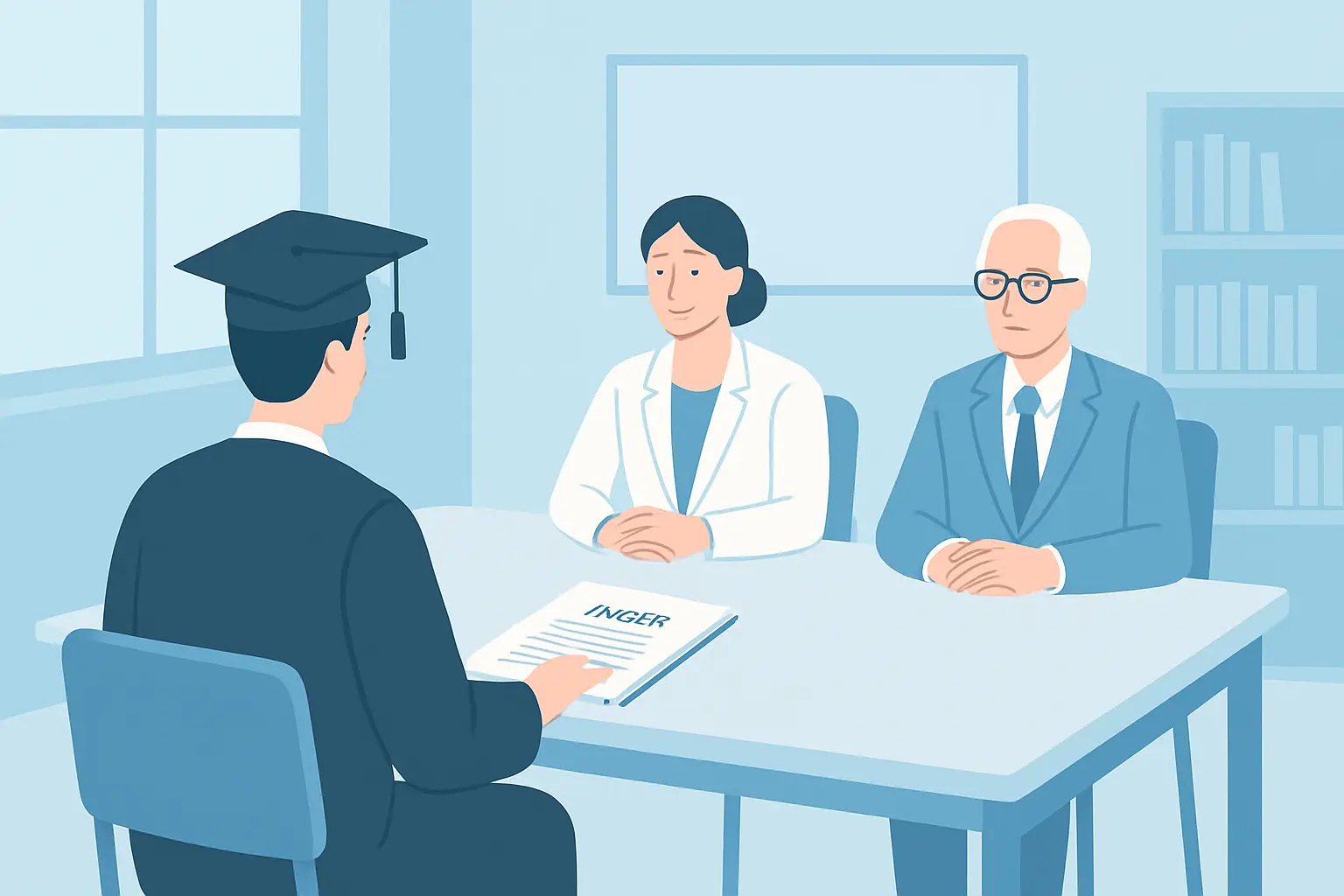
Can You Fail Your PhD Viva? Outcomes, Odds and What Happens Next (2026)
Yes, you can fail a PhD viva — but the statistical reality is that outright failure is rare to the point of being exceptional. A large-scale study by DiscoverPhDs examining 26,076 doctoral candidates across 14 UK universities found that only 3.3% failed their viva outright. For the overwhelming majority of candidates, the question is not whether they will pass but which correction category they will receive, and what the next few weeks or months look like after the examination room.
If you are preparing for your viva and the word “fail” is keeping you awake at night, the most useful thing you can know is this: examiners who have read your thesis, agreed to examine it, and travelled to your institution have already decided your work is worth examining seriously. The viva is a verification process, not a trap. Understanding every possible outcome — and the real odds attached to each one — turns an abstract fear into a concrete, manageable situation.
What are the possible outcomes of a PhD viva?
Most UK, Australian, and European universities recognise between five and seven formal viva outcomes. Understanding the full spectrum before your examination removes the fear of the unknown and helps you interpret the result you receive in the room. For a full primer on how the viva examination itself works, who attends, and what examiners are formally assessing, see our guide to what a viva voce examination is.
The standard outcomes, ranked from best to most severe, are as follows:
- Pass with no corrections — the thesis is accepted exactly as submitted. This is the rarest outcome, applying to approximately 5% of candidates.
- Pass with minor corrections — the thesis is accepted in principle; small textual revisions are required within one to three months. This is the most common outcome by a significant margin.
- Pass with major corrections — the thesis is accepted in principle but requires more substantial revision, typically within three to six months, sometimes followed by a second viva.
- Referral / revise and resubmit — the thesis must be substantially reworked and resubmitted within a set period, almost always followed by a second full viva examination.
- Award of a lower degree — the examiners judge the work meets master’s rather than doctoral standard; a master’s by research is recommended instead.
- Outright fail — no degree is awarded and no resubmission opportunity is offered. This is the rarest and most severe outcome.
How common is an outright viva fail?
Outright failure without any resubmission route is the rarest of all viva outcomes. The DiscoverPhDs study — which analysed over 26,000 doctoral candidates drawn from 14 UK universities — recorded an outright failure rate of 3.3%, meaning roughly three candidates in every hundred received no award at their examination. Even within that figure, many universities will offer a referral, a lower award, or a conditional resubmission pathway before arriving at an outright fail; pure, unrecoverable failure is genuinely uncommon.
The same dataset found that 80.5% of all enrolled PhD students complete their doctorate successfully. The more statistically significant source of non-completion is early withdrawal from the programme — students who leave before reaching the viva — rather than failure at the oral examination stage. Reaching the viva means you have already cleared the largest statistical hurdle in doctoral study.
It is also worth noting that these figures aggregate across all disciplines and all universities. In many STEM fields and in programmes with rigorous upgrade or confirmation panels, the proportion of candidates receiving an outright fail at viva is even lower than the aggregate suggests.
Source: DiscoverPhDs analysis of 26,076 UK doctoral candidates across 14 universities (2006–2017)
What does passing with minor corrections mean?
Passing with minor corrections is by far the most common viva outcome. Analysis of doctoral examinations across UK institutions suggests that between 79% and 84% of candidates receive this result — making it the statistical norm rather than an exceptional one. Minor corrections signal that your thesis is fundamentally sound; the examiners are satisfied with the research, the methodology, and the contribution to knowledge, and they want small textual adjustments before formal sign-off.
Typical minor corrections include: correcting typographical and grammatical errors, clarifying ambiguous passages, tightening the abstract to better reflect the conclusions, updating references, adding a brief paragraph to address a gap identified during questioning, or reformatting figures to meet submission standards. The work is genuinely minor — most candidates complete it within a few weeks even if the formal deadline allows three months.
After resubmitting, you send the corrected thesis to your internal examiner (or both examiners, depending on institutional regulations) for sign-off. You do not normally face a second viva. Once the examiner confirms the corrections are satisfactory, your degree is formally recommended and the graduation process begins. Minor corrections are not a failure: they are the standard, expected route to your doctorate.
What counts as major corrections?
Major corrections — sometimes labelled “substantial amendments” in institutional regulations — are required when the thesis demonstrates original research but contains identifiable weaknesses in one or more chapters that go beyond typographical fixing. Common triggers include a theoretically underdeveloped literature review, an underspecified methodology that leaves the examiners uncertain whether the design was appropriate, insufficient engagement with competing interpretations of your results, or data presentation that does not meet your discipline’s conventions.
The time allowed for major corrections is typically three to six months, depending on your institution. After resubmission, a second viva is required at some universities but not at others — it is worth checking your doctoral regulations before your first viva so that this does not come as a surprise. Major corrections are not a failure and, critically, they do not constitute a permanent mark against your record. The large majority of candidates who receive major corrections complete them within the allocated window and receive their degree without further complication.
If you receive major corrections, the process of building a systematic response document — cross-referencing each examiner comment to a revised page and section — is covered in full in our step-by-step guide to responding to examiner corrections after your viva.
What is a referral or revise-and-resubmit outcome?
A referral (also called revise and resubmit, R&R, or “referred for resubmission” in some institutional regulations) is issued when examiners conclude that the thesis does not currently meet doctoral standard but that the candidate has the underlying capacity to bring it to standard with significant work. It differs from major corrections in degree rather than in kind: the revisions required are more extensive, often affecting the conceptual framing of the whole thesis, the research design justification, or the analytical core of multiple chapters.
A referral period is typically 12 months from the date of notification. At the end of that period you submit a substantially revised version of the thesis and face a second full viva before the degree can be awarded. This outcome is relatively uncommon — it sits between major corrections and outright fail on the severity spectrum — but it is far from the end of your doctoral journey. Many candidates successfully convert a referral into a pass at the second viva, particularly when the supervisor remains actively engaged through the revision process.
One underappreciated factor in referral outcomes is the quality of the research design decision at an earlier stage. Examiners often query why a particular methodological approach was chosen over the available alternatives. If you are still working on your thesis and want a clear framework for justifying whether your approach should be qualitative, quantitative, or mixed, the guide on qualitative vs quantitative research at Tesify Pro walks through that decision in detail.
Can you be awarded a lower degree instead of a doctorate?
Yes. Many UK and Australian universities allow examiners to recommend a master’s by research — often an MRes or MPhil — when the submitted work meets master’s but not doctoral standard. This outcome is distinct from an outright fail: you leave your examination with a postgraduate qualification, not empty-handed. The degree awarded is a genuine credential, even if it is not the PhD you enrolled for.
Whether this pathway is available depends on your institution, your original registration (some universities require a separate MPhil registration for this outcome to be possible), and the examiners’ judgement of where precisely the work falls short. If you are uncertain whether this is a formal option at your university, ask your graduate school administrator to clarify the available outcomes well before your viva.
What actually causes candidates to fail a viva?
Outright viva fails are almost never caused by nerves on the day, an unusually difficult question, or a brief moment of poor articulation. They are caused by fundamental problems that were present in the thesis before the candidate walked into the room. Examiners can identify a weak thesis in the written document; the oral examination confirms or challenges what they already found on the page.
The factors most consistently associated with severe viva outcomes include:
- Absence of an original contribution: The thesis cannot demonstrate that it adds new knowledge, new analysis, or new interpretation to the existing body of scholarship in the field.
- Fundamental methodological error: The research design is flawed in a way that undermines all conclusions — for example, a statistical approach that is inappropriate for the data type, or a data collection method that does not address the research question as stated.
- Academic misconduct: If examiners identify plagiarism or data fabrication during the viva or in advance of it, an outright fail — and possible disciplinary action — may follow.
- Inability to demonstrate ownership of the work: A candidate who cannot explain their own methodology, defend their literature choices under questioning, or discuss their analytical decisions raises concerns about authorship.
- Premature submission: Candidates who submit before their supervisory team indicated readiness — bypassing upgrade panels or ignoring late-stage concerns — run a meaningfully higher risk of referral or fail.
None of these emerge as surprises on the day. Transfer panels, upgrade reviews, and supervisory feedback exist precisely to surface these concerns long before submission. If your supervisor cleared you to submit, the probability of an outright fail is very low.
Can you appeal a viva outcome?
Yes. Most UK, Australian, and North American universities maintain formal academic appeals processes for doctoral examinations. The grounds for appeal are typically narrow and well-defined: procedural irregularity in how the examination was conducted (for example, an examiner with an undeclared conflict of interest), medical or personal circumstances that materially affected performance and were not known to the committee at the time of the examination, or demonstrable bias or prejudice in the examination process itself.
Disagreeing with the examiners’ academic judgement is not itself a recognised ground for appeal at almost any institution. If you believe your outcome was unjust, the first step is to speak candidly with your supervisor and then contact your institution’s doctoral college or graduate school to understand precisely which appeal route applies and what evidence you would need to provide within the required timeframe.
Frequently asked questions about viva failure
Can you fail a PhD viva in the UK?
Yes, it is possible to fail a PhD viva in the UK, but outright failure is statistically rare. A study of 26,076 doctoral candidates at 14 UK universities found that only 3.3% received an outright fail. The most common outcome — applying to the large majority of candidates — is a pass subject to minor corrections, which is not a failure and requires no second viva.
What percentage of PhD students fail their viva?
Approximately 3.3% of PhD candidates in the UK fail their viva outright, according to DiscoverPhDs research analysing more than 26,000 candidates across 14 universities. A further proportion receive a referral or revise-and-resubmit outcome, which is not an outright fail but does require a substantial resubmission and a second viva before the degree can be awarded.
Is it common to pass with minor corrections?
Yes. Passing with minor corrections is the single most common viva outcome by a wide margin. Institutional data suggests that between 79% and 84% of doctoral candidates receive this result. Minor corrections are not a failure: they are the standard route to degree award and typically require no second oral examination.
What is the difference between major corrections and a referral?
Major corrections involve substantial revisions to one or more chapters, typically completed within three to six months, sometimes followed by a second viva. A referral (revise and resubmit) requires more extensive reworking of the thesis — often across 12 months — and always requires a full second viva before the degree can be formally awarded. Both outcomes are recoverable; neither is an outright fail.
Can you redo a PhD viva if you fail?
Whether you can sit a second viva depends on the specific outcome and your institution’s regulations. A referral outcome always leads to a second viva after resubmission. An outright fail with no resubmission opportunity is the most final result and is extremely uncommon. You should check your institution’s doctoral regulations for the specific resubmission and re-examination rules that apply to your programme.
What are the most common reasons for a viva fail?
The most common factors behind severe viva outcomes are: a thesis that lacks a demonstrable original contribution to knowledge, a fundamentally flawed research design that undermines the conclusions, evidence of academic misconduct, an inability to demonstrate ownership and understanding of the work under questioning, and premature submission against supervisory advice. Poor performance in the oral examination itself is rarely the primary driver of an outright fail.
Does getting corrections affect when I graduate?
Minor corrections usually delay formal degree award by one to three months after the viva. If you submit promptly, the effect on graduation ceremony dates is often minimal. Major corrections can delay graduation by three to six months. A referral outcome — requiring a full resubmission and second viva — may postpone degree award by a year or more, depending on how long the revision period takes and when the second examination is scheduled.
Can I be awarded an MPhil instead of a PhD after failing my viva?
At many UK and Australian universities, examiners can recommend a master’s by research — typically an MRes or MPhil — when the thesis meets master’s but not doctoral standard. This is a formal award, not an outright fail, and leaves you with a legitimate postgraduate qualification. Whether this option is available depends on your institution and your original registration status on the programme.
Prepare a thesis your examiners cannot fault
The most effective viva insurance is a thesis that is coherent, well-structured, and free of the methodological and argumentative gaps that lead to major corrections or referral. Tesify helps doctoral and master’s students draft, structure, and refine their chapters with AI assistance built for academic integrity — so that when examiners probe your methodology, your argument, or your contribution to knowledge, your thesis says exactly what you mean it to say.
Write your thesis with AI
Structure, draft, cite, and format your thesis faster with Tesify’s AI writing tools, automatic bibliography, and plagiarism checker. Free to start, no credit card required.






Leave a Reply