
Can I Use AI to Write My Law Dissertation? (2026)
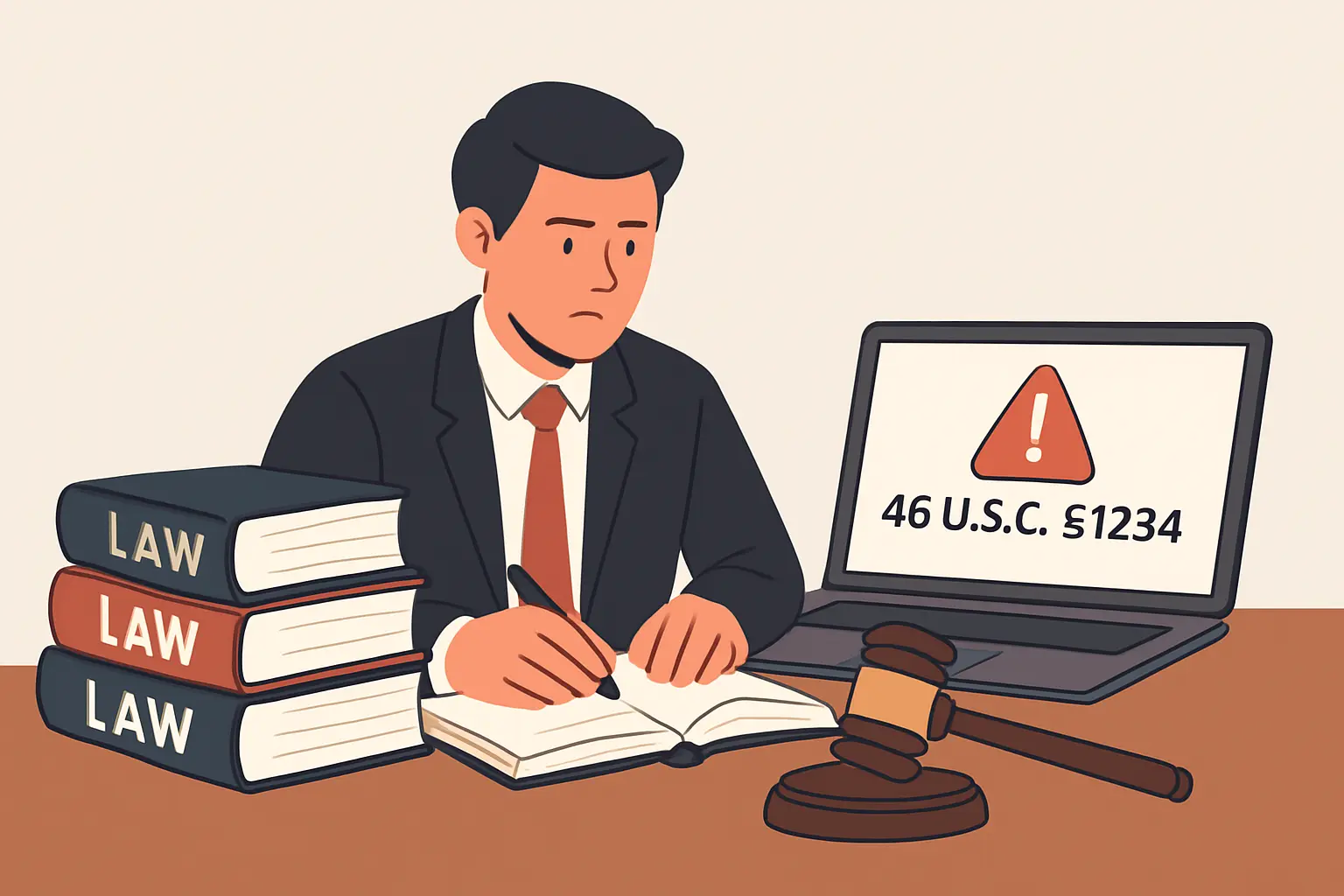
You can use AI tools to support research, structure, and editing of a law dissertation, but having AI generate substantive legal analysis or case-law arguments without disclosure typically breaches university academic integrity policy — and risks citing fabricated cases, which UK courts and regulators have already sanctioned qualified lawyers for in 2025 and 2026.
What Does “Using AI to Write My Law Dissertation” Actually Mean?
“Using AI” covers a spectrum, from grammar-checking a finished paragraph to asking a chatbot to draft an entire section arguing a point of law. Universities and regulators increasingly draw the line at substantive, undisclosed use — meaning AI output that materially shapes your analysis, arguments, or case selection without you declaring it. That distinction matters more than the blanket question of “am I allowed to touch AI at all,” because most current UK guidance, including the Russell Group’s five principles on generative AI in education, focuses on transparency and disclosure rather than an outright ban.
Is It Against University Policy to Use AI for a Law Dissertation?
It depends on your specific department’s rules, but the general UK direction — set by the Russell Group’s 2023 principles, which most research-intensive universities including law schools have adopted in some form — is built around five commitments: supporting AI literacy, equipping staff to guide appropriate use, adapting assessment for ethical AI use, upholding academic rigour and integrity, and sharing best practice as the technology evolves. None of those principles amount to a blanket prohibition, but all of them assume disclosure. Submitting AI-generated legal analysis as your own original work without declaring it is the scenario that consistently falls foul of academic integrity policy, regardless of which specific university you attend.
Why Is AI-Generated Case Law Especially Risky for Law Students?
Law dissertations live or die on the accuracy of their case citations, and this is precisely where generative AI is weakest. Large language models are known to “hallucinate” — producing citations to cases, statutes, or quotations that sound completely plausible but do not exist. This isn’t a hypothetical risk: a public sanctions tracker had documented more than 1,300 court proceedings involving AI-fabricated legal content by April 2026, up from roughly 200 a year earlier, and penalties have escalated sharply, from around $5,000 in early cases to over $55,000 by 2025, with one 2025-2026 US case reaching a combined $110,204.38 fine against two lawyers whose briefs contained 15 nonexistent cases and 8 fabricated quotations.
The UK has its own example directly relevant to law students: in April 2026, a judge in Rodney v Gee’z Micro Bar & Pitstop referred two solicitors to the Solicitors Regulation Authority (SRA) after court documents relying on AI contained inaccurate case citations. If qualified, practising solicitors can make this mistake under professional pressure, an unsupervised dissertation citation is at least as exposed — markers who are subject specialists are well-placed to spot a case that doesn’t check out.
What Do UK Legal Regulators Say About AI-Generated Content?
The SRA’s current position, reflected in compliance guidance last updated 9 February 2026, is that it has not written AI-specific rules because existing professional duties already cover AI use — practitioners remain personally responsible for the accuracy of AI-assisted work and are expected to understand a tool well enough to critically review its output, including recognising when it’s wrong. That “you remain responsible for the output” framing is a useful mental model for a law dissertation too: submitting your name to a claim means you own its accuracy, whether a human or a model produced the first draft.
What Can I Safely Use AI For in My Law Dissertation?
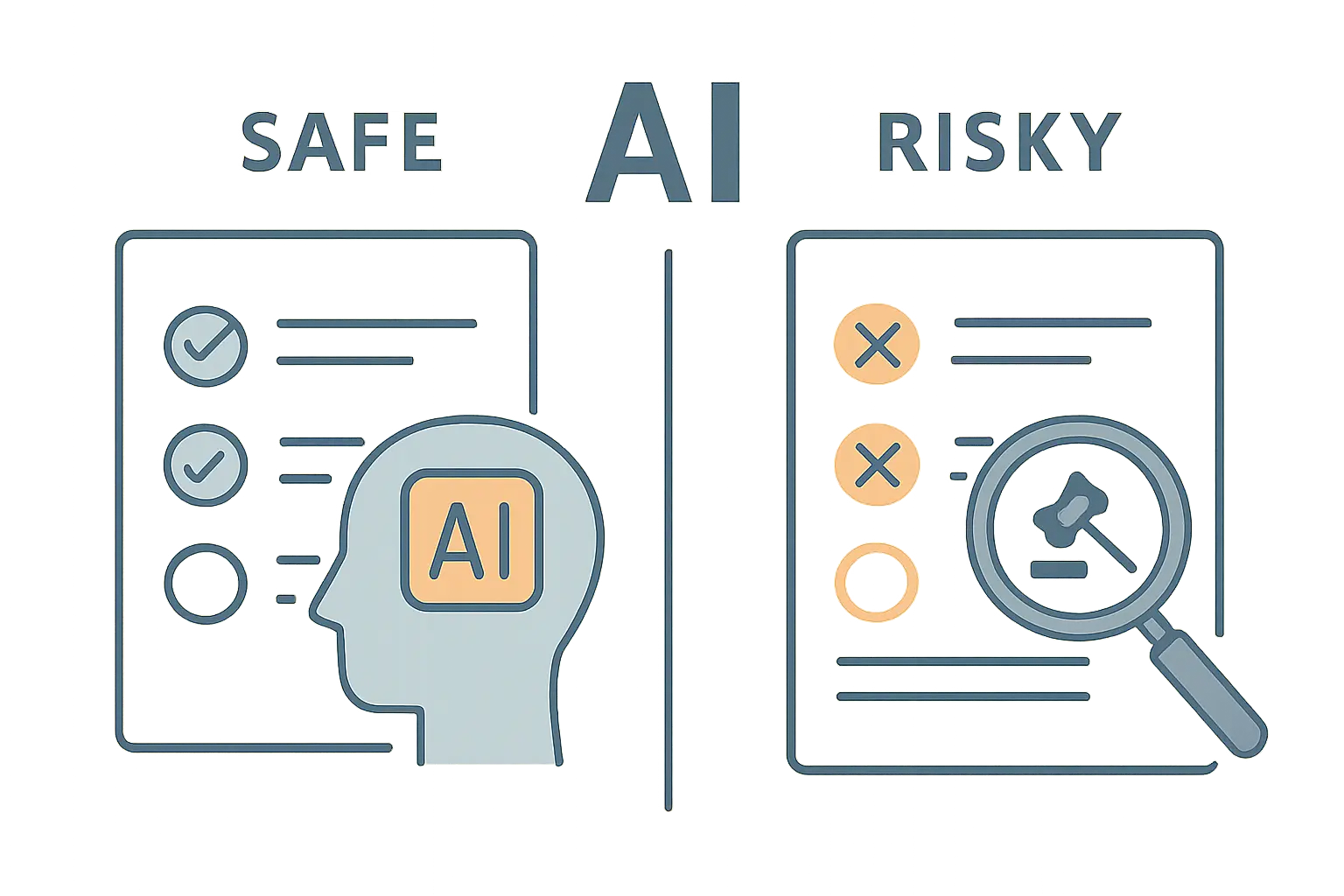
Most university guidance, including departmental policies that build on the Russell Group principles, draws a workable line around the following uses, provided your specific institution’s policy doesn’t say otherwise:
- Brainstorming research questions and narrowing a broad topic into a defensible thesis statement.
- Summarizing your own notes or a source you’ve already read, as a comprehension check rather than a source of new claims.
- Grammar, clarity, and structural editing of a draft you wrote yourself.
- Formatting citations into OSCOLA or your required style, provided every underlying case, statute, and pinpoint reference has been independently verified against a primary source such as Westlaw, LexisNexis, or BAILII — never against the AI’s own output.
| AI task | Generally safe? | Required safeguard |
|---|---|---|
| Brainstorming research questions | Yes | Disclose if your department’s policy requires it |
| Summarising your own notes | Yes | Treat as a comprehension check, not a new source |
| Grammar and structural editing | Yes | Apply only to text you wrote yourself |
| Formatting OSCOLA citations | Conditional | Verify every case against Westlaw, LexisNexis, or BAILII |
| Generating legal analysis or arguments | No | Substantive undisclosed use breaches integrity policy |
| Trusting an AI-supplied case citation | No | AI hallucinates cases; always pull the primary source |
The common thread: AI supports process and mechanics, not the substantive legal claims themselves. Every case name, citation, and quotation that appears in your final dissertation should be one you have personally checked against the primary source, not one you’ve simply trusted a chatbot to have gotten right. Treat an AI-suggested citation the same way you’d treat a citation from an unfamiliar classmate’s notes — plausible, but unverified until you’ve pulled the primary source yourself.
What Happens If I’m Caught Using AI Improperly?
Consequences vary by institution and severity, but undisclosed substantive AI use in assessed work is generally treated as an academic misconduct matter, consistent with the “ensure academic rigour and integrity is upheld” principle that UK universities have converged on. Outcomes can range from a capped or reduced mark to failing the assessment or module, and in serious or repeated cases, referral to a formal misconduct panel. For law students specifically, there’s a second-order risk worth naming directly: a dissertation built on fabricated case law that goes undetected at university doesn’t become safer once you’re practising — it becomes the exact scenario the SRA guidance and the 2026 UK sanctions case above describe.
How Can Tesify Help Me Write My Law Dissertation Ethically?
Tesify is built around the disclosure-friendly, verification-first uses described above: structuring chapters, organizing your literature review, and managing OSCOLA or other citation formatting — while leaving the substantive legal analysis and case selection to you, where it has to stay. Tesify also includes a plagiarism checker so you can confirm originality before submission, on top of the structural support most law dissertation writers actually need.
For a broader look at where AI fits into thesis writing generally, our complete guide to AI thesis writers covers the same disclosure-and-verification principle across disciplines, and our AI detection accuracy statistics piece explains why detection scores are a weaker signal of misconduct than a citation that simply doesn’t exist. If you’re weighing the broader plagiarism landscape in higher education, our plagiarism rates in universities statistics roundup has the sourced data.
If you’re specifically researching how Oxford handles this question, our companion piece on whether Oxford allows AI tools for essays and theses covers the university’s published position in detail.
Frequently Asked Questions
Can I use AI to write my law dissertation?
You can use AI tools to support research, structure, and editing of a law dissertation, but having AI generate substantive analysis or case-law arguments without disclosure typically breaches university academic integrity policy and risks citing fabricated cases, which UK courts and regulators have already sanctioned lawyers for.
Will a law school know if I used AI to write my dissertation?
Detection tools are imperfect and not the main risk. The bigger exposure is AI-fabricated case citations that a marker or, later, a professional regulator can verify against real case law and find do not exist — which is a far more concrete red flag than any AI-detection score.
What happens if a law student is caught using AI improperly?
Outcomes depend on the university’s academic misconduct process, but undisclosed substantive AI use in assessed work is generally treated as a conduct breach that can range from a capped mark to failing the module, consistent with Russell Group principles on upholding academic rigour and integrity.
Why is AI particularly risky for legal citations specifically?
Generative AI models are known to hallucinate plausible-sounding but nonexistent cases and quotations. A public tracker had documented over 1,300 court proceedings involving AI-fabricated legal content by April 2026, including a UK case where a judge referred two solicitors to the SRA after fake citations appeared in court documents.
What can I safely use AI for in a law dissertation?
Commonly accepted uses include brainstorming research questions, summarizing your own notes, checking grammar and structure, and formatting citations — provided every case, statute, and quotation is independently verified against a primary legal source before it appears in your submission.
Should I use AI to check my OSCOLA citations in a law dissertation?
AI-assisted formatting tools can help structure OSCOLA references correctly, but the underlying case names, neutral citations, and pinpoint references still need to be verified against a primary source such as Westlaw, LexisNexis, or BAILII, since formatting tools do not verify whether a case actually exists.
Write your thesis with AI
Structure, draft, cite, and format your thesis faster with Tesify’s AI writing tools, automatic bibliography, and plagiarism checker. Free to start, no credit card required.




Leave a Reply