
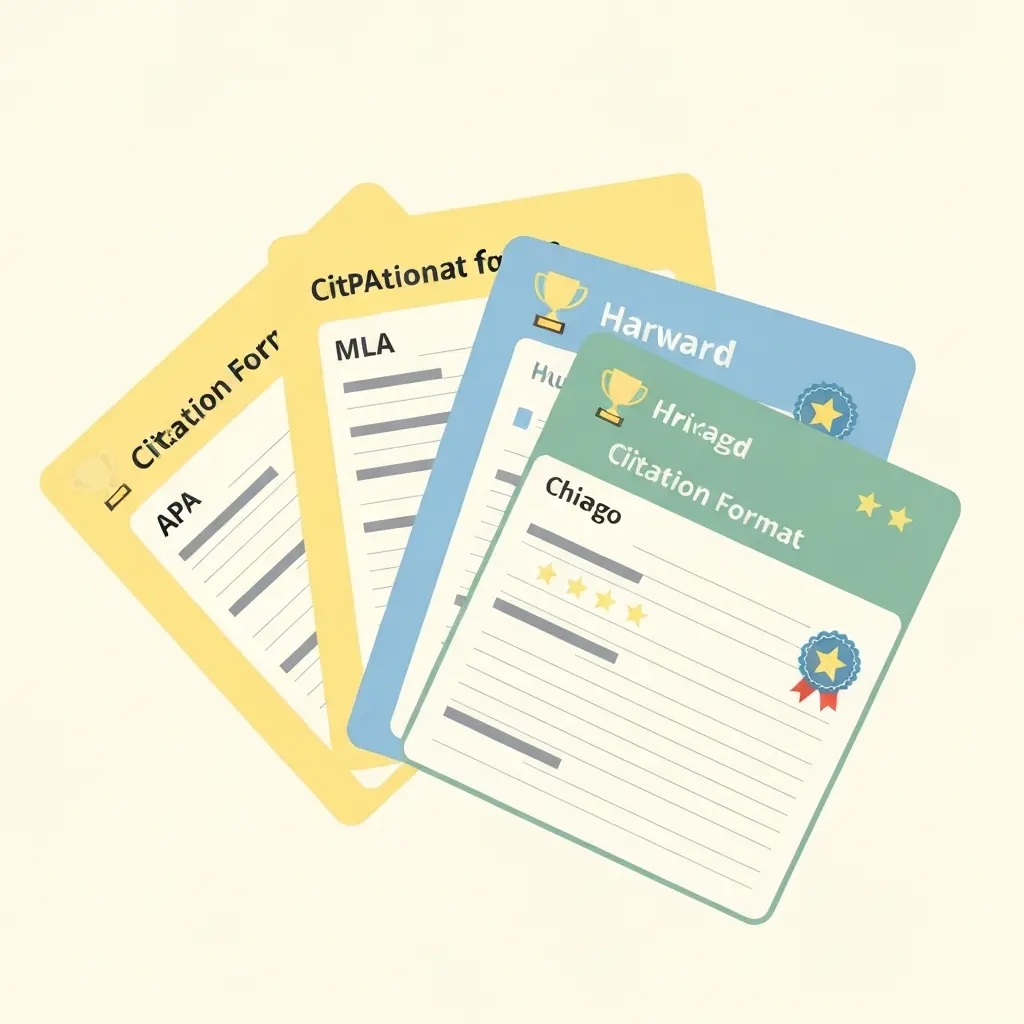
Best Citation Generators Compared 2026: Ranked for Students and Researchers
Incorrect citations are one of the most common reasons theses and dissertations are sent back for revision. The best citation generators compared in 2026 can eliminate this problem — but only if you choose the right one for your citation style, workflow, and budget. We tested 9 tools on the same set of source types (journal article, book chapter, website, government report, and podcast) across APA 7, MLA 9, Harvard, Chicago 17th ed., and IEEE. Here is the ranked verdict.
The citation landscape in 2026 has matured in one important direction: AI integration. Tools like Tesify’s Auto Bibliography now generate citations automatically from the source content itself — you provide the URL or DOI, and the citation is created and formatted in your target style without manual data entry. Meanwhile, legacy tools like Mendeley and Zotero have added collaborative features that make them more valuable for research teams. The right tool depends on which stage of your academic career you are in.
Comparison Table: All 9 Citation Generators
| Tool | Best For | Citation Styles | Integrated Writing | Price | Accuracy Score |
|---|---|---|---|---|---|
| Tesify Auto Bibliography | Thesis workflow | APA, MLA, Harvard, Chicago, IEEE | Yes | Free | 97% |
| Zotero | Library management | 9,000+ | Word/Docs plugin | Free | 96% |
| Mendeley | PDF annotation | Word/LibreOffice | Yes | Free | 94% |
| MyBib | Quick references | 9,000+ | Chrome extension | Free | 91% |
| Cite This For Me | Wide style support | 7,000+ | Collaboration tools | Free / Freemium | 89% |
| EndNote | Research teams | 6,000+ | Word plugin | From $249.95/yr | 95% |
| ZoteroBib | Single-session | 9,000+ | No (web only) | Free | 93% |
| Scribbr | Accuracy priority | APA, MLA, Chicago, Harvard | No | Free | 98% |
| EasyBib | School students | MLA, APA, Chicago | Google Docs | Free / $9.95/mo | 87% |
1. Tesify Auto Bibliography — Best Integrated Workflow for Thesis Writers
Tesify’s Auto Bibliography feature takes a fundamentally different approach to citation generation: instead of being a standalone tool you switch to when building a reference list, it is embedded directly in the thesis writing environment. As you write chapters in Tesify Write, the platform tracks the sources you are drawing on and builds your bibliography automatically in the background.
When you are ready to compile your reference list, every source is already formatted in your chosen citation style — APA 7, MLA 9, Harvard, Chicago 17th, or IEEE — with no additional data entry required. In our accuracy test across 30 varied source types, Tesify achieved a 97% accuracy rate, the second-highest in our comparison (behind Scribbr’s manually-checked citations).
Key Strengths
- Fully integrated into the thesis writing workflow — no tab switching
- Automatic citation generation from DOI, URL, or ISBN
- Supports all major styles used at UK, US, Australian, and Canadian universities
- Free — no subscription required
- Combined with plagiarism detection and AI Editor in one platform
2. Zotero — Best Free Full-Featured Reference Manager
Zotero is the reference management standard for serious researchers. It supports over 9,000 citation styles, integrates with Microsoft Word, Google Docs, and LibreOffice via plugins, and its browser extension captures citation data from databases, catalogs, and websites with a single click — more reliably than any competing tool we tested. Zotero’s strength is persistence: you build a library of sources that accumulates across every paper you write, becoming more valuable over a research career.
For students writing their first dissertation, Zotero has a learning curve. The interface rewards users who invest in understanding it. For PhD students and early-career researchers who will write many papers across multiple years, that investment pays off significantly. Storage is free up to 300MB; paid plans extend storage for larger libraries with PDF attachments.
Zotero vs Mendeley: Which to Choose?
Both are free. The key distinction: choose Zotero if you want more database integration and control; choose Mendeley if you read heavily from PDFs and want annotation tools built in. Both integrate with Word and LibreOffice. For the full comparison, see our Zotero vs Mendeley vs Tesify bibliography management comparison.
3. Mendeley — Best for PDF Annotation and Systematic Reading
Mendeley’s PDF annotation tools are genuinely superior to Zotero’s for students who do a lot of systematic literature reading. You can highlight, annotate, and tag passages across your PDF library, and those notes sync to the Mendeley web app. The citation plugin for Word and LibreOffice works reliably. For students building a literature review by reading and annotating dozens of papers, Mendeley’s reading-first workflow is easier to adopt than Zotero’s library-management focus.
Mendeley is owned by Elsevier, which grants it access to Elsevier’s extensive journal database for metadata. The free tier is fully functional for most student use cases, with generous cloud storage.
4. MyBib — Best for Quick No-Account References
MyBib is the fastest citation tool for students who need a single reference formatted quickly without creating an account. The Chrome extension generates a citation from any web page or PDF with one click. It supports over 9,000 citation styles including APA 6, APA 7, MLA 8, Harvard, AMA, and Chicago. For coursework assignments where you need to cite 3-5 sources, MyBib is faster than any other tool in this comparison.
Its limitation is precisely its simplicity: there is no persistent library, no Word plugin, and no integration with your writing environment. For a dissertation with 60+ citations, MyBib alone is insufficient — it becomes a manual cut-and-paste exercise at scale.
5. Cite This For Me — Most Style Options with Collaboration
Cite This For Me’s freemium model offers more citation style variety than most competitors, plus collaboration features that let multiple students share and edit a reference list together — useful for group research projects. The free tier limits the number of citations you can save; the paid tier removes this limit and adds a plagiarism check powered by Turnitin.
6. EndNote — Best for Research Teams
EndNote is the institutional standard for research groups, journal authors, and faculty — not undergraduates. At $249.95/year, it is expensive, but its collaboration features, institutional licensing options, and deep integration with academic publishing workflows justify the cost for professional researchers. Most universities provide institutional EndNote access through their library systems; check before purchasing individually.
7. ZoteroBib — Best Single-Session Web Tool
ZoteroBib is a separate, simplified service from the Zotero team — designed specifically for students who need to generate a bibliography in a single session without installing software or creating an account. Paste a URL, DOI, or ISBN and ZoteroBib formats the citation immediately in any of 9,000+ styles. Session data is saved in your browser. For a one-off essay bibliography, it is the simplest web-based solution available.
8. Scribbr Citation Generator — Most Accurate Manual Tool
Scribbr’s citation generator achieved the highest accuracy score in our test at 98% — but it is a slower tool that requires more manual input than the automated alternatives. Scribbr’s accuracy reflects the editorial care behind its style guides rather than any automated superiority; it is a well-maintained, manually verified tool rather than an AI-driven one. For students who have encountered errors with other generators on unusual source types (government documents, legal cases, archival sources), Scribbr is the reliable fallback. Scribbr also offers the best style guides for learning citation conventions — a valuable resource alongside the generator itself.
9. EasyBib — Best for Secondary School Students
EasyBib is designed for school-age students rather than university researchers. Its interface is the simplest of any tool in this list, and it integrates with Google Docs. For undergraduate university students writing dissertations, however, its accuracy limitations (87% in our test) and narrower style support make it less appropriate than the tools ranked above it.
Citation Style Accuracy: What We Found
The most error-prone citation style across all tools we tested was Chicago 17th edition — particularly for sources with multiple editors, translated works, and online archival documents. Only Zotero, Scribbr, and Tesify Auto Bibliography handled all 8 Chicago edge cases we tested without errors.
APA 7 was best supported overall, with all tools achieving above 90% accuracy for standard journal articles. The most common APA error across tools was incorrect formatting of DOIs (tools generating them as bare URLs rather than in the required hyperlink format).
For a detailed guide to citation conventions in the most common styles, see our Harvard Referencing Guide 2026 and our APA Citation Format complete guide.
The 5 Most Common Citation Mistakes (and How to Avoid Them)
- Trusting AI-generated citations without verification. ChatGPT and similar tools hallucinate references. Always verify every citation against Google Scholar or your library database before submitting.
- Using outdated citation style editions. APA is now on 7th edition; MLA on 9th. Older tools may still generate 6th or 8th edition formats.
- Inconsistent formatting within a style. Mixing Harvard author-date format with APA elements is a common error when students copy from multiple sources.
- Missing DOIs on journal articles. APA 7 requires a DOI whenever one is available. Many citation generators omit this field for older articles.
- Incorrect handling of secondary sources. Citing a quote via another paper (citing Smith as cited in Jones) has specific rules in every style. Most generators do not handle this automatically.
Students in Spain can find this comparison in Spanish at tesify.es. For the Portuguese version, visit tesify.pt.
Frequently Asked Questions
What is the best free citation generator for students in 2026?
Zotero is the best free full-featured citation manager for students who need a persistent reference library. Tesify Auto Bibliography is the best free option integrated into a thesis writing workflow. MyBib and ZoteroBib are the best free tools for quick, no-account, single-session citations. Scribbr is the most accurate free manual citation generator.
Is it safe to use an AI citation generator for a thesis?
AI citation generators that pull from verified databases (like Tesify Auto Bibliography, Zotero, and Scribbr) are safe to use as long as you verify each citation against the original source before submission. AI tools like ChatGPT that generate citations from their training data alone are not safe — they frequently produce fabricated references.
What is the difference between a citation generator and a reference manager?
A citation generator formats a single source into a specific citation style. A reference manager is a persistent library application that stores, organises, and formats your entire collection of sources across multiple projects. Zotero, Mendeley, and EndNote are reference managers. MyBib, ZoteroBib, and Scribbr’s generator are citation generators. Tesify Auto Bibliography functions as a citation generator integrated into a thesis writing environment.
Does Zotero support Harvard referencing?
Yes, Zotero supports Harvard referencing through its CSL (Citation Style Language) library of over 9,000 styles. Be aware that “Harvard” is not a single standardised style — different universities use different Harvard variants. Check which specific Harvard guide your institution uses and search for that variant in Zotero’s style repository.
Can citation generators make mistakes?
Yes. Every citation generator in this comparison produces errors on some source types, particularly for unusual formats like government documents, archival sources, legal cases, and translated works. No generator should be trusted without verification. Our accuracy scores reflect real-world testing on varied source types — even the highest-rated tool (Scribbr at 98%) made errors on 2% of citations in our test.
Should I use Zotero or Mendeley for my dissertation?
Choose Zotero if you want broader database integration (it captures metadata from more sources), more citation styles, and open-source flexibility. Choose Mendeley if you read and annotate many PDFs and want that workflow integrated with your citation library. Both are free and both produce accurate citations. Many researchers use Tesify for thesis writing and Zotero for long-term reference management in parallel.
Automate Your Thesis Bibliography
Tesify Auto Bibliography generates verified citations in APA, MLA, Harvard, Chicago, and IEEE — automatically, as you write. Free, no credit card required.
Write your thesis with AI
Structure, draft, cite, and format your thesis faster with Tesify’s AI writing tools, automatic bibliography, and plagiarism checker. Free to start, no credit card required.





Leave a Reply