
Best AI Paraphrasing Tools for Academic Writing in 2026 (Ranked and Tested)
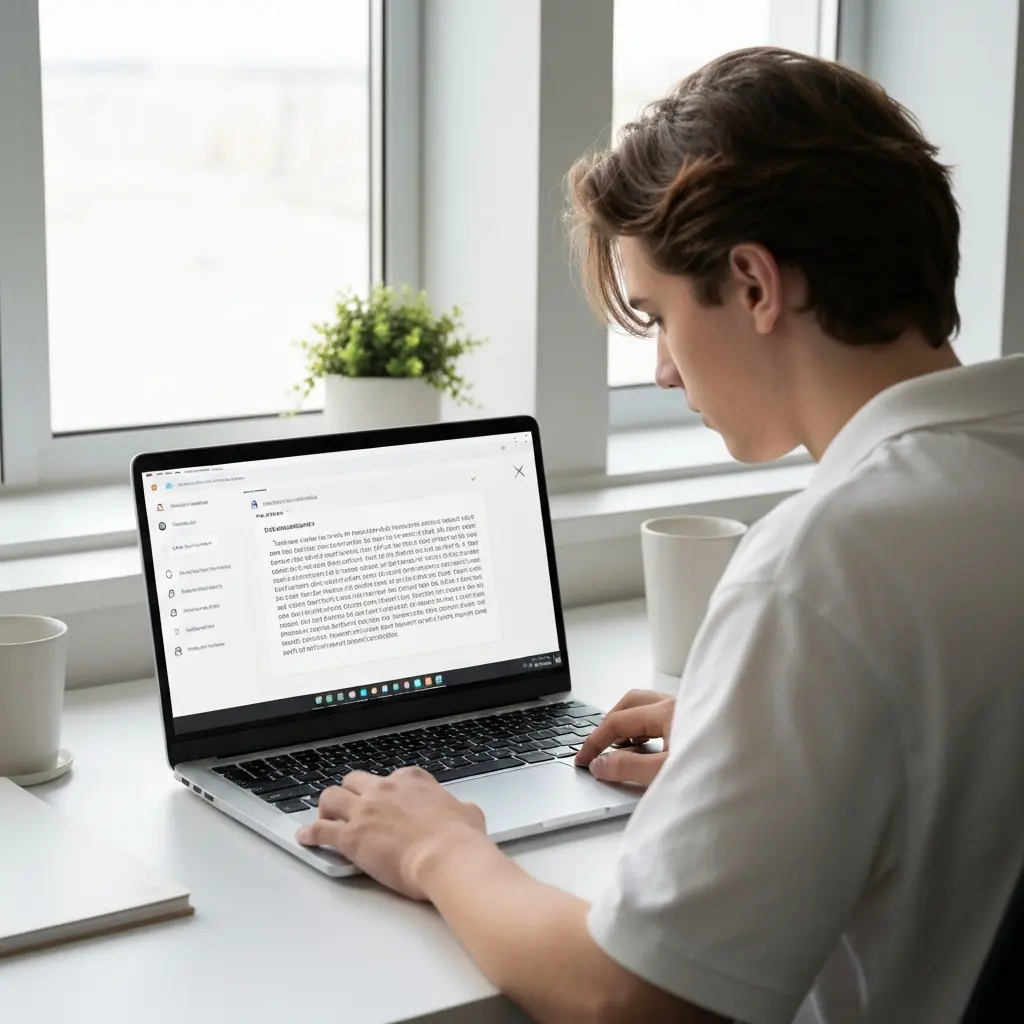
A reliable AI paraphrasing tool for academic writing does more than swap synonyms. It restructures sentences to improve flow, preserves technical meaning and citations, maintains academic register, and helps you avoid accidental plagiarism when synthesising sources into your thesis. The problem: most paraphrasing tools are built for general content writing, not academic research — and using the wrong one can produce output that sounds informal, loses citation context, or creates new plagiarism risks rather than eliminating them.
This guide ranks the best AI paraphrasing tools specifically for students and researchers in 2026 — comparing their academic tone quality, citation handling, plagiarism detection integration, pricing, and honest limitations.
Why Use a Paraphrasing Tool in Academic Writing?
Academic paraphrasing is a genuine skill — taking a source’s idea and expressing it in your own words while retaining the original meaning and citing the source. It is not the same as changing a few words to avoid detection software. Legitimate uses of paraphrasing tools include:
- Improving flow — rephrasing a clumsily worded sentence without changing its meaning
- Adjusting academic register — tightening informal phrasing to match the conventions of academic writing
- Non-native English speaker support — improving grammatical accuracy while preserving the writer’s ideas
- Breaking repetition — varying sentence structure when you have used the same construction three times in a paragraph
What AI paraphrasing tools should NOT be used for: generating your original argument, fabricating analysis from sources you have not read, or submitting AI-rephrased text as original writing. These uses violate academic integrity policies at every institution.
What to Look for in an Academic Paraphrasing Tool
- Academic tone modes — tools with a dedicated “academic” or “formal” mode produce better output for thesis writing than general-purpose tools
- Citation preservation — the tool must not remove or alter in-text citations (e.g., “(Smith, 2023)”) during paraphrasing
- Technical term accuracy — discipline-specific terminology must survive rephrasing intact
- Plagiarism integration — built-in or integrated plagiarism checking helps verify output is original
- University policy compatibility — check whether your institution’s AI use policy explicitly addresses paraphrasing tools
1. QuillBot — Best Free Option
Best for: Students wanting a powerful free paraphrasing tool with multiple modes.
Pricing: Free (limited); Premium from $9.95/month.
QuillBot is the most widely used AI paraphrasing tool globally, with over 35 million users. For academic writing, its Formal and Academic modes produce register-appropriate output. The free tier allows up to 125 words per paraphrase; Premium removes this limit and unlocks all 9 paraphrase modes.
Strengths: Excellent mode variety; grammar checker and plagiarism checker built in; well-maintained citation preservation; integrates with MS Word and Chrome.
Limitations: Free tier word limit is low; tends to over-paraphrase (changes too much, including things that were fine).
QuillBot’s Premium plan includes a citation generator — useful for students managing sources alongside paraphrasing. Try it at quillbot.com.
2. Paperpal — Best Purpose-Built for Research
Best for: Researchers and postgraduate students writing journal papers and theses.
Pricing: Free (limited); Prime from $12/month.
Paperpal is specifically designed for academic and research writing — not general-purpose content. Its paraphrase function includes options like “Make academic,” “Improve fluency,” “Simplify,” “Trim,” and “Change tone.” This granularity is far more useful for thesis editing than a single “rephrase” button.
Paperpal also integrates with MS Word and the web, and includes grammar checking, a plagiarism detector, and a language translation tool — making it a comprehensive academic writing environment rather than just a paraphrasing tool.
Limitations: Free tier is limited in usage; less known outside research communities, so fewer user guides and tutorials available.
3. SciSpace Paraphraser — Best for Citation Preservation
Best for: Multilingual researchers; paraphrasing paragraphs with in-text citations.
Pricing: Free (unlimited paraphrasing); Premium for advanced features.
SciSpace’s paraphrasing tool is free and handles citation preservation exceptionally well — it rewrites surrounding text while leaving APA, MLA, and other in-text citation formats intact. It also works in 75+ languages, making it the best choice for international students writing in English as a second language.
The broader SciSpace platform includes a literature search tool, PDF reader, and AI research assistant — useful for the full research workflow, not just paraphrasing.
4. Ref-n-Write — Best for Word Users
Best for: Students who write primarily in Microsoft Word; non-native English speakers.
Pricing: Paid subscription (~$5/month); free trial available.
Ref-n-Write integrates directly into Microsoft Word and provides a library of academic phrases organised by section type (introduction, methodology, results, discussion). Its paraphrase function is designed to improve sentence-level academic writing rather than produce block rewrites — ideal for refining individual sentences in a thesis without wholesale restructuring.
Its unique “Academic Phrasebank” feature — suggesting standard academic formulations for common writing moves — is particularly valuable for students writing in English as a second language.
5. Writefull — Best for Non-Native English Speakers
Best for: PhD students and researchers whose native language is not English.
Pricing: Free for basic; Premium for full features (~$9.90/month).
Writefull analyses billions of sentences from published academic papers to provide language suggestions grounded in real academic usage. Its paraphrase tool is trained specifically on academic text, making its output more likely to match the register expected in journals and theses than tools trained on general web content.
Writefull also integrates with Word, Overleaf (LaTeX), and Google Docs — making it versatile for different thesis writing workflows.
Comparison Table
| Tool | Free Plan | Academic Mode | Citation Safe | Word Integration |
|---|---|---|---|---|
| QuillBot | Limited (125w) | Yes (Premium) | Good | Yes |
| Paperpal | Limited | Yes (native) | Excellent | Yes |
| SciSpace | Unlimited | Yes | Excellent | No |
| Ref-n-Write | Trial only | Yes (native) | Good | Yes (native) |
| Writefull | Limited | Yes (trained on academic) | Good | Yes + Overleaf |
Ethics of Paraphrasing Tools: What Your University Allows
Most universities’ AI use policies in 2026 distinguish between using AI for editing and proofreading (broadly permitted with disclosure in many institutions) and using AI to generate academic content (broadly prohibited). Paraphrasing tools sit in the editing/proofreading category when used to refine your own writing.
The key test: does the final submitted work represent your own ideas, research, and analysis? If yes, and you used a paraphrasing tool to improve the expression of those ideas, most policies permit this with disclosure. If the ideas themselves came from AI output rather than your own reading and thinking, that crosses the line regardless of which tool was used.
Always check your specific course handbook and your university’s AI use policy. For broader context on academic integrity when using AI, see our guide to academic integrity and plagiarism. For a broader toolkit including Tesify and our overview of AI tools for dissertation writing, explore the full Tesify academic writing hub.
Frequently Asked Questions
Is it plagiarism to use a paraphrasing tool?
Using a paraphrasing tool to rephrase your own writing is not plagiarism. Using a paraphrasing tool to rephrase a source’s text and then presenting it without a citation is still plagiarism — the tool does not remove the need to cite the original source. The origin of the idea matters; the phrasing is secondary.
Will plagiarism checkers detect AI-paraphrased text?
Modern plagiarism detection tools like Turnitin and iThenticate increasingly detect AI-generated and AI-paraphrased text using AI detection algorithms alongside traditional similarity checks. Heavily paraphrased text from a source may still be flagged if the underlying sentence structure or ideas closely match the original. Always cite sources regardless of whether you paraphrase them.
What is the best free AI paraphrasing tool for academic writing?
QuillBot (free tier, up to 125 words per paraphrase) and SciSpace Paraphraser (free, unlimited) are the best free options for academic writing. QuillBot has more mode variety; SciSpace handles citations better and supports 75+ languages. Both are adequate for most student use cases.
Do I need to disclose that I used a paraphrasing tool in my thesis?
This depends on your institution’s AI use policy. Increasingly, universities require disclosure of any AI tools used in assessed work. Some distinguish between tools used for proofreading/editing (disclosure often required but use permitted) and tools used to generate content (usually prohibited). Check your course handbook and follow your institution’s specific guidance.
Does QuillBot keep citations in academic text?
QuillBot generally preserves in-text citations (e.g., APA parenthetical citations like “(Smith, 2023)”) during paraphrasing, but this is not guaranteed in every case. Always review the output carefully and ensure all citations are intact before using paraphrased text in your thesis. Never rely on the tool to maintain citation accuracy without manual review.
Try Tesify for Academic Writing
Tesify combines AI writing assistance with academic integrity — helping you improve your thesis prose while keeping your original thinking front and centre.
Write your thesis with AI
Structure, draft, cite, and format your thesis faster with Tesify’s AI writing tools, automatic bibliography, and plagiarism checker. Free to start, no credit card required.





Leave a Reply