
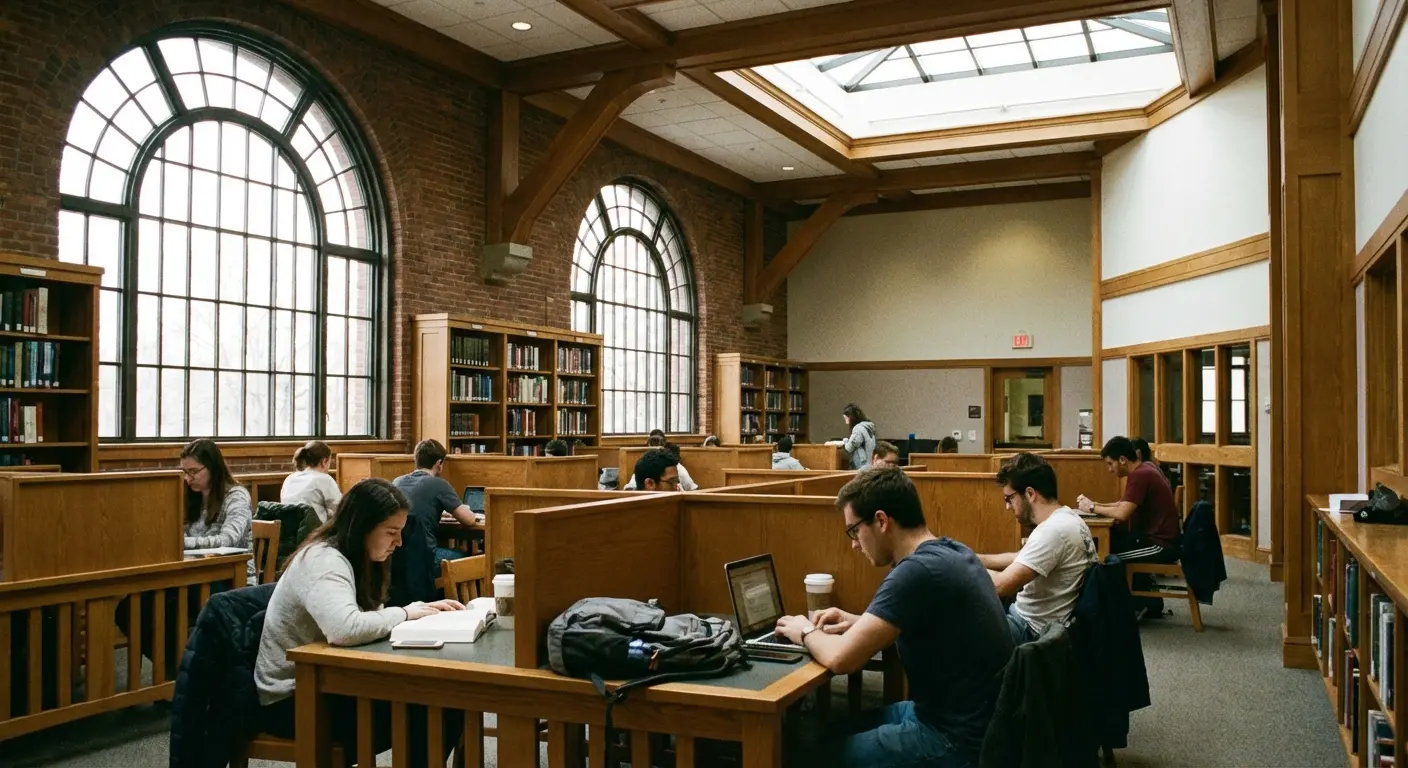
AI Thesis Writer: The Secret That Saves 3 Weeks
Your deadline is six weeks away. You’ve got a half-finished literature review, a bibliography that’s completely out of order, and a browser with 47 tabs open. Sound familiar? Most dissertation students lose three to four weeks — not to writing, but to the friction around writing: formatting citations, battling plagiarism anxiety, rewriting flat paragraphs at midnight.
AI thesis writing tools have changed that equation dramatically. The right one doesn’t just autocomplete sentences — it handles structure, citations, and academic tone so you can focus on your actual argument. And right now, one platform is pulling ahead of the competition in a way that’s worth your attention.
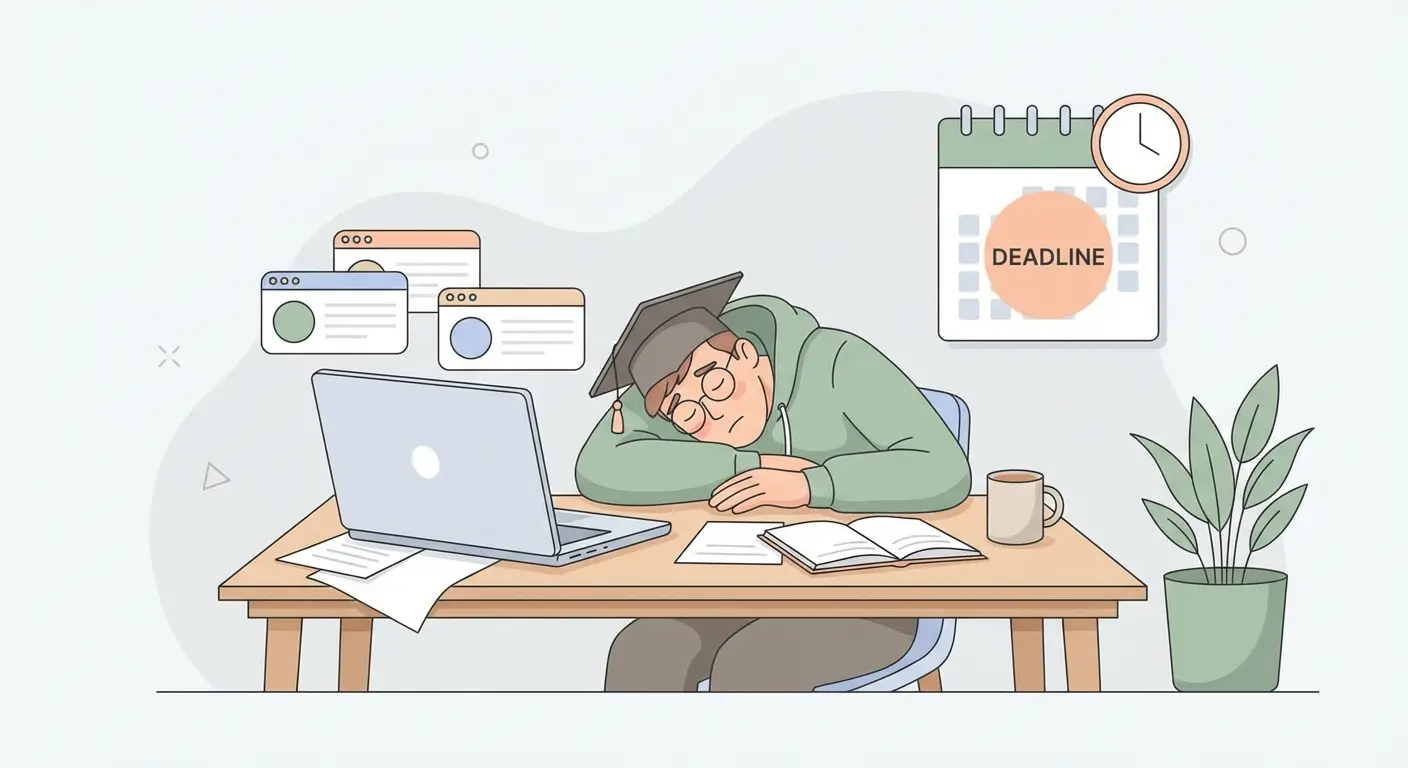
Why Most Students Lose 3 Weeks Without Realising It
Here’s the counterintuitive truth: the actual writing is rarely what eats your time. A 2024 Tyton Partners report on digital learning found that students consistently underestimate the administrative overhead of academic work — formatting, sourcing, and revision loops — by a factor of two.
For a typical 15,000-word master’s dissertation, the breakdown looks something like this:
| Task | Average Time (No AI) | Average Time (With AI Tools) |
|---|---|---|
| Bibliography formatting | 8–12 hours | Under 30 minutes |
| Plagiarism checking & editing | 10–16 hours | 1–2 hours |
| Academic language revision | 15–20 hours | 3–4 hours |
| Structural planning & outlining | 6–10 hours | 1–2 hours |
| Total overhead | 39–58 hours | ~8 hours |
That’s 30–50 hours recovered. Spread across a typical writing schedule of 4–6 hours a day, you’re looking at a full week to three weeks given back to you. Not hypothetically — actually.
What most people miss is that this overhead compounds. Every hour spent hunting for a DOI or reformatting an APA reference is an hour of cognitive energy drained from your argument. You’re not just losing time; you’re losing the mental clarity that good academic writing demands.
AI Thesis Writing Tools Compared: What Actually Works
Not all AI writing tools are built for dissertations — and the gap between a general-purpose tool and a purpose-built one is bigger than most students realise before they waste two weeks finding out the hard way.
AI thesis writing tools are software platforms that use large language models (LLMs) and academic databases to help students draft, edit, structure, cite, and check dissertation content. The best ones integrate citation management, plagiarism detection, and academic tone correction — purpose-built for scholarly standards rather than general content creation.
ChatGPT is probably the first thing that comes to mind. And it’s genuinely useful — for brainstorming, unsticking writer’s block, or explaining a methodology concept. But here’s where it falls short for dissertations specifically:
- No citation generation: ChatGPT doesn’t pull real sources. It invents them — a phenomenon researchers call “hallucination.” Your supervisor will notice immediately.
- No plagiarism checking: It has no connection to academic databases like JSTOR or ProQuest.
- No dissertation structure: It doesn’t know the difference between an abstract and a literature review, and it won’t guide you through the structural conventions of your field.
- No export to LaTeX or Word in academic format: You’re copy-pasting into a separate document every single time.
For a deeper look at how different tools stack up, the roundup of the best AI writing tools for dissertations in 2025 breaks down features, pricing, and use cases side by side — worth reading before you commit to any platform.
Research on ChatGPT in graduate work confirms what many PhD students already knew anecdotally: general AI tools are a starting point, not a finishing tool. Dissertation-specific platforms fill the gap.
Tesify: The AI Thesis Platform Built for Dissertation Completion
Tesify is the platform that keeps coming up when serious dissertation students compare options — and the reason isn’t marketing, it’s specificity. Every feature in Tesify was designed around the actual workflow of writing a bachelor’s dissertation, master’s thesis, or PhD.
Here’s what that looks like in practice. You open a new project. Tesify gives you a structured editor with pre-built dissertation sections — introduction, literature review, methodology, results, discussion, conclusion. You’re not staring at a blank document; you’re filling in a scaffold that’s already academically correct.
As you write, the Tesify AI Editor works in real time — rewriting passive sentences into active academic prose, flagging coherence issues between paragraphs, and suggesting stronger transitions. It’s not autocomplete; it’s more like having a meticulous academic editor sitting next to you who never gets tired or impatient.
Over 9,000 students are already using Tesify to finish their dissertations twice as fast. That’s the result of compressing the overhead tasks (bibliography, plagiarism checking, language correction) into minutes instead of days.
Try Tesify Free — No Credit Card Required
Free sign-up. Works in your browser. Export to PDF, Word, and LaTeX.
If you want a concrete timeline for how this fits into a realistic writing plan, the 4-week dissertation draft completion guide shows exactly how Tesify accelerates each phase — from outlining in week one to final polishing in week four.
The Bibliography Time Drain — and How to Kill It in One Click
Ask any dissertation student what they hate most and bibliography formatting comes up within thirty seconds. APA 7th edition, MLA, Chicago, Vancouver — each with its own arcane rules for journal articles versus book chapters versus government reports.
Manual bibliography work for a 15,000-word thesis with 80+ sources takes the average student 8–12 hours. That’s a full working day and a half spent on something that contributes zero intellectual value to your argument.
Tools like Zotero are genuinely excellent for reference management and have saved countless students from bibliography chaos. The limitation is that they still require you to manage imports, clean metadata, and manually place citations in your document.
The Tesify Auto Bibliography goes a step further. Type a source title or paste a DOI, and it pulls the full citation from Google Scholar, PubMed, JSTOR, or ProQuest — formatted instantly in whichever style your university requires. When you insert a citation in your text, the reference list updates automatically. When you delete one, it disappears from the bibliography without you touching anything.
For students whose universities require LaTeX formatting (common in STEM and social sciences), Tesify exports directly to LaTeX — including properly formatted references — which means you can also work from templates like those in the Overleaf thesis template gallery without manually translating every citation.
The thing that genuinely surprises students is how much mental energy bibliography stress was consuming invisibly. Remove it entirely, and your writing gets sharper.
Plagiarism Anxiety Is Real — Here’s the Smart Solution
Here’s the tension nobody talks about openly: students are told to use AI, then immediately warned that using AI might get them expelled. The anxiety that creates is completely understandable — and it’s one of the biggest sources of wasted time and emotional energy in the dissertation process.
The LSE research on student perceptions of AI and academic integrity found that the majority of students feel genuinely uncertain about where the line is — and that uncertainty leads to either avoiding helpful tools entirely or using them recklessly.
The practical middle ground? Use AI for structure, rewriting, and citations — then verify originality before submission. Universities including Oxford explicitly acknowledge the value of AI-assisted learning in their generative AI guidelines for students, with the key requirement being transparency and academic integrity.
What “academic integrity” actually means in practice is: your work must be substantively yours, correctly attributed, and not copied from unacknowledged sources. That’s exactly what Tesify’s Plagiarism Checker is built to protect. It compares your text against millions of scholarly sources — JSTOR, ProQuest, EThOS, ERIC, Google Scholar, and international academic databases — in real time, flagging similarities before your supervisor or Turnitin does.
And on the Turnitin question specifically: Turnitin’s own guidance clarifies that their AI detection flags statistical patterns, not the use of AI itself — meaning well-integrated, rewritten, original scholarly work doesn’t trigger false positives. Tesify’s editor is designed to help you hit that standard.
For a structured approach to planning and organising your dissertation so originality is baked in from the start — not patched in at the end — the guide on planning and structuring your dissertation with intelligent tools is worth bookmarking now.
Step-by-Step: How to Use an AI Thesis Writer Without Getting Caught Out
This won’t work for everyone, but for students in the final 4–8 weeks of their dissertation — where the pressure is highest and the cognitive load is worst — this workflow has proven reliable.
- Set up your structure first. Open Tesify, create a new thesis project, and fill in your chapter headings before you write a single word. Structural clarity at the start prevents the most common time-killer: writing yourself into a corner and having to restructure later.
- Draft section by section using the AI Editor. Write your first rough draft freely, then run each section through Tesify’s AI Editor to tighten academic language, improve coherence, and expand underdeveloped arguments. Think of it as a first-pass peer review.
- Add citations as you write, not at the end. Every time you reference a source, insert it immediately using Tesify’s Auto Bibliography. Leaving citations until the end is where hours disappear.
- Run a plagiarism check at 50% completion — not just at the end. Most students wait until the final draft. Catching issues at the halfway point means you have time to rewrite, not panic.
- Export in your required format. PDF for submission, Word for supervisor edits, LaTeX if your department requires it. Tesify handles all three without reformatting.
- Final integrity check before submission. Run the complete document through Tesify’s plagiarism checker one last time against scholarly databases. Submit with confidence.
The whole process — when Tesify is handling bibliography, language, and plagiarism in parallel — typically shaves 2–3 weeks off the average timeline. That’s not optimistic; it’s what happens when 30–50 hours of overhead disappear.
Stop losing weeks to formatting, citations, and plagiarism stress.
Join 9,000+ students who use Tesify to finish their dissertation faster — and with more confidence.
Start Writing Free on Tesify →
No credit card. No commitment. Works in your browser right now.
Frequently Asked Questions
Is using an AI thesis writing tool considered cheating?
Using AI tools for assistance — structuring, editing, and formatting — is broadly accepted by universities when done transparently and when the intellectual content remains your own. Oxford, LSE, and most UK and US universities have published guidance permitting AI assistance with clear attribution requirements. The key distinction is using AI to improve your work versus using it to replace your thinking entirely.
How is Tesify different from ChatGPT for writing a dissertation?
Tesify is built specifically for dissertations, while ChatGPT is a general-purpose tool. Tesify includes real citation generation from academic databases (JSTOR, PubMed, Google Scholar), built-in plagiarism detection, dissertation structure templates, and direct export to Word, PDF, and LaTeX. ChatGPT can’t do any of those things reliably — it hallucinates citations and has no connection to academic databases.
Will Turnitin detect AI-written content in my thesis?
Turnitin’s AI detection flags statistical patterns associated with AI-generated text, not AI assistance itself. Content that has been substantially rewritten, reflects your own analysis, and is properly cited typically does not trigger false positives. Tesify’s AI Editor is designed to produce academic writing that reads naturally and meets scholarly standards — which is exactly what integrity checks are looking for.
What citation formats does Tesify support?
Tesify’s Auto Bibliography supports APA 7th edition, MLA, Chicago, Vancouver, and additional formats. Citations are generated automatically from Google Scholar, PubMed, JSTOR, and ProQuest, and the reference list updates dynamically as you add or remove sources in your text.
How long does it realistically take to write a master’s thesis using Tesify?
Most master’s students using Tesify report completing a submission-ready draft in 4–6 weeks for a 15,000-word thesis, compared to 8–10 weeks without AI assistance. The biggest time savings come from bibliography automation and real-time language editing. The detailed 4-week dissertation plan on the Tesify blog maps out exactly how this timeline works in practice.
Does Tesify work for PhD dissertations as well as master’s theses?
Yes. Tesify is built for bachelor’s dissertations, master’s theses, and PhD dissertations. The platform’s structured editor, citation tools, and plagiarism detection scale to longer, more complex documents — and the LaTeX export is particularly useful for PhD candidates in STEM and social science fields where LaTeX is a departmental requirement.
The Bottom Line on AI Thesis Writing Tools
Three weeks is a long time to lose to tasks that don’t make your argument better. Bibliography formatting, plagiarism stress, and language revision are necessary — but they don’t have to consume the best hours of your writing day.
The students who finish dissertations faster aren’t working harder. They’re working with tools that handle the overhead so they can focus on the thinking. Tesify is the most complete AI thesis writing platform for doing that — and it’s free to try right now.
Stop spending weekends reformatting APA references manually.
Create Your Free Tesify Account →
Automatic bibliography · AI editing · Plagiarism detection · PDF, Word & LaTeX export
Write your thesis with AI
Structure, draft, cite, and format your thesis faster with Tesify’s AI writing tools, automatic bibliography, and plagiarism checker. Free to start, no credit card required.




Leave a Reply