
How to Write Your Thesis Abstract with AI (2026)
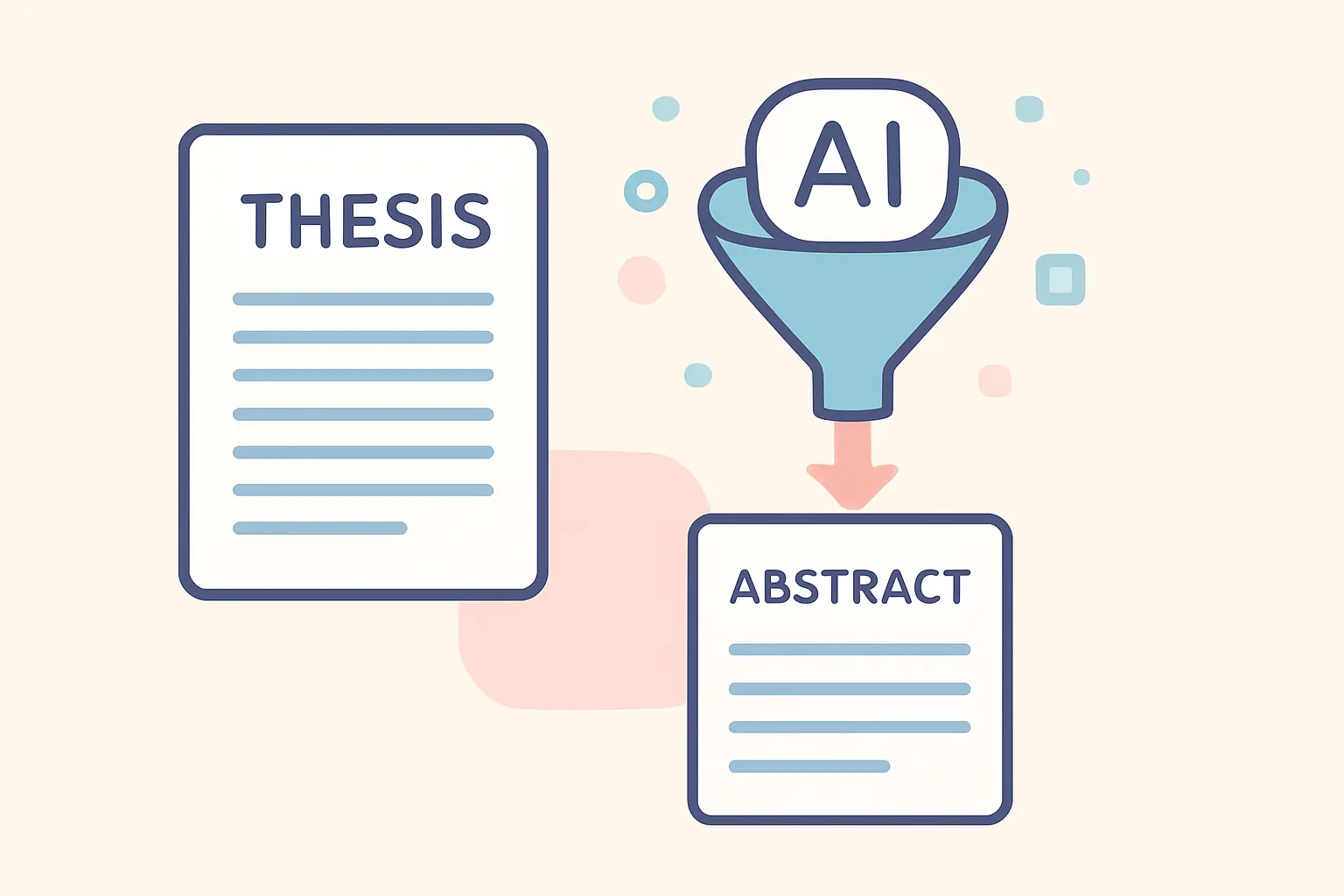
To write your thesis abstract with AI, give the tool your finished thesis or a chapter-by-chapter summary, prompt it with the standard six-part abstract structure, and then rigorously check the draft for accuracy. AI is excellent at compressing and structuring, but because an abstract stands in for your entire study, you must verify that every claim matches what you actually did and found.
The abstract is the most-read part of your thesis — it is what appears in databases, what examiners read first, and what decides whether anyone reads further — yet it is written last, when you are most exhausted. That is exactly the moment an AI-assisted workflow helps, provided you stay in control of accuracy.
Why Is the Abstract So Hard to Write?
An abstract is not a summary of your thesis so much as a miniature of it — every essential element in a few hundred words, in the right proportion. Compressing months of work into one paragraph while staying accurate is a distinct skill, and it comes at the point of maximum fatigue. This is a compression-and-structuring task, which is where AI genuinely helps, in the same way it does when you proofread your thesis with AI before submission.
What Is the Step-by-Step AI Workflow?
- Summarise each chapter in one or two sentences yourself. This gives the AI accurate raw material instead of forcing it to guess from a long document.
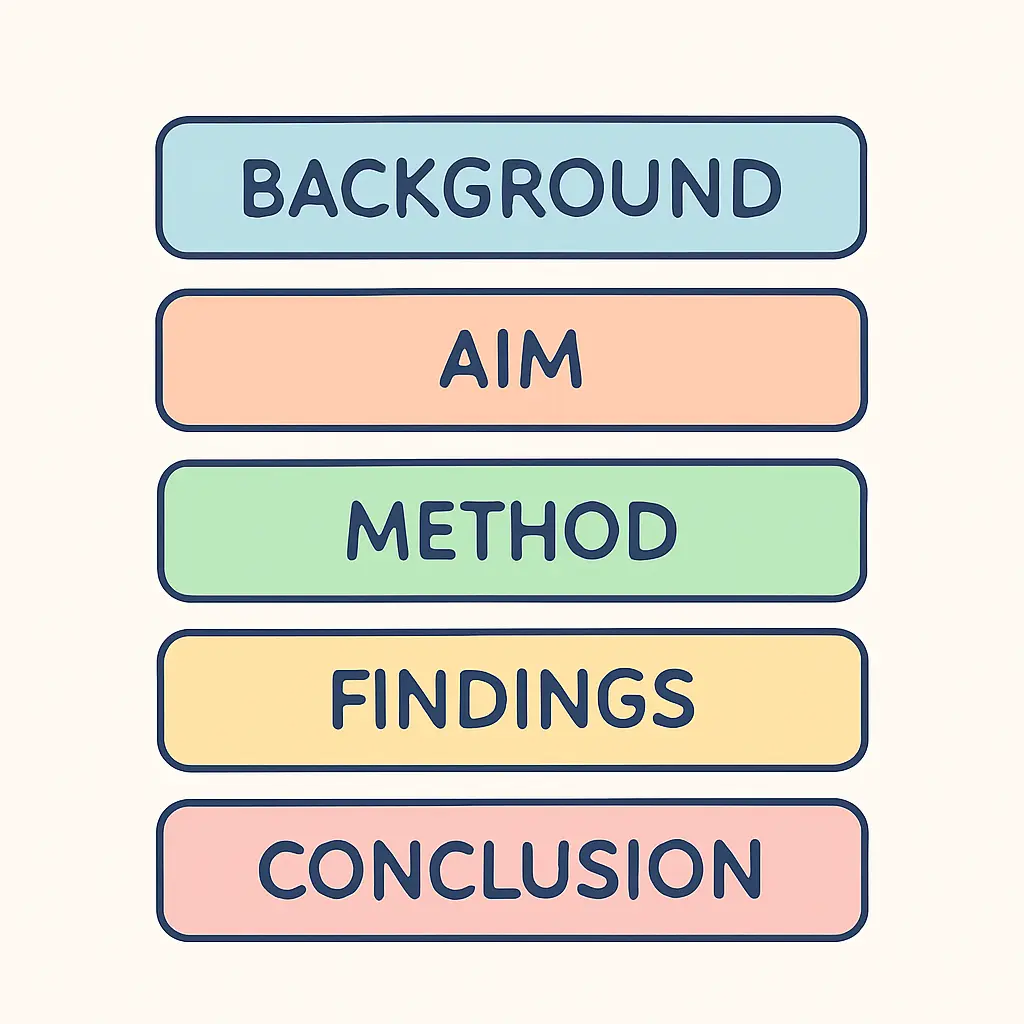
- Prompt with the six-part structure. Ask for an abstract covering background/problem, aim or research question, method, key findings, and conclusion/contribution.
- Generate a first draft, then fact-check every claim. Confirm the method, sample size, and findings exactly match your thesis — AI tends to round up or overstate.
- Cut to the word limit. Ask the AI to compress the draft to your university’s limit without dropping any of the six elements.
- Remove citations and undefined jargon. Abstracts normally contain no references and should be readable by someone outside your sub-field.
- Read it against your conclusion chapter. The abstract’s findings and contribution must line up precisely with what your thesis actually concludes.
What Should the Abstract Contain?
| Element | What it answers | Approx. share |
|---|---|---|
| Background / problem | Why does this matter? | 1–2 sentences |
| Aim / question | What did you set out to do? | 1 sentence |
| Method | How did you do it? | 1–2 sentences |
| Findings | What did you discover? | 2–3 sentences |
| Conclusion | What does it mean / contribute? | 1–2 sentences |
For the underlying rules and worked examples this workflow builds on, see our guides to writing a thesis abstract and the step-by-step abstract examples.
What Must You Check Before Trusting the Draft?
- Accuracy of every number. Sample sizes, effect directions, and percentages must match your results exactly.
- No overstated findings. AI often inflates “some evidence” into “clearly demonstrates” — tone it back to what your data supports.
- Correct tense and voice. Methods and findings are usually past tense; conclusions can be present.
- Word limit and keywords. Hit the exact limit and include the keywords your discipline searches on.
- Disclosure. Declare AI assistance where your university requires it.
Tesify turns your finished chapters into a tight, accurate abstract at your exact word limit — then helps you check it against your results so nothing is overstated. Write your abstract with Tesify.
FAQ
Can AI write my thesis abstract?
AI can produce a strong first draft of your abstract if you give it your finished thesis or a summary of each chapter, but you must check every claim. Because an abstract compresses your whole study, AI can subtly overstate findings or misstate your method, so your job is to verify accuracy and match it to what you actually did.
How long should a thesis abstract be?
Most abstracts are between 150 and 300 words for a master’s thesis and up to around 350 for a PhD, though your university sets the exact limit. AI is useful for compressing a longer draft down to the required word count without losing the key points.
What should a thesis abstract include?
A complete abstract covers the background and problem, your aim or research question, your method, your key findings, and your main conclusion or contribution. Prompting AI with this six-part structure produces a far more usable draft than asking it to summarise your thesis generically.
Is it safe to paste my whole thesis into an AI tool?
Check your university’s data and AI-use policy and the tool’s privacy terms before uploading unpublished work. Use a reputable academic tool, avoid pasting confidential or third-party data, and disclose AI assistance where required. Purpose-built academic tools generally handle your text more appropriately than a public chatbot.
Related Reading
Write your thesis with AI
Structure, draft, cite, and format your thesis faster with Tesify’s AI writing tools, automatic bibliography, and plagiarism checker. Free to start, no credit card required.




Leave a Reply