
What Happens If You Get Caught Using AI in Your Dissertation? (2026)
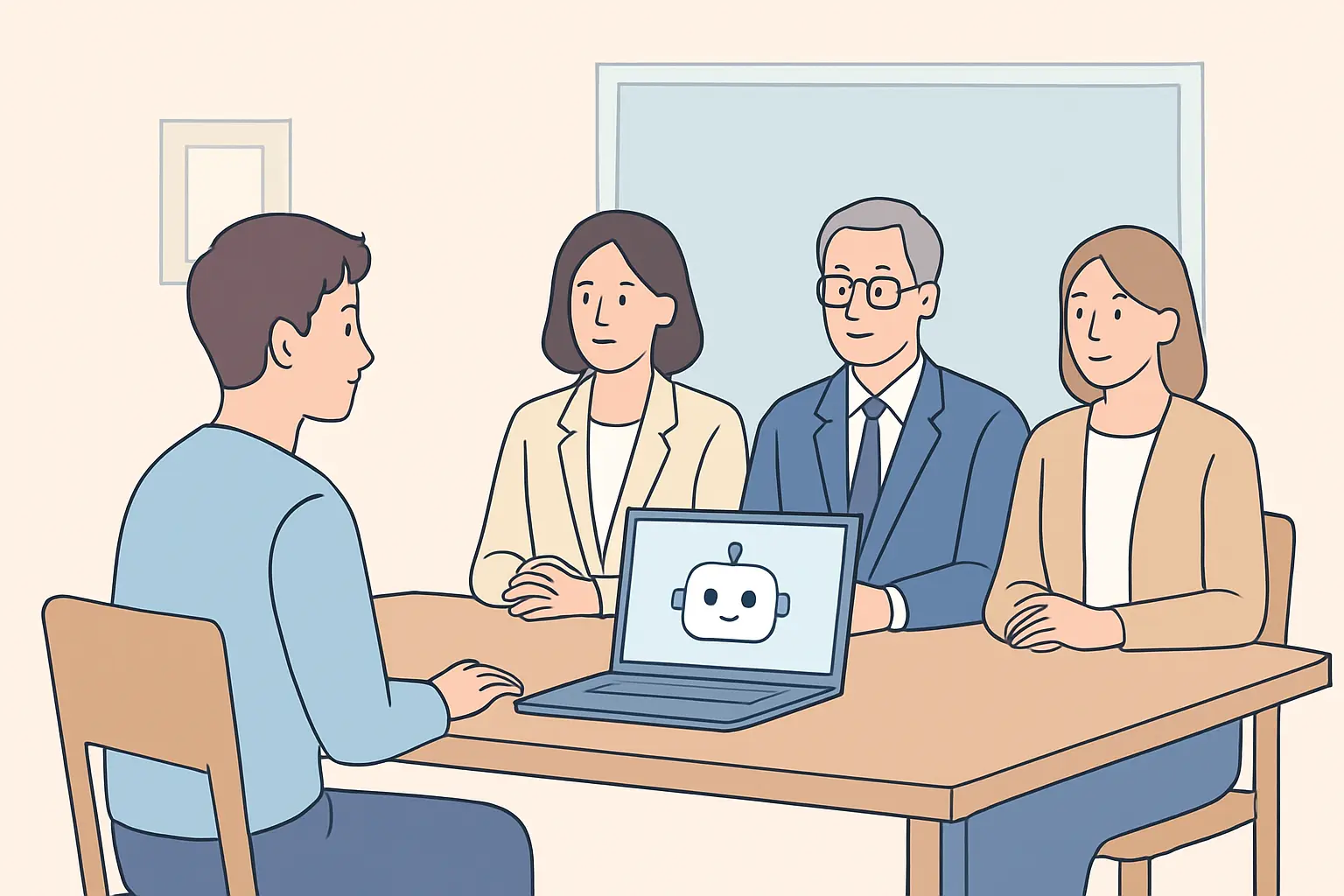
If you get caught using AI in your dissertation without disclosing it, expect a formal academic misconduct investigation followed by an oral review where you explain your work in person. Penalties range from required integrity training or a grade cap for a first, minor offense to a failed dissertation or suspension for serious or repeated undisclosed use, depending on your university’s policy.
The rules around AI in dissertations shifted significantly through 2025 and into 2026. Almost no major university still treats “AI is banned, full stop” as workable policy — instead, the dominant framework now treats undisclosed AI use as the violation, not AI use itself. That distinction changes what “getting caught” actually means and what happens next.
What Actually Happens After AI Use Is Flagged?
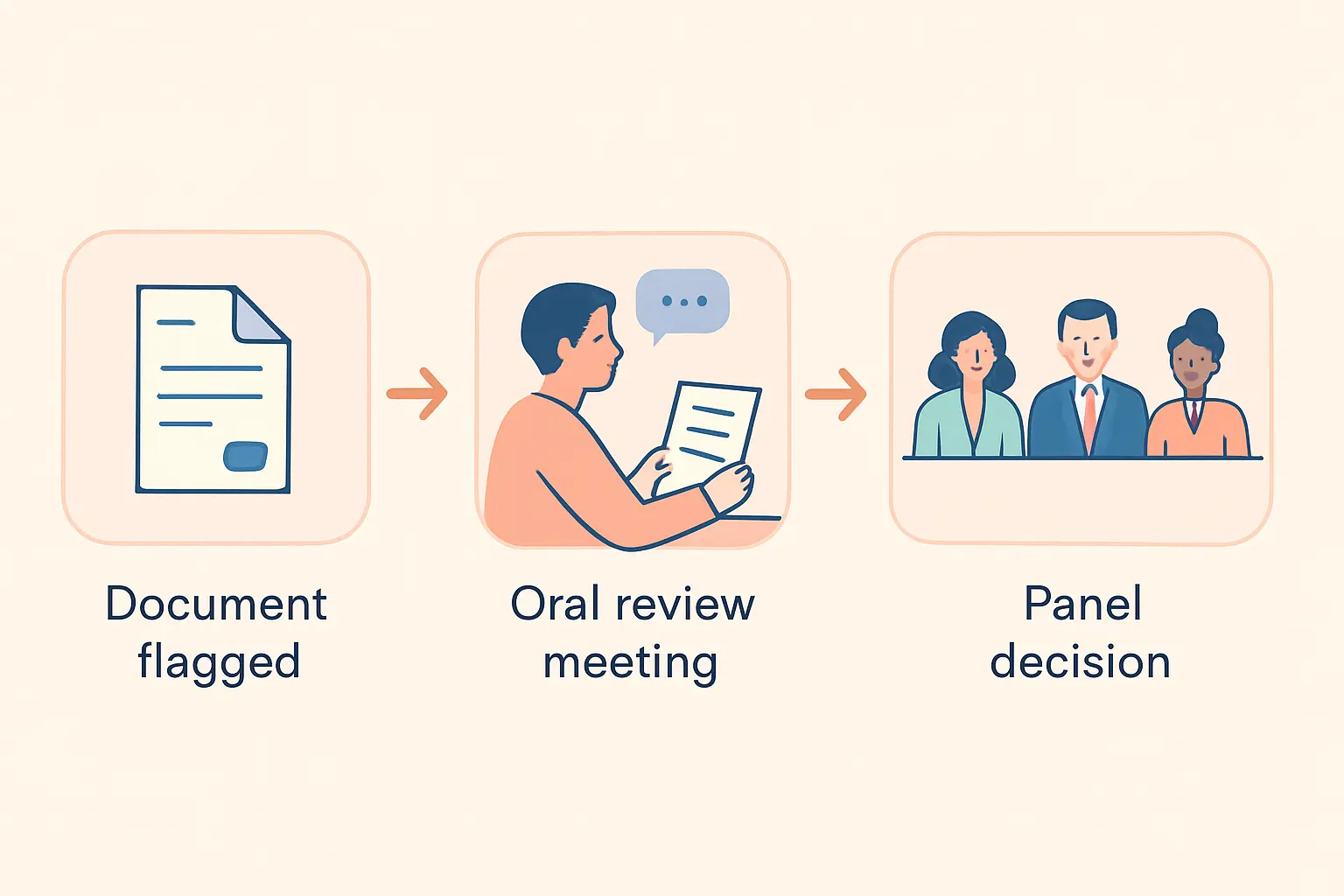
The process usually starts with a flag — from a similarity/AI-detection report, a supervisor’s suspicion after reading a chapter that reads differently from your earlier drafts, or an inconsistency between your written work and how you discuss it in a meeting. From there, most UK and US universities follow a broadly similar sequence:
- Initial review. A designated academic integrity officer or your supervisor reviews the flagged material and decides whether it meets the threshold for a formal case.
- Formal notification. If it does, you are formally notified in writing and given the specific allegation and evidence.
- Oral review or investigatory meeting. Most institutions now hold what is often called an oral review, viva-style meeting, or investigatory interview, where you are asked to explain your argument, discuss your sources, and demonstrate familiarity with the flagged content.
- Panel decision. A misconduct panel or committee reviews the evidence and your response, then decides on an outcome.
- Right of appeal. Nearly every university offers an appeals process if you believe the finding or penalty was disproportionate or procedurally flawed.
This is a slower, more deliberate process than students often expect — it is not a single automated system flag followed by an automatic fail.
Is Using AI Automatically Academic Misconduct?
No. The dominant 2026 policy position across UK and US universities has moved away from blanket prohibition and toward a disclosure-based model: using AI is not itself the violation in most policies — misrepresenting AI-assisted or AI-generated content as entirely your own, undisclosed work is. Institutions increasingly classify this as a specific form of academic malpractice rather than folding it into traditional plagiarism definitions, since the underlying issue (misrepresentation) is somewhat different from copying another author’s words.
This matters practically: a student who used an AI tool to check grammar and disclosed it in an AI use statement is in a fundamentally different position from a student who submitted an AI-drafted chapter and claimed it as fully original work.
Can a University Actually Prove You Used AI?
Rarely from detection software alone. AI-detection tools, including Turnitin’s AI writing indicator, carry acknowledged false-positive risks, and most universities are aware of this limitation and reluctant to base a misconduct finding purely on a percentage score. That is precisely why the oral review step exists.
In practice, an oral review is a much harder test to pass through deception than a written submission. Being asked to explain your specific methodological choices, walk through why you cited a particular source, or defend an argument you did not actually construct is very difficult to fake convincingly — which is also why viva-style oral examinations have long been used as an integrity check even outside misconduct investigations specifically.
What Penalties Are Actually Handed Out?
| Severity | Typical scenario | Common outcome range |
|---|---|---|
| Minor, first offense | Undisclosed AI use for editing/grammar in a limited section | Integrity training, warning, or capped mark on the section |
| Moderate | Undisclosed AI use for substantial drafting of a chapter | Zero mark for the affected chapter, resubmission required |
| Severe | Substantial AI-generated content across the dissertation presented as original | Failed dissertation, possible failed module/year |
| Severe and repeated | Prior finding on record plus a new undisclosed AI case | Suspension or, in rare cases, expulsion |
Ranges are illustrative and synthesized from published university academic integrity and AI-use policy pages; exact penalty tariffs are set individually by each institution’s academic regulations. Always check your own university’s specific policy.
Will It Affect Your Final Degree Classification?
It can, and the effect scales with severity and timing. A capped mark on one chapter may have only a marginal effect on your overall classification if the rest of the dissertation is strong. A failed dissertation requiring resubmission, by contrast, delays graduation and can affect classification depending on how your university’s resubmission rules cap the maximum achievable grade after a misconduct finding — some institutions cap resubmitted work at a pass grade regardless of quality. In the most serious cases, continued enrollment itself can be at risk, which is a materially different outcome from the mark-level penalties in less severe cases.
Should You Disclose AI Use Before You’re Asked?
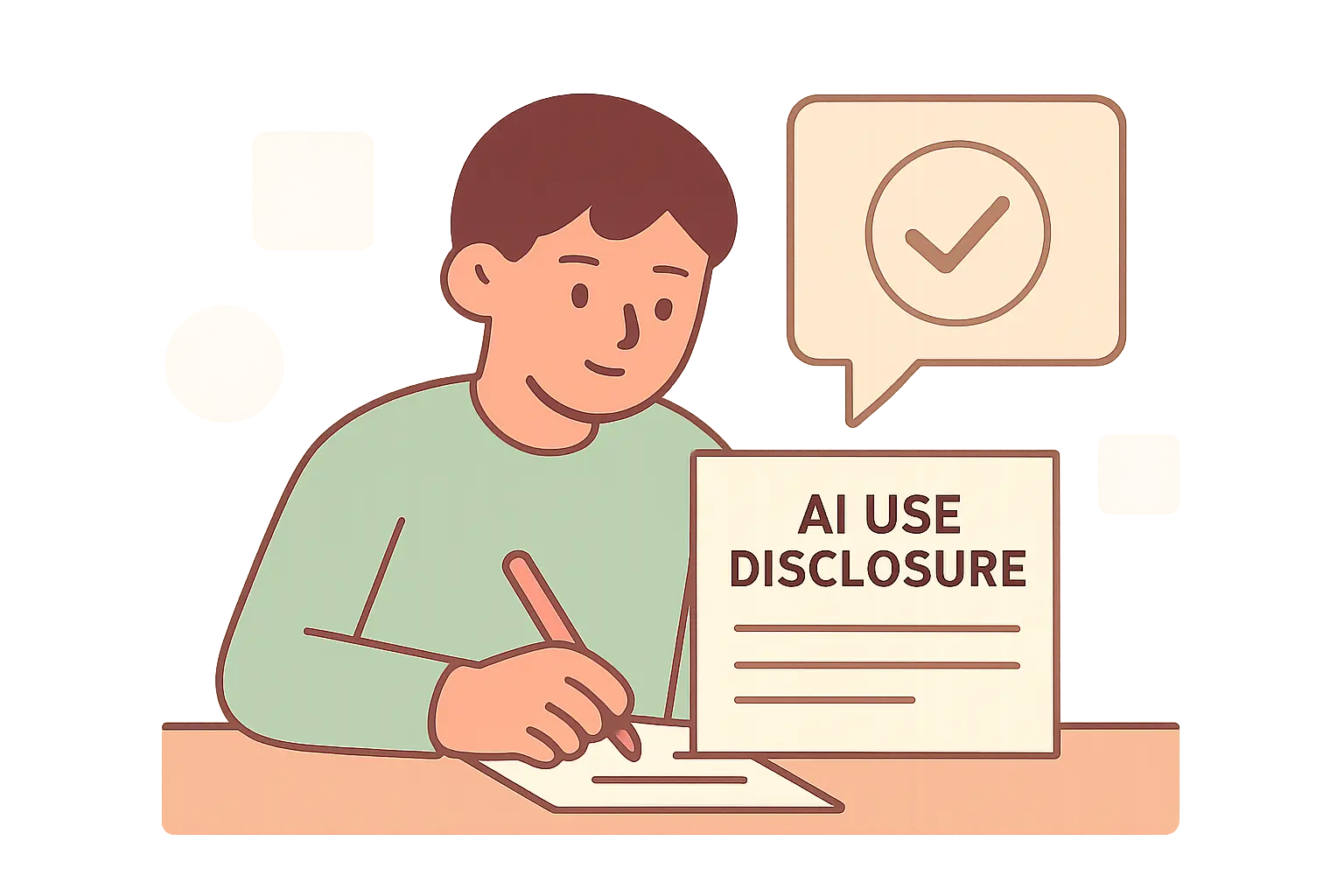
Yes, in almost every case. The clearest theme across 2026 institutional policy is that proactive disclosure is treated far more leniently than discovery after submission. Universities increasingly require or strongly encourage a dedicated AI use statement — specifying which tools were used, for what purpose (grammar checking, literature summarization, code debugging, etc.), in which sections, and how any AI output was verified or edited before inclusion.
Writing a clear, specific disclosure statement is one of the simplest ways to protect yourself. See our companion guide on how to write an AI use declaration for your thesis for a section-by-section template.
What Should You Do If You’re Accused?
If you receive a formal allegation notice, treat it seriously and act quickly:
- Read the specific policy and procedure your university cites, not just the general academic integrity page — procedures for AI-specific cases sometimes differ from traditional plagiarism procedures.
- Respond within the stated deadline. Missing a response window can itself count against you procedurally.
- Prepare thoroughly for the oral review. Re-read the flagged sections closely and be ready to explain your reasoning, sources, and process in detail.
- Use available student support. Most universities and students’ unions offer free, independent advice or representation for academic misconduct hearings — this is a resource worth using, not a sign of guilt.
- Understand your appeal rights in case the outcome feels disproportionate to the actual conduct.
Going forward, the safest approach is to build disclosure into your workflow from the start rather than treating it as damage control. If you use an AI thesis assistant such as Tesify to help structure chapters or manage citations, keep a running note of exactly what it helped with and where, so your AI use statement is accurate and specific rather than a vague afterthought written under pressure.
Tesify helps you draft, structure, and cite your dissertation with full visibility into what AI assisted with at each stage — making an accurate AI use disclosure statement straightforward instead of a scramble. Try Tesify.
FAQ
What happens if you get caught using AI in your dissertation?
Most universities open a formal academic misconduct investigation, which usually includes an oral review where you explain your argument and sources in person. Outcomes range from a grade penalty or required integrity training for a first offense to a failed module, failed dissertation, or in serious repeat cases, suspension, depending on the institution’s policy and the severity of undisclosed AI use.
Is using AI automatically academic misconduct?
Not necessarily. Most 2026 university policies distinguish between disclosed, permitted AI use and undisclosed AI use presented as entirely your own work. The violation in most policies is non-disclosure and misrepresentation, not the mere act of using an AI tool at some stage of your process.
Can a university actually prove you used AI?
Universities rarely rely on AI-detection software alone, since detection tools carry known false-positive risks. Most investigations instead combine detection flags with an oral review where you are asked to explain your methodology, sources, and specific claims — something that is very difficult to do convincingly if you did not actually write or fully understand the section in question.
Will getting caught using AI affect your final degree classification?
It can. Depending on the severity and stage of the misconduct finding, penalties range from a capped or reduced mark on the affected chapter to a failed dissertation requiring resubmission, which can delay graduation by months. In the most serious or repeated cases, degree classification or even continued enrollment can be affected.
Should you disclose AI use before you’re asked?
In almost every case, yes. Under 2026 policies, proactively disclosing AI assistance in an acknowledgments section or a formal AI use statement is treated far more leniently than having undisclosed use discovered later, since disclosure demonstrates transparency rather than concealment.
What should you do if you’re accused of undisclosed AI use?
Read your university’s academic misconduct procedure immediately, respond to any request within the given deadline, and prepare to explain your work in detail at the oral review. Many universities also offer independent student advice or union representation during a misconduct hearing — use it.
Related Reading
Write your thesis with AI
Structure, draft, cite, and format your thesis faster with Tesify’s AI writing tools, automatic bibliography, and plagiarism checker. Free to start, no credit card required.



Leave a Reply