
Thesis Statement Examples: Why They Fail and How to Fix Them
Thesis statements are where most dissertations quietly fall apart. You’ve spent weeks on your research, you know your topic inside out — and then your supervisor hands back your draft with one brutal note: “Your argument isn’t clear.” It’s one of the most common pieces of feedback at universities from Oxford to Stanford, and it stings every single time.
The truth is that writing a strong thesis statement for a dissertation or academic paper is genuinely hard. Not because students aren’t clever, but because nobody ever really teaches you why weak statements fail — they just tell you yours isn’t good enough. This guide on thesis and dissertation writing changes that. You’ll see real thesis statement examples, understand the exact failure patterns behind them, and get concrete fixes you can apply today.
Table of Contents
- What Is a Thesis Statement? (Definition That Actually Helps)
- Why Thesis Statements Fail: The 7 Most Common Problems
- Thesis Statement Examples: Before and After Fixes
- Strong vs. Weak Thesis Statements: Side-by-Side Comparison
- How to Write a Thesis Statement Step by Step
- Thesis Statements by Discipline: What Changes?
- Writing Thesis Statements for Full Dissertations and Theses
- The 10-Point Self-Check Checklist
- Frequently Asked Questions
What Is a Thesis Statement? (The Definition That Actually Helps)
Every guide gives you a textbook definition. Here’s one that’s actually useful when you’re staring at a blank page at midnight.
Definition: Thesis Statement
A thesis statement is a single, arguable claim — usually one to three sentences — that tells the reader exactly what your paper will argue, why it matters, and how you’ll prove it. It appears at the end of your introduction and acts as the spine of your entire document. Everything you write should connect back to it.
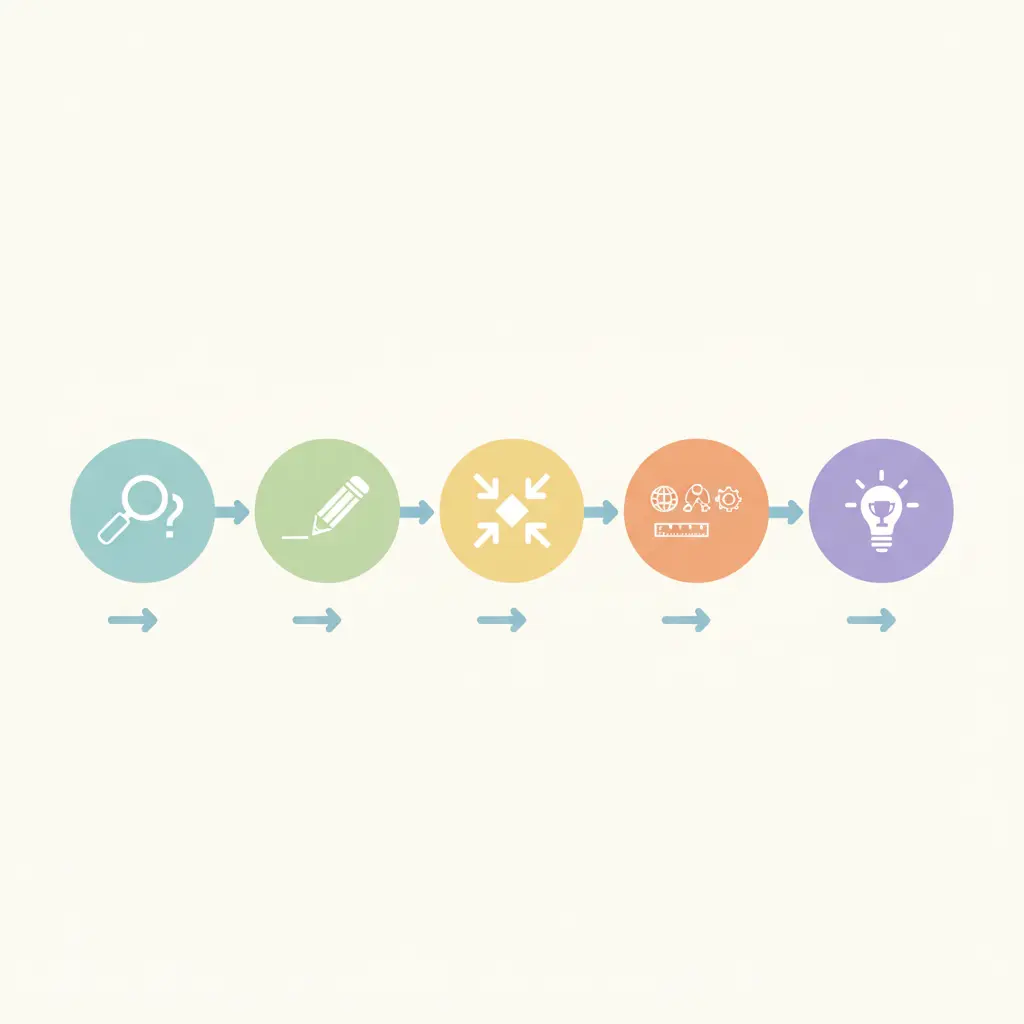
Notice what that definition includes: arguable. Not “describable.” Not “factual.” An argument. This distinction is where students most often go wrong, and it’s why so many thesis statements — even from bright, well-read students — collapse under scrutiny.
The Purdue OWL, one of the most trusted writing resources for university students, puts it plainly: a strong thesis “takes a stand” rather than making an announcement. Their guidelines on thesis statement writing are worth bookmarking alongside this article.
Here’s where it gets interesting: a thesis statement for a 2,000-word essay and a thesis for a 90,000-word PhD dissertation serve the same logical function — but the scope, complexity, and contribution differ enormously. We’ll address both, because the failure patterns (and fixes) are slightly different at each level.
Why Thesis Statements Fail: The 7 Most Common Problems
Understanding failure patterns is genuinely more useful than reading a list of tips. When you can identify why something doesn’t work, you can fix it anywhere — in your own writing, in drafts, even years from now.
Problem 1: The Announcement Problem
This is the single most common error at undergraduate level. The student writes what their essay will do rather than what it will argue.
This tells the reader nothing about your argument. It’s a table of contents masquerading as a thesis. No examiner at UCL or Harvard wants to read a promise of description — they want a claim they can evaluate.
Problem 2: The Obvious Fact Problem
If your thesis statement could appear in an encyclopaedia entry, it’s not a thesis — it’s a fact. Facts can’t be argued; they can only be confirmed or denied.
This is true, but uncontestable. A thesis must invite intellectual disagreement. That’s what drives the argument forward.
Problem 3: The Vague Generalisation Problem
Vague thesis statements feel safe. They’re not. They’re actually harder to write a coherent paper around because they don’t commit to anything specific enough to be proved or disproved.
Which young people? What kind of effects? Positive or negative? Over what period? Compared to what? Every reader will interpret this differently — which means you’ve given yourself an impossible writing target.
Problem 4: The Two-Headed Thesis Problem
Sometimes students accidentally write two separate thesis statements in one sentence, creating a paper that never fully commits to either direction. This usually happens when scope isn’t properly defined early in the research process. If you’re struggling to narrow your focus, the advice in our guide on fixing common dissertation structural problems is particularly relevant here.
Pick one. Each of those claims deserves its own paper.
Problem 5: The Scope Mismatch Problem
Your thesis promises too much — or too little — for the word count you’re working with. A 3,000-word essay cannot adequately argue that “neoliberalism caused the decline of Western democracy.” A 90,000-word dissertation probably shouldn’t be restricted to “Instagram usage among 16-year-olds in Bristol in 2019.”
Problem 6: The Alignment Failure Problem
This one is sneaky. The thesis statement sounds fine in isolation, but it doesn’t match what the research actually proves. You changed direction mid-study — which happens all the time in real research — but forgot to update your central claim accordingly.
This disconnect between thesis and findings is one of the most common reasons examiners at postgraduate level ask for major revisions. The Thesis Whisperer blog by Dr. Inger Mewburn (ANU) has written extensively about this phenomenon in PhD writing — well worth a read.
Problem 7: The Missing “So What?” Problem
Your claim is specific and arguable — but why does it matter? Examiners at top universities don’t just want to know what you’re arguing; they want to know why it contributes something new to the field. Without the “so what,” even a technically correct thesis feels hollow.
Thesis Statement Examples: Before and After Fixes
Theory only gets you so far. Here are real-world examples across disciplines, showing the exact transformation from weak to strong.
Example 1: History / Politics
What changed: Specific event, specific claim, specific timeframe, specific consequence. A reviewer at Cambridge could push back on “constrained US interventionism” — which is exactly the point.
Example 2: Psychology / Social Sciences
What changed: Active vs. passive distinction (a real research concept), specific demographic, specific psychological outcome, and a direct implication for policy/practice — the “so what.”
Example 3: Literature / Humanities
What changed: The specific literary technique (narrative structure), the precise argument it makes, and its position within a scholarly debate (essentialism vs. assimilationism).
Example 4: Business / Management
What changed: Specific context (knowledge-intensive sectors), specific mechanism (psychological safety), and a direct challenge to a common organisational assumption.
Example 5: STEM / Environmental Science
What changed: Specific type of pollution, specific location, comparative framing against existing concern, and a direct policy gap — generating both a research argument and a real-world implication.
Strong vs. Weak Thesis Statements: Side-by-Side Comparison
| Failure Type | Weak Example | What’s Wrong | Fixed Version |
|---|---|---|---|
| Announcement | “This paper will discuss gun control in America.” | Describes the paper’s topic, not its argument | “Federal background check requirements reduce gun homicide rates in urban areas but have measurably less impact in rural communities — a gap that current reform proposals fail to address.” |
| Obvious Fact | “Poverty affects children’s educational outcomes.” | Undeniable; nothing to argue | “Early-years poverty affects literacy attainment more significantly than secondary-school poverty, suggesting that UK education funding should be redistributed toward the 0–5 age range rather than focusing on secondary intervention.” |
| Vague Claim | “Technology has changed modern workplaces.” | Which technology? How? For whom? | “Remote collaboration tools introduced during the COVID-19 pandemic reduced junior employees’ access to informal mentorship, creating measurable career progression gaps that persist even after hybrid working became standard.” |
| Split Thesis | “Brexit damaged UK trade, and immigration policy also changed significantly.” | Two unrelated claims competing for space | “Brexit’s post-2021 customs arrangements have suppressed UK goods exports to the EU by a measurably greater margin than the trade gains achieved through new non-EU bilateral agreements in the same period.” |
| Missing “So What” | “Mindfulness programmes improve stress levels in university students.” | Specific enough, but why does it matter? | “Short-format (4-week) mindfulness programmes produce comparable stress-reduction outcomes to 8-week programmes among undergraduate students, offering universities a more resource-efficient wellbeing intervention that could be scaled across large cohorts without specialist staffing.” |
For a deeper look at how Scribbr approaches thesis statement construction, their step-by-step thesis statement guide is one of the most thorough free resources available.
How to Write a Thesis Statement Step by Step
Forget the vague advice you’ve seen before. Here’s a process that works — whether you’re writing a 2,000-word essay or a 100,000-word PhD thesis.
Step 1: Identify Your Research Question
Your thesis statement is the answer to your research question. If you don’t have a sharp research question, you cannot write a sharp thesis. Start there. Write your research question at the top of a blank document and don’t move on until it genuinely makes sense as a question someone would need to investigate.
Step 2: Draft a One-Sentence Answer
Answer your research question in one plain sentence. Don’t worry about elegance yet. Just commit to an answer. “The answer to my question is: [X causes Y because Z, in context C].” That’s your raw thesis.
Step 3: Test the “Could Someone Disagree?” Rule
Show your draft thesis to a friend or colleague with no knowledge of your topic. Ask: “Do you see any reason someone might disagree with this?” If they say “No, obviously that’s true” — it’s a fact, not an argument. Go back to step 2 and sharpen the claim.
Step 4: Add Context, Scope, and Mechanism
Upgrade the raw sentence by adding:
- Context: Where, when, in what population?
- Scope: What is this thesis not claiming?
- Mechanism: Why or how does your claim work?
This is where most theses transform from passable to genuinely impressive. Mechanisms are what examiners at Imperial, MIT, and Stanford look for — they signal that you understand causation, not just correlation.
Step 5: Write the “So What?” Sentence
In one additional sentence, state why your argument matters. Who should care? What does it challenge, confirm, complicate, or extend in existing scholarship or practice? This sentence is often what separates a first-class thesis from an upper second.
Step 6: Align with Your Conclusion
Here’s advice most guides skip: once you’ve written your full first draft, return to your thesis statement and check that it actually reflects what you proved. This is the alignment check. Your thesis should be a preview of your conclusion — not a promise you abandoned halfway through.
If you’re finding your draft has drifted significantly from your original thesis, the structured revision approach in our dissertation writing help guide gives you practical tools for realigning your argument without starting from scratch.
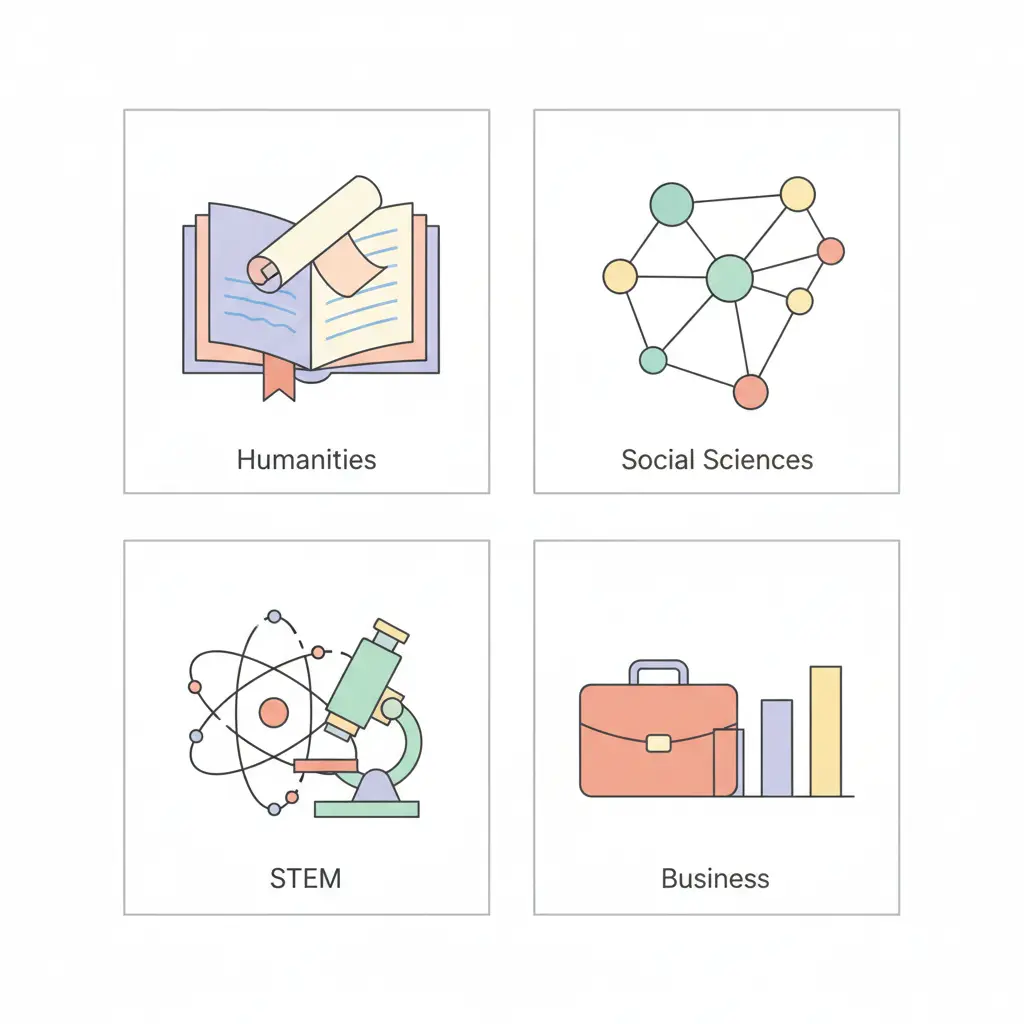
Thesis Statements by Discipline: What Changes?
The structural requirements of a thesis statement are universal. But the language, conventions, and expectations shift significantly by discipline — and getting this wrong can make an otherwise strong argument look naive to a specialist examiner.
Humanities (Literature, History, Philosophy)
Humanities theses typically engage with interpretive debates. The strongest ones position themselves within a scholarly conversation: “Against X’s reading, I argue that…” or “Building on Y’s framework, this paper demonstrates…” You’re not just making a claim — you’re entering an ongoing intellectual argument. Specificity of text, period, and theoretical framework all strengthen the statement.
Social Sciences (Psychology, Sociology, Political Science, Education)
Social science theses almost always benefit from specifying the population, method, and mechanism. They also tend to carry an explicit or implicit policy implication. Avoid over-hedging (every claim sounds like a hypothesis) but also avoid over-stating (correlation masquerading as causation). The Scribbr video guide on writing strong thesis statements covers social science examples particularly well.
STEM and Applied Sciences
In scientific writing, the thesis statement often sits within the abstract or introduction as a hypothesis-plus-contribution statement: what you tested, what you found, and why it matters for the field. It’s less about “arguability” in the rhetorical sense and more about the significance and originality of the finding. Precision of measurement and specificity of context carry enormous weight.
Business, Law, and Professional Disciplines
These fields expect theses that connect to real-world implications — policy, practice, or commercial relevance. Purely theoretical arguments without a practical grounding often read as disconnected. Conversely, purely descriptive accounts of industry trends without an analytic claim aren’t theses at all. The sweet spot is an argument grounded in evidence that generates specific, actionable implications.
Writing Thesis Statements for Full Dissertations and Theses
A single-essay thesis statement and a dissertation thesis statement are related but not identical. Understanding how they differ will save you enormous confusion.
The Central Argument vs. The Research Gap
At dissertation and PhD level, your thesis statement must do more than state an argument — it must signal an original contribution to knowledge. This means it typically references (implicitly or explicitly) a gap in existing literature that your research fills.
Think of it this way: an undergraduate essay thesis says “here is what I argue.” A dissertation thesis says “here is what I have discovered that nobody has demonstrated before, and here is why it matters to the field.” That’s a higher bar, and it requires you to know the literature well enough to know what’s missing from it.
Where Does It Appear in a Dissertation?
In a traditional dissertation structure, your central argument appears:
- In the abstract: One or two sentences summarising your core finding
- At the end of Chapter 1 (Introduction): Formally stated after establishing context and gap
- In the conclusion: Revisited and demonstrated to have been proven by the preceding chapters
It should read consistently across all three. If your abstract argues X, your introduction should argue X, and your conclusion should show how X was demonstrated. This structural coherence is one of the clearest markers of a well-crafted dissertation.
Thesis Statement Evolution Through the Research Process
This is something experienced researchers know but rarely say out loud: your thesis statement should change as you research. The version you write before data collection is a working hypothesis. The version you write after analysis is your actual thesis. Students who treat their original statement as untouchable often end up writing toward a conclusion their data doesn’t support — and that’s a significant problem at examination stage.
If you’re at the stage where your argument and your data feel misaligned, the practical steps in our guide to fixing common dissertation problems are directly relevant to this challenge.
The 10-Point Thesis Statement Self-Check Checklist
Before you submit anything with a thesis statement in it, run through this. Honest answers only.
- Arguability: Could a well-informed reader reasonably disagree with my claim?
- Specificity: Have I named the specific context, period, population, or phenomenon?
- Mechanism: Have I explained how or why — not just stated what?
- Significance: Have I included (or clearly implied) why this matters?
- Single focus: Is this one argument, not two or three competing ideas?
- Scope fit: Can I realistically support this claim in the word count I have?
- No announcements: Does my thesis make a claim, not describe what the paper will do?
- No vague language: Have I replaced words like “many,” “various,” “significant” with specific terms?
- Alignment: Does this thesis accurately reflect what my paper/dissertation actually proves?
- Discipline conventions: Does the language and framing suit my field’s expectations?
If you answer “no” or “I’m not sure” to any of these, that’s your revision target. One honest “no” is infinitely more useful than ten optimistic “yes” answers that don’t hold up under examination.
For additional support on the broader writing process — including how thesis statements connect to chapter structure, argument mapping, and literature review framing — the Purdue OWL thesis statement video resource provides a solid foundational walkthrough.
Frequently Asked Questions
How long should a thesis statement be?
For most academic essays, a thesis statement is one to three sentences. For dissertations and theses, the central argument may span a short paragraph — but it should still be reducible to a single core claim. Longer is not better; clarity is. If you need four or five sentences to state your argument, the argument itself probably needs more refinement.
Where does a thesis statement go in an essay or dissertation?
In an essay, the thesis statement typically appears at the end of the introduction — after you’ve established context and the problem. In a dissertation, it appears formally at the end of Chapter 1, after your research gap and rationale have been established. It should also appear (in summary form) in the abstract. Placing it too early — before you’ve established why it matters — weakens its impact significantly.
Can a thesis statement change during the writing process?
Yes — and for dissertation students especially, it’s often necessary. Your working thesis at the start of research is a hypothesis; your final thesis after analysis should reflect what you actually found. The key is ensuring your final thesis statement aligns with your conclusion before submission. Many students discover their real argument only after completing a full first draft, which is completely normal.
What’s the difference between a thesis statement and a research question?
A research question asks what you intend to investigate: “Does social media use affect academic performance in undergraduates?” A thesis statement is your answer to that question, stated as a specific argument: “Recreational social media use during study hours reduces academic performance in undergraduates by disrupting sustained attention, rather than through time displacement alone.” The thesis cannot exist without the research question preceding it.
Do thesis statements look different in quantitative vs. qualitative research?
Yes, there are differences in framing. Quantitative theses often state a causal or correlational relationship with reference to measurable outcomes: “X significantly predicts Y in population Z.” Qualitative theses typically make interpretive or theoretical claims: “This analysis reveals that X is understood by participants through the lens of Y, challenging the dominant framing of Z in existing literature.” Both must still be specific, arguable, and aligned with findings.
Is a hypothesis the same as a thesis statement?
Not exactly. A hypothesis is a testable prediction used primarily in scientific and quantitative research: “If X, then Y.” A thesis statement is a broader claim that synthesises your argument and contribution, used across all disciplines. In scientific writing, a thesis statement might encompass the hypothesis but also explain the significance and contribution of the findings — making it a more holistic academic claim.
Keep Building Your Dissertation Skills
A strong thesis statement is the foundation — but the whole structure needs to hold. Explore our most-read guides for university students writing their first dissertation or final-year thesis.
Putting It All Together
Thesis statements fail for predictable, fixable reasons. They’re too vague, they announce topics rather than argue positions, they carry two ideas when they should carry one, or they drift away from what the research actually found. None of these problems are signs of intellectual weakness — they’re signs of a process that needs a structured approach.
The examples in this article weren’t chosen at random. They reflect the failure patterns that come up again and again in feedback from supervisors at universities across the UK, US, Ireland, Australia, and North America. And the fixes aren’t magic — they’re the result of asking harder, more specific questions about your own argument.
Use the checklist. Test your thesis against the “could someone disagree?” rule. Don’t be precious about revising it — the best thesis statements are usually the third or fourth version, not the first. That’s not a failure of effort; that’s how thinking actually works.
Your argument is in there. The work now is to make it visible. For more guidance on thesis and dissertation writing for university students at every stage — from first draft to final submission — explore the full resource library.
Write your thesis with AI
Structure, draft, cite, and format your thesis faster with Tesify’s AI writing tools, automatic bibliography, and plagiarism checker. Free to start, no credit card required.





Leave a Reply