

Naming “the Theory of Planned Behavior” in a marketing dissertation’s framework chapter and then measuring purchase intention with an unrelated ad-hoc scale is one of the most common ways a theory-driven chapter falls apart under questioning. This guide develops TPB end to end for a marketing dissertation: what the theory actually claims, how each construct becomes a measurable variable, how to write hypotheses that follow logically from the model, and a worked consumer-behaviour example connecting every piece.
What TPB actually claims
Icek Ajzen introduced the Theory of Planned Behavior in the mid-1980s as an extension of the Theory of Reasoned Action he developed with Martin Fishbein; the standard citation for the theory is Ajzen (1991). The extension mattered because research had shown that behavioral intention alone does not guarantee action when people lack genuine control over performing the behavior — TPB adds perceived behavioral control specifically to address that gap. The model’s four constructs are: attitude toward the behavior (an individual’s evaluation of performing the specific action), subjective norm (perceptions of whether people who matter to the individual approve of the behavior), perceived behavioral control (the individual’s belief in their own capability to perform the behavior), and behavioral intention, which the theory treats as the most proximal determinant of actual behavior. Attitude, subjective norm and perceived behavioral control together predict intention; intention (often alongside perceived behavioral control directly) predicts the behavior itself.
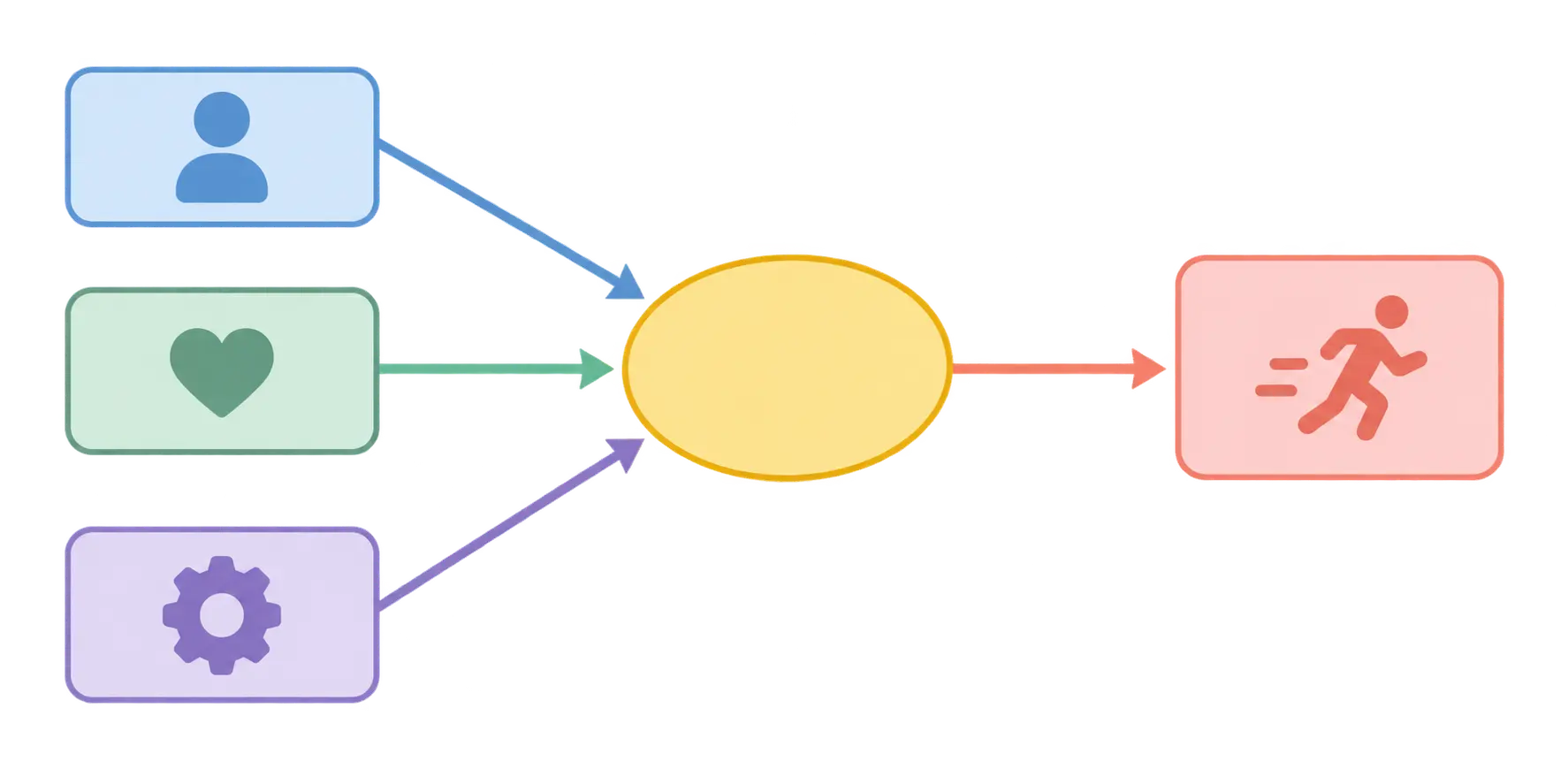
Turning each construct into a marketing variable
A marketing dissertation applying TPB needs a specific, named behavior — “purchase intention for a specific product category” or “adoption of a specific service,” not a vague “consumer behavior” — and then each construct operationalized against that exact behavior:
- Attitude toward the behavior: not general brand attitude, but the specific evaluation of performing the target action (e.g., “purchasing a subscription meal-kit service is a good idea”).
- Subjective norm: perceived approval from specific referent groups relevant to your population (family, friends, or — increasingly common in marketing TPB applications — social media influencers or online reviewer communities).
- Perceived behavioral control: the consumer’s belief in their own ability to perform the behavior, which in a marketing context often means perceived ease of access, affordability, or technical ability to use a product or service, distinct from attitude toward the product itself.
- Behavioral intention: a direct, specific measure (“I intend to purchase the product in the next month”), not a proxy like general purchase likelihood disconnected from a defined timeframe.
Writing hypotheses that follow from the model
TPB’s structure licenses a specific set of hypotheses, and a dissertation should state them explicitly rather than leaving the model’s logic implicit:
- H1: Attitude toward the target behavior is positively associated with behavioral intention.
- H2: Subjective norm regarding the target behavior is positively associated with behavioral intention.
- H3: Perceived behavioral control over the target behavior is positively associated with behavioral intention.
- H4: Perceived behavioral control is positively associated with the actual behavior, independent of intention.
- H5: Behavioral intention is positively associated with the actual behavior.
Not every marketing TPB study tests H4 and H5 directly — many, constrained by a thesis timeline, measure intention as the outcome variable rather than tracking actual subsequent behavior, which is a legitimate scope decision but should be stated explicitly as a limitation rather than left unaddressed. The variable-naming and hypothesis-writing discipline this requires is the same one covered in our guide to research questions, hypotheses and variables for a psychology dissertation, which applies directly to a TPB-framed marketing design.
Building the elicitation step before your instrument
A rigorous TPB application starts with elicitation interviews — a small preliminary qualitative step identifying the salient beliefs, referents, and control factors specific to your population and behavior, rather than assuming generic TPB items from a published study on a different behavior transfer directly. For a marketing dissertation studying, say, intention to buy secondhand clothing online, elicitation interviews would surface the specific beliefs your target consumers actually hold (concerns about hygiene, price advantage, sustainability values) rather than the researcher guessing at them from the literature alone. Skipping this step and importing items wholesale from an unrelated TPB study is a common shortcut that weakens construct validity — reviewers familiar with TPB methodology specifically look for evidence that items were adapted to the study’s own population, not copied verbatim.

Analysis approach: regression versus SEM
TPB’s structural model — three predictors feeding into intention, intention (plus perceived behavioral control) feeding into behavior — can be tested with either multiple regression or structural equation modeling (SEM), and the choice depends on your design and sample size. A simpler design testing only H1–H3 with directly measured constructs can use hierarchical multiple regression, entering attitude, subjective norm and perceived behavioral control as predictors of intention. A design measuring each construct with multiple indicator items (the more common approach, since single-item measures of attitude or norm are less reliable) is better suited to SEM, which can model measurement error explicitly and test the full structural path from constructs through intention to behavior in one integrated model. Whichever you choose, report it as a deliberate methodological decision tied to your instrument’s structure, not a default choice made without considering the alternative.
How TPB differs from the Technology Acceptance Model
Marketing dissertations studying digital or app-based purchase behavior often have to choose between TPB and the Technology Acceptance Model (TAM), and the choice matters for what the framework can explain. TPB is a general behavioral-prediction theory applicable to any planned behavior; TAM is a narrower model built specifically for technology adoption, using two core constructs (perceived usefulness and perceived ease of use) rather than TPB’s four. Where a marketing dissertation’s behavior is fundamentally about adopting a new technology or platform, TAM may be the more parsimonious fit; where the behavior is a purchase decision that happens to occur through a digital channel but is not primarily about technology adoption itself, TPB’s broader social and control constructs usually explain more variance. Our guide comparing TAM and UTAUT covers the technology-adoption-specific alternatives in more depth if your behavior sits closer to that category.
A worked theoretical framework example
Weak version: “This study uses the Theory of Planned Behavior to understand consumer purchase intention.” (No constructs named, no hypotheses derived, no instrument connection.)
Full application (illustrative): “This study applies Ajzen’s (1991) Theory of Planned Behavior to predict consumers’ intention to purchase refillable packaging products. Elicitation interviews with a small group of consumers (Phase 1) identified salient beliefs about refillable packaging, informing a structured survey (Phase 2) that measured attitude, subjective norm and perceived behavioral control using items adapted from established TPB scales. Structural equation modeling tested H1–H3. Because actual purchasing was not observed, the direct path from perceived behavioral control to behavior (H4) and the intention-behavior path (H5) were not tested, and this is reported as a limitation.”
The second version names the specific behavior, shows the elicitation step, states the measurement approach, and connects the analysis directly back to the hypotheses the theory licenses.
Instrument alignment: adapting published TPB scales
TPB items typically follow a standard semantic-differential or Likert format per construct (attitude items like “performing the behavior would be bad or good” on a bipolar scale; perceived behavioral control items like “I am confident I could perform the behavior if I wanted to”). Our guide to marketing dissertation scales covers how to adapt an established instrument to your own brand or product context while preserving the psychometric properties that justify calling it a validated measure, rather than rewriting items so heavily that the adaptation amounts to a new, unvalidated instrument in practice.
A note on extending TPB with additional constructs
Many published marketing TPB studies add a fifth construct specific to their context — moral norm, past behavior, or, increasingly, environmental or ethical concern for sustainability-focused purchase research. This is a legitimate and common extension, but frame it explicitly as an extension rather than presenting it as though it were part of Ajzen’s original model: state that the study extends TPB with an environmental concern construct, name both the addition and a precedent study that made the same extension for a comparable behavior, rather than inventing the extension without support.
Sample size for a TPB survey study
Because a full TPB survey with multi-item constructs and SEM analysis has more estimated parameters than a simple regression, sample-size planning needs to account for the analysis method, not just a general rule of thumb. A common approach for SEM is estimating a minimum ratio of observations to estimated parameters (a commonly cited rule of thumb is around 10 observations per estimated parameter as a starting point, though this varies by model complexity and estimation method), while a regression-only design can use a standard power analysis for multiple regression given the number of predictors. State which approach you used and why in the methods chapter, rather than picking a round sample-size number without justification.
Mistakes that get a TPB-framed chapter flagged
- The theory named but constructs never explicitly operationalized as separate measured variables.
- No elicitation step, with generic items imported from an unrelated study’s population.
- Attitude measured toward the brand or product generally rather than toward the specific behavior, conflating TPB’s precise construct with a looser marketing-attitude measure.
- Hypotheses not stated explicitly, leaving the reader to infer the model’s logic.
- No discussion of the intention-behavior gap where only intention, not actual behavior, was measured.
- An added construct presented as part of the original model without framing it as an extension or citing precedent.
Frequently asked questions
Who developed the Theory of Planned Behavior and when?
Icek Ajzen introduced the Theory of Planned Behavior in the mid-1980s as an extension of the Theory of Reasoned Action developed with Martin Fishbein; cite Ajzen (1991) for the standard statement of the theory.
What are the four constructs of the Theory of Planned Behavior?
Attitude toward the behavior, subjective norm, perceived behavioral control, and behavioral intention, with intention predicted to be the most proximal determinant of actual behavior.
How is TPB different from the Technology Acceptance Model (TAM)?
TPB is a general behavioral-prediction theory applicable to any planned behavior; TAM is a narrower model specifically for technology adoption, built from two constructs (perceived usefulness and perceived ease of use) rather than TPB’s four.
Do I need to run elicitation interviews before using TPB?
For a rigorous application, yes — elicitation interviews identify the salient beliefs, referents and control factors specific to your population and behavior, rather than assuming generic items transfer directly from a different study.
Can TPB explain why intention does not always predict behavior?
Partially. TPB added perceived behavioral control specifically to address the intention-behavior gap, but a residual gap often remains and should be discussed honestly rather than assumed away.
Should I use regression or SEM to test my TPB model?
Multiple regression suits a simpler design with directly measured constructs; SEM suits a design where each construct is measured with multiple indicator items, since it can model measurement error and the full structural path in one integrated analysis.
Can I add a construct to TPB, like environmental concern?
Yes, this is a common and legitimate extension in marketing research, but frame it explicitly as an addition to the original model and cite a precedent study that made a comparable extension, rather than presenting it as part of Ajzen’s original framework.
Apply TPB all the way from constructs to conclusion
Tesify’s thesis workspace, used by 9,000+ students and 15,000+ chapters, helps marketing researchers trace TPB’s constructs into named variables, hypotheses and an aligned instrument. Every word stays 100% written by you.
Write your thesis with AI
Structure, draft, cite, and format your thesis faster with Tesify’s AI writing tools, automatic bibliography, and plagiarism checker. Free to start, no credit card required.






Leave a Reply