
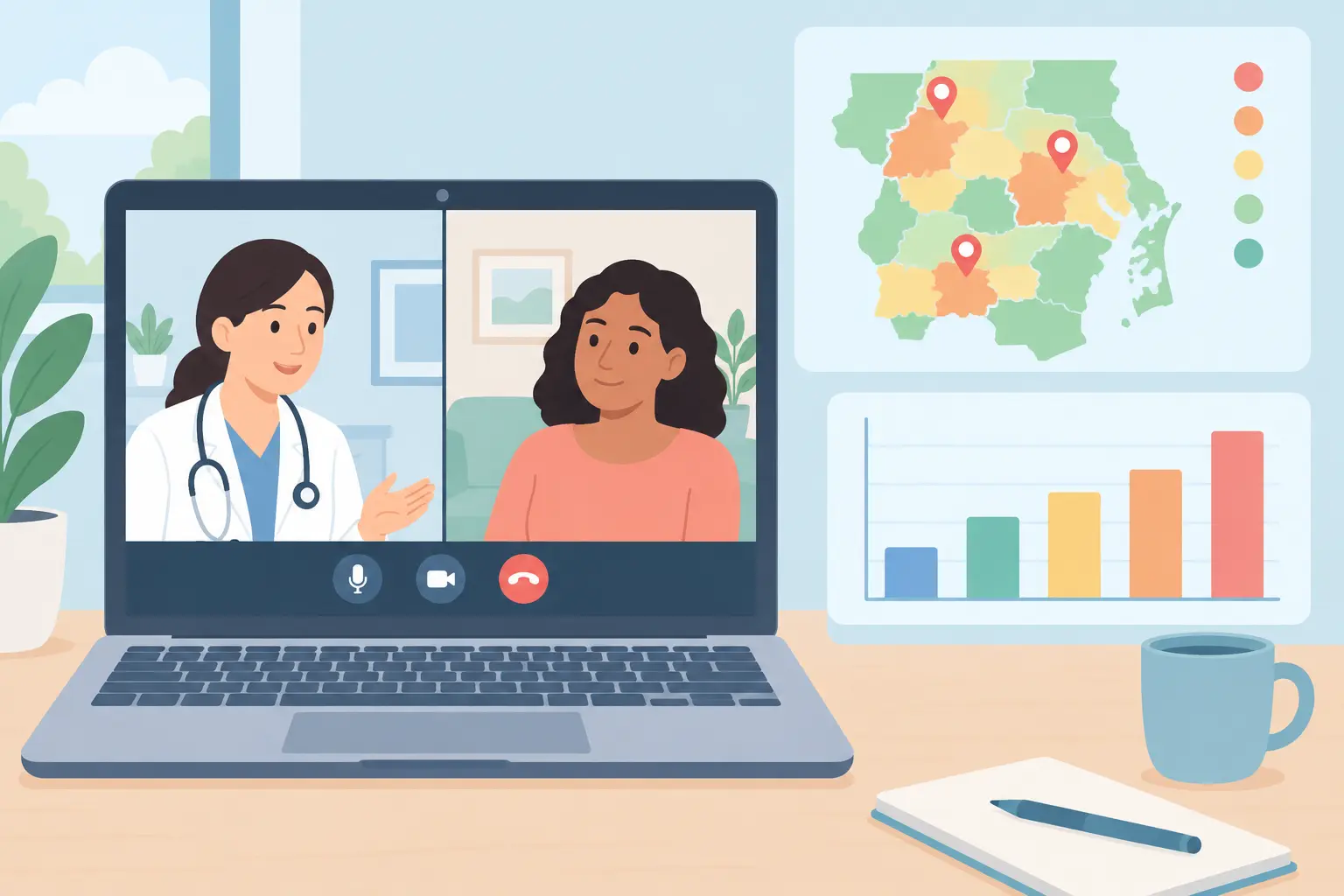
It’s 11 p.m. and you have a topic — “telehealth” — and a blinking cursor. Telehealth is not a thesis topic on its own; it is a delivery mechanism that intersects with dozens of distinct public health questions, and the students who submit strong proposals are the ones who pick one specific intersection and defend it, not the ones who write a broad literature summary of “telehealth during and after the pandemic.”
The problem with “telehealth” as a topic
Telehealth research spans access, equity, quality, cost, regulation and clinical outcomes, and each of these is a different kind of study with a different method. A proposal that tries to touch all of them ends up defending none of them well. The fix is the same funnel every strong public health proposal uses: name the specific population, the specific telehealth modality, and the specific outcome you are studying, in one sentence.
Five ready-made research questions, by public health sub-area
- Access and rural health: Does broadband availability at the county level predict telehealth utilization rates among Medicare beneficiaries in rural counties, controlling for provider density?
- Health equity: Do telehealth utilization rates differ by primary language spoken at home, after controlling for insurance status and broadband access, among a state’s Medicaid population?
- Policy and regulation: Did the expansion of interstate licensure compacts (such as the Interstate Medical Licensure Compact or PSYPACT for psychology) change the rate of out-of-state telehealth consultations for mental health services?
- Reimbursement and cost: Following the expiration or extension of pandemic-era telehealth reimbursement parity policies, did primary care telehealth visit volume change among a specific payer population?
- Clinical quality: Does chronic-disease management delivered via telehealth (for example, hypertension follow-up) achieve equivalent control-rate outcomes compared to matched in-person follow-up, in a defined patient population?
Choosing your evaluation framework
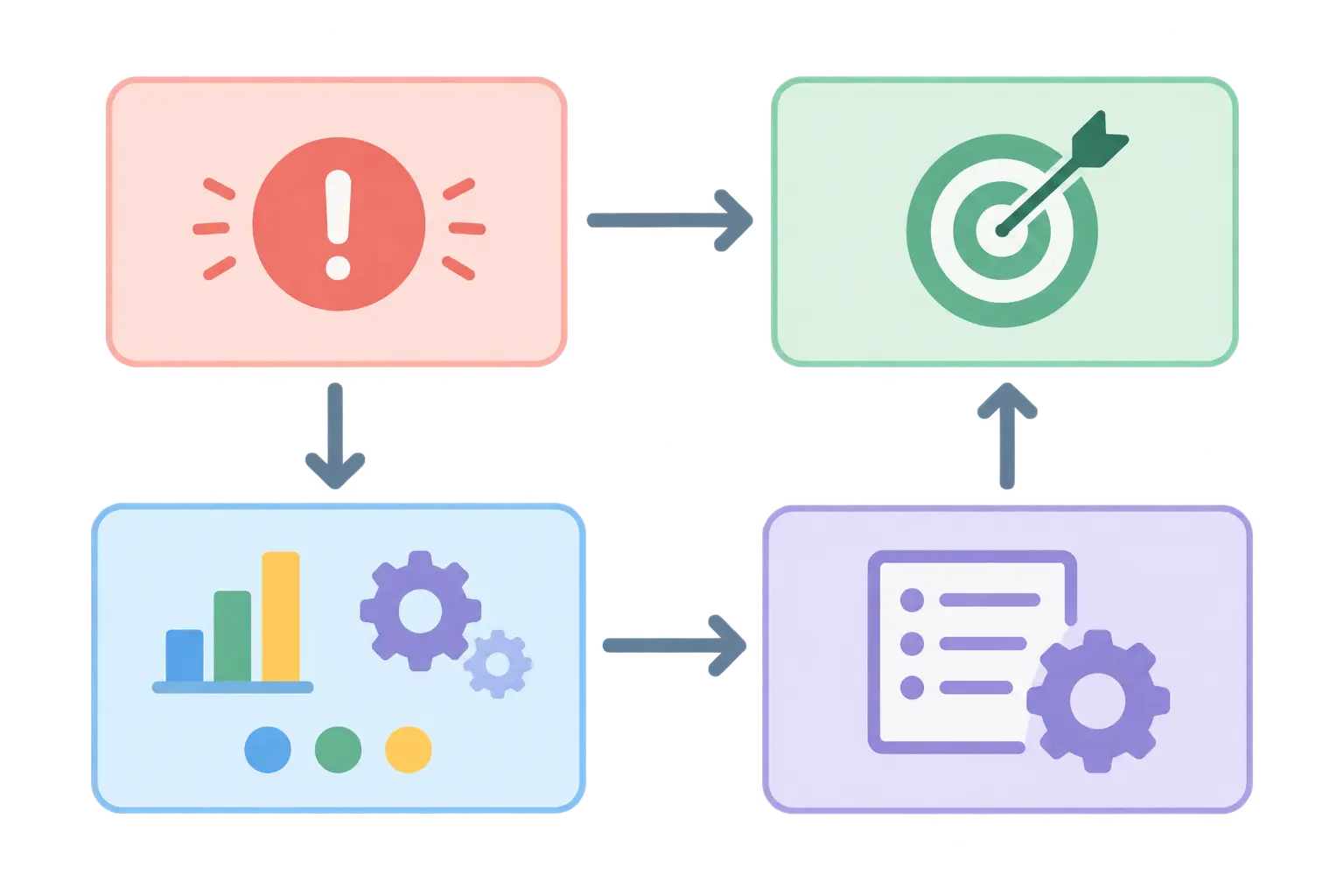
The RE-AIM framework (Reach, Effectiveness, Adoption, Implementation, Maintenance) is a widely used evaluation structure in telehealth and public health implementation research, because it forces you to separate “did the program reach the intended population” from “did it work when it reached them” — two questions that get conflated constantly in weaker telehealth proposals. Reach asks who was exposed to the telehealth service relative to the eligible population; Effectiveness asks whether it produced the intended clinical or behavioral outcome; Adoption asks which sites, providers or systems took it up; Implementation asks how faithfully it was delivered as designed; and Maintenance asks whether the program and its effects persisted beyond the initial rollout period. State explicitly which of these dimensions (or which two, at most) your thesis targets; a proposal claiming to address all five in a single thesis-scale project is rarely realistic and will read as unfocused to a committee.
Where the data actually lives
- HRSA’s Health Center Program data and the Uniform Data System (UDS) report telehealth visit volume for federally qualified health centers, useful for access and utilization questions in underserved populations.
- CMS Medicare telehealth utilization data, released periodically, breaks out telehealth visits by service type, specialty and geography.
- State Medicaid claims data (accessed via a data-use agreement with your state Medicaid agency or a university-affiliated data enclave) is often the richest source for a state-specific equity or utilization question, though access timelines can be long — start this application early.
- The FCC’s National Broadband Map supplies the county- or block-level connectivity data needed for any access-and-infrastructure research question.
- Your own health system’s electronic health record, if you have a research-access agreement, is often the most practical source for a clinical-quality comparison design.
The general 40+ free datasets and open data repositories directory is a useful starting point for the public national data sources above, though the state Medicaid and health-system sources will still require a specific data-use agreement rather than a public download.
The digital divide is a measurement problem, not just a policy problem
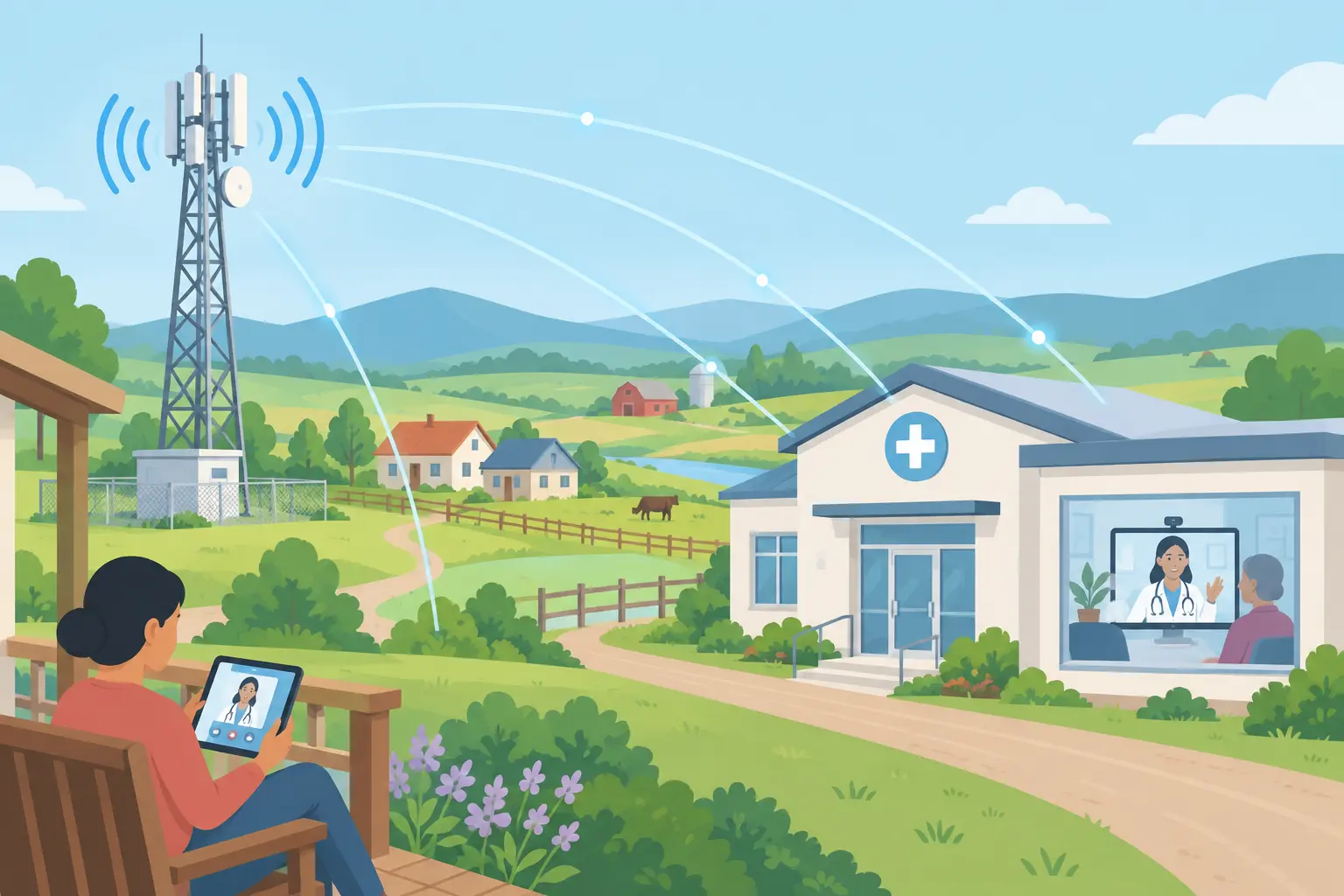
A common weakness in telehealth equity research is treating “broadband access” as a single binary variable when the underlying construct actually has several distinct layers: physical infrastructure availability, affordability of a subscription, device ownership, and digital literacy to use the service once connected. The FCC’s National Broadband Map captures infrastructure availability well but says nothing about affordability or literacy, both of which independently predict telehealth uptake in the published equity literature. A stronger thesis names which layer of the digital divide it is actually measuring, rather than treating “access” as self-evident, and considers pairing infrastructure data with a survey component capturing device ownership and self-reported comfort with video-visit technology.
A worked illustrative design
The following is an illustrative composite, not a description of a real study. Research question: Among Medicaid beneficiaries with hypertension in a defined state, does telehealth-delivered follow-up care achieve equivalent blood-pressure control rates compared to matched in-person follow-up over a 12-month period? Design: a retrospective cohort using linked Medicaid claims and clinical data, propensity-score matched on baseline blood-pressure control, comorbidity burden and rurality, comparing control-rate outcomes between the telehealth-follow-up and in-person-follow-up groups. What this design has to justify explicitly: why propensity matching (rather than a randomized design, which is rarely feasible for a retrospective thesis) is an adequate substitute for randomization, and what unmeasured confounders (patient preference for telehealth, which may correlate with health literacy or self-management skill) the discussion section needs to address as a limitation.
Ethics and IRB considerations specific to telehealth research
Most telehealth research using existing claims or utilization data (rather than new primary data collection from patients) qualifies for an exempt or expedited IRB review, since it is secondary analysis of routinely collected administrative records, but this determination belongs to your IRB, not to your own assumption. If your design adds a survey component asking patients directly about their telehealth experience or digital-literacy barriers, expect a fuller review given the added direct human-subjects contact, and build extra time into your proposal timeline accordingly.
The regulatory landscape moves fast — check it before you submit
Telehealth reimbursement and licensure policy has changed substantially and repeatedly since 2020, with pandemic-era flexibilities extended, modified or allowed to lapse at different times across state and federal policy. Whatever specific policy your thesis references (a reimbursement rule, a licensure compact, a DEA telehealth prescribing flexibility), confirm its current status directly from the regulator’s own site the week you write your proposal — a policy correct at the start of your literature review can change before your defense.
Cost-effectiveness as an alternative framing
If your programme or committee is particularly interested in health economics, a cost-effectiveness or cost-utility framing (comparing the cost per additional patient reaching guideline-recommended blood-pressure control, for example, between telehealth and in-person follow-up) is a well-established and distinct alternative to a purely clinical-equivalence design, though it requires access to cost data (billed charges, reimbursement rates, or a standard cost-weighting approach) in addition to the clinical outcome data described above.
Provider-side questions, not just patient-side
Most published telehealth research asks patient-facing questions (access, outcomes, satisfaction), leaving provider-side questions comparatively under-studied and therefore a genuine opening for a thesis: does telehealth delivery change a provider’s documentation burden or visit-length patterns; does it change referral rates to specialists; does sustained telehealth caseload correlate with provider-reported burnout differently than an equivalent in-person caseload. These questions typically need provider survey data or scheduling-system metadata rather than patient claims data, a different and sometimes easier data-access path than the patient-outcome questions above.
Specialty-specific telehealth angles worth considering
Beyond general primary-care telehealth, several specialty areas carry their own distinct, less-studied questions: tele-behavioral-health capacity in areas with a documented psychiatrist shortage, tele-dermatology’s diagnostic concordance with in-person examination for a defined set of skin conditions, and tele-genetics counseling access for rural patients referred after an abnormal prenatal screening result. Each of these narrows the broad “telehealth” topic into a specialty-specific question with its own established (if smaller) literature to build a review from, which is often easier to defend than a primary-care-general framing precisely because the comparison literature is more focused.
Three mistakes that sink telehealth proposals
First, defining the exposure vaguely: “telehealth use” can mean video, audio-only, remote monitoring or patient-portal messaging, and each behaves differently. Second, comparing periods without naming the policy change that separates them, which leaves the committee unable to tell a real effect from a calendar artifact. Third, ignoring who selects into telehealth: patients who choose video visits often differ systematically from those who do not, so a naive comparison of outcomes will mostly measure that selection rather than the care model itself. Name each of these in your methods chapter and say how your design handles it.
Where Tesify fits
Once you have picked your specific telehealth question, your RE-AIM dimension and your data source, the hardest part of the proposal is behind you — the rest is disciplined writing. Tesify’s thesis workspace, used by 9,000+ students and 15,000+ chapters, helps you structure that scoped question into a clear problem statement and methods section. Every word stays 100% written by you, and the scoping work above, plus checking each regulation’s current status, is work only you can do.
Where this fits with the wider proposal
Once your specific question is set, see how to write a public health dissertation for the full MPH chapter structure this topic feeds into, and population, sample and sampling for a public health thesis for how to define your specific cohort once your data source is confirmed.
Frequently asked questions
Is telehealth research still a viable, non-saturated thesis topic in 2026?
Yes — while the initial post-2020 wave of general “telehealth adoption” studies is now saturated, specific equity, policy-change and clinical-equivalence questions (like the five above) remain active, high-value research areas with real gaps.
Do I need clinical data access, or can I study telehealth policy without it?
Policy and regulatory questions (licensure compact effects, reimbursement-parity changes) can often be studied with publicly available claims or utilization data and do not require individual clinical record access, making them more tractable for students without an existing health-system data agreement.
What is the difference between telehealth and telemedicine in how I should use these terms?
Telemedicine typically refers narrowly to clinical services delivered remotely; telehealth is the broader umbrella including non-clinical services (health education, remote monitoring, provider-to-provider consultation). State which term and scope you are using explicitly in your first chapter, since committees will hold you to your own stated definition throughout.
Can I compare telehealth modalities (video versus audio-only) rather than telehealth versus in-person?
Yes, and this is an increasingly relevant and less saturated question, particularly for equity research, since audio-only telehealth access differs meaningfully by broadband availability, digital literacy and device ownership.
How current does my regulatory citation need to be?
As current as you can make it at the moment you submit — cite the specific regulation’s version or effective date, and note explicitly if a change is pending, rather than presenting a fast-moving policy area as settled.
What sample size do I need for a telehealth-versus-in-person outcome comparison?
Run an a priori power analysis based on the expected effect size from the closest comparable published study using your same outcome measure, rather than assuming a fixed number — equivalence or non-inferiority designs (common in this literature) typically require larger samples than a standard superiority comparison.
Should I focus on a single condition (like hypertension) or telehealth use broadly?
A single, well-justified condition is almost always the stronger thesis-scale choice, since outcome measurement, clinical guidelines and confounders differ meaningfully across conditions, and a broad “telehealth use in general” outcome measure tends to blur these differences into an uninterpretable average.
Is a provider-side telehealth study easier to complete than a patient-outcome study?
Often yes, in terms of data access, since a provider survey or scheduling-system extract typically requires a lighter data-use agreement than linked patient claims or clinical records, though the trade-off is a smaller, more institution-specific sample.
Are specialty-specific telehealth questions (like tele-dermatology) harder to research than primary care telehealth?
Not necessarily harder, but the literature base and available comparison data are smaller and more concentrated in a handful of specialty journals, so budget extra time for a targeted literature search rather than assuming the general telehealth literature will transfer directly.
Write your thesis with AI
Structure, draft, cite, and format your thesis faster with Tesify’s AI writing tools, automatic bibliography, and plagiarism checker. Free to start, no credit card required.






Leave a Reply